Carbon Steel Pickling Process: A Technical Guide for Buyers
Pickling is the acid-cleaning step that removes oxide scale from hot-rolled carbon steel before cold rolling, coating, or direct sale as pickled and oiled (P&O) coil or plate. The quality of pickling affects surface finish, coating adhesion, forming behavior, and downstream defect rates. This guide explains the carbon steel pickling process, acid types, line configurations, quality checks, and what buyers should verify on the mill test certificate.
What Is Pickling and Why It Matters
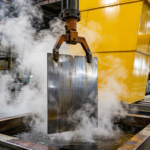
Hot-rolled steel emerges from the finishing mill at 800–900°C and develops a multilayer oxide scale (hematite, magnetite, and wustite) as it cools on the run-out table and coilers. This scale is hard, abrasive, and chemically incompatible with paint, zinc, and polymer coatings. Pickling dissolves the scale in acid, leaving a clean, reactive steel surface that can be cold-rolled, galvanized, or painted without delamination or flaking. For buyers, properly pickled steel means fewer rejects in forming lines, better weld quality, and longer coating life.
Main Pickling Methods Used Today
| Method | Acid | Typical use | Key features |
|---|---|---|---|
| Continuous push-pull pickling | HCl or H₂SO₄ | Strip coil 0.8–12 mm | High speed, tight gauge control, acid recycling |
| Continuous shallow-tank pickling | HCl | Automotive-exposed strip | Gentle handling, low surface roughness |
| Batch (tower) pickling | HCl or H₂SO₄ | Heavy plate, wire rod, structural sections | Flexible, handles mixed sizes |
| Eco pickle (acid-free) | Mechanical + inhibitor | Specialty, environmentally sensitive plants | No acid waste, slower, higher cost |
Most modern carbon steel strip is pickled in continuous hydrochloric acid (HCl) lines because HCl dissolves scale faster than sulfuric acid at lower temperatures, produces cleaner surfaces, and allows efficient acid regeneration via spray-roast or fluidized-bed plants. Sulfuric acid is still used in some older facilities and for very heavy scale on plate and rod.
Step-by-Step Process Flow
1. Uncoiling and welding. Individual hot-rolled coils are welded end-to-end to create a continuous strip. The welder must produce a joint that survives tension leveling and acid without breaking; weld skips or poor profiles cause line stoppages.
2. Tension leveling / scale breaking. The strip passes through a set of small-diameter work rolls that bend and flex the steel, cracking the brittle oxide scale. This mechanical loosening reduces acid consumption and shortens pickling time by 20–40%.
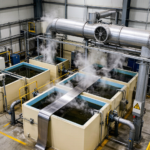
3. Acid pickling. The strip enters a series of tanks containing 5–20% HCl at 70–90°C. The acid reacts with iron oxides and some base metal, producing dissolved iron chloride and hydrogen gas. Residence time is tuned by line speed and tank length; typical strip speeds range from 60 to 250 m/min depending on gauge and scale thickness.
4. Rinsing and neutralizing. After acid, the strip passes through cascading water rinses to remove residual acid and salts. A final neutralizing rinse (dilute alkaline or hot water) ensures the surface pH is near neutral before drying.
5. Drying and oiling. Hot air knives dry the strip, followed by electrostatic or roll-coater application of rust-preventive oil (typically 0.5–2.0 g/m²). The oil film prevents flash rusting during storage and transit.
6. Recoiling and inspection. The clean strip is recoiled, edge-trimmed if required, and inspected for surface defects, coil set, and flatness. Samples are taken for roughness and residual cleanliness checks.
Quality Control Checks During Pickling
| Check | Method | Typical acceptance |
|---|---|---|
| Residual scale | Visual + tape test | No visible scale; tape test clean |
| Surface roughness (Ra) | Profilometer | 0.8 – 2.5 µm depending on end use |
| Acid residues | pH indicator / conductivity | pH 6–8; conductivity < 50 µS/cm |
| Oil film weight | Gravimetric wipe | 0.5 – 2.0 g/m² as specified |
| Flash rust | Visual after 24 h open storage | No rust under standard humidity |
Common Defects and Prevention
- Under-pickling (residual scale): Caused by insufficient acid concentration, low temperature, or excessive line speed. Leaves grey or black patches that flake during forming. Prevention: maintain acid iron content below 120 g/L and monitor free acid regularly.
- Over-pickling (etch pits): Excessive acid attack on the base metal creates a rough, pitted surface that increases friction in dies and reduces fatigue life. Prevention: control line speed and acid temperature; use inhibitors.
- Edge burning: Thinner edges dissolve faster, creating notches or wavy edges. Prevention: edge masking or reduced acid concentration at strip edges.
- Flash rust: Insufficient oil film or high humidity storage causes surface oxidation within hours. Prevention: verify oil weight and use VCI film for sea freight.
Environmental and Safety Considerations
Pickling generates acid fumes, spent acid, and iron chloride sludge. Modern mills use fume scrubbers (wet or dry), acid regeneration plants that convert spent acid back to fresh HCl and iron oxide byproduct, and closed-loop rinse systems. Buyers sourcing from mills with ISO 14001 certification can expect lower environmental risk and more consistent acid management, which translates to cleaner steel and fewer process variations.
What Buyers Should Specify
- Surface quality standard: EN 10163, ASTM A635, or JIS G3131 surface class.
- Oil type: standard rust-preventive, DOS oil, or dry (no oil) for immediate galvanizing.
- Flatness and coil set limits if the material feeds automatic roll-forming or stamping lines.
- Edge condition: mill edge, slit edge, or dressed edge.
- Certificate requirements: EN 10204 3.1 or 3.2 with surface roughness and oil weight if specified.
FAQ
How long can pickled steel be stored before rusting?
With standard oil, 1–3 months in a dry warehouse. With VCI packaging, 6–12 months. For tropical or coastal humidity, specify heavier oil or VCI wrap.
Is pickled steel ready for painting without further treatment?
Usually yes for general industrial paint, but high-performance coatings may require additional phosphating or shot blasting to Ra 0.8–1.2 µm. Always confirm with your paint supplier.
Can I order pickled plate instead of coil?
Yes. Many mills offer cut-to-length pickled plate from 1.5 mm to 25 mm. Lead time is typically 2–4 weeks because plate pickling is often batch rather than continuous.
Does pickling change mechanical properties?
Negligibly. The acid removes only a few micrometers of surface material. Any strength change comes from the tension-leveling step, which may add a small amount of work hardening.
What is the difference between pickled and blasted scale removal?
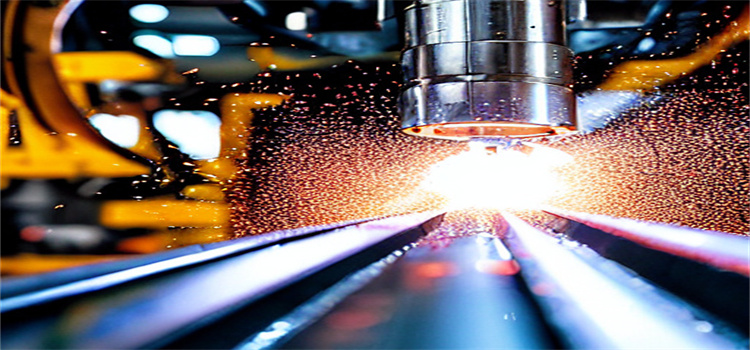
Pickling dissolves scale chemically and leaves a smooth, reactive surface ideal for coating. Shot blasting mechanically removes scale and leaves an anchor profile (rougher) preferred for paint adhesion but less suitable for immediate cold rolling.
Source Pickled and Oiled Carbon Steel
Huaxia-Steel supplies hot-rolled pickled and oiled carbon steel coil and plate from 1.0 to 25 mm, SPHC/SS400/S355/SAE grades, with mill edge or slit edge, oiled or dry finish. Request a quote with MTC and surface inspection report.