Hot expansion is a forming process that enlarges the diameter of a seamless steel pipe while keeping wall thickness within tolerance. It is widely used to produce large-diameter seamless line pipe, structural pipe and mechanical tubing without starting from an oversized mother tube. This article explains the hot expansion seamless steel pipe process, the equipment involved, quality controls and when to specify expanded pipe.
1. What Is Hot Expansion?
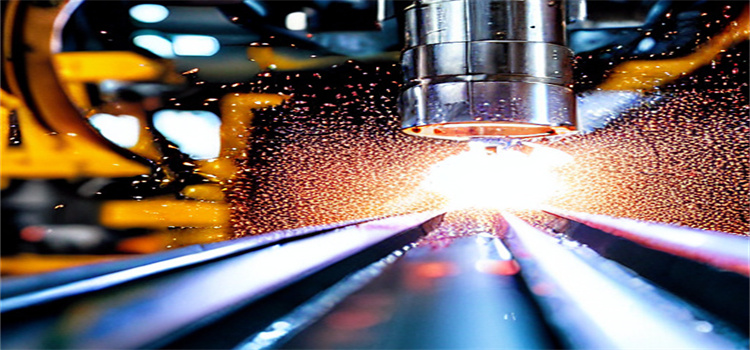
Hot expansion is a rotary or push-bench process that heats a smaller-diameter seamless tube above its recrystallization temperature and then expands it to a larger outer diameter. Because the material is worked hot, the grain structure recrystallizes during or after forming, leaving the pipe with uniform mechanical properties and good dimensional accuracy.
- Input pipe is usually a pierced and rolled seamless tube or an ERW/HFI welded pipe.
- Heating is done by induction coils or gas-fired furnaces to 900-1,100 °C depending on grade.
- Expansion ratio typically ranges from 1.1 to 1.5 times the original diameter.
- After expansion, the pipe is cooled, straightened, cut to length and inspected.
2. Main Hot Expansion Methods
Mills use several methods to expand pipe. Each has advantages for diameter range, wall thickness and production rate.
| Method | Principle | Best For |
|---|---|---|
| Mandrel expansion | Hydraulic or mechanical mandrel pushed through heated tube | Good ID control, medium sizes |
| Rotary expansion | Cone rolls rotate and push the pipe outward | Large diameters, high output |
| Hydroforming expansion | Internal water pressure expands tube against die | Complex shapes, tight tolerances |
| Stretch reduction | Multiple stand mills reduce diameter/change wall | Small sizes, long runs |
Rotary expansion is the most common method for API 5L line pipe and large structural seamless pipe because it can handle diameters up to 1,400 mm and a wide wall-thickness range.
3. Materials Suitable for Hot Expansion
Most carbon and low-alloy seamless grades can be hot-expanded if temperature and reduction schedules are controlled. Common grades include:
- ASTM A106 Gr B and Gr C seamless pipe for high-temperature service.
- API 5L Gr B, X52, X60, X65 and X70 line pipe for oil and gas pipelines.
- ASTM A53 Gr A and Gr B for mechanical and pressure applications.
- S355J2H and S275J2H structural hollow sections to EN 10210.
- Special grades such as 16Mo3, 13CrMo4-5 and P265GH for elevated-temperature equipment.
4. Dimensional and Mechanical Effects
Hot expansion changes the geometry of the pipe and, depending on the grade and cooling rate, may affect strength and toughness. Mills control the process so that final properties meet the specified standard.
| Parameter | Effect of Expansion | Typical Tolerance |
|---|---|---|
| Outer diameter | Grows by expansion ratio | ± 1 % typical, tighter on request |
| Wall thickness | Thins slightly | Controlled to -12.5 % / +12.5 % or better |
| Length | May shorten due to diameter growth | Cut to ordered length |
| Yield strength | Usually unchanged or slightly higher | Normalized expansion stabilizes values |
| Toughness | Recrystallization refines grain | Charpy results depend on grade and test temp |
| Ovality | Controlled by straightening | ≤ 1 % typical for line pipe |
5. Quality Control and Testing
Expanded seamless pipe must pass the same inspections as conventionally produced pipe. Additional checks focus on wall uniformity, dimensional stability and surface integrity after expansion.
- Ultrasonic testing of the full body and end zones for laminations and cracks.
- Wall-thickness measurement on multiple points around the circumference.
- Straightness and ovality checks over the full length.
- Hydrostatic testing to verify leak tightness.
- Flattening, flaring or bend tests depending on the applicable standard.
- Charpy impact testing for low-temperature or high-strength grades.
6. When to Specify Hot Expanded Pipe
Hot expanded pipe is a cost-effective alternative when a mill cannot roll the required diameter directly or when delivery from stock of a smaller mother pipe is faster than ordering a special size.
- Large-diameter seamless pipe above normal rolling limits.
- Tight delivery schedules where a smaller mother pipe is already available.
- Applications where weld seams must be avoided but welded large-diameter pipe would otherwise be used.
- Mechanical tubing and casings requiring intermediate sizes not kept in stock.
7. FAQ
Is hot expanded pipe as strong as conventionally rolled seamless pipe?
Yes, if the process is controlled and the pipe is normalized afterward. The recrystallized grain structure can give properties equal to or better than conventionally rolled pipe.
What is the maximum diameter for hot expansion?
Rotary expanders can produce pipe up to approximately 1,400 mm outside diameter, depending on the mill. Larger sizes are usually welded pipe.
Does hot expansion change the grade designation?
No. The final grade and standard remain the same as the input material, provided testing confirms the specified properties. The certificate should note any special forming.
Can hot expansion be used for sour service?
Yes, but strict control of sulfur, phosphorus and hardness is required. NACE MR0175/ISO 15156 limits may apply.
8. Summary
Hot expansion extends the size range of seamless steel pipe while preserving the benefits of a weld-free body. Specify it when the required diameter is beyond standard rolling limits or when lead time can be shortened by starting from available smaller pipe. Always confirm the expansion method, heat treatment and testing plan before ordering.
Need a reliable carbon steel supplier for your next project? Huaxia-Steel supplies mill-certified carbon steel bars, plates, pipes, flanges and fittings with full inspection, export packing and fast delivery. Request a quote today and our team will reply within 24 hours.