LSAW vs SSAW vs ERW Carbon Steel Pipe: Manufacturing, Performance, Selection
Carbon steel pipe for oil and gas transmission, structural piling, water mains and process piping is produced by three principal welded processes – Longitudinal Submerged Arc Welded (LSAW), Spiral Submerged Arc Welded (SSAW), and Electric Resistance Welded (ERW). Each method creates pipe with a different weld seam orientation, mechanical property profile, dimensional range, and unit price. Procurement managers who pick the wrong process can pay 25 to 60 percent more than necessary, or end up with a pipe that does not meet the line pipe specification they specified. This guide explains how each pipe is made, where each type fits, and how to choose correctly for the next RFQ.
1. Manufacturing Process Comparison
The three pipe-making processes differ in how the steel plate or coil is formed into a tube and how the longitudinal or helical seam is welded.
1.1 LSAW (Longitudinal Submerged Arc Welded)
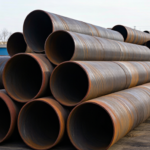
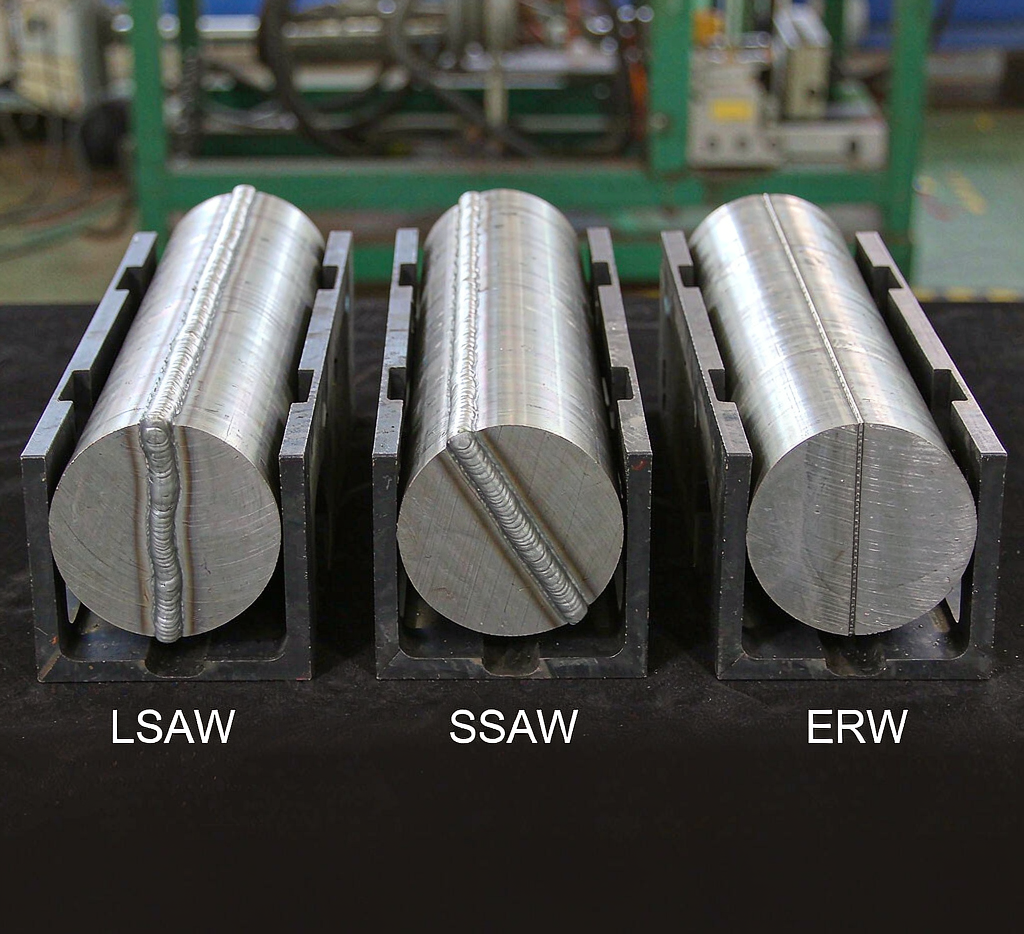
LSAW pipe is formed from a single plate (skelp) that is pressed into a U-shape by a press or U-ing roll, then into an O-shape by an O-ing roll. The two edges are welded together by submerged arc welding (SAW) running parallel to the pipe axis. Inside weld, outside weld, or both can be applied depending on the spec. Diameter range is typically 16 inch to 60 inch (NPS 400 to 1500 mm), with wall thickness up to 50 mm and single-piece lengths to 12 m or longer with double-jointing.
1.2 SSAW (Spiral / Helical Submerged Arc Welded)
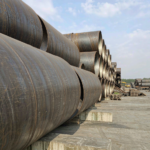
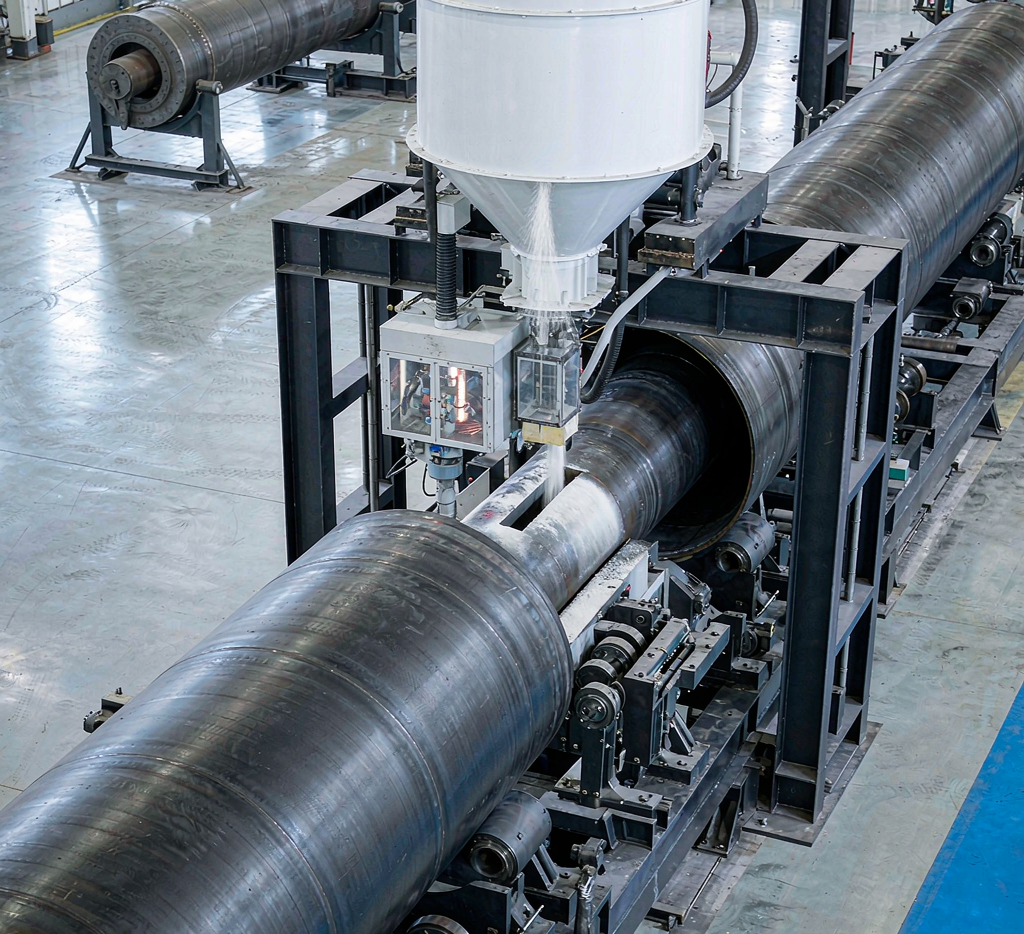
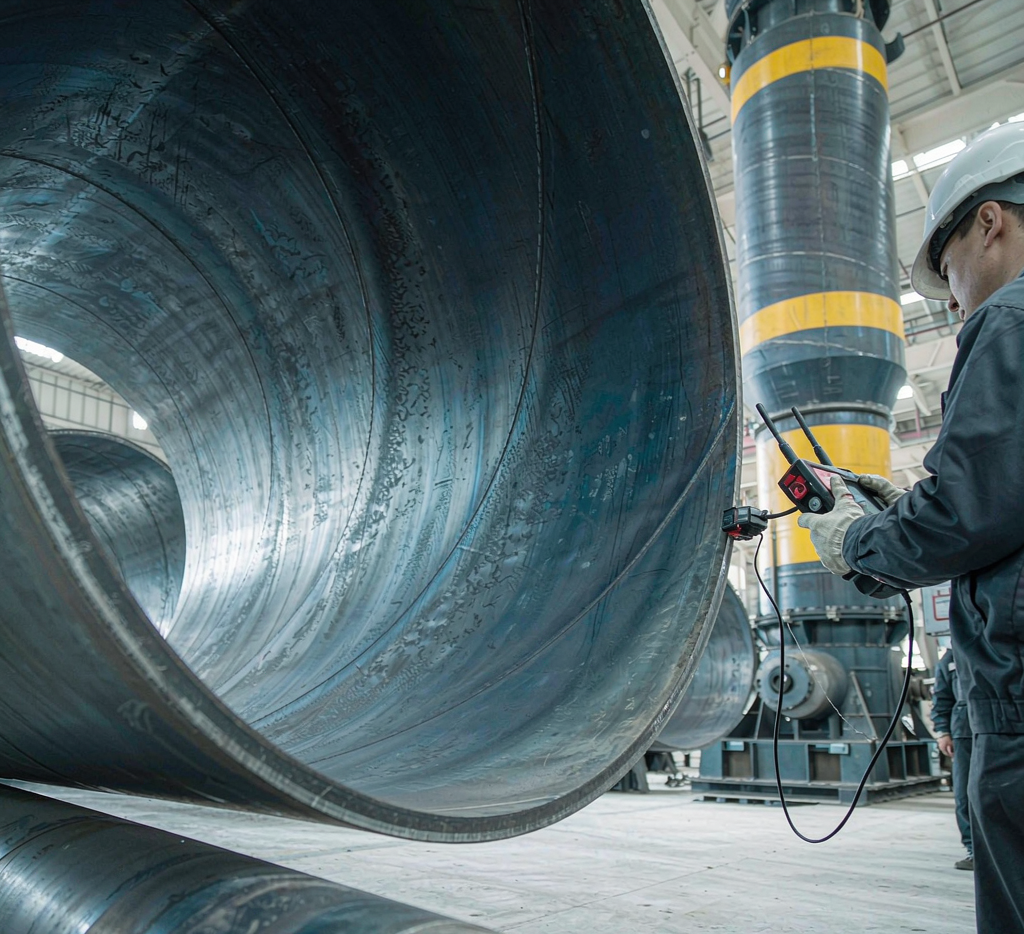
SSAW pipe is formed from a coil that is fed at an angle into a forming stand, producing a continuous helical seam that runs around the pipe at the helix angle. SAW welding inside and outside the helix is performed simultaneously. Diameter range is 8 inch to 100 inch (200 to 2540 mm), wall thickness up to 25 mm typical. SSAW was historically low-cost for large-diameter water and piling pipe, but is increasingly replaced by LSAW for critical transmission service.
1.3 ERW (Electric Resistance Welded)
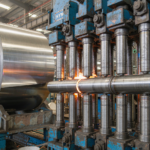
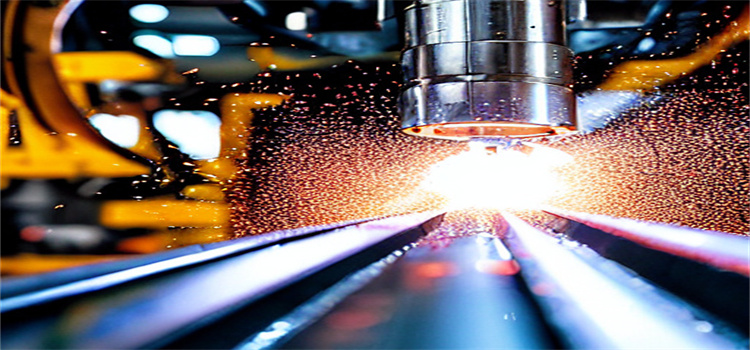
ERW pipe is formed from coil by passing it through a series of rollers into an oval shape, then squeezing the open edges together at the welding stand. Weld heat is generated by resistance heating (low-frequency AC, then later high-frequency 100 to 800 kHz). No filler metal is added – the seam is a forge weld of the parent metal. After welding, the seam is flash-trimmed and the weld zone normalized with an induction coil. Diameter range is 1/2 inch to 24 inch (NPS 15 to 600 mm), wall thickness typically up to 25 mm.
2. Weld Seam Geometry
| Feature | LSAW | SSAW | ERW |
|---|---|---|---|
| Seam orientation | Straight, parallel to axis | Helical, around the pipe | Straight, parallel to axis |
| Typical diameter (mm) | 400 to 1,500 | 200 to 2,540 | 15 to 600 |
| Typical wall thickness (mm) | 6 to 50 | 6 to 25 | 1.5 to 25 |
| Welding process | Submerged arc (SAW) inside and outside | Submerged arc (SAW) inside and outside | High-frequency induction (HFI) or contact resistance |
| Filler metal | Wire and flux | Wire and flux | None (forge weld) |
| NDE (in spec) | RT on seam, hydrostatic test | RT on seam, hydrostatic test | UT on seam, hydrostatic test |
3. Mechanical Property Comparison
| Property | LSAW | SSAW | ERW (HFI modern) |
|---|---|---|---|
| Yield strength range | 235 to 555 MPa | 235 to 415 MPa | 235 to 485 MPa |
| Tensile strength range | 415 to 760 MPa | 415 to 590 MPa | 415 to 620 MPa |
| Charpy @ 0 deg;C (typical) | 60 to 200 J | 40 to 120 J | 50 to 180 J (modern HFI) |
| Seam ductility | High (multi-pass weld) | Moderate (helical stress) | Moderate (narrow HAZ) |
| Anisotropy | Low (longitudinal seam straight) | High (helix concentrates stress) | Low (longitudinal seam straight) |
4. End Use Applications
4.1 LSAW Applications
- API 5L line pipe for onshore and offshore oil and gas transmission (X42 to X80)
- Long-distance water trunk lines and intake/discharge lines
- Process pipe for refineries, fertilizer and LNG plants
- Heavy-wall structural pipe for jackets, piling and risers
- Pipe larger than 24 inch diameter with required impact toughness
4.2 SSAW Applications
- Large-diameter water transmission mains (24 to 100 inch)
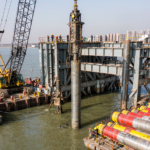
- Piling pipe for bridges, ports and offshore structures
- Low-pressure hydrocarbon gathering lines
- Drainage and culvert pipe for highway and rail projects
- Structural pipe where the helical seam is not a fitness issue
4.3 ERW Applications
- API 5L line pipe for lower-pressure distribution (X42 to X70)
- ASTM A53 / A135 / A795 pipe for plumbing, fire protection, mechanical service
- Scaffolding tube, fence pipe, mechanical tubing
- Heat exchanger and boiler tubes (small diameter, thin wall)
- Structural pipe for building frames and agricultural machinery
5. Size Range and Dimensional Tolerance
LSAW is dominant in the 16 to 60 inch (DN 400 to 1500) diameter range with heavy wall thickness, where the parent plate can be hot-formed and submerged-arc welded. SSAW covers the very-large-diameter space (24 to 100 inch) at moderate wall thickness where it is more economical than LSAW. ERW is dominant from 1/2 inch up to 24 inch at thinner walls where high productivity offset the wall-thickness limitation.
For dimensional tolerance, LSAW has the best control of outside diameter and roundness because the forming is done one plate at a time against a rigid press. SSAW has a wider OD tolerance because the helical winding allows for more accumulating variance. ERW has tight OD tolerance but the seam flash-trim can leave a visible witness line.
6. Cost and Lead Time
| Process | Relative cost (per ton) | Typical lead time | Stock availability |
|---|---|---|---|
| ERW (HFI) | Lowest (baseline) | 1 to 4 weeks (stock sizes) | Excellent at distributors |
| SSAW | 10 to 25 percent over ERW | 3 to 8 weeks (large diameters) | Limited, mostly custom |
| LSAW | 25 to 60 percent over ERW | 6 to 12 weeks (heavy wall) | Special order, project-based |
ERW is cheapest because the forming and welding happen simultaneously at high speed using coil feedstock. LSAW is most expensive because of the heavy plate forming, double-sided SAW and longer inspection cycle. SSAW falls in between because the helical winding uses cheaper coil but the SAW lines are slower.
7. Inspection and Testing
Modern HFI ERW pipe carries full-body ultrasonic testing of the seam plus hydrostatic test per API 5L, ASTM A53 or A135. LSAW and SSAW pipe carry 100 percent radiographic testing of the seam per ASME or API spec, plus hydrostatic test. All three processes support supplementary testing for sour service (HIC, SSC, hardness per NACE MR0175), low-temperature impact (Charpy to -46 deg;C), and fracture-mechanics testing (CTOD, DWTT) when specified.
8. Cross Reference Table
| LSAW | SSAW | ERW | Common spec |
|---|---|---|---|
| API 5L PSL1/PSL2 | API 5L PSL1 | API 5L PSL1/PSL2 | Line pipe |
| ASTM A671 (EFW) | ASTM A672 | ASTM A53 Type E/F | Pressure / process pipe |
| ASTM A691 | – | ASTM A135 | Structural / process |
| EN 10219 | EN 10219 | EN 10219, EN 10255 | Cold-formed structural |
9. Common Pitfalls in Selection
- Specifying LSAW where SSAW is sufficient. For large-diameter water or piling with no fitness-for-service impact test, SSAW delivers 60 to 70 percent of LSAW strength at lower cost.
- Specifying SSAW for sour-service hydrocarbon. The helical seam concentrates triaxial stress and is more prone to HIC. Use LSAW or seamless pipe for sour H2S service.
- Ordering ERW in place of seamless for high-temperature headers. The ERW seam can fail in creep at sustained temperature above 425 deg;C. Specify seamless pipe or LSAW with PWHT for these services.
- Forgetting hydrotest on ERW. Most ERW pipes are hydrotested, but for low-frequency ERW (older mills) the heat-affected zone may not be fully normalized. For critical service, specify HFI modern pipe (post-1980) with documented NDT.
10. Selection Decision Flow
- Diameter and pressure: Below 24 inch – ERW; 24 to 60 inch – LSAW or SSAW; above 60 inch – LSAW or SSAW.
- Fluid service: Hydrocarbon line pipe – LSAW or modern ERW. Water or piling – SSAW cost-effective.
- Sour / HIC service: LSAW (PSL2, Annex H) or seamless. Avoid SSAW.
- Low temperature: LSAW or ERW (both support -46 deg;C Charpy).
- High temperature: LSAW with PWHT or seamless. Avoid plain ERW above 425 deg;C.
- Cosmetic: ERW seam is visible at the inside surface; LSAW and SSAW seams are also inside-welded but ground for cosmetic surface.
11. Frequently Asked Questions
Q1: Is LSAW pipe stronger than ERW pipe?
Not in the parent metal. Both have similar tensile and yield when specified to the same API 5L grade. The difference is seam reliability – LSAW has a more forgiving weld geometry and a broader heat-affected zone, making it more tolerant of cyclic pressure and low-temperature service.
Q2: Can SSAW pipe be used for oil and gas transmission?
Yes for low-pressure gathering lines and pilot projects. Most major transmission operators use LSAW or ERW because SSAW pipes have shown higher rates of in-service seam failures from hydrogen-induced cracking, particularly in sour service.
Q3: What is the difference between LSAW and DSAW?
DSAW (Double Submerged Arc Welded) is the older US term for pipe that is welded with the SAW process on both inside and outside seams. The modern term LSAW refers to the same pipe but emphasizes the longitudinal seam direction.
Q4: Does ERW pipe need coating?
For buried service, ERW pipe is coated with FBE, 3LPE, or 3LPP per project spec. Internal corrosion is handled by chemical treatment or internal epoxy coating. Bare ERW pipe in storage requires the same rust-prevention care as any carbon steel pipe.
Q5: Which process is best for offshore platform pipe?
LSAW and seamless pipe dominate offshore. Modern HFI-ERW pipe is also used for low- and moderate-pressure service lines. SSAW is rare offshore because of the helical stress concentration.
12. Conclusion
ERW pipe is the cost-effective choice for small- to medium-diameter, low- to moderate-pressure service. LSAW pipe is the premium choice for heavy-wall, large-diameter, sour-service and critical transmission work. SSAW pipe is the economy choice for large-diameter water and piling. Match the process to the service requirement, not the project prestige. The right specification can save 20 to 50 percent of pipe cost with no loss of integrity.
13. Get a Quote from Huaxia-Steel
Huaxia-Steel supplies factory-direct LSAW, SSAW and ERW carbon steel pipe from API 5L PSL1 and PSL2 certified mills. Diameter 1/2 inch to 100 inch, wall thickness to 50 mm, with 3.1 / 3.2 MTC and FBE / 3LPE coating options. Send your project spec, design code and Charpy test requirement to our export team for a comparative quotation within 24 hours.