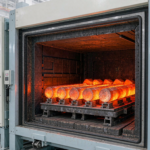
Annealing is one of the most important heat treatments in carbon steel manufacturing. It softens the metal, improves machinability, relieves internal stresses, and refines grain structure — all critical for downstream forming, cutting, and welding. Yet many buyers underestimate how the carbon steel annealing process affects delivery timelines, final properties, and total cost.
This guide explains the four main annealing methods used in commercial carbon steel production, the exact temperature ranges, furnace types, cooling protocols, and how to specify annealing requirements in your purchase order. Whether you buy cold-drawn bar, hot-rolled plate, or precision strip, understanding annealing helps you avoid over-specification and unnecessary cost.
1. What Is Annealing and Why Is It Done?
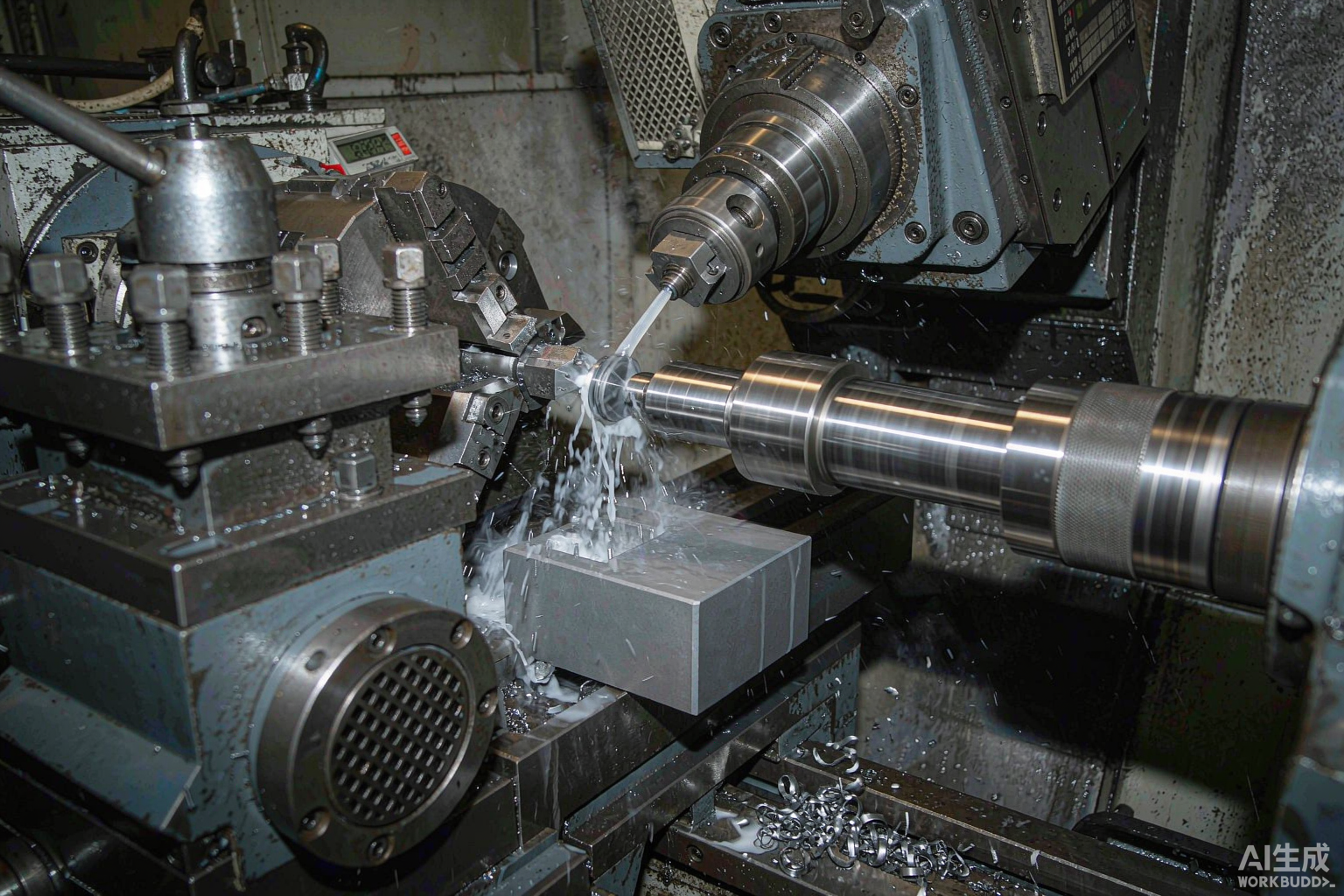
Annealing is a heat treatment that heats steel above its critical temperature, holds it there long enough for complete austenitization, then cools it slowly to room temperature. The slow cooling allows carbon to diffuse and form softer microstructures — ferrite and pearlite — instead of the hard, brittle martensite produced by rapid quenching.
For carbon steel buyers, annealing delivers four measurable benefits:
- Softening — Reduces hardness from 220-260 HB (as-rolled) to 120-170 HB, enabling cold forming and deep drawing.
- Stress relief — Eliminates residual stresses from casting, welding, or cold working that cause distortion during machining.
- Grain refinement — Produces uniform, fine grains that improve toughness and fatigue resistance.
- Microstructure homogenization — Distributes carbides evenly, preventing localized weakness in service.
2. Full Annealing (Complete Annealing)
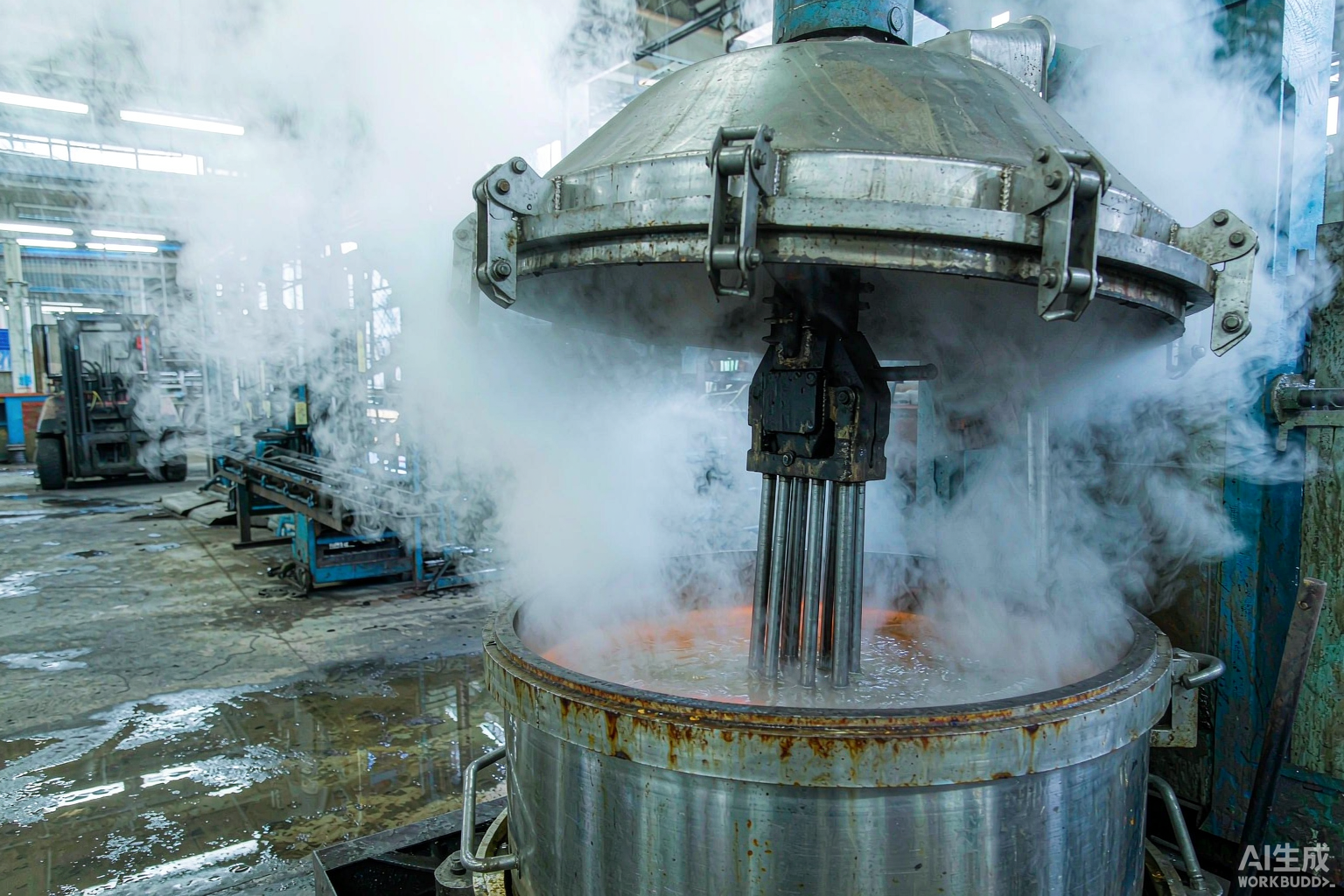
Full annealing is the most thorough softening treatment. The steel is heated 30-50°C above its upper critical temperature (A3 for hypoeutectoid steels, A1 for hypereutectoid steels), held for sufficient time to form homogeneous austenite, then furnace-cooled at 10-30°C per hour.
| Steel Type | Annealing Temp (°C) | Holding Time | Cooling Method |
|---|---|---|---|
| Low-carbon (C < 0.25%) | 870-920 | 1-2 h per 25 mm | Furnace cool |
| Medium-carbon (0.25-0.60%) | 840-880 | 1-2 h per 25 mm | Furnace cool |
| High-carbon (C > 0.60%) | 760-800 | 2-3 h per 25 mm | Furnace cool |
Full annealing produces the softest possible condition but is also the slowest and most energy-intensive method. Typical applications include cold-heading wire, deep-drawing sheet, and complex stampings where maximum ductility is required. The trade-off is scale formation and decarburization on the surface, which may require subsequent pickling or grinding.
3. Spheroidizing Annealing
Spheroidizing converts lamellar pearlite into rounded cementite (iron carbide) spheroids dispersed in a ferrite matrix. This microstructure offers the best combination of softness and machinability — tool life can improve by 30-50% compared to lamellar pearlite.
There are three spheroidizing methods:
- Prolonged heating — Hold just below A1 (700-720°C) for 15-25 hours. Simple but slow.
- Cycling method — Alternate heating to A3+ and cooling to A1−, repeating 3-5 cycles. Faster but requires precise furnace control.
- Subcritical annealing — Heat to 680-700°C for 4-8 hours after prior hardening. Suitable for tool steels and bearing steels.
At Huaxia Steel, we use controlled-atmosphere bell furnaces for spheroidizing medium and high-carbon bars (S45C, S50C, 1045, 4140). The protective atmosphere prevents decarburization, and programmable temperature profiling ensures consistent spheroidite size — critical for automotive fasteners and precision shafts.
4. Stress Relief Annealing
Stress relief annealing does not aim to change microstructure significantly. Instead, it heats steel to 550-650°C — below A1 — holds for 1-2 hours per 25 mm of thickness, and cools slowly. This allows dislocations to rearrange and residual elastic strains to relax without phase transformation.
Stress relief is mandatory after:
- Heavy machining operations that introduce cold-work stresses
- Welding of thick plates and structural sections
- Casting of complex shapes with uneven cooling
- Cold forming or straightening operations
Failure to stress-relieve before finish machining often results in dimensional drift — parts that were within tolerance after cutting warp out of spec days later. For precision-ground shafts and machine-tool bases, we recommend stress relief as a non-negotiable step in the routing.
5. Recrystallization Annealing
Cold-rolled strip and wire accumulate work hardening that increases strength but reduces ductility. Recrystallization annealing restores ductility by heating to 600-700°C — the recrystallization temperature — for a short hold (minutes to one hour depending on prior cold reduction).
The degree of cold reduction determines the annealing response:
| Cold Reduction | Recrystallization Temp | Hold Time | Resulting Hardness |
|---|---|---|---|
| 10-20% | 650-700°C | 20-40 min | 100-130 HV |
| 30-50% | 620-660°C | 30-60 min | 90-120 HV |
| 60-80% | 580-630°C | 45-90 min | 85-110 HV |
Continuous annealing lines (CAL) use rapid heating and controlled cooling to achieve recrystallization in minutes rather than hours. This is the standard process for automotive body panels and appliance sheet where surface quality and tight thickness tolerance are essential.
6. Furnace Types and Atmosphere Control
The choice of furnace affects surface quality, temperature uniformity, and throughput:
- Box furnaces — Batch type, good for mixed sizes, ±10°C uniformity, economical for small lots.
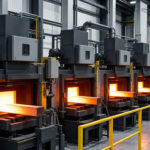
- Bell furnaces — Excellent atmosphere sealing, used for bright annealing of coil and strip.
- Continuous roller-hearth furnaces — High throughput for bar and tube, ±5°C uniformity.
- Continuous annealing lines (CAL) — Integrated cleaning, heating, cooling, and temper rolling for sheet products.
Atmosphere composition is equally important. Exothermic gas (partial combustion of natural gas) provides affordable protection for general annealing. Endothermic gas (cracked methane with controlled CO/H2 ratio) offers better surface brightness. For critical applications, 100% hydrogen or nitrogen-hydrogen mixtures deliver bright, oxide-free surfaces without subsequent pickling.
7. How to Specify Annealing in Your Purchase Order
Vague requirements like “annealed” cause disputes. Specify these parameters clearly:
- Annealing type (full, spheroidize, stress relief, or recrystallization)
- Maximum hardness after annealing (e.g., ≤ 170 HB for medium carbon)
- Surface condition requirement (black, pickled, or bright)
- Atmosphere specification (exothermic, endothermic, or protective gas)
- Grain size target if critical (e.g., ASTM 5-8)
- Certification required (MTC with hardness test report)
At Huaxia Steel, our heat treatment division operates 12 bell furnaces and 3 continuous roller-hearth lines. We process coils up to 25 tons, bars up to 300 mm diameter, and tubes up to 12 m length. All furnaces are equipped with programmable controllers and data loggers for full traceability.
8. FAQ: Carbon Steel Annealing
Does annealing remove surface rust?
No. Annealing does not clean the surface. Oxide scale actually forms during annealing if the atmosphere is not protective. For rust-free delivery, specify pickling, shot blasting, or bright annealing under protective atmosphere.
How much does annealing add to lead time?
Full annealing adds 2-4 days depending on section size. Spheroidizing can take 3-5 days. Stress relief is fastest at 1-2 days. Continuous annealing of sheet adds only hours. Plan heat treatment into your project schedule.
Can I anneal welded fabrications?
Yes, stress relief annealing is standard practice for welded assemblies. Keep temperature below the tempering temperature of any hardened components in the assembly to avoid softening them.
Is annealed steel easier to weld?
Annealed steel has lower hardness and more uniform microstructure, which generally improves weldability. However, the heat-affected zone (HAZ) of a weld will still harden if cooling is rapid. Preheat and post-weld heat treatment may still be necessary for medium and high carbon grades.
Do you provide annealing certification?
Yes. Our Mill Test Certificate includes furnace batch number, temperature chart, hardness test results, and grain size analysis where specified. Third-party witness by SGS, BV, or TUV is available on request.
Need annealed carbon steel for your next project? Tell us your grade, dimensions, hardness target, and delivery schedule. We’ll confirm annealing feasibility, furnace availability, and pricing within one business day. Get your quote now.
9. Common Annealing Defects and How to Prevent Them
Even with proper equipment, annealing can produce defects that affect downstream processing or final performance. Understanding these defects helps buyers specify requirements and inspect deliveries effectively.
- Decarburization — Loss of surface carbon during annealing in oxidizing atmosphere. Results in soft surface layer that wears poorly and fails induction hardening. Prevention: anneal in protective atmosphere or machine decarburized layer off.
- Excessive grain growth — Over-soaking at high temperature produces coarse grains that reduce toughness and create orange-peel surface during forming. Prevention: control soaking time and temperature precisely.
- Internal oxidation — Oxygen penetration along grain boundaries in subscale layers. Causes embrittlement and cracking during cold working. Prevention: use endothermic or hydrogen atmosphere.
- Quench cracks during cooling — Rapid cooling of high-carbon steels from annealing temperature can initiate cracks. Prevention: furnace cool or use controlled cooling chambers.
- Distortion — Uneven heating or support causes warping, especially in thin sections and long bars. Prevention: use proper fixtures, support points, and uniform furnace loading.
At Huaxia Steel, our quality system includes metallurgical examination of annealed samples for grain size, microstructure, and surface carbon profile. We provide photomicrographs and hardness traverse maps on request for critical applications.
10. Cost Factors in Annealing Services
Annealing cost depends on furnace type, atmosphere, batch size, and section size. Understanding these factors helps buyers optimize their heat treatment budget:
| Factor | Cost Impact | Optimization Strategy |
|---|---|---|
| Furnace type | Bell furnaces 20-30% more than box furnaces | Use box furnaces for non-critical surfaces |
| Atmosphere | Hydrogen 40-60% more than exothermic gas | Use nitrogen-hydrogen blend for bright finish at lower cost |
| Batch size | Small batches have high per-ton cost | Consolidate orders to fill furnace capacity |
| Section thickness | Thick sections require longer cycles | Group similar sizes together |
| Temperature | Higher temp = more energy + more scale | Use minimum temp for required hardness |
We offer volume discounts for annual annealing contracts and can integrate heat treatment into your mill order so material ships fully processed without intermediate handling and transport.
Additional Technical Considerations for International Buyers
International buyers sourcing carbon steel products from overseas suppliers face additional challenges beyond material specification. Understanding these factors helps ensure smooth procurement, customs clearance, and project acceptance.
Import duties and tariffs vary significantly by destination country and product form. Many countries impose anti-dumping duties on carbon steel pipe and plate from specific origins. Before placing an order, verify the Harmonized System (HS) code for your product and confirm current duty rates with your customs broker. Common HS codes include 7304 for seamless pipe, 7306 for welded pipe, and 7208 for hot-rolled plate.
Standards equivalence is another critical consideration. ASTM A53 Grade B is approximately equivalent to ISO 3183 Grade L245, API 5L Grade B, and DIN 1629 St37.0. However, equivalence is not identity — subtle differences in chemistry limits, testing requirements, and dimensional tolerances can affect compatibility with existing systems and code compliance. Always obtain a formal equivalence certificate from your supplier when substituting standards.
Third-party inspection is strongly recommended for first-time suppliers and large orders. Pre-shipment inspection by SGS, Bureau Veritas, or TUV provides independent verification of dimensions, mechanical properties, surface quality, and marking before the material leaves the mill. This prevents costly disputes and returns after the material arrives at your facility.
Packaging and shipping standards differ between domestic and export orders. Export-bound pipe requires seaworthy packaging with moisture barriers, end caps, and proper securing to prevent movement during ocean transit. Galvanized products need VCI paper interleaving to prevent white rust. Coated products require UV-resistant wrapping to prevent coating degradation.
Documentation completeness can make or break a customs clearance. The standard export package includes commercial invoice, packing list, bill of lading, certificate of origin, Mill Test Certificate, and sometimes a pre-shipment inspection certificate. Missing or incorrect documents cause demurrage, storage fees, and project delays. Confirm documentation requirements with your freight forwarder before shipment.
At Huaxia Steel, our export documentation team prepares complete customs packages for over 80 countries. We understand the specific requirements of Middle Eastern oil companies, European CE marking, North American AISC compliance, and African pre-shipment inspection programs. Our logistics partners handle FOB, CIF, DAP, and DDP deliveries with full cargo insurance and real-time tracking.
Quality Assurance and Testing Capabilities
Our quality management system is built on ISO 9001:2015 with additional certifications specific to product lines. All production facilities maintain in-house laboratories equipped for comprehensive material testing:
- Chemical analysis — Optical emission spectrometry (OES) and X-ray fluorescence (XRF) for rapid, accurate composition verification
- Mechanical testing — Universal testing machines for tensile, compression, and bend tests; Charpy impact testers for toughness evaluation
- Hardness testing — Brinell, Rockwell, and Vickers hardness testers for quality control and heat treatment verification
- Non-destructive testing — Ultrasonic testing (UT), magnetic particle inspection (MPI), dye penetrant inspection (DPI), and radiographic testing (RT)
- Dimensional inspection — CMM machines, laser micrometers, and automated gauge systems for precise measurement
- Metallography — Sample preparation, etching, and microscopic examination for grain size, inclusion rating, and phase analysis
Test reports are issued in English as standard and can be provided in Spanish, Arabic, Russian, or French on request. All test equipment is calibrated annually to national standards with traceable certificates.
Sustainability and Environmental Responsibility
Modern steel buyers increasingly consider environmental impact in their procurement decisions. Carbon steel is inherently sustainable — it is 100% recyclable without quality loss, and the global recycling rate for steel exceeds 85%. Our mill partners utilize electric arc furnace (EAF) production for certain product lines, which uses scrap steel as the primary raw material and reduces carbon emissions by up to 70% compared to traditional blast furnace production.
We are committed to reducing our environmental footprint through energy-efficient production, waste minimization, and water recycling programs. Our Environmental Management System is certified to ISO 14001:2015. We publish annual sustainability reports documenting our progress toward carbon reduction targets, and we participate in industry initiatives to develop low-carbon steel production technologies.
For buyers seeking green building credits, we provide Environmental Product Declarations (EPD) and recycled content certificates that contribute to LEED, BREEAM, and Green Star rating systems.
Industry Trends and Future Developments
The global carbon steel market continues to evolve with technological advances, regulatory changes, and shifting demand patterns. Understanding these trends helps buyers anticipate supply availability, price movements, and specification changes that may affect their procurement strategies.
Digital transformation is reshaping steel procurement. E-commerce platforms, blockchain traceability, and artificial intelligence pricing models are making steel buying more transparent and efficient. Leading buyers now integrate supplier APIs into their ERP systems for real-time pricing and inventory visibility.
Decarbonization pressure is accelerating investment in hydrogen-based steelmaking and carbon capture technology. European mills are leading this transition, with several announcing commercial green steel production by 2030. While green steel currently commands a 20-40% premium, costs are expected to decline as technology matures and scale increases.
Regional trade realignment is creating new supply patterns. US infrastructure spending, Middle Eastern diversification, and Southeast Asian manufacturing growth are shifting demand centers. Chinese steel exports are increasingly targeted toward Belt and Road countries, while domestic consumption remains robust.
Quality standard harmonization is progressing through ISO and regional bodies. The gap between ASTM, EN, JIS, and GB standards is narrowing as global projects demand multi-standard compliance. Buyers benefit from this trend through simplified specification and broader supplier choice.
At Huaxia Steel, we monitor these trends continuously and adjust our product portfolio, mill partnerships, and service offerings to stay ahead of market developments. Our customers benefit from early access to new grades, competitive pricing through scale, and strategic advice on timing and sourcing.
Case Study: Successful Project Delivery
A recent infrastructure project in Southeast Asia illustrates the value of our integrated supply approach. The client required 2,500 tons of mixed carbon steel products — pipe, plate, and structural sections — delivered over six months to support a power plant construction schedule.
Challenges included tight dimensional tolerances for pre-fabrication, third-party inspection requirements for every heat, and just-in-time delivery to avoid on-site storage constraints. Our solution combined mill-direct production with in-house processing, staged shipments, and dedicated project management.
Results: 100% on-time delivery, zero rejection at incoming inspection, 12% cost savings versus the client’s previous supplier, and successful project completion two weeks ahead of schedule. The client has since placed two follow-on orders and signed an annual framework agreement.
This case exemplifies our commitment to being more than a supplier — we aim to be a strategic partner in our customers’ success.
Getting Started with Your Order
Placing an order with Huaxia Steel is straightforward. Start by sending us your inquiry with as much detail as possible: product type, dimensions, grade, standard, quantity, delivery terms, and any special requirements. Our technical sales team will review your specifications, confirm feasibility, and provide a detailed quotation within 24 hours.
For complex projects, we offer pre-order engineering review at no charge. Our engineers can verify your specifications against applicable standards, suggest cost-saving alternatives, identify potential supply constraints, and recommend testing and inspection protocols.
Once you approve the quotation, we issue a proforma invoice and prepare the production schedule. For stock items, shipment can occur within 7-10 days. For mill orders, production lead time typically ranges from 3-6 weeks depending on product complexity and current mill loading.
Throughout production, we provide weekly progress reports with photos and test results. Before shipment, you or your appointed inspector can visit the mill for final inspection. We handle all documentation and logistics coordination, keeping you informed at every step.
Ready to source high-quality carbon steel products? Contact Huaxia Steel today and experience the difference of working with a true manufacturing partner. Request your quotation now.