GB/T 700 Q235 Steel: Grades, Properties and Export Guide
Q235 is the most-traded carbon structural steel grade in China and one of the most-traded in the world, specified by GB/T 700 — the Chinese national standard for carbon structural steels. Yet export buyers routinely encounter confusion around it: which of the four quality grades (A, B, C, D) a quote refers to, whether impact testing is mandatory, how Q235 maps to ASTM A36 or JIS SS400, and why an MTC that looks complete can still fail a European or North American review. This guide decodes GB/T 700 for international buyers: the grade system and its letter logic, full chemistry and mechanical tables, equivalence handling with ASTM/JIS/EN standards, product forms and delivery conditions, and a practical ordering checklist that prevents the most common Q235 documentation rejections.
How the GB/T 700 Grade System Works
The designation encodes everything. “Q” stands for the Chinese character Qu (yield), the number is the minimum yield strength in MPa at room temperature (for thickness ≤ 16 mm), and the letter is the quality grade with increasingly strict impact test and chemistry requirements:
Q235A: no impact test required; sulfur and phosphorus limits loosest (≤ 0.050 / 0.045). The commodity grade.
Q235B: Charpy V-notch at 20 °C (room temperature), ≥ 27 J; S/P ≤ 0.045 / 0.040. The workhorse export grade.
Q235C: CVN at 0 °C, ≥ 27 J; S/P ≤ 0.040 / 0.040.
Q235D: CVN at −20 °C, ≥ 27 J; S/P ≤ 0.035 / 0.035, plus tighter residual rules. The low-temperature grade.
The standard also permits a quality-level suffix for deoxidation practice: F (rimming steel, hot-rolled coils only), b (semi-killed), Z (killed — the default, usually omitted), TZ (special killed). A full designation reads “Q235B·Z”, though trade practice shortens it to Q235B. When a buyer’s specification says simply “Q235,” always confirm the letter grade and the deoxidation mode in writing — the four letters differ in price, test scope and fitness for welded structural work.
Chemical Composition Requirements
Element
Q235A
Q235B
Q235C
Q235D
C max
0.22
0.20 (0.22 for certain products)
0.17
0.17
Si max
0.35
0.35
0.35
0.35
Mn max
1.40
1.40
1.40
1.40
S max
0.050
0.045
0.040
0.035
P max
0.045
0.040
0.040
0.035
Deoxidation
F, b, Z
b, Z
Z
TZ
Note the carbon ceiling differences: C grade and D grade pull carbon down to 0.17 percent for weldability at low temperature, which is why Q235C/D heat chemistry is often the easiest to pass when a project reviews certificates against EN S235 limits. Q235A heats, by contrast, sometimes run carbon near the ceiling with no impact data — the combination that fails European reviews most often.
Mechanical Properties
GB/T 700 specifies yield, tensile, elongation and bend performance, with yield values decreasing as thickness increases — the same structure used by every major structural standard:
Thickness / diameter
Yield min (MPa)
Tensile (MPa)
Elongation min
≤ 16 mm
235
370–500
26%
> 16–40 mm
225
370–500
26%
> 40–60 mm
215
370–500
25%
> 60–100 mm
215
370–500
25%
> 100–150 mm
195
370–500
24%
> 150–200 mm
185
370–500
24%
The tensile window 370–500 MPa is wide compared with, say, S235JR’s 360–510, and elongation is generous. The 180° bend test (mandrel diameter 0.5–2 × thickness depending on grade and direction) is a standard requirement for plate and strip — buyers comparing Q235 MTCs against ASTM certificates should expect to see bend results, which A36 certificates often omit.
Q235 vs ASTM A36 vs JIS SS400 vs EN S235JR
The four grades are close cousins and frequently substituted, but each equivalence has seams:
Attribute
Q235B (GB/T 700)
A36 (ASTM)
SS400 (JIS G3101)
S235JR (EN 10025-2)
Yield min (thin)
235 MPa
250 MPa
245 MPa
235 MPa
Tensile
370–500
450–600 (plates)
400–510
360–510
Impact test
CVN 27 J at 20 °C mandatory
none mandatory
none mandatory
CVN 27 J at 20 °C mandatory
C max
0.20
0.25–0.29 by thickness
0.23 (per JIS tables)
0.22 max
S/P discipline
0.045/0.040
0.040/0.040 (shape)
0.050/0.050
0.045/0.045
Equivalent claim
Q235B ↔ S235JR is the tightest pair; Q235A ↔ SS400 is the loose commodity pair; A36 sits between on strength but lacks mandatory CVN
The practical substitution rules used in export trade: Q235B can normally cover SS400 and S235JR on certificates when the impact temperature and chemistry match the receiving standard’s limits — always verified heat by heat, not assumed. A36 can frequently cover Q235A on strength, but Q235B’s mandatory CVN cannot be claimed from an A36 certificate unless the heat was tested. Q235D, tested at −20 °C, covers S235J0 territory (0 °C) and approaches S235J2 (−20 °C) with tighter chemistry; formal J2 equivalence needs the full EN chemistry check.
Product Forms and Delivery Conditions
Q235 is produced in nearly every carbon steel form, and export volume concentrates in these:
Hot-rolled plate and sheet (GB/T 3274): 3–200 mm plate, the structural workhorse for fabrication and machinery bases.
Hot-rolled strip and coil (GB/T 3522 class products): 1.2–25 mm, for roll forming and pipe making.
Reinforcement bar is a separate standard (GB/T 1499.2, HRB400 etc.) — “Q235 rebar” is a legacy concept; modern rebar orders name HRB grades, and buyers should not accept Q235 certified rebar against a rebar specification.
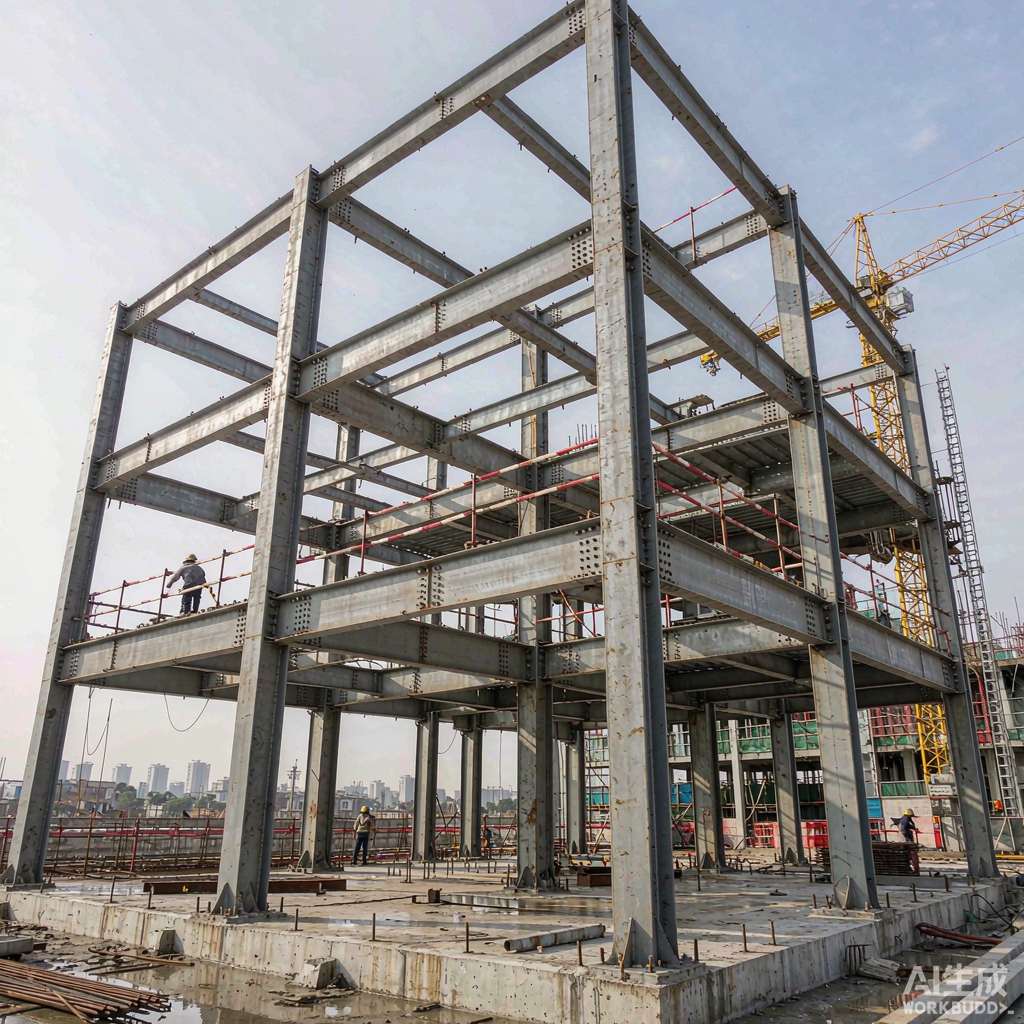
Structural sections: angles, channels, I-beams, H-beams to GB/T 706 — the standard grade for these sections in China.
Round bar to GB/T 702 for general fabrication — distinct from machine-structural bar under GB/T 699 (45#) or GB/T 3077 (42CrMo).
Pipe: Q235B strip is the standard feedstock for ERW pipe certified to GB/T 3091 and is widely dual-certified to ASTM A53 Gr B territory.
Delivery is normally hot-rolled with mill scale; controlled-rolled or normalized delivery can be ordered where impact properties at thickness need help. Surface per GB/T 14977 planishing limits; straightness, camber and flatness tolerances follow each product standard.
Ordering Checklist for Export Buyers
Name the letter grade explicitly — “Q235B” not “Q235” — and the deoxidation mode where relevant (killed Z for welding).
Name the product standard with it: “Q235B plate per GB/T 3274” or “Q235B H-beam per GB/T 706” — grade standard plus product standard together define the full requirement.
State the equivalence target if the project certifies to another standard: “Q235B dual-certified to EN 10025-2 S235JR, CVN 27 J at RT, EN chemistry limits apply.”
Confirm impact test frequency — GB/T 700 ties test lots to weight and batch rules that differ from EN sampling; for projects with strict sampling rules, state the required test frequency explicitly.
Check CEV for welding-heavy fabrication: Q235’s carbon equivalent sits around 0.30–0.38 — comfortably weldable without preheat to about 20 mm in ambient conditions.
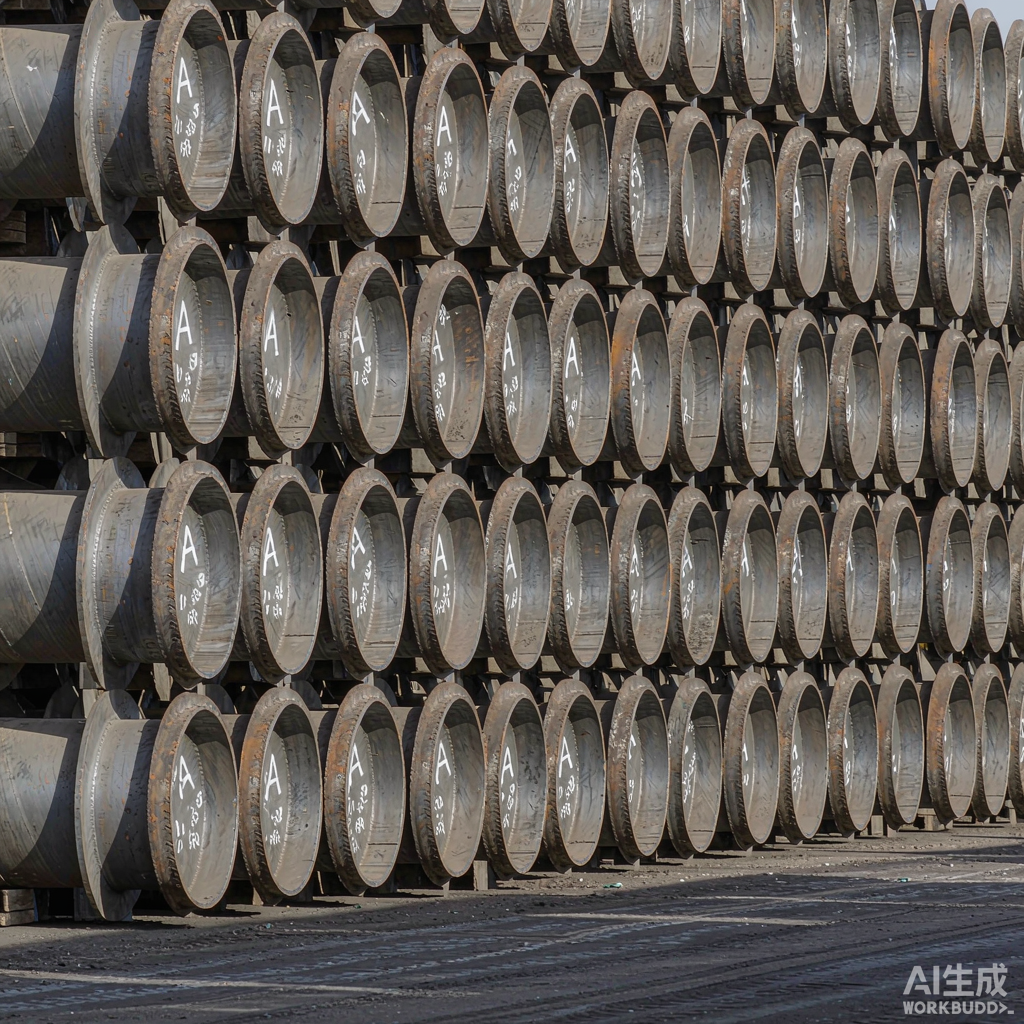
Verify marking: grade letter must appear on heat-stamped or paint-marked goods matching the MTC heat numbers.
The most frequent rejection in export Q235 trading is a certificate that says “Q235” with no letter, no impact result and no product standard — acceptable for Q235A commodity strip, worthless for a welded structural order in Europe. Thirty seconds of specification writing prevents the entire failure class.
Quality and Documentation Practice
Standard documentation on export shipments includes the EN 10204-style mill test certificate (chemical ladle analysis, mechanical results, heat numbers), and reputable mills will issue 3.1 certificates with stamping and third-party inspection (SGS/BV/TUV) on request. For galvanized or painted downstream products, coating weight and adhesion certificates ride on separate product standards. Buyers running third-party inspection on Q235 shipments should include in the inspection scope: heat number traceability against MTCs, visual surface and edge condition, dimensional sampling against the product standard’s tolerance tables, and witness of any re-test.
Welding and Fabrication Notes for Q235
Q235’s moderate carbon content gives it a carbon equivalent (CEV per IIW) typically in the 0.30–0.40 range depending on the heat’s carbon and manganese — comfortably below the 0.45 threshold where preheat becomes mandatory. In practice this means:
Sections to 20 mm in ambient conditions: weld with standard low-hydrogen electrodes (E43/E50 series, J422/J427 in Chinese designation) or solid wire GMAW without preheat, observing normal interpass cleanliness.
Sections above 20–25 mm, or ambient below 5 °C: apply a modest preheat of 80–100 °C and slow cool — cheap insurance against hydrogen cracking in restrained joints.
Filler selection: match the 370–500 MPa tensile class — J422/E4303-class fillers are the traditional choice; E50-class fillers are used where joints feed into higher-strength assemblies.
Galvanized Q235 components: weld zinc-coated material with enhanced ventilation and slightly wider bevels; zinc vapor is both a health and porosity issue.
Hot-dip galvanizing after fabrication: Q235 fabrications galvanize cleanly; vent and drain holes follow the fabricator’s galvanizing guide, and the mild chemistry avoids the silicon bands (0.05–0.30%) that cause thick, brittle galvanized layers in some steels — confirm the heat’s silicon on the MTC for critical appearances.
Because Q235A carries no impact test and looser sulfur, fabricators welding into code work should insist on Q235B minimum for welded structural members — the price difference per ton is marginal and the weld-metal toughness margin is real. Many Chinese design offices simply write “Q235B” into drawings by default for exactly this reason.
Tolerances, Sampling and Marking Rules Buyers Should Know
GB/T 700 defines the steel; the product standard defines the tolerances, sampling and marking — and the pairs differ in details that show up during inspection:
diameter tolerances h13–h15 class, out-of-round, length random bands
Strip / coil
GB/T 3522 family
crown and wedge tolerances, edge condition, coil build
ERW pipe feedstock
GB/T 3091
weld zone verification, hydro or NDT, zinc coating class on GI pipe
Sampling rules under GB/T 700 tie impact and tensile tests to batch weight groups — a heat may produce multiple test lots depending on product mass and thickness, which differs from EN’s rolling-piece logic. For projects with prescriptive sampling (some international codes require test per specific tonnage), state the rule in the purchase order and let the mill’s lab schedule it; post-hoc disputes over test frequency are unwinnable after goods ship. Marking follows the grade-plus-heat convention: steel brands and heat numbers are paint-stamped, tagged or banded, and professional export lots keep heat separation through bundling so the MTC maps cleanly to physical goods during inspection.
Price Logic and Cost Drivers in Q235 Trading
Q235 pricing is a benchmark conversation: the grade trades as a commodity against published mill indices, and most export quotes are built as index-plus-extras. The drivers that move your per-ton number, in order of magnitude, are:
Product form and processing depth: hot-rolled coil is the base; plate adds cutting and leveling; sections add rolling complexity. The same Q235B chemistry can vary 10–20 percent between forms.
Quality letter: Q235A→B adds impact testing cost; B→C/D adds chemistry discipline (tighter S/P, lower carbon) — typically a 1–3 percent step per letter.
Dual certification: EN-compliant testing usually adds 1–2 percent and is worth every point when the receiving spec demands it.
Dimension specials: non-stock thicknesses, widths and lengths carry rolling minimums; small tonnage of odd sizes can double the effective price per ton — consolidate with standard sizes where the design allows.
Logistics share: on heavy structural goods, ocean freight and inland haulage can be 15–25 percent of landed cost — quote FOB vs CFR vs CIF against your own freight program before comparing mill numbers.
Timing matters as much as structure. Q235 indices move with iron ore and billet markets, and a monthly swing of 3–5 percent is normal. For program buyers, the standard tools are index-linked pricing formulas written into supply agreements, or staged bookings against forecast consumption with fixed-price windows. For spot buyers, the practical rule is to quote and decide within the same week — quotes that sit for a month in a rising market produce disputes, not savings.
One more commercial note: the cheapest Q235 offer is frequently a Q235A offer in disguise. When comparing mills, normalize the quotes to the same letter grade and test scope first — a B-grade quote that looks 2 percent higher than an A-grade quote is actually cheaper once the downstream impact-test requirement is priced in.
Q235 Across the Supply Chain: Who Uses Which Form
Understanding where Q235 sits in the trading chain helps buyers pick the right supplier type. Steel mills sell Q235 in mill-form tonnage: coil, plate, sections and bar in production lengths, with pricing tied to indices and minimum order quantities in the tens of tons. Service centers and slitters add value by cutting to width and length, holding stock ranges and breaking bulk to project quantities — the right source for mixed bills of material on one delivery. Fabricators and traders complete the chain with downstream processing: drilling, shot blasting, priming and cut-to-shape parts, which shifts the buyer’s labor to the origin side and reduces destination workshop cost. Each step adds margin but reduces the buyer’s own processing and inventory burden, and the professional approach is to map which steps your own workshop actually performs economically before deciding where in the chain to buy.
For export programs specifically, the decision usually lands between mill-direct tonnage (best price per ton, longest lead time, strict MOQ) and service-center consolidation (2–5 percent premium, faster mixed shipments, single documentation set). Container-based buyers ordering less than a full mill heat almost always land better with consolidation — and the documentation discipline of a consolidator who ships export lots weekly is usually stronger than a mill’s first-time export desk.
Whichever link in the chain you buy from, the certificate discipline travels with the goods: insist that every processing step — slitting, cutting, blasting, galvanizing — is noted on the paperwork against the originating heat numbers, so the final MTC set still traces cleanly to the steel mill.
FAQ
Is Q235 the same as A36?
Close but not identical. Q235B yields 235 MPa minimum versus A36’s 250, but A36’s tensile range and carbon ceiling differ, and A36 carries no mandatory impact test. Q235B’s mandatory 27 J at room temperature actually makes it the stricter certificate. Substitution works in both directions only with the receiving specification’s checks verified on the MTC.
Which Q235 grade should I order for welded structures?
Q235B as the baseline for general welded work in temperate climates; Q235C where service drops to 0 °C or below and Q235D for −20 °C service or when the project targets S235JR/J0 equivalence with tighter sulfur. Q235A is acceptable only for non-welded or lightly loaded commodity uses where no impact requirement exists.
Can Q235 be exported with an EN 10025-2 S235JR certificate?
Yes, as a dual-certified product: the mill tests the heat against EN chemistry and impact rules and names both standards on the 3.1 certificate. The reliability depends on the mill’s internal chemistry discipline, so request sample MTCs before booking, and check that P/S limits and the impact temperature actually meet the EN row, not just the GB row.
What is the difference between Q235 and Q345/Q355?
Q235 is a carbon structural steel (~0.20 C, no microalloying, 235 MPa yield); Q345/Q355 are high-strength low-alloy steels under GB/T 1591 with niobium/vanadium microalloying and 345/355 MPa minimum yield. Price differs by roughly 5–10 percent and weldability procedures differ. Choose Q235 for standard structures where A36/SS400/S235 would be specified, and Q355 where S355-class strength is needed.
Does Q235 come in cold-rolled form?
Thin cold-rolled sheet and strip is commonly sold as SPCC/DC01-type commercial quality rather than Q235, though Q235-designated cold-rolled products exist for specific applications. For structural thicknesses, hot-rolled is the norm; for CR sheet orders, specify by the CR standard and verify the mechanical class separately.
Need Q235B/C/D plates, sections, bars or pipes with dual-standard MTCs (GB/T 700 + EN 10025-2 / ASTM) and third-party inspection? Send your grade, thickness range and destination port — Huaxia-Steel replies with stock, per-ton pricing and sample MTCs within 24 hours.
If you require further information about our metal sheet products or architectural projects, please don’t hesitate to leave your contact details and message here.
Our team of experts will respond within 24 hours to continue the discussion and provide you with any additional information you requires.