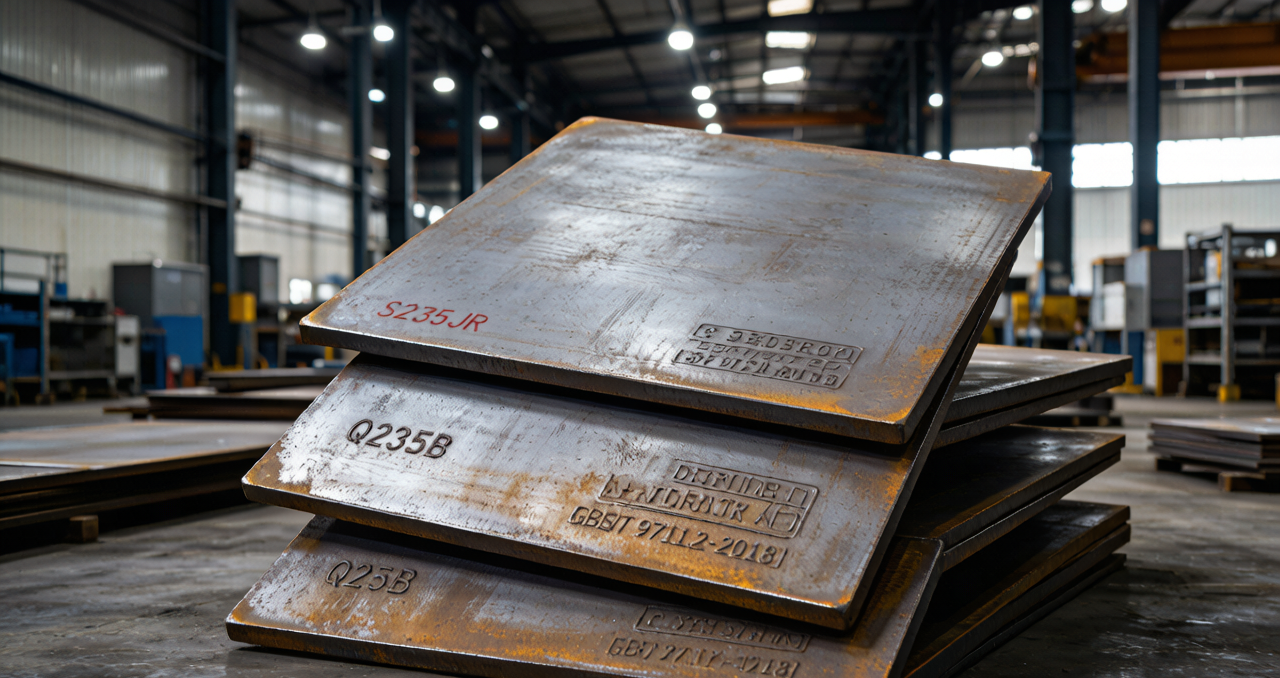
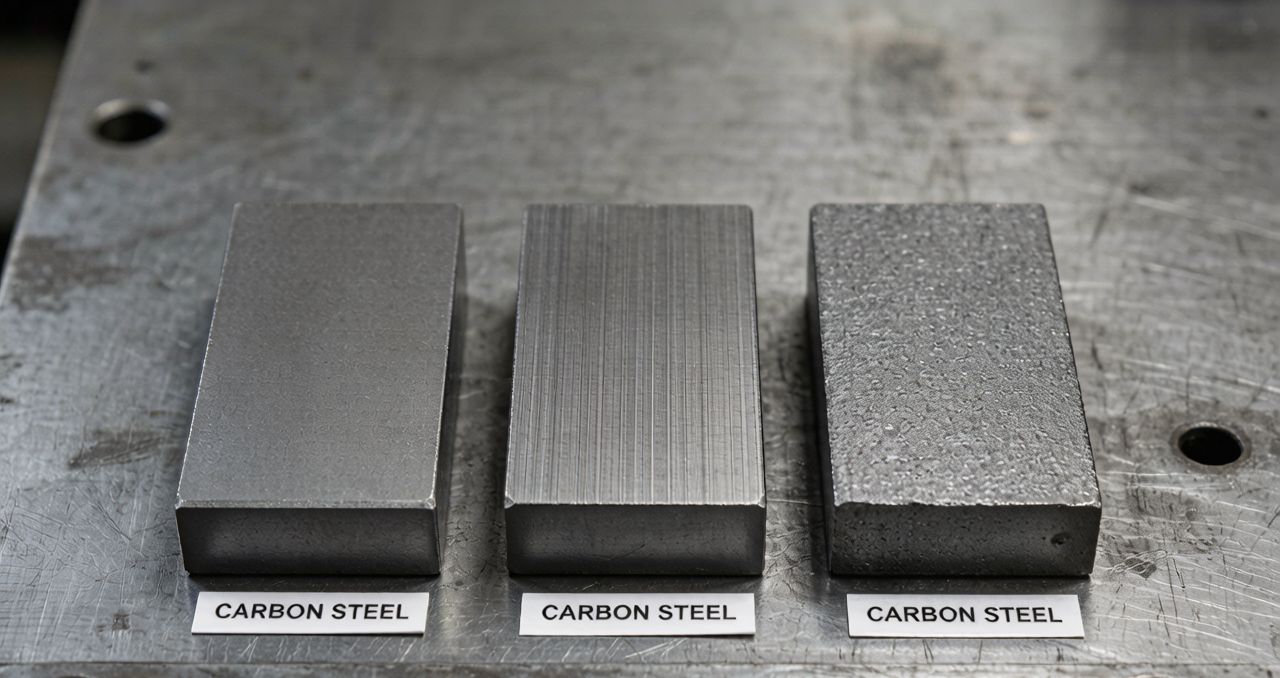
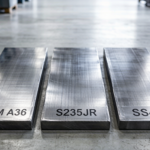
Q235 vs S235JR vs ASTM A36 Carbon Steel Plate Comparison
Specifying structural carbon steel plate for an international project usually comes down to three workhorses: China GB/T Q235, European EN 10025 S235JR, and ASTM A36 from the United States. They look interchangeable on the boilerplate side, yet the chemistry, mechanical margin, and certification chain differ in ways that can rewrite your weld procedure, your MTC acceptance criteria, and your delivery schedule. This guide lines them up side by side so procurement, QA, and the design office all read off the same page.
Why These Three Grades Keep Showing Up in Your RFQ
Q235 is the backbone of the Chinese domestic construction supply chain and the default export grade for Chinese mills. S235JR is the European standard non-alloy structural steel, almost always called out for projects designed to Eurocode 3. ASTM A36 has been the long-standing North American workhorse and still dominates in U.S. EPC, oil and gas, and bridge specifications. Any mill that sells hot-rolled plate into more than one continent has to keep all three chemistries and rolling schedules on file. When a buyer asks “can you quote A36 equivalent in Q235 or S235JR?”, the answer is yes, with caveats that come straight from the chemistry and toughness numbers below.
Side-by-Side Specification Table
Attribute
GB/T Q235 (B/C)
EN 10025-2 S235JR
ASTM A36
Issuing standard
GB/T 700-2006
EN 10025-2:2019
ASTM A36/A36M-19
Yield strength (min, <=16 mm)
235 MPa
235 MPa
250 MPa
Tensile strength
370-500 MPa
360-510 MPa
400-550 MPa
Elongation (min)
26 % (Q235B)
26 %
23 %
Charpy impact
27 J @ 20 deg C (Q235B)
27 J @ 20 deg C (JR)
by agreement @ -20 deg C
C (max, <= 40 mm)
0.20 % (Q235B); 0.17 % (Q235C)
0.17 %
0.25 % heat; 0.29 % product
Mn (max)
1.40 %
1.40 %
0.80-1.20 %
P (max)
0.045 (B); 0.040 (C)
0.035
0.040
S (max)
0.050 (B); 0.040 (C)
0.035
0.050
Supply condition
hot-rolled, normalized on request
hot-rolled, normalized on request (+N)
hot-rolled, as-rolled
MTC level
EN 10204 3.1
EN 10204 3.1 or 3.2
ASTM mill test report
Reading the table line by line: the three grades are within 3 % of each other on yield strength. The visible spread is in the upper tensile ceiling (A36 goes to 550 MPa while Q235 and S235JR cap at 500-510 MPa) and in the carbon ceiling. A36 allows 0.25 % C in the heat analysis, which is why it carries thicker plate better in heavy-section welds but limits its cold formability versus Q235C.
Chemistry Deep Dive: What the Numbers Actually Buy You
Carbon and weldability
Q235B caps carbon at 0.20 %, Q235C at 0.17 %, and S235JR caps it at 0.17 %. A36 allows up to 0.25 % in the heat. That delta compounds through the carbon equivalent. At 16 mm thickness, the CEV lands at roughly 0.30 for Q235C/S235JR and 0.36 for A36. Above 25 mm, A36 climbs further because the manganese range tightens while thickness increases. The practical consequence is that A36 plate above 50 mm generally wants a preheat pass for SAW welding; Q235 and S235JR rarely do.
Manganese as the silent strength booster
A36 holds a tight manganese window of 0.80-1.20 %. That range pushes strength into the 400-550 MPa band while still keeping CEV manageable. Q235 and S235JR allow manganese up to 1.40 %. Most Chinese mills run 1.20-1.40 % for Q235B, while European mills typically run 0.80-1.20 % for S235JR. When you ask for “A36 in Q235” you are generally safe. When you ask for “Q235 in S235JR” you may need a tighter manganese cap written into the order.
Sulfur and shape control
A36’s 0.050 % sulfur ceiling is the highest of the three. Calcium treatment or rare-earth treatment can bring sulfur down to 0.010-0.015 % in any of the grades for through-thickness Z-direction requirements. S235JR and Q235C hold sulfur at less than 0.035-0.040 % by default, which is enough for most non-fabrication applications but should be specified if the plate will be cut and welded into thick T-joints or chord members.
Mechanical Properties Explained
Yield strength of 235 MPa is the explicit promise of Q235 and S235JR. A36’s 250 MPa minimum is a small upward nudge that comes from the manganese range, but the real-world difference in design margin is negligible. Tensile strength bands do diverge: A36 is a slightly stronger steel in absolute terms but also slightly less formable because of the higher carbon. Elongation on A36 is 23 % minimum, which sits below the 26 % of Q235B and S235JR. For cold forming (press brake, roller bending, deep draw), Q235B and S235JR give you more headroom.
Charpy impact: S235JR (the J designation) and Q235B (the B grade) both demand 27 J at 20 deg C on longitudinal specimens. A36 does not require impact testing by default; project specifications typically add 27 J @ -20 deg C or 20 J @ -40 deg C when the structure lives in a cold climate. If your RFQ does not call out impact but you are in a region with winter service below -10 deg C, add it. The mill cost penalty is small and the schedule impact is zero if requested up front.
Applications and Practical Equivalence
For general building frames, low-rise bridges, transmission towers, container frames, ship internal structure, and mild fabrication work, all three grades serve. The choice comes down to design code and documentary chain rather than performance.
GB/T Q235: PRC onshore and Southeast Asia, Africa, and South America destinations where EN/ASTM are not mandated. Also widely accepted as “commercial grade” structural steel for non-coded structures.
EN 10025-2 S235JR: EU member states, UK, Middle East EPC projects, and most EPC projects designed to Eurocode 3.
ASTM A36: USA, Canada, Mexico, Latin America EPC, and U.S.-flagged projects. Also the default for North American midstream oil and gas and shipbuilding subcontractors.
Welding Procedure Implications
A 235 MPa yield carbon steel plate welds easily. None of the three grades needs preheat up to about 20 mm thickness with conventional GMAW or SMAW. Above 25 mm, A36 benefits from 75-100 deg C preheat for the first pass to slow the cooling rate. Q235 and S235JR rarely require it. For SAW on heavy sections, all three should be welded with a PWHT review or hydrogen-controlled consumables to avoid HAZ hardness spikes.
S235JR -> same E7018 / ER70S-6; CE marking must accompany the consumables for EU projects.
Q235 -> E7018 / ER70S-6; for Chinese-supplied plate going to non-Chinese projects, request the consumables batch certificate alongside the plate MTC.
Ordering Tips That Save Money and Time
Always specify the standard by full name (for example “ASTM A36/A36M-19, supplementary requirement S58 for impact at -20 deg C, 27 J min”). Avoid shorthand like “A36 grade” or “Q235 structural”.
Tie the chemistry to the thickness range. For plate above 40 mm, cap carbon at 0.20 % and manganese at 1.40 % unless CEV is being formally controlled.
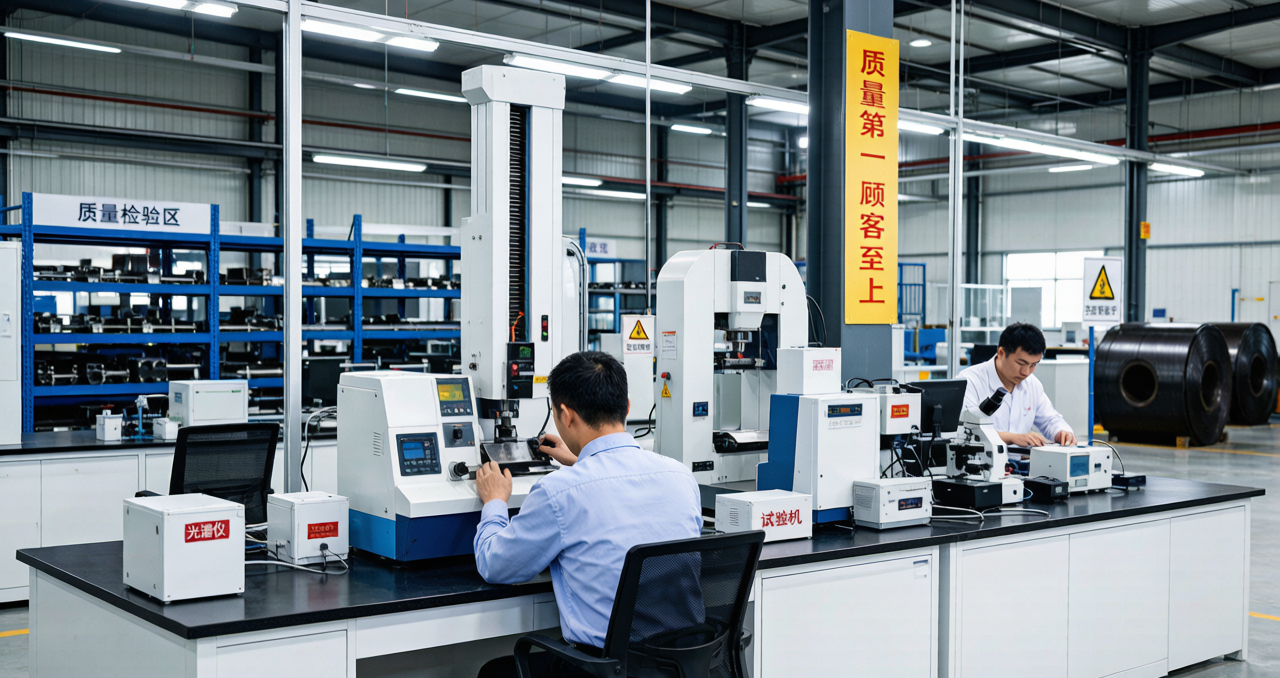
Decide on MTC level: EN 10204 3.1 mill certificate is the default; 3.2 with independent witness (BV, SGS, TUV) is required for some oil and gas and pressure-equipment buyers. A36 typically arrives as ASTM A6 supplementary test report.
Request normalized rolling (+N) for plate 16-50 mm if your design relies on isotropic through-thickness properties (Z15/Z25/Z35 testing).
Check whether your supplier can dual-cert: many mills roll Q235/S235JR/A36 interchangeably, so a single heat can meet more than one standard if specified at order entry.
Supply, Lead Time, and Mill Sourcing
For plate 3-80 mm in standard widths (1500, 1800, 2000, 2200, 2500 mm), all three grades run from 30 to 60 days FOB at most Chinese mills. A36 to U.S. destinations sits at the shorter end of that range because of established rolling schedules; S235JR to Europe is mid-range; Q235 to South America and Africa is often the shortest because of dense mill footprints. Plate above 80 mm in thickness adds 15-25 days for any grade.
At Huaxia-Steel we stock all three grades in 6-25 mm thicknesses in our Tianjin warehouse for ex-stock dispatch, with rolling-mill capacity behind that for thicker sizes and special chemistries. Share your project standard list at inquiry and we will return a heat-by-heat offer with the MTC level you need.
Frequently Asked Questions
Is Q235B the same as SS400?
No, but they are close. Q235B and SS400 both deliver 235 MPa minimum yield, but Q235B has the 27 J impact requirement that SS400 (a JIS G3101 commercial grade) does not. For structural duties with no impact requirement, SS400 is an acceptable substitute for Q235B. For duties that require impact testing, Q235B is the correct pick.
Can A36 be used in place of S235JR on a Eurocode project?
Technically yes, mechanically yes, but the design code path and the CE-marked supply chain typically push the engineer back to S235JR. If the design has been signed off using S235JR’s properties, you are safest shipping S235JR plate. If the design allows A36, that is fine too.
Does Q235C have the same welding behavior as S235JR?
Effectively yes. Both have carbon capped at 0.17 %, both qualify under the same CEV window, and both weld cleanly with conventional E7018-type consumables. They are commonly dual-certified at the mill.
What is the typical dimensional tolerance on all three?
Thickness tolerance is +/- 0.3 mm at 6 mm, +/- 0.5 mm at 10 mm, scaling to +/- 1.5 mm at 50 mm per EN 10029 / ASTM A6 / GB/T 709. Flatness is 1 % of width or better for all three. Mill will hold tighter tolerances on request.
Which grade is the cheapest?
In most Chinese mill order books, Q235B is the cheapest and A36 is the next. S235JR is on par with Q235B when the impact testing is already in the spec. Premium for switching grades is generally under 5 %.
Request a Quotation
Send your drawing, grade list, thickness, quantity, and the destination port to [email protected]. We will return a mill-direct offer covering Q235, S235JR, ASTM A36, or a dual-certified option, with EN 10204 3.1 or 3.2 certificates and the surface condition you specify (shot-blasted, primed, hot-rolled black, or pickled and oiled).
Explore more carbon steel plate and grade comparison guides on the Huaxia-Steel news hub.
Related Images
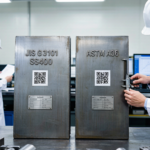
Figure 2: Q235 vs S235JR vs ASTM A36 Carbon Steel Plate ComparisonFigure 3: Q235 vs S235JR vs ASTM A36 Carbon Steel Plate Comparison
If you require further information about our metal sheet products or architectural projects, please don’t hesitate to leave your contact details and message here.
Our team of experts will respond within 24 hours to continue the discussion and provide you with any additional information you requires.