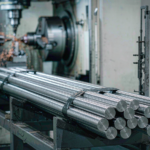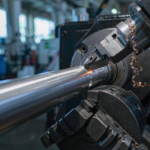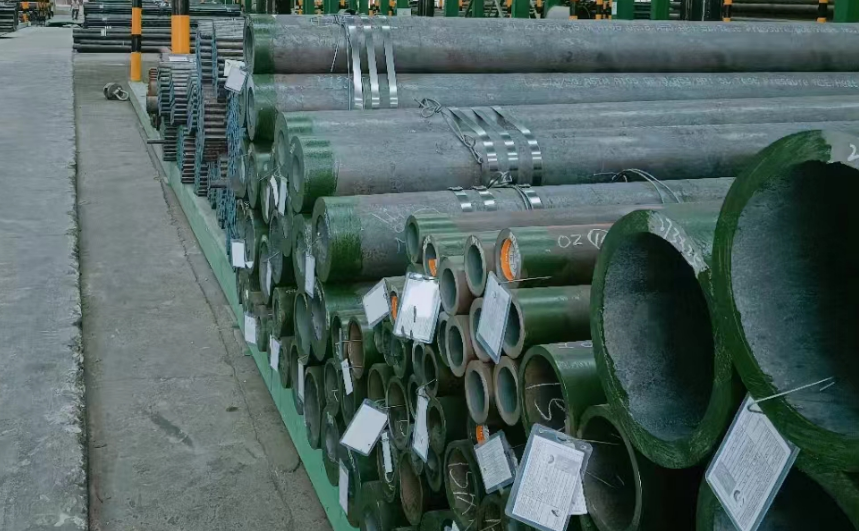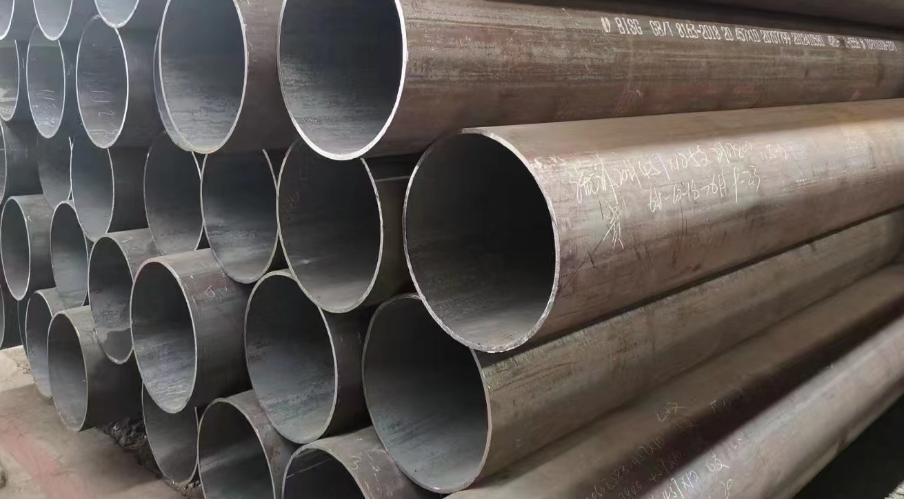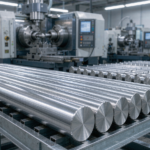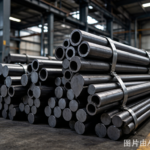
1215 cold drawn carbon steel bar is the free-machining low-carbon bar that replaced leaded 12L14 in most modern supply chains: a resulfurized, rephosphorized grade (AISI/SAE 1215, UNS G12150) engineered for maximum machining speed with clean chip breaking, delivering 30–40 percent faster turning than plain 1018 and thread-rolling quality that rivaled 12L14 without any lead content. Supplied cold drawn with h9/h10 diameter tolerance, straightened and cut-to-length, it is the default bar stock for high-volume turned parts — fittings, inserts, bushings, hydraulic hose couplings, fasteners and general screw-machine products — exported to machining houses worldwide. Huaxia-Steel supplies 1215 cold drawn bar factory direct: 3–100 mm diameter, tight tolerance and straightness, RoHS/lead-free compliance documentation, and EN 10204 3.1 MTCs on every heat.
Product Overview
1215 belongs to the resulfurized carbon steel family (the 12xx series): base chemistry of 0.09 percent carbon max with elevated sulfur (0.26–0.35 percent) and phosphorus (0.04–0.09 percent). The sulfur forms manganese sulfide inclusions that act as internal chip breakers and lubricate the cutting zone; the phosphorus hardens the ferrite slightly, sharpening the chip and improving surface finish. The result is a steel that machines at high surface speeds with predictable chip curl — the property that screw-machine houses pay the premium for — while remaining cold-formable enough for thread and knurl rolling, which 1215 performs nearly as well as the leaded grades it replaced.
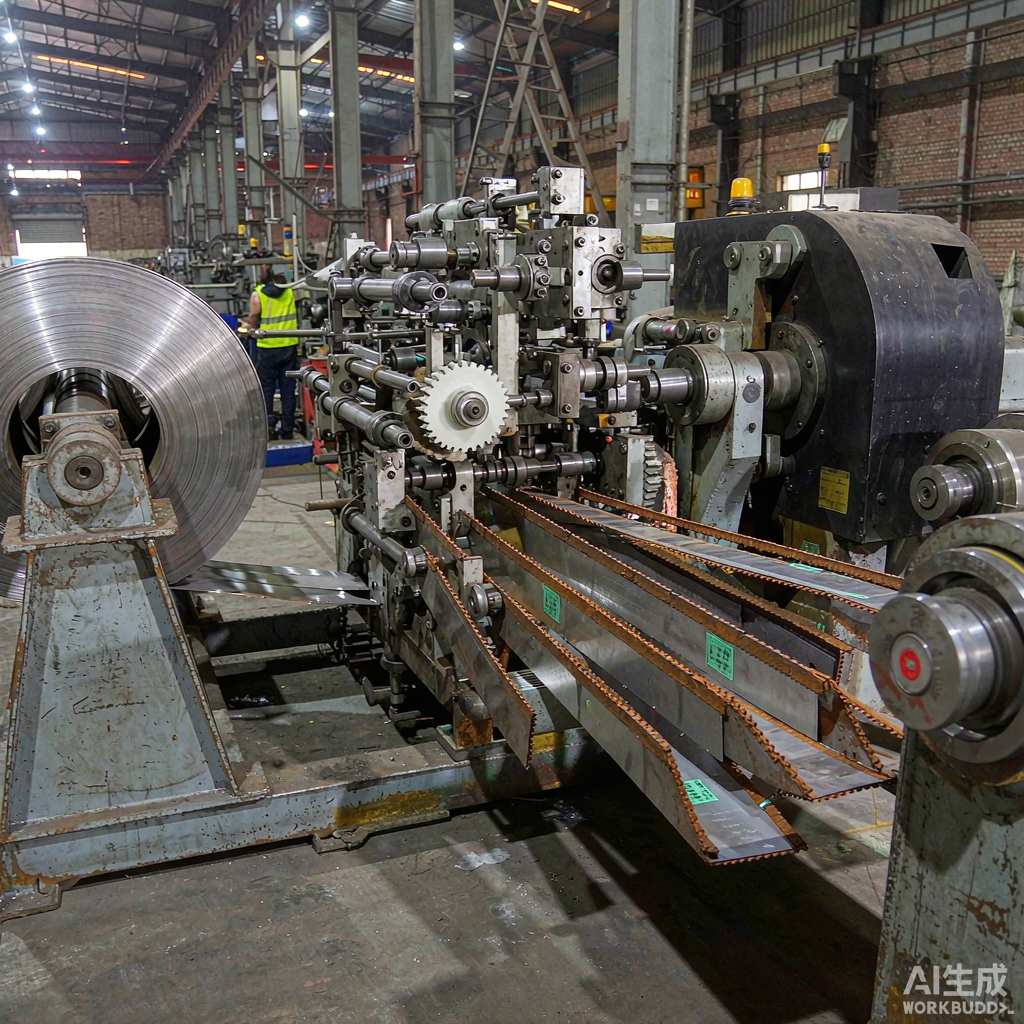
Cold drawing — pulling the hot-rolled coil or bar through a carbide die at room temperature — does three jobs at once: it sizes the bar to h9/h10-class tolerance straight off the die, raises yield strength 20–30 percent through strain hardening, and leaves the bright, scale-free surface that eliminates pre-machining cleaning. Combined with stress-relief annealing for straightness-critical parts, cold drawn 1215 arrives ready for the machine tool with no downstream preparation.
Specification Table
| Parameter | Range | Notes |
|---|---|---|
| Diameter (cold drawn) | 3 – 100 mm | hex 4–60 mm on request |
| Diameter tolerance | h9 / h10 / h11 by size and order | ISO h-tolerance; ±0.025 mm typical on 6–30 mm |
| Roundness | ≤ half the diameter tolerance | per ASTM A108 conventions |
| Straightness | ≤ 0.5 mm/m standard; ≤ 0.2 mm/m on request | straightened after drawing |
| Length | 3 – 6 m standard; cut blanks ±0.5 mm | exact cutting to part blanks available |
| Chemistry | C ≤ 0.09, Mn 0.75–1.05, S 0.26–0.35, P 0.04–0.09 | per SAE J403; lead-free |
| Yield strength (CD) | ≥ 320 MPa typical | strain-hardened by drawing |
| Tensile strength (CD) | ≥ 420 MPa typical (420–540 observed) | size-dependent |
| Elongation | ≥ 10% (CD) | higher in stress-relieved condition |
| Hardness (CD) | ≈ 140–180 HB | machining planning reference |
| Machinability rating | ≈ 130–136% of B1112 baseline (≈ 85–90% of 12L14) | the core commercial property |
| Certificates | EN 10204 3.1, RoHS/lead-free declaration | SVHC-free statement on request |
Available Grades and Close Relatives
| Grade | Key difference vs 1215 | When to specify instead |
|---|---|---|
| 12L14 | lead addition (0.15–0.35%) | only where lead is permitted; best machinability but RoHS-restricted |
| 1215 | — (this page) | default lead-free free-machining choice |
| 12SMn37 (EN 10087) | European free-cutting equivalent, 0.30–0.40 S | EU specification projects; near-identical behavior |
| SUM43 / SUM42 (JIS) | Japanese resulfurized grades | JIS drawing chains |
| 1018 cold drawn | no sulfur/phosphorus boost | where welding or cold forming dominates and machinability is secondary |
| 1144 | higher carbon + sulfur, stronger | stress-proof style parts needing more strength |
For buyers converting drawings from 12L14, 1215 is the standard substitution: thread rolling and knurling performance remain excellent, and machining cycle times rise only modestly (typically 3–8 percent) in exchange for full RoHS compliance. Where a drawing insists on 12L14 for a European customer, EN 10087 12SMn37 or a lead-declaration review usually resolves the conflict.
Manufacturing Standards
- SAE J403 — chemistry of SAE carbon steels including the 12xx resulfurized series; the grade-definition anchor.
- ASTM A108 — cold-drawn carbon steel bars: quality, tolerance and straightness conventions.
- EN 10087 — free-cutting steels: 12SMn37 and related grades for European chains.
- Delivery conditions: cold drawn (CD) standard; stress relieved (SR) for straightness-critical and post-machining distortion control; turnish-peel and ground options for premium surface.
Mill practice: hot-rolled rod is shot-blasted, drawn through carbide dies (single or double draft), straightened in rotary or two-roll straighteners, then cut. Lots are tested per heat for chemistry and per size-lot for mechanical results, with hardness verification typical.
Applications
- Screw-machine products: the core duty — high-volume turned fittings, spacers, bushings, inserts, hose couplings and specialty fasteners.
- Hydraulic and pneumatic components: fittings, adapters and valve bodies where surface finish and cycle time drive cost.
- Threaded fasteners: rolled-thread screws, studs and special bolts, taking advantage of 1215’s excellent thread-rolling behavior.
- Automotive internals: non-critical shafts, pins, clips and connector parts in high volumes.
- General machining: any small part where 1018 is too slow and strength requirements are moderate.
Quality Assurance
Every heat ships with ladle chemistry against SAE J403 limits, and every size-lot with tensile and hardness results in the as-drawn condition. Inclusion ratings and sulfide distribution are controlled at the steelmaking stage — the property that makes machinability repeatable — and bars are inspected for surface laps, die scratches and straightness before bundling. Gauge checks with go/no-go rings verify h-tolerance on sampled bars from each bundle. Lead-free compliance is documented by mill declaration; SVHC (REACH) statements are provided for European consignees. Third-party inspection is available, and sample coupons for your machining trials can ship with the order on request — the fastest way to validate cycle times before committing volume.
Packaging and Shipping
- Standard: straight bars in bundles of 500–1,500 kg, each bundle tagged with grade, size, heat and lot, and protected with rust-preventive paper.
- Precision upgrade: individual VCI sleeves or plastic tube packing for ground and peeled bars.
- Cut blanks: packed in inner cartons with dividers, ready for direct feed into customer bins.
- Container logistics: 3 m/6 m bars in 20 ft/40 ft with dunnage; anti-humidity desiccants in sealed containers for long voyages.
Stock diameters ship in 5–10 days; production draws and cut-blank programs run 20–40 days. Quotations are issued FOB, CFR or CIF with mixed-diameter consolidation in one shipment to reduce your freight per ton.
Choosing Tolerance and Condition for Your Parts
The tolerance class drives both price and machining strategy. h10 cold drawn suits parts machined all over, where the bar only needs to chuck and clean up. h9 pays off on parts where diameter surfaces remain as-drawn — pins, spacers, shaft sections running in bushings — saving a grinding pass. h8 and ground finishes are for bearing fits and hydraulic seals, and typically arrive turnish-peeled or ground rather than plain drawn. Matching the tolerance class to the drawing’s actual needs — rather than defaulting to the tightest — is the fastest cost reduction available on 1215 programs, and our quotation will price each option when you send the part drawings.
Machining Parameter Guidelines
The numbers below are starting points our machining customers converge on for 1215 cold drawn bar with coated carbide tooling — tune upward for rigid setups, downward for slender parts:
| Operation | Cutting speed | Feed / notes |
|---|---|---|
| Turning (CNMG carbide) | 250–350 m/min | 0.15–0.30 mm/rev; excellent chip control without coolant pressure |
| Drilling (solid carbide) | 90–130 m/min | 0.08–0.18 mm/rev; through-coolant recommended above 8×D |
| Tapping | 15–25 m/min | roll-form taps perform well; sulfur inclusions aid tapping |
| Thread rolling | — | excellent — the grade’s signature advantage over plain steels |
| Surface finish expectation | — | Ra 0.8–1.6 μm routine in single pass at high speed |
Compared with 1018, production shops report 30–40 percent cycle-time reductions on turned parts and dramatically better tool life at small diameters. Compared with 12L14, expect a modest 3–8 percent cycle penalty in exchange for the lead-free certificate — worth demonstrating on a trial coupon before committing the annual volume, which we supply on request with any quotation.
For high-volume screw-machine customers we support blanket orders with monthly releases against fixed drawings, holding tolerance and heat consistency across the program, and shipping matched cut blanks directly to your bar feed or bins.
Rust protection in transit is part of the product: bars ship oiled as standard, with VCI paper or sealed poly sleeves on h9 and ground finishes, and container desiccants on ocean voyages to humid destinations. Machinists unwrapping cartons six weeks after sailing should find the same bright surface that left the works.
FAQ
Is 1215 a good replacement for 12L14?
Yes — it is the industry-standard lead-free substitute. Machinability is slightly lower (roughly 85–90 percent of 12L14), thread rolling and knurling remain excellent, and the parts become RoHS-compliant. Most screw-machine shops convert with no tooling changes and only minor speed adjustments.
Can 1215 be welded?
Not reliably. The high sulfur causes hot-short weld metal and porous, cracking-prone welds — resulfurized free-machining grades in general are for machining, not fabrication. If a part needs welding, switch to 1018 or 1020 for the welded feature, or redesign so the free-machining component is mechanically joined.
What surface finish tolerance comes standard on cold drawn 1215?
Standard cold drawn bar arrives h10-class with drawn surface; h9 is the common order upgrade, and turnish-peel or ground finishes reach h8 with Ra below 1.6 μm. Confirm the tolerance class on the purchase order — it drives the die program and the price.
Does cold drawing affect the machinability?
Favorably. The work-hardened drawn structure chips more consistently than hot-rolled, and the scale-free bright surface reduces tool wear at entry. Excessive cold reduction would raise hardness, but standard 1215 drawing schedules are tuned specifically to keep the machinability rating high.
Need 1215 cold drawn bar in h9 tolerance, lead-free certified, with machinability trial coupons and 3.1 MTCs? Send your diameter list, tolerances and annual volume — Huaxia-Steel replies with stock, per-ton pricing and sample coupon availability within 24 hours.