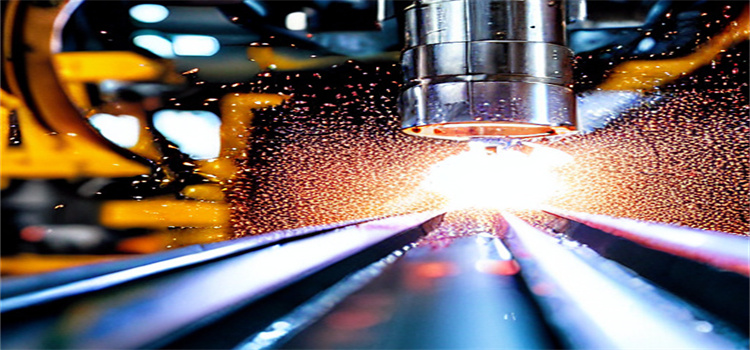
NM500 is a quenched and tempered abrasion-resistant steel plate with a nominal Brinell hardness of 500 HBW, used where carbon steel wears out too fast and where the cost of a shutdown exceeds the cost of the plate. It belongs to the Chinese GB/T 24186 wear-resistant plate series — NM400, NM450, NM500, NM550, NM600 — and sits in the same performance band as Hardox 500, Raex 500 and Quard 500. We supply NM500 from 4 mm to 100 mm in widths up to 2,500 mm and lengths up to 12,000 mm, with mill hardness testing across the full plate, ultrasonic inspection on request, and cutting and bending services for customers who need finished wear parts rather than flat plate.
Product Overview
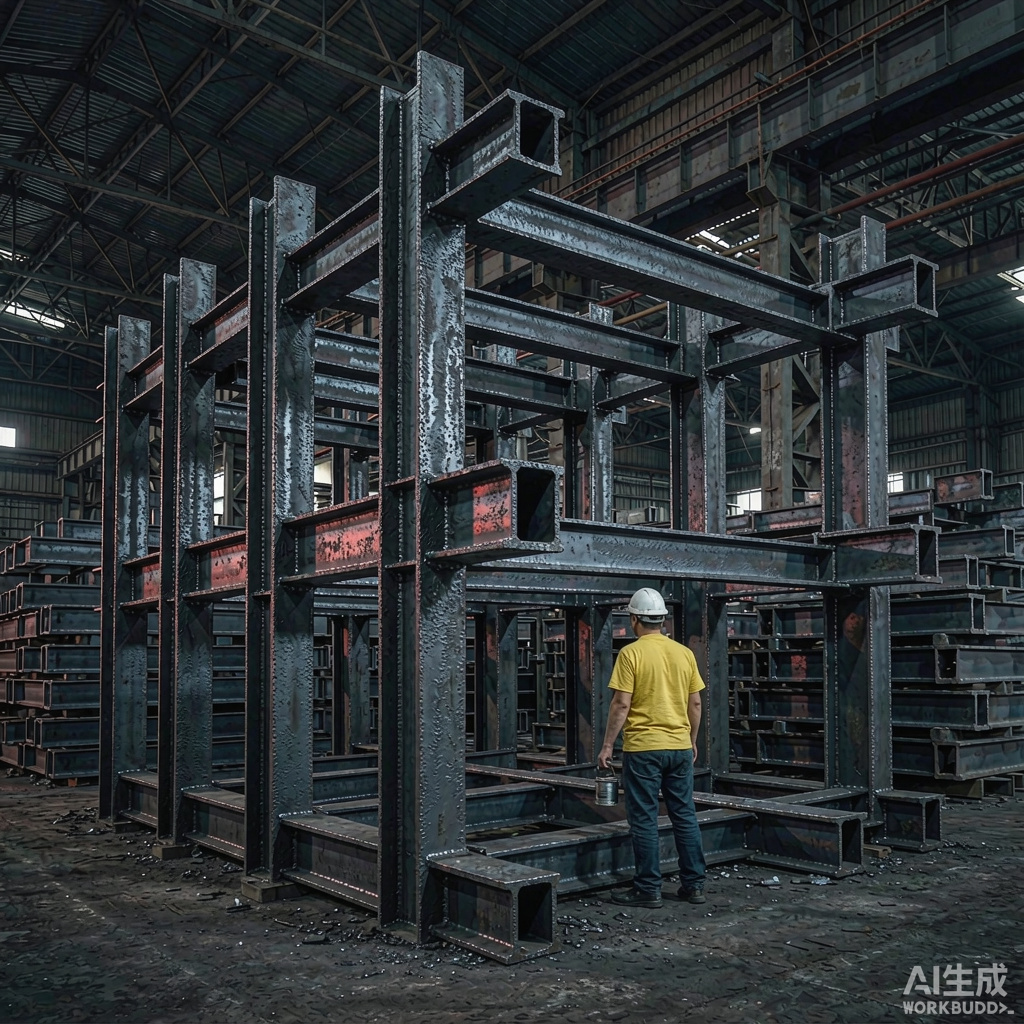
Wear-resistant plate works on a simple principle: hardness resists abrasion, and abrasion resistance scales roughly with hardness. Moving from a 200 HBW structural plate to a 500 HBW wear plate can extend the life of a chute liner, a bucket edge or a truck bed by a factor of four to six, which is why the material is specified even though it costs three to four times as much per tonne. The trade-off is ductility. NM500 is a martensitic steel with limited elongation and a hardness that makes it sensitive to heat input, so the way it is cut, formed and welded decides whether it performs as designed.
NM500 is produced by quenching and tempering: the plate is austenitized, water quenched to full martensite, then tempered at a low temperature to restore just enough toughness to survive impact loading without losing hardness. The result is a plate with a hardness gradient from surface to core that must be controlled within a defined band — too shallow and the plate wears through quickly once the hard skin is gone; too hard throughout and the plate cracks when a rock strikes it.
Specifications
| Parameter | Range / value |
|---|---|
| Standard | GB/T 24186-2009 (NM series) |
| Hardness | 470 – 530 HBW (nominal 500), tested per plate |
| Thickness | 4 – 100 mm (4–20 mm most common) |
| Width | 1,500 – 2,500 mm |
| Length | 3,000 – 12,000 mm, cut to length available |
| Tensile strength | ≥ 1,250 MPa typical |
| Yield strength | ≥ 950 MPa typical |
| Elongation | 8 – 12 % typical |
| Impact (Charpy V) | ≥ 24 J at −20 °C typical, thickness dependent |
| Surface | As-rolled, shot blasted, or primed |
| Flatness | ≤ 5 mm/m for thickness ≥ 8 mm |
| Delivery condition | Quenched and tempered (Q&T) |
Grade Comparison Within the NM Series
Choosing between the NM grades is a calculation, not a guess. The right question is how much wear life the application needs before the next planned shutdown, and what the plate costs per hour of service. The table below gives the working ranges we quote most often.
| Grade | Hardness (HBW) | Relative wear life | Formability | Typical use |
|---|---|---|---|---|
| NM400 | 360 – 430 | 1.0 (baseline) | Good, bendable to tight radius | Chutes, hoppers, liners |
| NM450 | 410 – 480 | 1.15 – 1.25 | Moderate | Bucket lips, truck beds |
| NM500 | 470 – 530 | 1.3 – 1.5 | Limited; bend radius ≥ 4t | Crusher liners, heavy impact wear |
| NM550 | 520 – 580 | 1.5 – 1.7 | Poor; cutting only | Transfer points, high-abrasion chutes |
| NM600 | 570 – 640 | 1.7 – 2.0 | Not recommended | Extreme sliding abrasion, bolt-on liners |
Two practical warnings. First, hardness alone does not predict wear life: a 500 HBW plate with a coarse microstructure can wear faster than a 450 HBW plate with a fine one, which is why a mill certificate showing only surface hardness is not enough. Second, above 500 HBW the plate becomes difficult to weld without preheat and difficult to machine at all; if the wear part needs holes or threads, specify a softer grade and use a bolt-on hardened liner instead.
Fabrication: Cutting, Forming and Welding
- Cutting. Plasma or waterjet cutting is preferred. Oxy-fuel cutting is acceptable but requires preheat above 20 mm thickness, and the cut edge hardens and may need grinding before welding.
- Drilling. Carbide drills with low speed and high feed, rigid setup and copious coolant. Laser-cut holes are usually cheaper than drilled holes above 12 mm thickness.
- Forming. Minimum bend radius is approximately four times thickness for NM500, with the bend line perpendicular to the rolling direction wherever possible. Cold bending above 12 mm should be replaced by hot forming with controlled temperature, followed by re-hardening if hardness is critical.
- Welding. Low hydrogen electrodes or flux-cored wire, stringer beads, heat input between 0.8 and 1.5 kJ/mm, interpass temperature below 200 °C. Preheat 100–150 °C for thickness above 20 mm. Never weld a wear plate with a high-hydrogen electrode and no preheat: the result is delayed cracking in the heat-affected zone, typically 24 to 48 hours after welding.
- Machining. Turning and milling are possible with ceramic or CBN tooling but rarely economic; design the part so that wear surfaces do not need machining.
Matching Plate to the Wear Mechanism
Wear plate selection fails most often because the buyer specified a hardness number without identifying the wear mechanism. Sliding abrasion — sand, ore or aggregate moving across a surface — responds almost linearly to hardness, so NM500 or NM550 is the right answer. Impact abrasion — rock falling onto a plate, or a bucket edge striking material — responds to toughness as much as hardness, and a 500 HBW plate in a high-impact position may crack and spall where a 400 HBW plate would merely dent. Three-body abrasion, where hard particles are trapped between two surfaces, behaves like sliding abrasion but at a much higher rate, and is the case where the extra hardness matters most.
The practical test is to look at the worn plate you are replacing. Polished, gouged surfaces with even material loss point to sliding abrasion, and a higher hardness grade will pay back. Cracks, spalling and craters point to impact, and the correct response is a lower hardness with higher toughness — or a hybrid design where a hard liner sits on a ductile backing plate. Deformation and bending before wear-through point to a structural problem, not a wear problem, and no wear plate will fix that.
Thickness selection follows the same logic. A thicker plate lasts longer in pure sliding wear, but it also raises the stiffness of the part, which increases impact stress. For chute liners, 8 to 12 mm NM500 is the common starting point; for truck beds and bucket floors, 10 to 16 mm; for crusher liners, 20 to 40 mm with a backing structure. Where the wear surface is replaceable, thinner plate replaced more often is usually cheaper than thick plate replaced rarely, because handling and downtime dominate the cost.
Inspecting NM500 on Arrival
Three checks decide whether a wear plate delivery is acceptable. Measure hardness with a portable Leeb or UCI hardness tester at five points per plate, after grinding the surface clean — mill scale reads soft and a reading taken on scale can be 50 HBW low. Check flatness with a straight edge; a plate that arrives bowed will not sit on the structure and will fail at the fixing points. Inspect the cut edges and plate corners for cracks, particularly if the plate was cut to size by the supplier, because a crack initiated at a sheared edge will propagate under load.
Ask for the through-thickness hardness report if the plate is thicker than 25 mm. A plate that reads 500 HBW at the surface and 350 HBW at mid-thickness has half the wear life it appears to have, and that difference is invisible without a section test. A mill that will not provide it is telling you something about its process control.
Applications
NM500 is specified for crusher feed and discharge liners, screen decks, excavator and loader bucket components, dump truck bodies and liners, conveyor transfer chutes, hopper and silo liners, shredder wear parts, bulldozer blades and mould boards, and general high-abrasion sliding contact. It is not the right choice for structural members, for parts that must absorb heavy impact without cracking, or for anything requiring extensive machining — those cases call for NM400, a structural grade, or a composite approach with a hardened wear insert on a ductile backing.
Quality Assurance
- Hardness tested on every plate at a defined pattern — typically nine points across the surface plus a section check on a sample per lot.
- Through-thickness hardness verified on request to confirm the hardened depth, not just the surface value.
- Ultrasonic inspection to detect laminations and inclusions, especially important for plate destined for impact-loaded parts.
- Dimensional and flatness inspection per plate, with results on the packing list.
- Chemical composition certified by heat, with carbon equivalent reported for welding procedure development.
- Third-party inspection and EN 10204 3.1 certification available; SGS or BV witness of hardness testing on request.
Packaging and Shipping
Wear plate ships as individual plates or in bundles, with interleaving to prevent surface scratching, edge protection on cut-to-size pieces, and lifting lugs or lifting holes as requested. Bundle weight is limited to suit the receiving crane, typically 3 to 5 tonnes. Timber used in packing is ISPM 15 heat-treated and marked, and cut-to-size parts are packed in plywood cases with VCI film for long sea voyages.
We ship FOB, CFR and CIF from Shanghai, Tianjin and Qingdao. Stock thicknesses of 6, 8, 10, 12, 16, 20 and 25 mm are usually available in 10–15 days; non-standard thicknesses and cut-to-size work take 25–35 days depending on the cutting programme. Mill certificates, hardness reports and loading photographs are issued with the documents.
Request a Quotation
Send us the thickness, size, quantity, hardness grade and any cutting or bending drawings, and we will confirm the availability, the hardness band we will certify and the fabrication lead time. If you are replacing Hardox 500 or Raex 500, tell us the original grade and we will propose the closest NM equivalent with the hardness range and impact values that match it. Email our export team for a quotation within one working day.