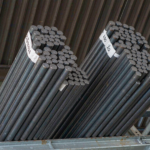
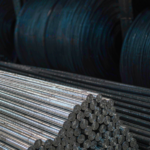
C45 and 1045 are the two medium carbon steels that dominate the 0.45 % carbon band, and they are the pair most often asked to substitute for each other on drawings that travel between Europe, America and Asia. C45 is the European grade under EN 10083 (historically DIN 17200, material number 1.0503); 1045 is the American SAE-AISI grade controlled through SAE J403 and delivered to bar or plate under ASTM A29 / A510 / A830. Both carry roughly 0.42–0.50 % carbon, both respond to quench and temper, both machine well, and both sit at the sweet spot between strength and cost for shafts, gears, axles, studs and general machine parts. Yet the two standards do not test the same things, and treating “C45 = 1045” as an identity rather than an equivalence causes real rejections — usually on chemistry windows, hardness guarantees or heat treatment certificates. This guide compares C45 vs 1045 line by line: chemistry, mechanical properties, heat treatment response, machinability, weldability, price logic and the paperwork each grade must carry, then closes with the substitution rules we apply on export orders every week.
Quick Answer: Can C45 Replace 1045, and Vice Versa?
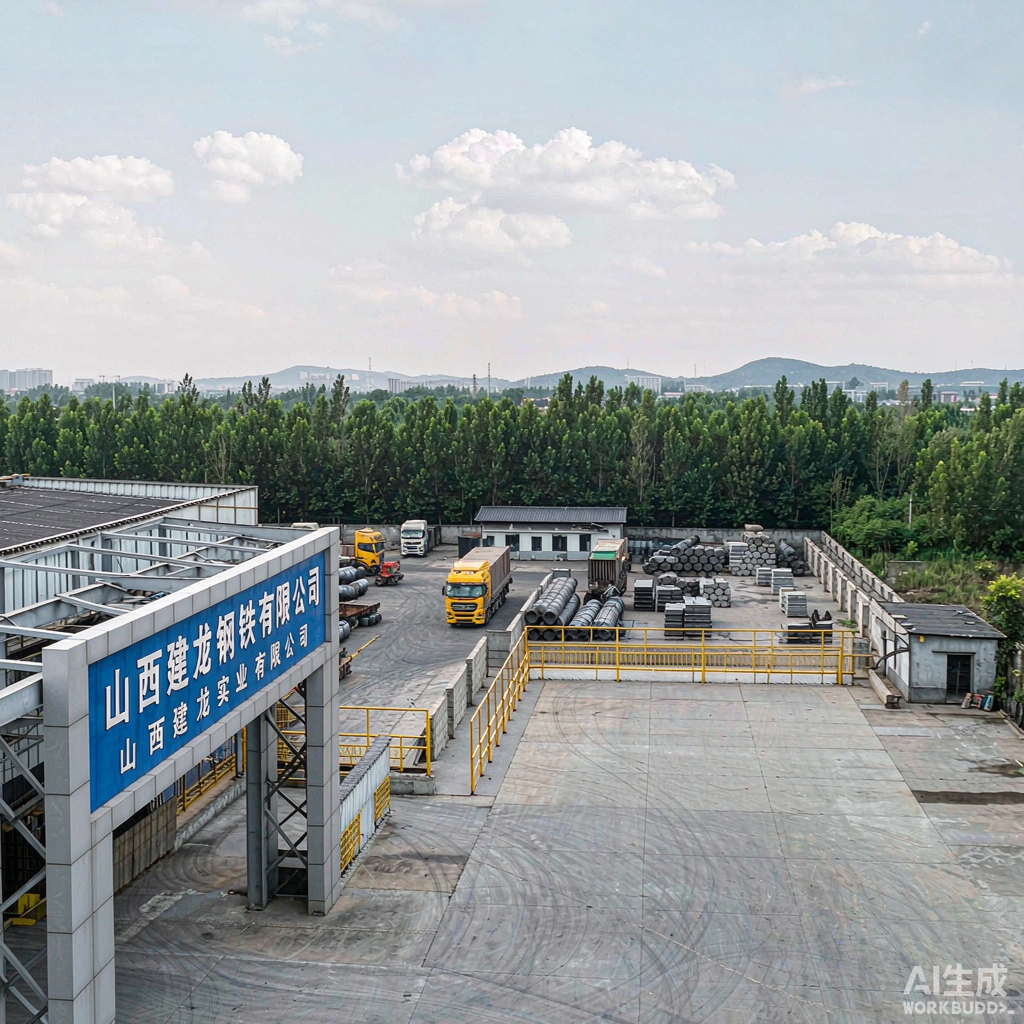
In the vast majority of general engineering applications, yes — a properly certified C45 can replace 1045 and a properly certified 1045 can replace C45, provided the carbon, sulphur and guaranteed heat treatment match what the drawing actually needs. C45 and 1045 overlap in carbon range (0.42–0.50 %), in manganese range and in the mechanical properties achievable after normalizing or quench and temper. The differences are in the standard’s philosophy: C45 under EN 10083-1 is a “quality steel” for machine construction with defined hardenability expectations and tighter sulphur control, while 1045 under SAE J403 is a plain carbon steel grade whose chemistry is a window and whose mechanical properties depend entirely on the delivery condition you specify. The practical rules are simple. If the drawing says “1045, quenched and tempered, 25–30 HRC” you can usually supply C45 Q&T with an equivalent property table and an EN 10204 3.1 certificate. If the drawing says “C45 to EN 10083-1 with Jominy end-quench data” a random 1045 heat will not carry that data, and the substitution must be agreed in writing.
1. What C45 Actually Specifies
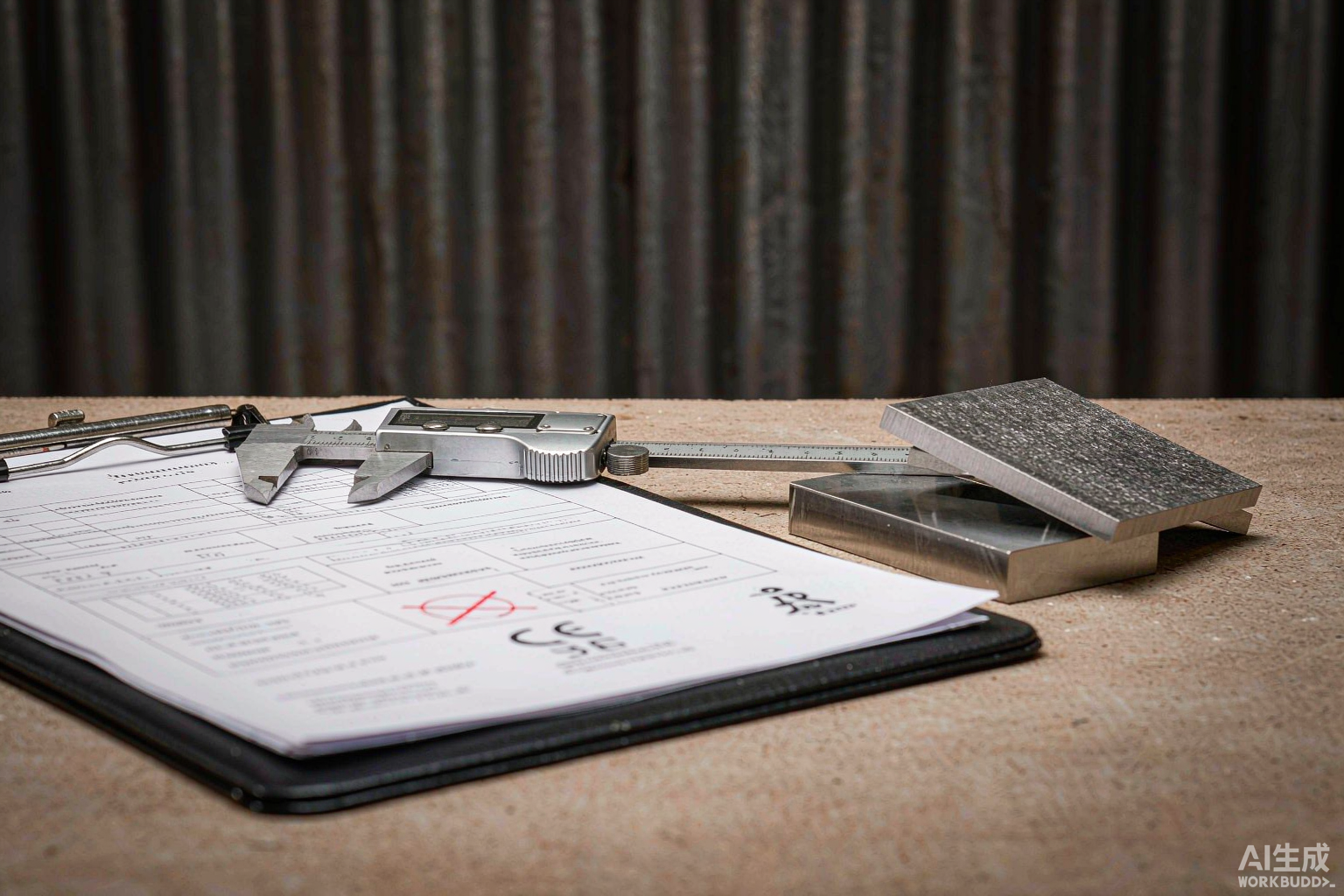
C45 is defined in EN 10083-1 (quenched and tempered steels, alloy-free) and EN 10083-2 for the non-alloy quality steels in semi-finished and hot-rolled forms, with the material number 1.0503. The standard classifies it as a quality steel rather than an alloy steel, and it expects the steel to be delivered in one of the standard treatment conditions: untreated (+U), annealed (+A), normalized (+N), quenched and tempered (+QT) or in the case of bright bar, cold drawn. What makes C45 useful to European buyers is that EN 10083 defines characteristic values for each condition and diameter band — so a purchaser can order “C45 +QT to Ø80 mm” and expect yield around 430 MPa minimum with defined elongation and impact values, and the mill must guarantee it on the certificate. The standard also specifies a maximum sulphur level of 0.035 % for the standard grade and 0.020–0.025 % for the restricted-sulphur variants used when transverse ductility or polishability matters.
Two clauses matter in practice. First, EN 10083 property tables are referenced to a “governing thickness” — the properties guaranteed apply up to 16 mm for bars in the as-delivered condition and extend through defined diameter steps for Q&T bars, so the same grade delivered at Ø150 mm carries lower guaranteed values than at Ø40 mm. Second, C45 can be supplied with hardenability data on request, but unlike case hardening steels it is not mandatory; buyers who need Jominy data must ask for it explicitly. Neither clause is exotic, but both are missed constantly when purchasing departments copy an old specification line without updating the diameter.
2. What 1045 Actually Specifies
1045 is a grade designation from the SAE-AISI system, defined chemically in SAE J403: carbon 0.43–0.50 %, manganese 0.60–0.90 %, phosphorus 0.040 % max, sulphur 0.050 % max. Unlike EN 10083, SAE J403 is a chemistry document only — it says nothing about mechanical properties, heat treatment or testing. The properties of “1045” come entirely from the product standard and the delivery condition: hot rolled bar to ASTM A29/A29M with no mechanical guarantee beyond the mill’s routine, cold drawn bar where ASTM A108 defines minimum mechanical properties by size, plate to ASTM A830 where chemistry is guaranteed and mechanicals are as-rolled, and forged shafts to whatever supplementary requirements the purchaser writes. This is why two invoices both reading “1045” can describe steel that behaves completely differently: a hot rolled 1045 plate at 220 MPa yield and a quenched-and-tempered 1045 bar at 550 MPa yield are both nominally compliant deliveries.
The consequence for buyers is straightforward but constantly ignored: an order for “1045” without a condition is an incomplete order. The phrase to write is “1045 per SAE J403, hot rolled to ASTM A29, or Q&T with minimum properties as follows…” and then the property table you need. American mills are used to this; trading houses that quote “1045 hot rolled” against a drawing that clearly needs Q&T bar are the reason substitution disputes exist.
3. Chemistry Compared Line by Line
The carbon windows overlap almost completely, which is why the two grades are metallurgical twins. The meaningful divergences are manganese floor, sulphur ceiling and the presence or absence of a guaranteed chemistry reporting format. The table below lists the standard windows.
| Element (%) | C45 (EN 10083-2) | 1045 (SAE J403) |
|---|---|---|
| Carbon | 0.42 – 0.50 | 0.43 – 0.50 |
| Manganese | 0.50 – 0.80 | 0.60 – 0.90 |
| Silicon | 0.40 max | 0.15 – 0.35 typical |
| Phosphorus, max | 0.030 | 0.040 |
| Sulphur, max | 0.035 (0.020–0.025 restricted) | 0.050 |
| Material number | 1.0503 | — |
Read the table from the substitution side. Any C45 heat automatically satisfies the 1045 chemistry window: its carbon is inside 0.43–0.50 (allowing the 0.42 floor to be treated as effectively equivalent), its manganese is mostly inside, and its sulphur is lower than the 1045 ceiling allows. The reverse is not automatic. A 1045 heat can carry sulphur up to 0.050 % — 40 % above the C45 ceiling — and phosphorus up to 0.040 % against a 0.030 % C45 limit. A 1045 heat that runs at the top of those ceilings will fail a European certificate review, especially in applications where transverse toughness, weldability or polishability matter, such as hydraulic cylinder rods, chrome plated shaft sections and crankshaft-type components. In practice, most Chinese and Indian mills producing “C45 equivalent” export material run sulphur at 0.020–0.030 % anyway, so dual certification is routine — but the MTC must be checked heat by heat, not assumed.
4. Mechanical Properties and Delivery Conditions
The properties you can buy depend on condition and diameter. The comparison below uses the most common commercial conditions and shows how wide the spread is inside one grade name — the reason the delivery condition must appear on every purchase order.
| Condition | C45 (EN 10083-2) | 1045 (typical, ASTM product standards) |
|---|---|---|
| Hot rolled / untreated | +U: Rm ~560–680 MPa, no guaranteed yield floor by grade table | A830 plate: chemistry only; as-rolled yield ~250–310 MPa |
| Normalized | +N at Ø≤16 mm: Rp0.2 ≥ 340 MPa, Rm 620–780 MPa | No formal normalized property table; mill typical 350–450 MPa yield |
| Quenched & tempered | +QT at Ø≤16 mm: Rp0.2 ≥ 490 MPa, Rm 700–850 MPa; KCV ≥ 25 J at 0 °C typical | Q&T per purchase spec: commonly 550–620 MPa yield, Rm 760–900 MPa, 25–32 HRC |
| Cold drawn bright bar | +C condition per EN 10087 family for bright products | ASTM A108: minimum yield 530 MPa (≤19 mm), tensile 625 MPa |
| Hardness, common delivery | Q&T 22–28 HRC typical; +A ≤ 207 HB | Q&T 25–30 HRC; hot rolled 163–179 HB typical |
Three notes on reading this table. First, the C45 Q&T values scale down with diameter — EN 10083 publishes tables by governing diameter steps (16, 40, 100, 160, 250 mm), so a Ø100 mm C45 bar guarantees roughly Rp0.2 ≥ 430 MPa, not 490. Second, 1045’s cold drawn values in ASTM A108 are minimums with defined sampling, so they are auditable, whereas the “typical” hot rolled numbers are not — if a customer insists on guaranteed as-rolled properties, the honest answer is that 1045 hot rolled guarantees none, and the material should be ordered in the cold drawn or Q&T condition instead. Third, hardness is the acceptance criterion most buyers actually check on arrival; both grades deliver 22–30 HRC in standard Q&T, and hardness is also the cheapest property to verify at receiving inspection with a portable tester.
5. Equivalent Grades Across the Systems
The full equivalence map around the 0.45 % carbon band is worth keeping on one line each, because procurement and engineering teams often hold different versions of it. The grades below are true near-equivalents, not loose lookalikes — but each pair has the same caveat: the Japanese and Chinese systems carry their own product standards, and certificates must quote those standards, not just the grade name.
| System | Grade | Standard | Notes vs C45/1045 |
|---|---|---|---|
| EN / WNr | C45 / 1.0503 | EN 10083-2 | Baseline; CK45 = restricted S+P variant |
| SAE-AISI | 1045 | SAE J403 + A29/A108/A830 | Wider S and P ceilings than C45 |
| JIS | S45C | JIS G4051 | S 0.035 max; close to C45 in practice |
| GB | 45 / 45# | GB/T 699 | S and P 0.035 max each; matches C45 intent |
| DIN old | C45 / CK45 | DIN 17200 | Superseded by EN 10083; drawings still cite it |
| ISO | C45 | ISO 683-1 | Harmonized designation, same window |
One frequent trap: CK45 and 1045 are not interchangeable when transverse properties or surface finish are specified. CK45’s restricted sulphur improves through-thickness ductility and plating adhesion; a 1045 bar at 0.045 % sulphur can show manganese sulphide stringers that cause chrome plating rejects on hydraulic rods. Conversely, some “free machining 1045” material on the market is actually resulphurized 1145-family steel — if the MTC shows sulphur above 0.05 %, the bar is not 1045 at all and should be rejected for any load-bearing use.
6. Heat Treatment Response Compared
Because the two grades share essentially one chemistry, their heat treatment recipes are identical in practice, and both can be quoted to customers who ask:
- Normalizing: 840–870 °C, air cool. Refines the as-rolled structure; both grades land near 200–230 HB and machinability improves measurably versus as-rolled.
- Austenitize for hardening: 820–850 °C, hold roughly 30 min per 25 mm section, quench in water or brine. Oil quenching risks soft spots in sections above about 25 mm because hardenability is low — both C45 and 1045 have shallow hardening curves.
- Tempering: 400–650 °C selected for the target hardness. 2 h at 550–600 °C typically lands 25–28 HRC; 200 °C gives 55 HRC surface hardness but with very low toughness — rarely used on real parts.
- Case hardening: not typical for either grade; if a part needs a hard case plus tough core, buyers move to C45 induction hardening (surface 55–60 HRC, case depth 1–3 mm) rather than carburizing.
- Induction hardening: the classic application for both — shafts, sprockets and studs get a 55+ HRC case while the core stays at Q&T hardness. Equivalence here is exact; any 0.45 % carbon steel responds the same.
The hardenability caveat deserves one more sentence: neither grade contains deliberate alloying, so water quenching above 40 mm section produces a martensitic rim with a pearlitic core. If a customer’s drawing demands minimum core properties at Ø80–100 mm, the correct answer is not more tempering — it is moving up to C50 or, more commonly, to 4140/42CrMo4. We make that recommendation openly when the section size clearly exceeds what a plain carbon steel can carry, because shipping a “compliant” bar that cracks in service costs more than losing the order.
7. Machinability, Weldability and Plating Behavior
Machinability. Both grades machine at a rating around 55–60 % of B1112 free-machining steel. Sulphur is the differentiator: a C45 heat at 0.030 % S cuts slightly cleaner than a 1045 heat at 0.045 % S only in the sense that sulphide stringers act as chip breakers — many machine shops actually prefer the higher-sulphur 1045 for turning, and accept the anisotropy. For CNC high-volume work both behave identically with carbide tooling at 180–220 m/min for roughing.
Weldability. At 0.45 % carbon the carbon equivalent is around 0.62–0.70 with manganese included — welding is possible but requires discipline on both grades: 100–150 °C preheat for sections above 20 mm, low hydrogen electrodes (E7018 or equivalent), slow cooling, and post-weld tempering at 550–600 °C where the joint is load bearing. Neither grade should be welded in the fully hardened condition. The failure mode when shops skip preheat is HAZ cracking within 24–48 hours — the same delayed-cracking family as hydrogen embrittlement, and just as hard to argue about after the fact.
Plating. Hard chrome plating on either grade is routine for rod and shaft work; the substrate requirement is the same — finish ground surface, 180–200 °C post-plate bake to drive off hydrogen, and sulphur below 0.035 % for consistent deposits. This is the single strongest argument for specifying CK45 (or verified low-sulphur 1045) on plated parts: plating rejects from sulphide stringers are far more expensive than the premium for clean steel.
8. Price Logic and Availability
On the export market the two grades usually price within 1–3 % of each other for equivalent size and condition, because the production route is the same EAF or BOF route and the chemistry targets overlap. Differences appear at the edges: C45 with restricted sulphur and impact testing carries a 3–6 % premium over plain 1045 hot rolled; cold drawn bright bar in either grade carries a 15–25 % premium over hot rolled; and small-diameter Q&T bar carries a heat treatment charge of roughly USD 60–120 per tonne depending on batch size. Availability is excellent for both in Asia — Chinese mills roll 45# as a volume grade, and 1045 is dual-certified routinely. The cheapest compliant route for a European buyer needing C45 Q&T is usually Chinese 45# steel dual-certified to EN 10083-2 with a 3.1 certificate; for an American buyer needing 1045 Q&T, the same heat often serves, with the MTC quoting both grade names.
9. How to Write the Purchase Order So There Is No Dispute
Most C45/1045 substitution disputes trace back to an order line that named a grade but not the condition, product standard or acceptance tests. The line items below close those gaps and take thirty seconds to write.
| PO line item | C45 example | 1045 example |
|---|---|---|
| Grade and standard | C45, EN 10083-2 (or CK45) | 1045, SAE J403 |
| Product standard | EN 10083-3 / EN 10278 bright bar | ASTM A29 (bar), A108 (CD), A830 (plate) |
| Delivery condition | +QT, 25–28 HRC | Q&T 25–30 HRC, or A108 cold drawn |
| Governing diameter | Ø80 mm (Q&T table step) | Ø3 in (state size for property basis) |
| Acceptance tests | Tensile, hardness, KCV 0 °C if specified | Tensile, hardness per lot |
| Restricted chemistry | S ≤ 0.025 if plated or transverse-loaded | S ≤ 0.035 dual-cert option |
| Certificate | EN 10204 3.1, English | Mill cert with heat chemistry + tests |
10. FAQ
Is C45 equivalent to 1045? Functionally yes for most uses — same carbon band, same heat treatment response. The standards differ in what they guarantee: C45 comes with defined property tables per condition and diameter; 1045 is chemistry-only unless you order to a product standard with properties. Check sulphur: C45 caps it at 0.035 %, 1045 at 0.050 %.
Which is stronger, C45 or 1045? Neither, inherently. In identical Q&T condition their tensile and yield values overlap almost completely, because strength in this band is driven by carbon content and tempering, not by the designation. Guaranteed values differ only because the standards publish different tables.
Can 1045 be dual certified as C45? Often, yes. If the heat chemistry meets the C45 window — especially sulphur at or below 0.035 % — most mills will issue an MTC quoting both grades. Ask before production, not after, because the certificate format is fixed at shipping.
What about CK45 vs 1045? CK45 is C45 with restricted sulphur and phosphorus, intended for parts where transverse ductility or plating quality matters. 1045’s standard ceilings are looser, so a random 1045 heat is not CK45-compliant; request the restricted chemistry explicitly and confirm on the MTC.
Which grade for induction hardened shafts? Either — they respond identically. Case hardness 55–60 HRC at 1–3 mm depth, core at Q&T levels. Choose by availability and price, and by sulphur if the shaft will be chrome plated.
Source C45 and 1045 Bar, Plate and Shaft Stock
Huaxia-Steel supplies C45, CK45, 1045 and 45# steel as hot rolled bar, cold drawn bright bar, forged shafts and cut plate, in untreated, normalized and quenched-and-tempered conditions, with EN 10204 3.1 certificates quoting full chemistry and the property tables that match your governing diameter. We handle dual certification to both grade systems routinely, support third-party inspection, and machine blanks to drawing when you need ready-to-turn stock. Send us the grade, size, condition and hardness band you need, and our export team will return a technical quotation with MTC format and lead time within one working day.