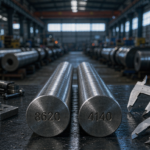
42CrMo vs 4140 steel is a comparison that comes up almost daily in our export RFQs, and for good reason: these two alloy steels are direct equivalents, yet buyers keep asking which one to specify. The short answer is that they are essentially the same material from two different standards — 42CrMo4 is the European grade under EN 10083-3, while 4140 is the American grade under SAE J404 / ASTM A29. Chemistry, mechanical properties and heat treatment response are so close that a mill certificate for one will nearly always satisfy the other’s requirements. But there are real differences in certification practice, tolerance culture, availability and price that matter when you are placing a purchase order across borders. This guide compares 42CrMo and 4140 across chemistry, mechanical properties, hardenability, heat treatment, weldability and sourcing, so you can specify with confidence and avoid paying twice for the same steel.
What Is 42CrMo4 Steel?
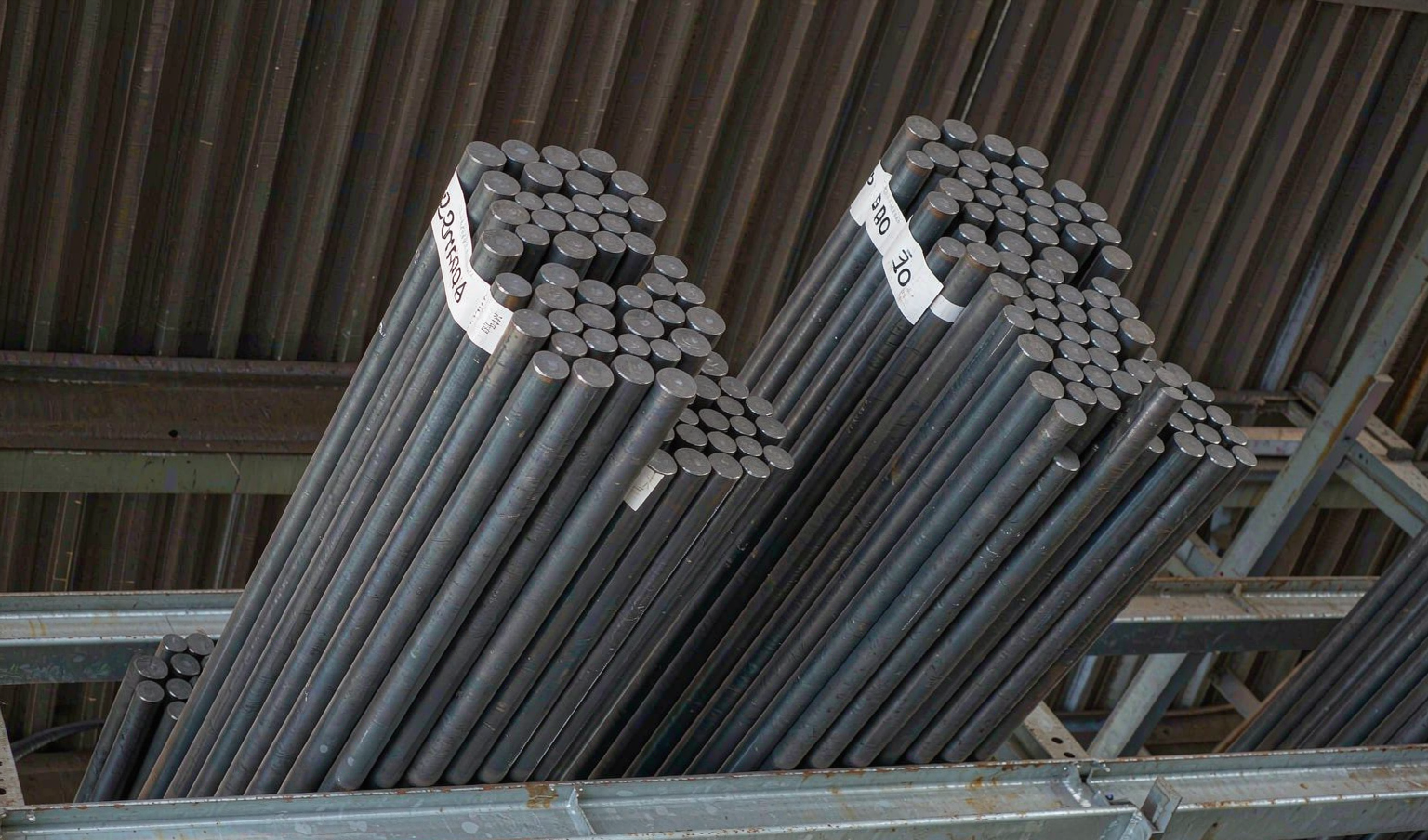
42CrMo4 is the chromium-molybdenum through-hardening steel defined in EN 10083-3 (material number 1.7225). It is the European successor to the old DIN 42CrMo4 designation and is widely used across the EU, India (as IS 1570 Gr 40Cr4Mo3 equivalent), China (GB 42CrMo) and beyond. Its nominal chemistry is 0.38–0.45 % carbon, up to 0.40 % silicon, 0.60–0.90 % manganese, 0.90–1.20 % chromium and 0.15–0.30 % molybdenum. The molybdenum is the key addition: it suppresses temper embrittlement, raises hardenability and improves high-temperature strength, which is why the grade is standard for axles, gears, crankshafts and heavily loaded bolts.
EN 10083-3 grades are specified with hardenability bands — buyers can order 42CrMo4 with a Jominy end-quench test per EN 10083-3 Annex, giving a guaranteed hardenability band (typically designated +HH or with a specific H band). This is a meaningful contractual difference from the plain EN grade, and one of the reasons European OEMs prefer to write EN designations into drawings.
What Is AISI/SAE 4140 Steel?
4140 is the American chromium-molybdenum steel under SAE J404 (and supplied to ASTM A29/A29M for bar). Its chemistry is 0.38–0.43 % carbon, 0.15–0.35 % silicon, 0.75–1.00 % manganese, 0.80–1.10 % chromium and 0.15–0.25 % molybdenum. Put the two side by side and the overlap is nearly complete — 4140 simply carries a slightly tighter carbon mid-band and a touch less manganese at the top end. Japanese SCM440 (JIS G4053) and Chinese GB 42CrMo are the same family again. In practice, a single heat of steel can be certified as 42CrMo4, 4140 and SCM440 simultaneously if its chemistry and mechanicals fall inside all three windows — and that is exactly what most export mills do.
Chemical Composition Compared
The table below compares the standard chemistry ranges. The differences are inside normal heat-to-heat variation, not enough to change performance in any application.
| Element | 42CrMo4 (1.7225) % | AISI 4140 % |
|---|---|---|
| Carbon (C) | 0.38 – 0.45 | 0.38 – 0.43 |
| Silicon (Si) | ≤ 0.40 | 0.15 – 0.35 |
| Manganese (Mn) | 0.60 – 0.90 | 0.75 – 1.00 |
| Chromium (Cr) | 0.90 – 1.20 | 0.80 – 1.10 |
| Molybdenum (Mo) | 0.15 – 0.30 | 0.15 – 0.25 |
| Phosphorus (P) max | 0.035 | 0.035 |
| Sulfur (S) max | 0.035 | 0.040 |
One nuance worth noting for critical parts: if you order 4140 to an H-band (e.g. 4140H), hardenability is guaranteed the same way as 42CrMo4+HH. Plain “4140” without an H suffix is chemistry-only, so hardenability can drift between heats — the same trap exists on the European side. For safety-critical components, always specify the H variant.
Mechanical Properties: 42CrMo vs 4140
Both grades are through-hardening steels that reach their full property envelope only after quench and temper. Typical delivered properties are shown below; values scale strongly with section size, so always validate against the mill certificate for the actual bar diameter.
| Property | 42CrMo4 (Q+T, ≤ 16 mm) | 4140 (Q+T, ≤ 25 mm) |
|---|---|---|
| Tensile strength Rm | 1000 – 1200 MPa | 1000 – 1170 MPa |
| Yield strength ReH / Rp0.2 | ≥ 750 – 900 MPa | ≥ 655 – 900 MPa |
| Elongation A | ≥ 11 – 12 % | ≥ 12 – 17 % |
| Impact energy (KV, RT) | ≥ 25 – 35 J | typically 27 – 54 J |
| Hardness (Q+T) | 285 – 341 HB | 285 – 341 HB |
| Surface hardness after hardening | 54 – 59 HRC | 54 – 59 HRC |
| Annealed hardness (soft) | ≤ 217 HB | ≤ 217 HB |
Hardenability and Heat Treatment
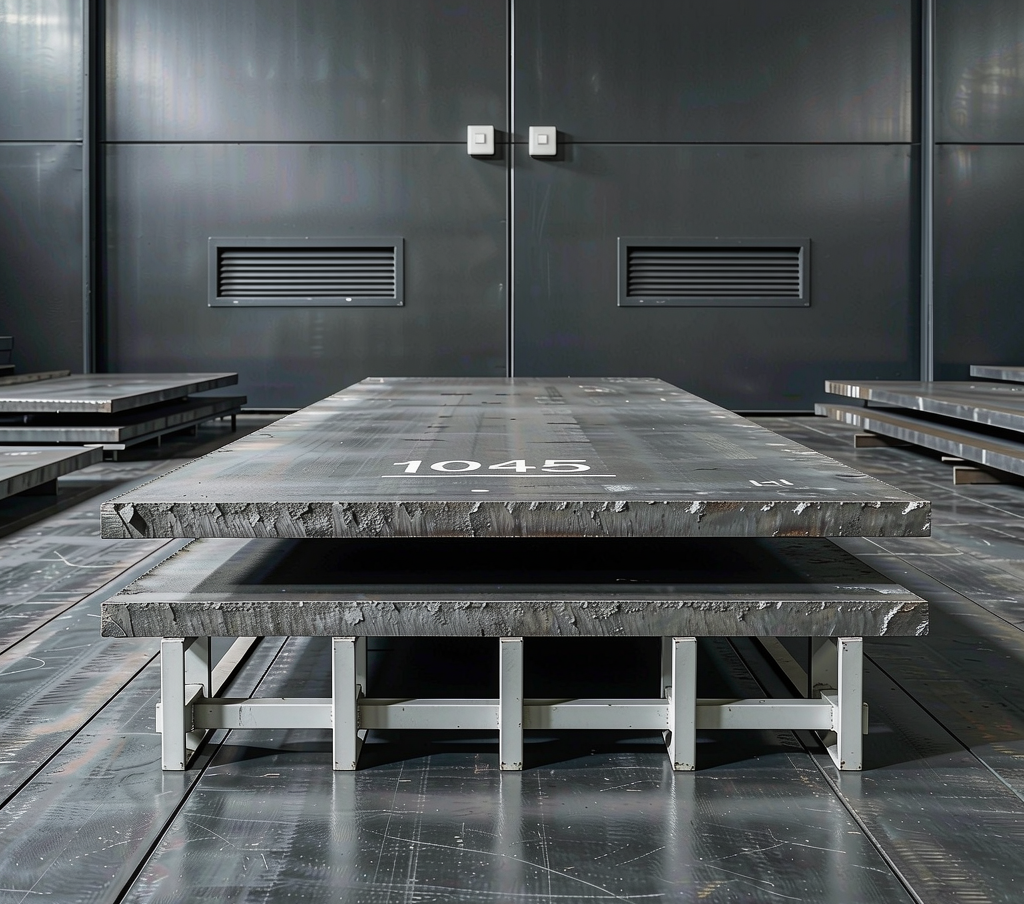
Hardening practice is identical for both grades: austenitize at 840–860 °C, quench in oil (or polymer for larger sections), and temper between 540 and 680 °C depending on the strength/toughness target. The second temper point matters more than buyers expect — tempering below about 500 °C trades impact toughness for hardness, which is appropriate for tooling holders but wrong for shafts. Both grades achieve a 50 % martensite core in sections up to roughly 60–90 mm diameter; beyond that, core properties drop and induction hardening of the surface becomes the better engineering route.
- Normalizing: 850–880 °C, air cool — used to refine grain before machining.
- Hardening: 840–860 °C, oil quench; surface 54–59 HRC achievable.
- Tempering: 540–680 °C; the classic “4140 HT” delivery condition is 28–32 HRC for shafting.
- Induction hardening: excellent response, case 1–3 mm deep at 55 HRC+ for wear surfaces.
- Nitriding: both grades are popular nitriding substrates; surface hardness up to 600–700 HV with minimal distortion.
Because the two steels are metallurgically interchangeable, heat treatment shops treat them identically. The only practical caution is hydrogen flaking in heavy sections (> 100 mm) — order slow-cooled or inherently dehydrogenated material for large forging stock.
Weldability: Both Grades Demand Precautions
With a carbon equivalent around 0.75–0.80 %, neither grade is suitable for casual welding. The carbon is simply too high for the heat affected zone to survive rapid cooling without hydrogen cracking. If welding is unavoidable: preheat 250–350 °C, use low-hydrogen electrodes (E11018-M or equivalent), maintain interpass temperature, cool slowly under insulation, and stress relieve at 600–650 °C immediately after welding. Even then, welded 4140/42CrMo is a repair technique, not a design choice. Where a design genuinely requires welding, specify 4130/25CrMo4 or a carbon steel with lower CE and design for strength by section, not by hardness.
Machinability and Delivery Conditions
In the annealed condition (≤ 217 HB) both grades machine at roughly 55–65 % of B1112 reference — comfortable with carbide tooling at 100–140 m/min surface speed. In the pre-hardened 28–32 HRC condition, expect 30–40 % of that; many machine shops deliberately buy soft material, rough machine, then heat treat and finish grind. Availability differs by region: cold drawn bright bar in 28–32 HRC pre-hardened condition is a stock item in American supply chains (4140 HT) and equally standard in Europe as 42CrMo4+QT. Turning and polishing to h9/h10 tolerance is routine from export mills in both camps.
Which Should You Order? Practical Sourcing Guidance
Since the steels are equivalent, the decision usually follows the drawing, the destination market and the certification requirements — not the metallurgy.
- Follow the drawing: if the design standard is EN (gearboxes, machinery per DIN drawings), specify 42CrMo4+QT; if it is ANSI/ASME (oilfield, pumps, American OEM equipment), specify 4140 per A29.
- Match the certificate to the end customer: an EN 10204 3.1 certificate listing 42CrMo4 satisfies European auditors; listing SAE 4140 satisfies North American ones. Dual-listed certificates (both designations on one cert) are common from export mills and solve the problem entirely.
- Specify the H band: 42CrMo4+HH or 4140H for any part where consistent quench response matters — gears, high-load bolts, connecting rods.
- Price: identical alloy content means identical surcharges; any quote difference between the two from the same mill is paperwork, not material.
Equivalent Grades Reference Table
| Standard | Designation | Notes |
|---|---|---|
| EN 10083-3 | 42CrMo4 (1.7225) | Europe, H bands available |
| SAE J404 / ASTM A29 | 4140 / 4140H | North America |
| JIS G4053 | SCM440 | Japan, Korean SCV440 |
| GB / GB/T 3077 | 42CrMo | China, near-identical window |
| ISO 683-2 | 42CrMo4 | International |
| UNS | G41400 | Cross-reference only |
Fatigue and Elevated-Temperature Service
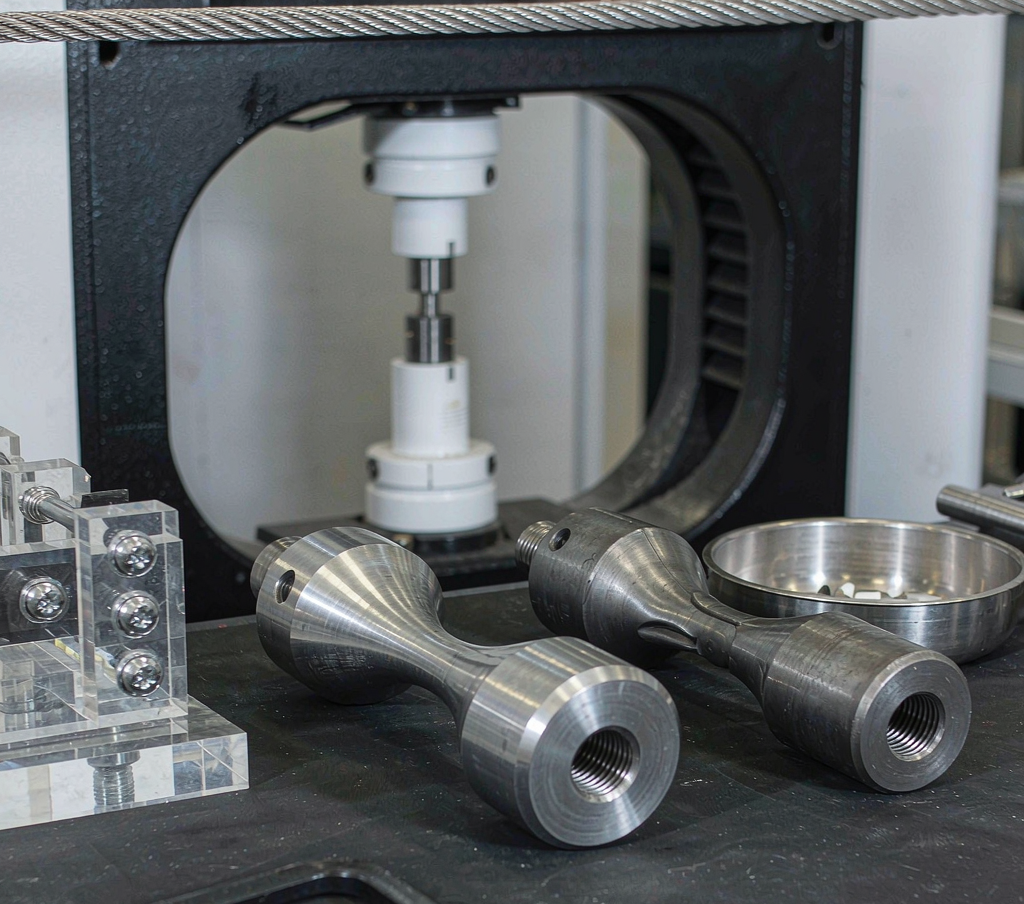
Both grades share identical fatigue behavior, which matters because a majority of 42CrMo/4140 parts — crankshafts, axles, connecting rods, pump shafts — fail by fatigue rather than static overload. In the 28–32 HRC Q+T condition, fully reversed bending fatigue strength is approximately 480–550 MPa for polished specimens, dropping to 350–420 MPa for machined surfaces and falling further with any notch or stress concentration. Design practice therefore leans heavily on surface treatments: fillet rolling, shot peening (10–30 % fatigue life improvement on machined surfaces), and induction hardening of bearing seats. When specifying, communicate the surface condition that matters — “Q+T, machined all over, bearing seats ground” produces a different fatigue part than as-rolled bar cut to length.
At elevated temperature, the molybdenum addition gives both grades usable strength to about 400–450 °C service — tensile strength remains above 600 MPa at 400 °C after tempering above 550 °C. Above that, creep and tempering effects take over and buyers should move to dedicated Cr-Mo grades (4145, 42CrMo5VT, or 1 % Cr-0.5 % Mo steels like 25CrMo4 with different heat treatment). Conversely, both grades suffer embrittlement in the 375–575 °C window if held for long periods (temper embrittlement) — a consideration for parts that operate hot continuously. Impact toughness at low temperature is modest: expect 15–25 J Charpy V at −20 °C in the standard condition; for sub-zero service, specify modified chemistry with restricted P and Sn, or step to a nickel-bearing grade.
Certification and Quality Control: What to Demand on the PO
Because these grades are frequently counterfeited by substitution (1045 or 40Cr sold as 4140), the certificate package deserves as much attention as the price. A proper 42CrMo4/4140 bar order should carry: EN 10204 3.1 certificate with heat-by-heat chemistry and mechanical results; hardness verification at mid-radius matching the ordered condition; grain size (typically ASTM 5 or finer); and for bar above 100 mm, UT testing to SEP 1921 Class 3 C/c or equivalent with a documented report. Buyers in oil and gas should add NACE MR0175/ISO 15156 compliance language when sour service is possible — standard 4140 is not automatically compliant, and the restricted-hardness variants (22 HRC max) must be ordered explicitly.
Receiving verification is cheap and effective: a portable Leeb or UCI hardness check on 10 % of bundles immediately reveals untempered or substituted material, since 1045 tops out around 25 HRC where 4140 HT sits at 28–32 HRC — the readings do not overlap when material is wrong. A spark test by an experienced inspector provides a second screen: 4140 produces a duller, more subdued spark burst than plain carbon steel due to the alloy content. Neither check replaces the certificate, but together they catch the majority of substitution attempts before machining costs are committed.
Common Mis-Specification Traps in 42CrMo/4140 RFQs
- Ordering “4140” without condition. Annealed, normalized and Q+T material are three different products at three different prices. Always state condition and target hardness.
- Confusing through hardness with case hardness. A bar “hardened to 58 HRC” by surface induction has a 28–32 HRC core. Define whether your drawing means core or surface.
- Ignoring section-size effects. A 200 mm bar cannot achieve the mechanicals of a 25 mm bar in the same condition. Specify the largest machined diameter and ask the mill for that section’s guaranteed values.
- Assuming H-band costs little. Jominy-tested H material carries a premium and slower lead time — but skipping it on hardenability-critical parts costs far more in rejected heat treatments.
- Welded assemblies in 4140. If the part will be welded, it should not be 4140. Flag welding on the drawing and let the supplier propose 4130 or a lower-CE alternative.
Price Drivers and Lead Times for 42CrMo/4140 Bar
Understanding what moves the price helps buyers time orders and compare quotes fairly. The base is the carbon steel scrap-and-pig-iron index, then alloy surcharges add the chromium and molybdenum content — molybdenum is the volatile one, and its surcharge can swing total price by 8–15 % across a year. Condition premiums stack on top: annealed is the baseline, normalized adds little, cold drawn adds a processing premium, and Q+T plus straightening plus hardness testing adds the most. Diameter matters nonlinearly — sizes above 200 mm cross into forging-stock economics with longer lead times and UT requirements. An H-band order adds Jominy testing cost and typically one to two weeks. As a planning guide: stock sizes in annealed or Q+T condition ship in one to two weeks; non-stock diameters and H-band material run three to six weeks; forged blocks above 400 mm run eight to twelve. When comparing two quotes, check that both are quoting the same condition, tolerance class and certification scope — most “cheap” 4140 quotes are annealed, untested material that becomes expensive after the first heat treatment batch fails hardness.
Stock Buying vs Mill-Order Buying Strategy
Distributor stock and mill production orders answer different needs, and mixing them up costs money in both directions. Stock buying (mill or master-distributor inventory in common diameters 16–200 mm, standard conditions) gets material moving in days and suits development work, urgent maintenance and small lots — but you accept the mill’s condition choice and pay the distributor margin. Mill orders unlock exactly what the drawing wants: H-band hardenability, restricted chemistry, special lengths, and volumes above roughly 10 tonnes per item, at the cost of lead time and minimum-order economics. A pragmatic pattern many OEM buyers use: keep one year of consumption of the top three diameters flowing through stock channels for continuity, and consolidate the long tail of special sizes into two scheduled mill orders per year. When you RFQ both channels with the same drawing data — diameter, condition, hardness band, certification scope — the quotes become directly comparable and the split often writes itself.
Frequently Asked Questions
Can I substitute 4140 for 42CrMo4 on an EN drawing? Yes, provided the chemistry and mechanicals meet the EN window and you can present a certificate the end customer accepts. Most auditors accept a dual-listed certificate; some insist on the EN designation being printed. Confirm with the design authority before substituting on safety parts.
Which grade is stronger, 42CrMo4 or 4140? Neither, in any meaningful sense. Both reach 1000–1200 MPa tensile in Q+T condition; achieved properties depend on section size and tempering, not on the designation letterhead.
Is 4140 the same as SCM440? Yes — SCM440 is the JIS G4053 designation of the same chromium-molybdenum family, with chemistry overlapping 4140 almost exactly. Japanese-standard buyers specify SCM440, American buyers 4140, European buyers 42CrMo4.
What condition should I order for machined shafts? The most common is Q+T to 28–32 HRC (roughly 900–1000 MPa tensile): machinable with carbide, dimensionally stable after machining, and strong enough for the vast majority of shafting. Order annealed material only if you will heat treat after rough machining.
Does 4140 rust? Yes. Both grades are plain alloy steels with no corrosion resistance — Chromium here is for hardenability, not passivation. Export with VCI wrap, oiled surface or crated packing.
Source 42CrMo4 / 4140 Bars Factory Direct
Huaxia-Steel supplies 42CrMo4 (1.7225) and AISI 4140 round bar, bright bar and forging stock from 8 mm to 400 mm diameter, in annealed, normalized, Q+T and pre-hardened conditions, with EN 10204 3.1 mill certificates and dual EN/SAE designation on request. Factory direct pricing, UT testing available, export packing to any port.
Request a quotation for 42CrMo4 / 4140 steel bar — send your diameter, condition and quantity for a same-week offer.