Q355B Carbon Steel Plate — Factory Direct Supplier | Huaxia-Steel
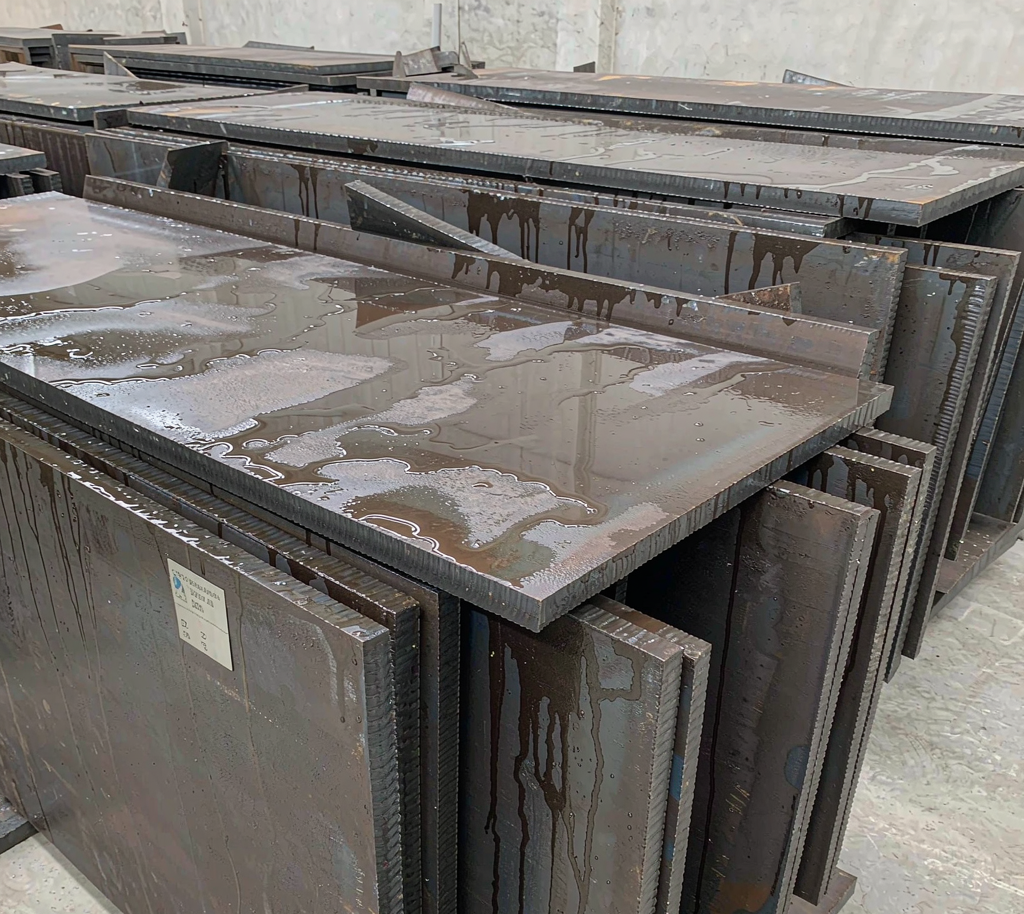
Huaxia-Steel supplies Q355B structural steel plate rolled to GB/T 1591, the Chinese low-alloy high-strength structural standard that replaced Q345. Q355B is the most widely used structural plate grade in Chinese export supply, offering a 355 MPa minimum yield with good weldability and toughness at room temperature. It is the grade behind a large share of fabricated structures, machinery bases, bridges and construction projects supplied from China.
This page sets out the thickness range, chemistry, mechanical properties, impact grade, international equivalents, applications, quality assurance and packing for Q355B plate. Send your thickness, size, quantity and destination for a firm quotation within 24 hours.
Product Overview
Q355B is a low-alloy high-strength structural steel defined by GB/T 1591. The “Q” denotes yield strength, “355” the minimum yield in MPa for the thinnest section, and “B” the impact test grade (room-temperature, +20°C, 27 J minimum). The grade is designed for welded, bolted and riveted structures where higher strength than Q235 allows lighter sections and lower weight.
Q355B replaced Q345B in the 2018 revision of GB/T 1591, with essentially the same strength level and chemistry. Drawings and contracts written before the revision may still say Q345B; in practice the two are treated as equivalent, and we will confirm the designation your project requires on the certificate. The B impact grade suits general structural service; colder service needs Q355C, D or E.
Specifications: Size, Weight and Tolerance
Q355B plate is supplied in a broad thickness range for structural and general fabrication. Thickness tolerance follows GB/T 709, and heavier plate may carry a different tolerance class that should be stated on the order.
| Parameter | Range | Tolerance |
|---|---|---|
| Thickness | 6–200 mm | Per GB/T 709 |
| Width | 1500–3500 mm | Mill standard |
| Length | 6000–12000 mm | Per order |
| Theoretical weight | 7.85 g/cm³ basis | Calculated |
| Flatness | Per GB/T 709 | Class by agreement |
| Edge | Mill edge or shear/flame cut | Per order |
Thickness is the commercial dimension that matters most, because plate is priced by theoretical weight. We report actual thickness on the inspection record and can supply to a minus-tolerance or positive-tolerance requirement depending on whether the buyer prioritises weight or machining stock. Cutting — shear, flame or plasma — can be arranged to drawing.
Available Grades and Chemistry
Q355B chemistry is controlled to GB/T 1591 to balance strength, weldability and toughness. Carbon and carbon equivalent are capped so the plate welds without excessive preheat in normal sections.
| Element | Q355B |
|---|---|
| Carbon (C) | ≤0.20% |
| Manganese (Mn) | ≤1.60% |
| Silicon (Si) | ≤0.55% |
| Phosphorus (P) | ≤0.035% |
| Sulfur (S) | ≤0.035% |
| Carbon equivalent (CEV) | ≤0.44% typical |
The B suffix denotes the impact grade: 27 J minimum at +20°C. For lower-temperature service, Q355C (0°C), Q355D (−20°C) and Q355E (−40°C) are available and should be specified where the design dictates. We can supply the full impact-grade range; the choice belongs on the drawing, not in the mill’s discretion.
Mechanical Properties
Yield and tensile requirements vary with thickness, because thicker plate has lower guaranteed strength. The values below are the GB/T 1591 requirements for the common structural thickness range.
| Property | Requirement (≤16 mm) | Requirement (16–40 mm) |
|---|---|---|
| Yield strength | ≥355 MPa | ≥345 MPa |
| Tensile strength | 470–630 MPa | 470–630 MPa |
| Elongation | ≥22% | ≥22% |
| Impact (B, +20°C) | ≥27 J | ≥27 J |
| Bend test | Per standard | Per standard |
Mechanical tests are taken per lot and reported on the mill certificate. For welded structures, buyers should also check the carbon equivalent against their welding procedure, since CEV drives preheat requirements. Q355B typically sits around 0.40–0.44% CEV, which is weldable with normal low-hydrogen practice.
Manufacturing Standards
Q355B plate is rolled and tested to GB/T 1591, with dimensions and tolerances to GB/T 709. The plate is supplied in the as-rolled, normalized or TMCP condition depending on thickness and mill practice, and the delivery condition is stated on the certificate. Marking includes grade, heat number, size and mill identification for traceability.
For export, we supply EN 10204 3.1 mill certificates and can arrange 3.2 certification or third-party inspection. Because Q355B is often substituted for EN S355JR, we can provide an equivalence comparison with the relevant EN 10025-2 grade so the buyer’s engineer can approve the cross-reference on the record.
Applications
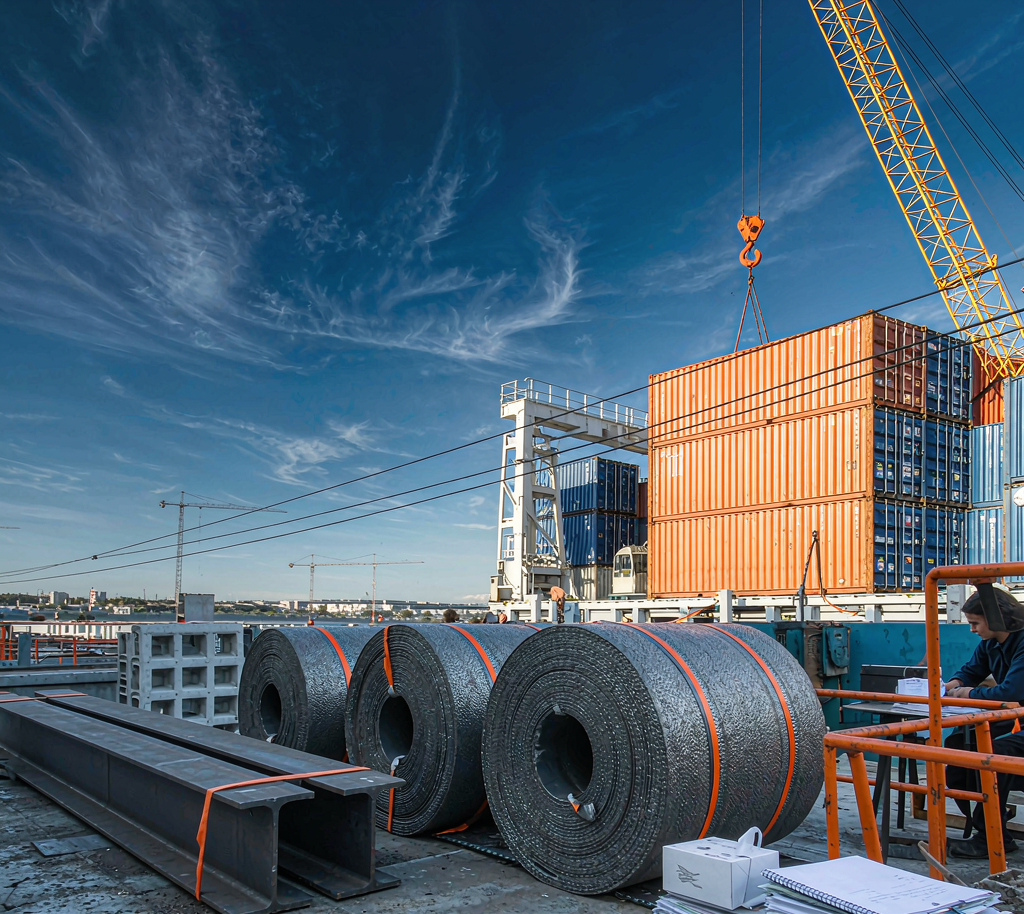
Q355B plate is used across structural and mechanical fabrication: building frames, industrial structures, bridges and infrastructure, machinery bases and frames, crane components, storage tanks, and general welded fabrication. Its higher yield than Q235 lets designers use thinner sections, reducing weight and cost in large structures while keeping weldability manageable.
The room-temperature B impact grade suits indoor and moderate-climate structural service. For outdoor structures in cold climates, offshore or dynamic loading, the C, D or E grades should be specified. As with any structural steel, the design code and the required impact grade should be confirmed before ordering, since a plate that meets Q355B but not the specified impact temperature is not a compliant delivery.
Quality Assurance
Quality control covers chemistry, mechanical properties, dimensions and surface. Each heat is verified against the GB/T 1591 bands, tensile and impact tests are taken per lot, and plate is inspected for thickness, flatness, edge condition and surface defects before dispatch. Records and traceability are supplied with the shipment.
- Heat chemistry and mechanical results, including impact energy, on 3.1 certificate.
- Dimensional inspection: thickness, width, length, flatness.
- Surface and edge inspection for laminations, seams and cuts.
- Optional ultrasonic testing (UT) for critical or thick plate.
- Optional third-party inspection before shipment.
Packing and Shipping
Plate is shipped in strapped bundles or as loose plate depending on size and customer handling capability, with edges protected against damage. Bundles are marked with grade, heat number, size and quantity. Heavy plate is loaded by magnet or clamp, and we can arrange container, breakbulk or project cargo shipping depending on thickness and total tonnage.
For export we apply a rust-preventive coating where the plate will be stored before fabrication, and use ISPM 15 compliant dunnage. Tell us the destination, the handling equipment at the receiving end and whether the plate will be stored outdoors, and we will recommend the right protection and loading method.
Welding and Fabrication of Q355B
Q355B is designed to weld, and its carbon equivalent of roughly 0.40–0.44% keeps it within the range where normal low-hydrogen practice works without excessive preheat. For thicknesses up to about 25 mm, a preheat of 50–100°C is usually sufficient; thicker sections or highly restrained joints need higher preheat and controlled interpass temperature. Matching consumables (typically E7018 or an equivalent low-hydrogen electrode, or ER70S-6 for GMAW) give sound welds when the procedure is qualified.
The grade’s higher strength than Q235 means fabricators should not simply carry over a Q235 welding procedure. Heat input, joint preparation and restraint all interact with the stronger steel, and a procedure qualified on Q235 may not produce the same toughness in the heat-affected zone of Q355B. Qualify the procedure on the actual grade and thickness, and control preheat and interpass temperature in the shop, not just on paper.
For structures subject to fatigue or dynamic load, weld detail and post-weld inspection matter as much as the base plate. Specify the inspection scope — visual, magnetic particle or ultrasonic — on the fabrication drawing, and confirm that the plate’s impact grade (B, C, D or E) matches the service temperature the design assumes. A Q355B plate used where Q355D was required is a compliance failure even if the strength is adequate.
Ordering Checklist
- State the grade and impact class (Q355B, or Q355C/D/E for colder service).
- Give thickness, width, length and quantity, and the tolerance class required.
- Specify delivery condition if it matters (as-rolled, normalized, TMCP).
- State cutting requirements: mill edge, shear, flame or plasma cut to drawing.
- Confirm whether ultrasonic testing or third-party inspection is required.
- Agree packing, rust protection and shipping documents for export.
Surface Condition, Delivery and Storage
Q355B plate is normally supplied with a mill finish that may carry light scale, roll marks or a thin rust-preventive coating depending on the order. For fabrication that will be painted, the surface should be blast cleaned before coating, and any mill scale removed so the coating adheres properly. Plate intended for outdoor storage before fabrication benefits from a rust-preventive primer applied at the mill or on arrival.
Storage practice affects both flatness and surface. Plate should be stacked flat on dunnage clear of the ground, with stickers between layers for drainage and air circulation where the plate will be stored for long. Standing plate on edge risks buckling and edge damage. For export shipments, the plate is strapped and edge-protected, and we can apply a rust-preventive coating where the destination or storage conditions require it.
For buyers comparing Q355B with EN S355JR, the two grades are close in strength and chemistry, and Q355B is commonly offered as an equivalent in Chinese export supply. Document the cross-reference on the mill certificate and confirm the impact grade your design requires, because the B suffix means +20°C impact and may not satisfy a project written around a lower temperature.
Get a Quote from Huaxia-Steel
Factory-direct carbon steel with MTC, third-party inspection, and fast export shipping. Tell us your grade, size, quantity and destination — we return a firm quote within 24 hours.