ASTM A573 Plate Carbon Steel — Factory Direct Supplier | Huaxia-Steel
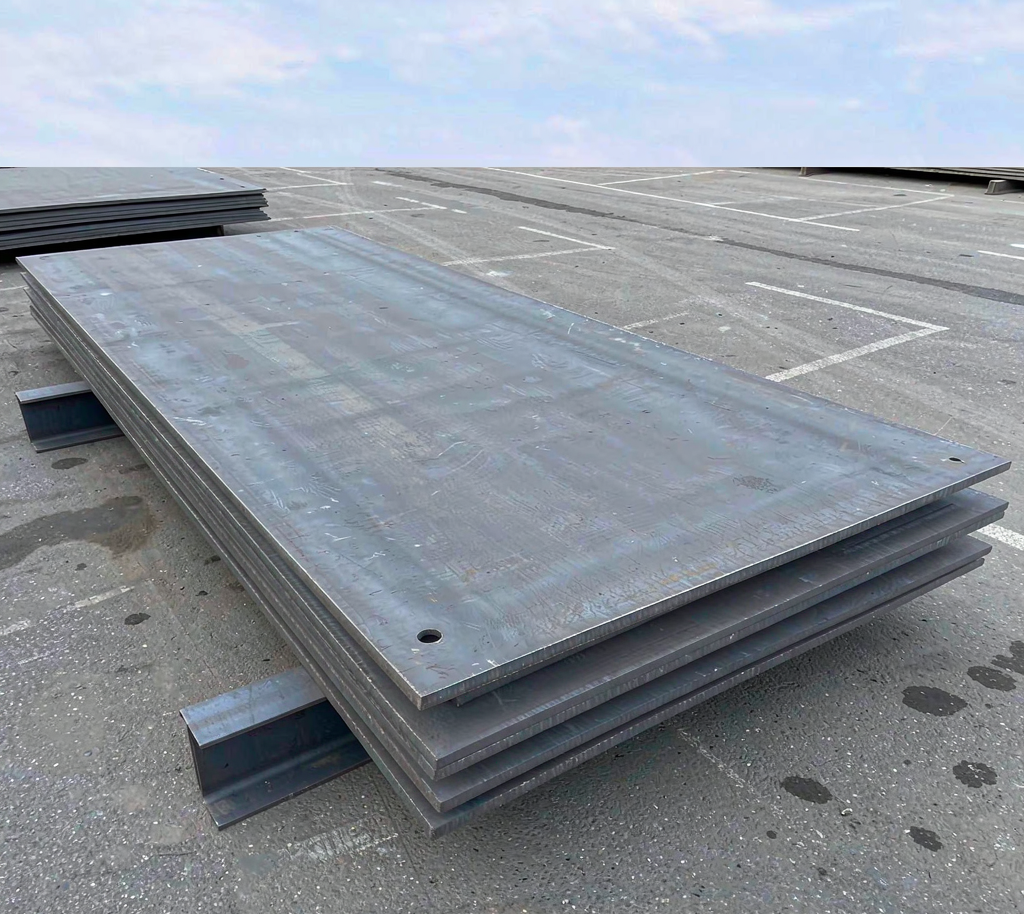
ASTM A573 carbon steel plate is a structural-quality plate intended for service where improved toughness is required, commonly used in general structures, bridges, buildings and equipment. It is supplied in three grades, 58, 65 and 70, where the number denotes minimum tensile strength in ksi.
Huaxia-Steel supplies A573 plate in thickness from 6 mm to 150 mm, in as-rolled or normalized condition, with mill test certificates and third-party inspection on request.
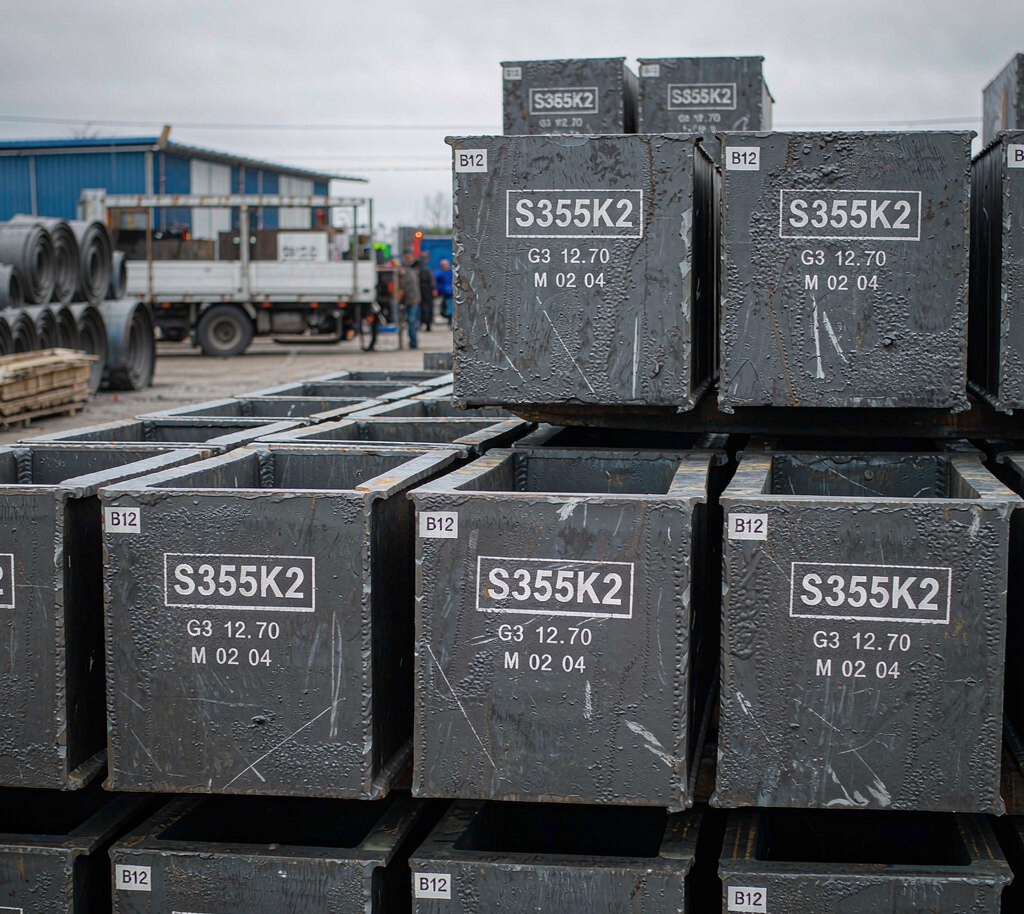
Product Overview
A573 fills the gap between commodity A36 plate and pressure-vessel A516 plate. It offers higher strength than A36 with better toughness control, making it suitable for structural members and equipment that see dynamic or low-temperature service. The grade number lets designers pick a strength level without moving to a low-alloy steel.
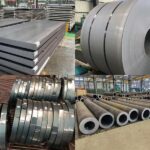
Plate is available in widths up to 3000 mm and lengths up to 12000 mm, with cut-to-size, flame cutting and edge preparation services. Typical delivery is as-rolled for thin plate and normalized for thicker sections where toughness is critical.
Specifications
| Parameter | Range / Standard |
|---|---|
| Thickness | 6 mm – 150 mm |
| Width | up to 3000 mm |
| Length | up to 12000 mm, or cut to size |
| Thickness tolerance | per ASTM A6 / EN 10029 |
| Flatness | per ASTM A6, typical 6 mm in 1.5 m |
| Surface | As rolled, pickled, shot blasted and primed on request |
| Edge | Sheared, universal mill, or flame cut |
Thickness tolerance and flatness follow the applicable plate standard, and we confirm them against your drawing before production. For flame-cut parts, we agree the cutting tolerance and edge quality in advance so the finished component fits without rework.
Available Grades
| Grade | Min tensile (ksi / MPa) | Min yield (ksi / MPa) | Typical use |
|---|---|---|---|
| A573 Gr 58 | 58 / 400 | 32 / 220 | General structural, moderate load |
| A573 Gr 65 | 65 / 450 | 35 / 240 | Bridges, buildings, equipment |
| A573 Gr 70 | 70 / 485 | 42 / 290 | Higher-strength structural plate |
Grade selection depends on the design load and the governing code. Higher grades give more strength per kilogram but may require more care in welding and forming, so the choice should follow the structural calculation rather than a preference for the strongest plate.
Manufacturing Standards
- ASTM A573 / A573M – structural carbon steel plate
- ASTM A6 / A6M – general requirements for rolled structural steel plates
- EN 10029 – tolerances on dimensions and shape for hot-rolled plate
- ISO 9001 quality management at the supplying mill
Each plate is supplied with a mill test certificate showing heat number, chemistry and mechanical properties. Normalized plate includes a heat treatment record, and impact testing can be added where the design temperature requires it.
Applications
A573 plate is used for structural steelwork, bridge components, building frames, machine bases, storage structures and general fabrication where a tougher plate than A36 is needed. It is also used for equipment frames and supports in industrial plants, and for parts that are flame cut and welded into larger assemblies.
It is not a pressure-vessel specification; for vessels and boilers, A516 or A515 should be used as required by the code. Using A573 in pressure service without engineering approval is a common and avoidable mistake.
Quality Assurance
Chemistry is verified per heat and mechanical properties are tested per plate or per lot as specified. Dimensions, flatness and surface are checked before shipment, and plates are marked with heat number, grade and size for traceability. We can arrange ultrasonic testing to ASTM A578 for plates that will be highly stressed or used in critical structures.
Third-party inspection by SGS, BV, Intertek or TUV is available, including witness of tensile testing and dimensional checks. For export projects, we provide a certificate of conformity and can coordinate pre-shipment inspection with your nominated surveyor.
Packaging and Shipping
Plates are shipped in bundles or on wooden skids, secured with steel strapping and protected at the edges. For export, plates can be shot blasted and primed to reduce surface rust, and marked according to your project requirements. We ship from Tianjin, Qingdao and Shanghai on FOB, CFR, CIF or DAP terms.
Lead time is typically 10 to 20 days for stock sizes and 25 to 35 days for mill rolling, depending on thickness and grade. Cut-to-size and flame-cut parts add a few days for programming and inspection.
Chemistry by Grade
| Element (%) | Gr 58 | Gr 65 | Gr 70 |
|---|---|---|---|
| Carbon (max) | 0.23 | 0.26 | 0.28 |
| Manganese | 0.60 – 1.20 | 0.60 – 1.20 | 0.60 – 1.20 |
| Phosphorus (max) | 0.035 | 0.035 | 0.035 |
| Sulfur (max) | 0.035 | 0.035 | 0.035 |
| Silicon | 0.15 – 0.40 | 0.15 – 0.40 | 0.15 – 0.40 |
Carbon rises slightly across the grades to deliver the higher tensile strength. The low phosphorus and sulfur limits improve toughness, which is the main reason A573 is preferred over A36 for structures that see dynamic loading or colder service.
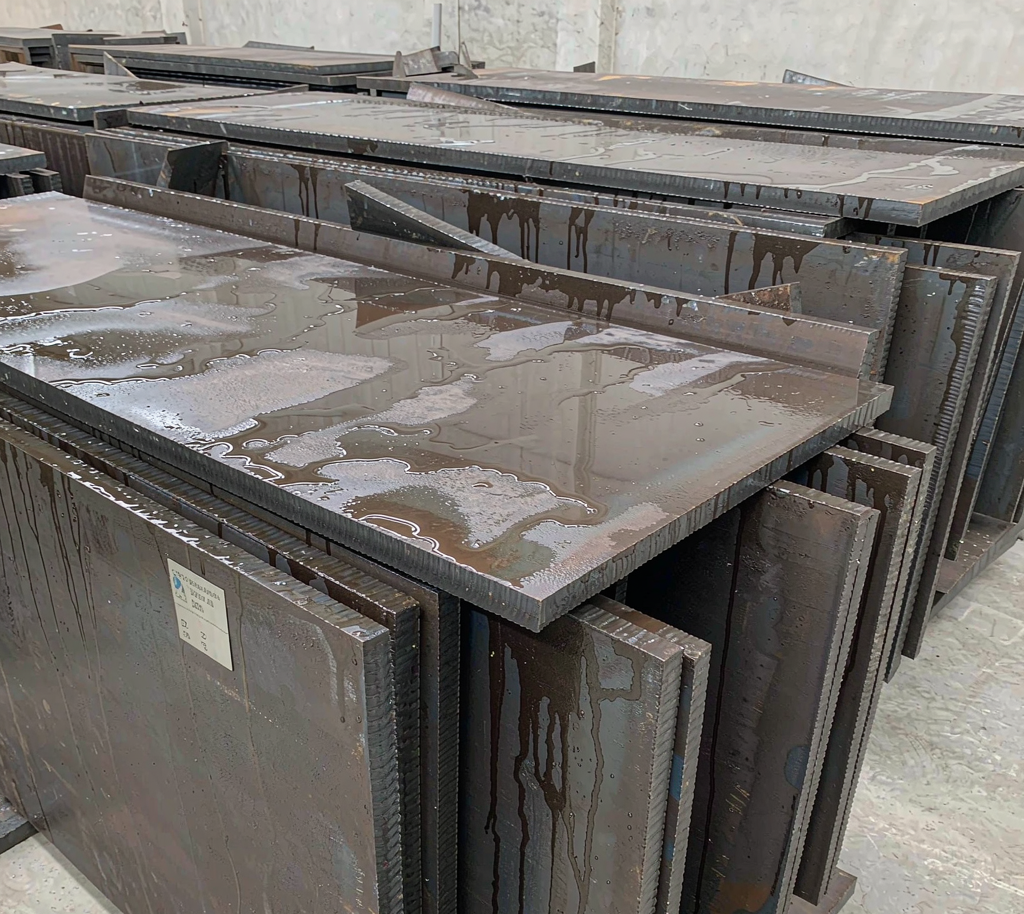
Mechanical Properties
| Grade | Tensile (MPa) | Yield (MPa) | Elongation (min) |
|---|---|---|---|
| A573 Gr 58 | 400 – 490 | 220 | 21% |
| A573 Gr 65 | 450 – 530 | 240 | 20% |
| A573 Gr 70 | 485 – 620 | 290 | 18% |
The tensile ranges are bounded, so a compliant plate must not be too strong. Excess strength usually means excess carbon or inadequate heat treatment, which reduces toughness. For structures in cold climates, impact testing should be specified and the results shown on the certificate.
A573 vs A36 vs A516
| Specification | Type | Strength | Toughness control | Use |
|---|---|---|---|---|
| ASTM A36 | Structural | 400 – 550 MPa | Basic | General structures |
| ASTM A573 | Structural, improved toughness | 400 – 620 MPa | Better | Bridges, cold service |
| ASTM A516 | Pressure vessel | 485 – 620 MPa | Good | Vessels, tanks |
A573 is the middle option: tougher than A36 but not a pressure-vessel grade. It is the right choice when a structure needs better toughness than A36 but does not fall under a pressure code. Substituting A36 for A573 in a cold-service structure can lead to brittle fracture, which is why the grade should follow the design calculation.
Welding and Fabrication
A573 plate welds readily with common processes, but thicker sections and higher grades benefit from preheat. A preheat of 100 to 150 degrees Celsius is typical for plate above about 25 mm, with interpass temperature control to avoid excessive heat input. Low-hydrogen consumables should be used for restrained joints.
Flame cutting leaves a hard edge that may need grinding before welding, particularly on higher-carbon grades. For critical structures, the welding procedure should be qualified and the edge preparation agreed in advance. Post-weld heat treatment is not usually required for A573 but may be specified for thick or highly restrained joints.
How to Order A573 Plate
- Confirm the grade (58, 65 or 70) against the structural calculation and code.
- State thickness, width, length and whether cut-to-size is required.
- Specify delivery condition, including normalizing for thick plate.
- State any impact testing temperature and acceptance criteria.
- Require a mill test certificate and agree marking and packing requirements.
A clear order specification avoids the most common problem with structural plate: receiving a plate that meets chemistry but not toughness, because impact testing was not requested. If the structure is in a cold climate or subject to dynamic load, impact testing should always be specified.
Surface Preparation and Coating
A573 plate can be supplied as-rolled, pickled, or shot blasted and primed. Shot blasting to Sa 2.5 removes mill scale and rust and provides a profile that improves coating adhesion. Priming with a shop primer protects the plate during fabrication and transport, and the primer should be compatible with the final coating system.
For structures that will be painted on site, specify the surface preparation grade and the primer type so the fabricator and the painter use compatible systems. Applying a topcoat over an incompatible primer is one of the most common causes of premature coating failure on structural steel.
Stock Sizes and Cut-to-Size
We stock common thicknesses in standard plate sizes and can cut to size by plasma, laser or flame cutting. Cut-to-size plates reduce waste and handling on site, and we can supply nesting-optimized cutting plans for repetitive parts. Cutting tolerance and edge quality are agreed before production.
For large projects, we can hold stock against a call-off schedule so plates arrive as needed rather than all at once. That reduces storage pressure on site and keeps the fabrication program flowing without a large upfront inventory.
Frequently Asked Questions
Is A573 the same as A36?
No. A573 is a separate specification with improved toughness control and three strength grades, while A36 is a general structural plate with a single strength range. A573 is preferred where the structure needs better toughness than A36 can guarantee.
Can A573 plate be used for pressure vessels?
Not as a pressure-vessel grade. For vessels and boilers, use A516 or A515 as required by the design code. A573 is intended for structural and general equipment use, not pressure containment.
What is the maximum plate thickness you supply?
We supply A573 plate up to 150 mm, with normalizing for thicker sections where toughness is critical. For very heavy plate, lead time increases and we confirm the rolling schedule before accepting the order.
Get a Quote from Huaxia-Steel
Factory-direct carbon steel with MTR, third-party inspection and fast export shipping. Send your grade, size, quantity and destination — we return a firm quote within 24 hours.