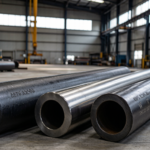
ERW Carbon Steel Pipe — Factory Direct Supplier | Huaxia-Steel
ERW (Electric Resistance Welded) carbon steel pipe is one of the most widely used tubular products in the world, combining consistent dimensions, good weld quality and economical pricing for structural, mechanical, fencing and general fluid-handling applications. Huaxia-Steel manufactures and exports ERW pipe directly from the mill, offering a full size range, multiple standards and flexible surface treatments. This page covers product overview, specifications, available grades, manufacturing standards, applications, quality assurance and packaging.
Product Overview
ERW pipe is formed from hot-rolled or cold-rolled steel strip, rolled into a round shape and joined by high-frequency electric resistance welding along the longitudinal seam, then sized and straightened. Because the weld is a continuous, controlled fusion of the same parent metal, modern ERW pipe delivers reliable integrity for non-critical pressure and structural service at a fraction of the cost of seamless pipe. It is the volume workhorse of the tubular world, balancing price, availability and performance.
Specifications (Size, Wall, Tolerance)
| OD range | Wall thickness | Length | OD tolerance | Wall tolerance |
|---|---|---|---|---|
| 21.3-610 mm (1/2″-24″) | 1.5-20 mm | 6-12 m or cut | +/- 0.5% or +/- 0.5 mm | +/- 10% (or per std) |
We supply both schedule-rated pipe (SCH 10 to SCH 160) and light-wall structural tubing. Custom diameters and lengths are available on request, and square and rectangular ERW sections can be quoted separately.

Available Grades
| Standard | Grade | Typical use |
|---|---|---|
| ASTM A53 | Grade A / B | General purpose, water, air, steam |
| API 5L | Grade B, X42-X70 | Line pipe, oil & gas |
| ASTM A500 | Grade B/C | Structural tubing |
| EN 10219 | S235 / S355 | Structural hollow sections |
| GB/T 3091 | Q195/Q235 | Domestic water & structure |
Manufacturing Standards and Process
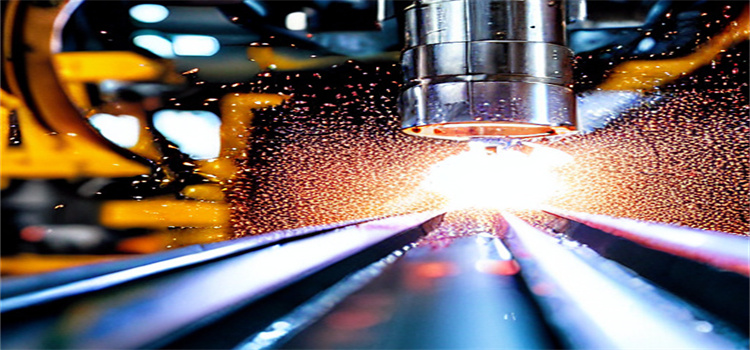
Production follows ASTM A53, API 5L, ASTM A500, EN 10219 or GB/T standards as required. The strip is un-coiled, levelled, formed into a round, welded by high-frequency induction, and the weld zone is heat-treated (normalize or anneal) to restore toughness. Sizing rolls bring the pipe to final tolerance, then ends are faced or threaded per specification. Modern lines run in-line seam inspection so non-conforming welds are rejected automatically.
Applications
ERW pipe serves in water and gas distribution, building structures, scaffolding, fencing, greenhouse frames, machinery, piling and low-pressure fluid lines. It is the default choice wherever seamless is not mandated by code or pressure class, and it is the backbone of most structural tubing inventories.
Quality Assurance
Every lot is verified for dimensions, visual weld quality and straightness. We perform hydrostatic testing or non-destructive eddy-current/UT inspection of the seam, plus tensile and flattening tests. Mill Test Certificates (EN 10204 3.1) and third-party inspection (SGS/BV/TUV) are available. Surface options include black (as-welded), painted, galvanized or varnished for corrosion protection.
Packaging and Shipping
Pipes are bundled with steel straps, ends capped or protected, and tagged with heat number and grade. For sea export we apply rust-preventive oil and woven wrapping, and can load by container or break-bulk. Mixed-size consolidation is supported to maximise container utilisation, and we can supply protective end caps for threaded ends.
Why Buy Direct from Huaxia-Steel
As a mill-direct exporter we remove trader margins, offer flexible grade and size combinations, and provide full documentation for customs. Our quality system covers in-process control and final inspection, and we welcome third-party witness testing on critical orders.
Additional Manufacturing Detail
The high-frequency weld in modern ERW lines is extremely fast and narrow, producing a seam that is often stronger than the surrounding parent metal after heat treatment. After welding, the pipe passes through a normalizing or annealing zone that refines the weld microstructure, removing the hard, brittle as-welded zone. Sizing and straightening follow, and end finishing (plain, bevelled, threaded or grooved) is applied per customer requirement.
Common End Finishes and Surface Options
| Finish | Use |
|---|---|
| Plain end (PE) | General welding |
| Bevelled end (BE) | Butt welding lines |
| Threaded | Mechanical joints |
| Galvanized | Corrosive environments |
Detailed Production Steps
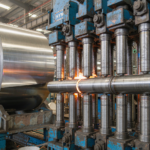
The ERW line runs as a continuous sequence. First, the strip is un-coiled and levelled to remove coil set. Edge milling trims the strip edges for a clean weld. A series of forming rolls gradually bends the strip into a circular shape. At the apex, high-frequency current passes through the abutting edges, heating them to forging temperature; squeeze rolls press the molten interface into a solid weld. The weld is then cooled and normalized or annealed to restore toughness. Sizing rolls bring the pipe to final OD and roundness, and the pipe is cut to length, end-finished and inspected.
Scheduling, Length and Tolerance Options
| Option | Typical value |
|---|---|
| Fixed length | 6 m / 12 m |
| Random length | 5-12 m mixed |
| Double random | up to 24 m |
| OD tolerance | +/- 0.5% or +/- 0.5 mm |
Selection Guide by Service
| Service | Recommended grade |
|---|---|
| Water, air, low pressure | ASTM A53 Gr B |
| Oil & gas line | API 5L Grade B/X42 |
| Structural truss | ASTM A500 Gr B |
| EU structure | EN 10219 S355 |
Quality Documents We Provide
Every order ships with a commercial invoice, packing list, mill test certificate (EN 10204 2.2 or 3.1), and on request a third-party inspection report. For line-pipe grades we can supply API 5L monogrammed material with full traceability. Keep these documents with the job file; they are required for welding procedure qualification and for any later audit of the structure.
Typical Project Example
A water utility ordered 200 tonnes of 168.3 mm OD x 4.5 mm wall A53 Grade B ERW pipe for a distribution main. We supplied plain-end black pipe in 12 m lengths, hydrostatic-tested, bundled and container-shipped with full MTC. The contractor welded it directly to flanges on site, and the consistent wall and roundness reduced fit-up time compared with their previous mixed-source supply.
Frequently Asked Questions
ERW or seamless? For non-critical pressure and structural use, ERW is the economical choice; use seamless where code or pressure demands it.
Can it be galvanized? Yes, we offer in-line or post galvanizing for corrosion service.
What lengths? Fixed 6/12 m or random lengths; cut-to-length available.
ERW vs Seamless vs LSAW at a Glance
| Type | Make | Best use | Price |
|---|---|---|---|
| ERW | Strip + HF weld | Structural, low-pressure | Low |
| Seamless | Pierced billet | High pressure, fatigue | High |
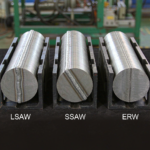
| LSAW | Plate + longitudinal weld | Large OD, line pipe | Medium-High |
How to Read an ERW Mill Certificate
The MTC lists heat number, grade, dimensions, tensile and yield results, flattening or hydrostatic test result, and weld inspection method. Match the heat number on the certificate to the marking on the pipe bundle. For line pipe, confirm the API 5L monogram and the supplemental tests (e.g. Charpy, hardness) you specified. A consistent certificate-to-product link is the foundation of traceability and weld procedure qualification.
Common Ordering Mistakes
Avoid: specifying only “ERW pipe” without grade and schedule; forgetting end finish (plain vs bevelled); mixing metric and imperial sizes; and omitting the certificate type. Each omission forces a clarification round and risks the wrong product. A complete line item – grade, OD, wall, length, end finish, standard, certificate – prevents these errors and speeds quotation.
ERW in Structural Systems
In buildings and plants, ERW pipe doubles as structural column, brace and handrail as well as conduit and process line. Its consistent roundness and straightness simplify connections, and the lower cost versus seamless frees budget for other elements. For structural use, specify ASTM A500 or EN 10219 and confirm the design yield; for process use, A53 or API 5L with the right pressure rating. Matching the grade to the role is what makes the structure both safe and economical.
Coating and Lining Options
| Option | Use |
|---|---|
| Black (as-welded) | Indoor, temporary |
| Painted | General structure |
| Galvanized | Outdoor, corrosive |
| Internal lining | Water, slurry |
How to Request a Quote Correctly
Send: grade and standard, outside diameter, wall thickness (or schedule), length and end finish, quantity, coating, certificate type and destination port. The more complete the inquiry, the faster and more accurate the quote. Include your intended use so the supplier can flag any standard mismatch before production, which is far cheaper than correcting it after the pipe is on the water.
Summary: Why Choose Huaxia-Steel for ERW Pipe
Huaxia-Steel combines mill-direct pricing with disciplined quality control across the full ERW range, from small-diameter structural tube to large line-pipe sizes. We hold common grades and sizes in stock, offer flexible standards (A53, API 5L, A500, EN 10219, GB/T), and provide full documentation including EN 10204 certificates and third-party inspection. Whether your need is a single trial container or a recurring supply agreement, our team can match the grade, finish and length to your application and deliver on a predictable schedule with the paperwork your customs broker expects.
Quick Reference
ERW: electric resistance welded pipe from strip. Schedule: wall-thickness series (SCH 10-160). Plain end: cut square for welding. Bevelled end: angled for butt welds. Hydrostatic test: pressure test of the finished pipe. Nominal bore: the named diameter, not always the exact OD. Keep these terms handy when reviewing quotes and inspection reports so specifications are unambiguous.
Request a Quote
Send us your required OD, wall thickness, grade, length and quantity, and Huaxia-Steel will return an ex-works or CFR/CIF quotation with lead time. Contact our sales team today.