Carbon Steel Shaft Collar — Factory Direct Supplier | Huaxia-Steel
A carbon steel shaft collar is a simple, inexpensive mechanical device used to locate, space, and secure components on a rotating shaft. Also called a shaft ring, stop collar, or set-screw collar, it prevents axial movement of bearings, pulleys, gears, sprockets, and couplings without the need for grooves, shoulders, or retaining rings machined into the shaft. This page describes our range of carbon steel shaft collars, covering types, sizes, materials, standards, selection, and installation practice.
We supply one-piece set-screw collars, two-piece split collars, clamping collars, and heavy-duty designs in bore sizes from 3 mm to 150 mm. Materials range from low-carbon steel with a zinc finish to medium-carbon and alloy steel with black oxide, phosphate, or hardened and ground execution. All collars are supplied with traceable material certificates and inspection records.
Product Overview
The basic shaft collar is a ring with a precisely bored centre and one or more radial set screws. The collar slides to the required position on the shaft and the set screws are tightened against the shaft surface to lock it in place. More sophisticated clamping collars use a split ring and a tangential screw to generate a uniform clamping force around the full circumference, which provides much higher holding power without marring the shaft.
The appeal of the shaft collar is its simplicity. It requires no shaft modification, it can be repositioned during assembly, and it costs a small fraction of a machined shoulder. In practice, however, holding power varies enormously between types. A single set screw on a smooth hardened shaft may slip at a modest axial load, while a two-piece clamping collar of the same size can resist several kilonewtons.
Types of Carbon Steel Shaft Collars
| Type | Construction | Holding power | Best for |
|---|---|---|---|
| One-piece set screw | Solid ring, one or two radial screws | Low to medium | Cost-sensitive, non-critical positioning |
| Two-piece split | Two halves bolted together | Medium | Assembly around an existing shaft without disassembly |
| One-piece clamping | Split ring with tangential screw | High | Precision positioning, repeated adjustment |
| Two-piece clamping | Split halves with multiple clamping screws | Very high | Heavy loads, easy installation on long shafts |
| Heavy-duty / double split | Thick section, multiple screws | Highest | High axial load and vibration |
| Threaded collar | Internal thread on a threaded shaft | Medium | Adjustable stops on lead screws |
For general machinery where the collar only locates a bearing, a one-piece set-screw collar is usually sufficient. Where the collar resists a meaningful axial force, or where the shaft surface must remain unmarked, a clamping design is the safer choice. Two-piece collars are indispensable when the shaft cannot be removed or when the collar must be fitted between two already-assembled components.
Sizes and Weight Specification
| Bore diameter | Outer diameter | Width | Approx. weight | Set screw size |
|---|---|---|---|---|
| 3 mm | 7 mm | 4 mm | 1 g | M2 |
| 6 mm | 12 mm | 6 mm | 4 g | M3 |
| 8 mm | 15 mm | 7 mm | 8 g | M4 |
| 10 mm | 18 mm | 8 mm | 14 g | M4 |
| 12 mm | 22 mm | 9 mm | 24 g | M5 |
| 15 mm | 26 mm | 10 mm | 38 g | M5 |
| 20 mm | 34 mm | 12 mm | 78 g | M6 |
| 25 mm | 42 mm | 14 mm | 135 g | M6 |
| 30 mm | 50 mm | 16 mm | 220 g | M8 |
| 40 mm | 65 mm | 18 mm | 420 g | M8 |
| 50 mm | 80 mm | 20 mm | 720 g | M10 |
| 75 mm | 115 mm | 25 mm | 1.9 kg | M12 |
| 100 mm | 150 mm | 30 mm | 3.8 kg | M12 |
| 150 mm | 210 mm | 35 mm | 8.5 kg | M16 |
Dimensions follow the common metric light and heavy series; imperial bore sizes from 1/8 inch to 6 inches are also available. Weight is calculated for the plain carbon steel version and excludes screws. Non-standard bore diameters, thinner widths, and special outside diameters can be produced against a drawing.
Dimensional Tolerances
- Bore tolerance: H7 as standard for sliding fit; H6 available for precision locations.
- Face perpendicularity: within 0.02 mm per 25 mm of bore diameter for clamping types.
- Parallelism of faces: within 0.02 mm to ensure even contact with the adjacent component.
- Set-screw thread: metric 6H, inspected with GO/NO-GO gauges.
- Surface finish on bore: Ra 1.6 micrometres or better for clamping collars.
- Concentricity: outside diameter to bore within 0.05 mm for balanced rotating assemblies.
Bore tolerance deserves careful attention. A collar with an oversized bore will sit off-centre and can cause vibration in a high-speed assembly, while an undersized bore will not fit. If the shaft is ground to a tight tolerance such as h6, confirm the mating collar bore before ordering large quantities.
Available Grades and Materials
| Material | Condition | Finish | Application |
|---|---|---|---|
| AISI 1018 / Q235 | As machined | Zinc plate or black oxide | General-purpose low-load positioning |
| AISI 1045 / 45# | Machined or hardened | Black oxide or phosphate | Moderate load and wear |
| AISI 4140 | Quenched and tempered | Black oxide | High-load and high-vibration shafts |
| AISI 1215 | Free machining | Zinc plate | High-volume set-screw collars |
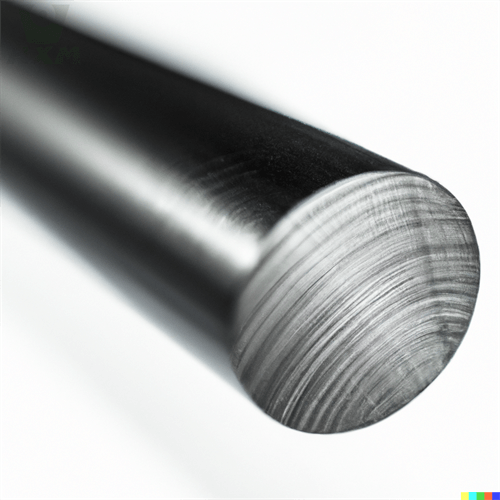
Most collars are machined from cold-drawn bar or from tube for larger diameters. For high-volume standard sizes we use automated bar-fed lathes, which hold tight bore tolerances and keep costs low. Hardened collars are heat treated after machining and then finish-ground on the faces and bore to remove distortion.
Manufacturing Standards
Shaft collars are primarily produced to dimensional standards established by leading manufacturers and to customer drawings; there is no single universal product specification. Set screws are made to ISO 4026 / DIN 913 for metric hex-socket types and to ANSI B18.3 for imperial sizes. Material certificates follow EN 10204 3.1, and heat treatment is performed to a documented hardness range. Surface finishes such as black oxide follow ASTM D769 or the relevant military specification where required.
Our production sequence includes bar incoming inspection, boring and facing, split machining for clamping types, thread tapping, deburring, heat treatment where specified, surface finishing, and final inspection. Each batch is sampled for bore size, face perpendicularity, and hardness, and a first-article inspection report can be provided for new parts.
Selection Guide
- For simple positioning with minimal axial load, choose a one-piece set-screw collar with two screws at 90 degrees.
- For a smooth hardened shaft or a load above a few hundred newtons, choose a clamping collar.
- For assembly around an existing shaft, choose a two-piece split or two-piece clamping design.
- For high-speed rotating assemblies, prefer a balanced one-piece clamping collar and check the outside diameter concentricity.
- For corrosive environments, specify zinc plating, phosphate, or stainless steel instead of black oxide.
- For repeated adjustment, choose a clamping design rather than a set-screw type, which marks the shaft each time it is moved.
A useful rule is to compare the collar holding power with the axial load in the application, including any shock or acceleration factor. Catalogue holding-power figures are determined under ideal conditions on a clean, smooth shaft. Real-world conditions — oil on the shaft, a soft shaft material, or vibration — reduce the achievable grip, so a generous safety margin is advisable.
Installation Practice
Before fitting, clean the shaft and the collar bore of oil and debris. Position the collar at the required location, then tighten the set screws evenly. Where two set screws are fitted, tighten each a little at a time so the collar remains square to the shaft. If the shaft material is soft, consider using a screw with a cup point that bites cleanly rather than a flat point that relies purely on friction.
For clamping collars, tighten the tangential screw to the torque stated in the product data. Over-tightening can distort the bore and make the collar difficult to remove; under-tightening leaves the collar free to slip. After the first operating cycle, recheck the screw torque, particularly where the assembly is subject to vibration or temperature change.
Applications
Shaft collars are found in motors and gearboxes, pumps, conveyors, packaging machines, printing equipment, robotics, agricultural machinery, medical devices, and laboratory instruments. They serve as bearing stops, sprocket locators, encoder mounts, limit stops on linear shafts, and spacers between rotating components. In many assemblies several collars of different diameters are used on the same shaft train.
They are also common in non-rotating roles: as stops on guide rods, as adjustable limit indicators, and as clamps for mounting sensors. This versatility is why shaft collars are stocked in almost every industrial maintenance workshop.
Quality Assurance
Incoming bar stock is checked against the ordered grade and heat number. During machining, bore diameter is verified with plug gauges or a calibrated internal micrometer at defined intervals, which detects tool wear before parts drift out of tolerance. Face perpendicularity is checked on a surface plate with a dial indicator for clamping types.
Set-screw threads are gauged, and assembled collars are checked for screw seating and freedom from burrs that could injure the installer or damage adjacent parts. Heat-treated collars are hardness tested on a sampled basis. Coating appearance and thickness are checked before packing, and all inspection records are retained against the lot number.
Packaging and Shipment
Small collars are packed in cartons of 100 to 1,000 pieces, sorted by bore size and type, with screws bagged separately or loosely fitted. Larger collars are packed in wooden crates or on pallets and protected against impact during transit. Each label states bore size, type, material, finish, and lot number.
We export from major Chinese ports with commercial invoice, packing list, and material certificates. Mixed containers can combine collars with shafts, keys, couplings, and other power-transmission components. Lead time for standard sizes is typically 7 to 15 days; custom bores, special materials, or non-standard designs require confirmation before ordering.
Frequently Asked Questions
What is the difference between a set-screw and a clamping collar?
A set-screw collar locks with radial screws that press on the shaft and may mark it. A clamping collar uses a split ring and tangential screw to grip the shaft evenly, giving higher holding power without damage.
Can a shaft collar be used on a hardened shaft?
Yes, but a clamping collar is preferred. Set screws can struggle to bite into a hard smooth surface and may slip under load.
Do you supply imperial bore sizes?
Yes. We produce both metric and imperial shaft collars, including non-standard bores against a drawing.
How tight should the set screws be?
Tighten evenly until the collar resists axial force without distorting. Over-tightening can damage the shaft or deform a thin-walled collar.
Can collars be hardened?
Yes. Medium-carbon and alloy steel collars can be quenched and tempered to a specified hardness range, followed by finish grinding for accuracy.
Request a Quote
We supply carbon steel shaft collars in set-screw, split, clamping, and heavy-duty designs with metric and imperial bores. Send your bore size, type, quantity, and destination port for a factory-direct quotation and lead time.
Contact our sales team at [email protected] with your grade, dimensions, quantity, and destination port. We reply with a mill-direct quotation, lead time, and full documentation within one business day.