Carbon Steel Weight Calculator: Formulas & Per-Meter Weight for Pipe, Plate & Bar
Knowing the exact weight of carbon steel before you order is not optional — it drives freight cost, crane capacity, structural load calculations, and your final landed price. A small miscalculation on a 500-ton order can mean a container that exceeds legal axle limits or a structure that under-performs.
This guide gives you the standard carbon steel weight formulas for the most common shapes — round bar, flat bar, square bar, plate, pipe, and tube — plus ready-to-use per-meter weight tables so you can estimate quickly and accurately.

The One Number You Need: Density
Almost every steel weight formula reduces to the same idea: volume × density. Carbon steel density is typically taken as 7.85 g/cm³ (7850 kg/m³, or 0.284 lb/in³). Use 7.85 for all ordinary carbon grades — the difference between 1018 and 1045 is negligible for estimating.
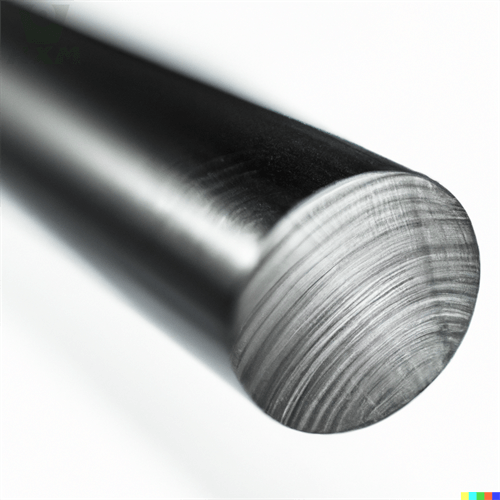
Round Bar Weight Formula
For a solid round bar of diameter D (mm):
Weight per meter (kg/m) = 0.00617 × D × D
Example: a 50 mm round bar = 0.00617 × 50 × 50 = 15.43 kg/m.
| Diameter (mm) | Weight (kg/m) |
|---|---|
| 10 | 0.62 |
| 20 | 2.47 |
| 30 | 5.55 |
| 50 | 15.43 |
| 80 | 39.49 |
| 100 | 61.70 |
Flat Bar Weight Formula
For flat bar of width W and thickness T (mm):
Weight per meter (kg/m) = W × T × 0.00785
Example: 100 mm × 10 mm flat = 100 × 10 × 0.00785 = 7.85 kg/m.
Square Bar Weight Formula
For square bar of side A (mm):
Weight per meter (kg/m) = A × A × 0.00785
Example: 40 mm square = 40 × 40 × 0.00785 = 12.56 kg/m.
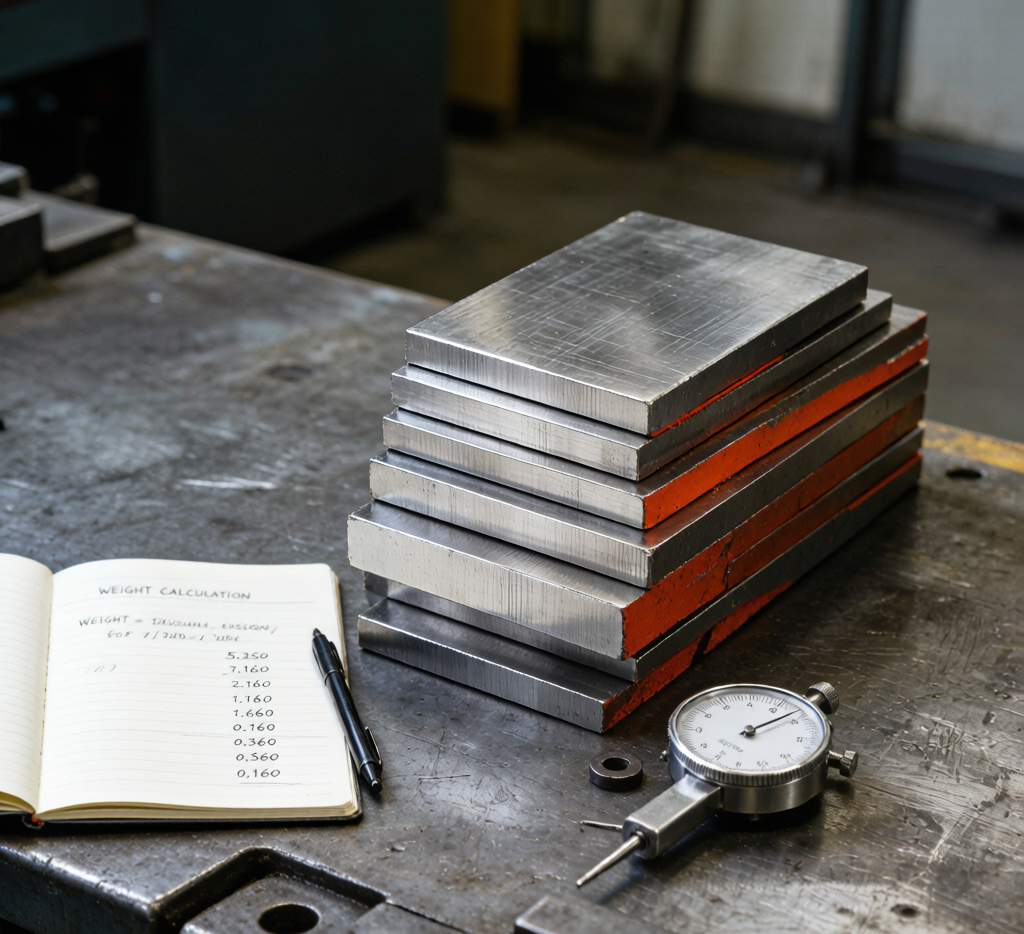
Plate Weight Formula
For plate of area in m² and thickness T (mm):
Weight (kg) = Length(m) × Width(m) × T(mm) × 7.85
Example: 2 m × 1 m × 10 mm plate = 2 × 1 × 10 × 7.85 = 157 kg.
| Thickness (mm) | Weight per m² (kg) |
|---|---|
| 3 | 23.55 |
| 6 | 47.10 |
| 10 | 78.50 |
| 20 | 157.00 |
| 40 | 314.00 |
Pipe Weight Formula (Round Hollow Section)
For a pipe with outer diameter OD and wall thickness WT (mm):
Weight per meter (kg/m) = 0.02466 × WT × (OD − WT)
Example: 114 mm OD × 6 mm wall = 0.02466 × 6 × (114 − 6) = 15.95 kg/m.
| OD (mm) | Wall (mm) | Weight (kg/m) |
|---|---|---|
| 33.4 | 3.4 | 2.61 |
| 60.3 | 3.9 | 5.55 |
| 114.3 | 6.0 | 16.07 |
| 168.3 | 7.1 | 28.57 |
| 219.1 | 8.2 | 43.20 |
Rectangular & Square Tube Formula
For a rectangular hollow section with sides A and B (mm) and wall T (mm):
Weight per meter (kg/m) = 0.0157 × T × (A + B − 2 × T)
Example: 100 × 50 × 4 mm tube = 0.0157 × 4 × (100 + 50 − 8) = 8.93 kg/m.
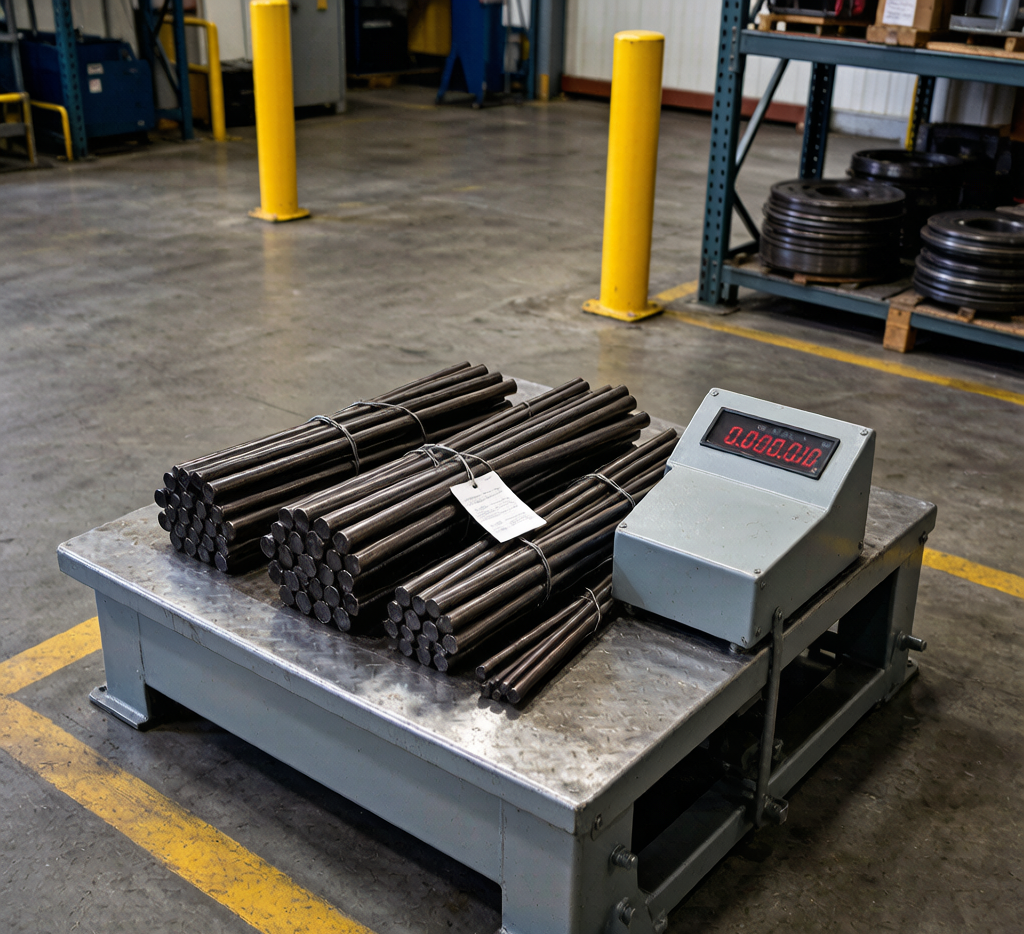
Worked Example: Estimating a Full Order
Suppose you need 200 pieces of 50 mm round bar, each 6 meters long:
- Per-meter weight = 15.43 kg/m
- Per piece = 15.43 × 6 = 92.58 kg
- Total = 200 × 92.58 = 18,516 kg (≈ 18.5 tons)
Now you can check container payload (a 20ft container holds roughly 21-28 tons depending on routing) and confirm the order fits one or two containers.
Common Estimation Mistakes
- Forgetting tolerance: actual weight is often 1-3% above theoretical; always add a margin for freight planning.
- Mixing units: keep everything in mm and meters; convert at the end.
- Ignoring coating: galvanizing adds ~3-5% to the weight of small sections.
Frequently Asked Questions
Does carbon content change the weight?
Negligibly. Density stays at ~7.85 g/cm³ across standard carbon grades, so one formula fits all.
Theoretical vs actual weight — which should I use?
Use theoretical weight for quoting and planning; rely on the supplier’s certified scale weight (shown on the MTC) for final settlement.
Get an Accurate Quote from Huaxia-Steel
Send us your bill of materials with dimensions and quantities, and our team will calculate exact weights, container loading, and a competitive FOB/CIF price. Contact Huaxia-Steel for fast, reliable carbon steel supply.