Alloy steel round bars are the backbone of high-strength shafts, gears, fasteners and structural components. Two grades dominate buyer enquiries in this family: AISI/SAE 4130 and AISI/SAE 4340. They look similar on a mill test certificate because both contain chromium and molybdenum, yet they behave very differently in service — and the price gap between them can reach 30-50%. Choosing the wrong grade either wastes money on capability you do not need, or worse, causes premature failure in a duty cycle the grade cannot survive. This guide compares 4130 vs 4340 alloy steel across chemistry, mechanical properties, hardenability, weldability, machining and cost, and closes with a practical selection checklist used by sourcing teams.
1. Chemical Composition: The Nickel Makes the Difference
The single biggest difference between the two grades is nickel. 4130 contains no nickel at all, while 4340 carries 1.65-2.00% Ni. That nickel dramatically deepens hardenability and improves low-temperature toughness. Here is the standard chemistry side by side (SAE J404, ladle analysis, %):
| Element | 4130 | 4340 |
|---|---|---|
| Carbon (C) | 0.28–0.33 | 0.38–0.43 |
| Silicon (Si) | 0.15–0.35 | 0.15–0.35 |
| Manganese (Mn) | 0.40–0.60 | 0.60–0.80 |
| Chromium (Cr) | 0.80–1.10 | 0.70–0.90 |
| Nickel (Ni) | — | 1.65–2.00 |
| Molybdenum (Mo) | 0.15–0.25 | 0.20–0.30 |
| Phosphorus (P) max | 0.035 | 0.035 |
| Sulfur (S) max | 0.040 | 0.040 |
Three observations matter for buyers. First, 4340 runs roughly 0.10% higher carbon, which lifts achievable surface hardness but reduces weldability. Second, the 1.7-2.0% nickel in 4340 is the main cost driver — nickel alloying additions routinely add 25-45% to bar price depending on market conditions. Third, if a supplier offers “4330 vanadium modified” or other substitutes, the composition rules change again, so always verify the MTC against SAE J404 or the equivalent EN 1.6582 (34CrNiMo6) designation when sourcing in Europe.
2. Mechanical Properties After Quench and Temper
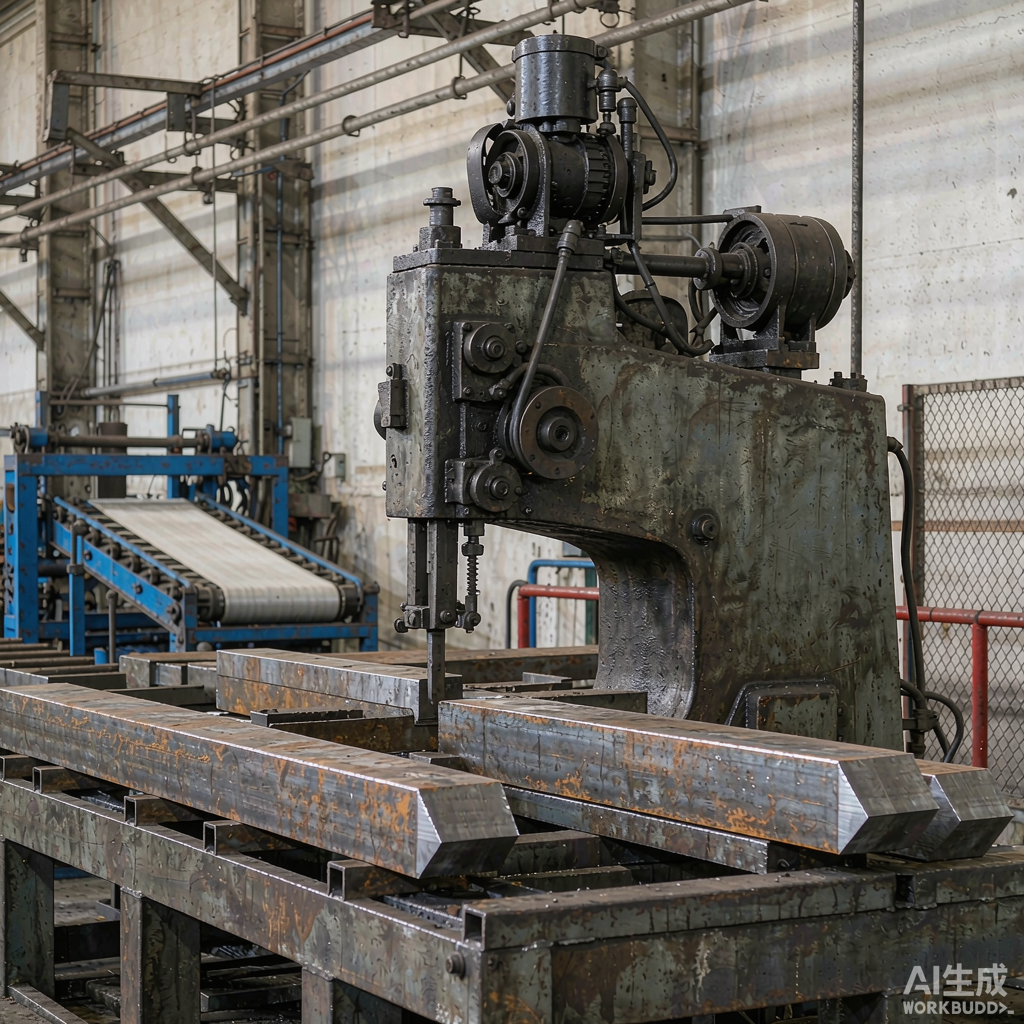
Both grades are supplied either normalized or quenched and tempered (Q&T). The following figures reflect typical Q&T conditions at 25 mm diameter, water or oil quench, tempered at 540 °C (numbers vary with section size and tempering temperature):
| Property | 4130 Q&T | 4340 Q&T |
|---|---|---|
| Tensile strength | 670–900 MPa | 1080–1280 MPa |
| Yield strength (0.2%) | 435–620 MPa | 930–1100 MPa |
| Elongation in 50 mm | 18–22% | 12–15% |
| Reduction of area | 50–60% | 40–50% |
| Hardness (typical) | 197–241 HB | 320–380 HB |
| Charpy V-notch, room temp | 60–90 J | 50–80 J |
| Charpy V-notch, −40 °C | 20–40 J | 40–60 J |
Read the table carefully: 4340 delivers roughly 50-60% higher tensile and more than double the yield strength of 4130 in comparable heat-treated conditions. What is less obvious is the −40 °C row. Because of its nickel content, 4340 retains better impact energy in cold climates, which is why it appears in landing gear components, arctic-grade shafts and cold-region mobile equipment. 4130, by contrast, offers better ductility and easier machining at equal strength levels below about 700 MPa.
3. Hardenability: Section Size Is the Real Limit
Hardenability — the depth to which a steel can be hardened during quenching — is where the two grades separate most clearly. On a Jominy end-quench test, 4130 shows a J1.5 hardness of roughly 50-55 HRC, but hardness falls off steeply beyond 10 mm from the quenched end. Practical rules of thumb:
- 4130: through-hardens reliably up to about 25-30 mm diameter (oil quench) or 40 mm (water quench with higher distortion risk). Above that, the core transforms to ferrite-pearlite and the strength advantage of Q&T is lost in the center of the bar.
- 4340: through-hardens up to about 75-100 mm diameter in oil, and with interrupted quench techniques can reach 125 mm. Its ideal critical diameter is roughly three times that of 4130.
- 4130 large sections: for shafts above 50 mm that only need a hard case, 4130 can be induction hardened (surface 52-58 HRC) while keeping a tough core — often the most economical route.
A common sourcing error: a buyer specifies 4340 for an 80 mm shaft because “it is stronger”, but the shop only has limited-quench capability. If the heat treater cannot guarantee the quench severity, even 4340 will underperform its datasheet. Always match the grade not just to the load, but to the section size and the quench facilities available in your supply chain.
4. Weldability and Fabrication
4130 is widely welded in aircraft tubular structures and roll cages. Its carbon equivalent (CEV ≈ 0.50) is moderate; with preheat at 200-260 °C, low-hydrogen electrodes (E7018 or ER80S-D2 filler) and slow cooling, sound welds are routine. Post-weld stress relief at 600-650 °C is recommended for restrained joints.
4340 sits at CEV ≈ 0.75-0.85, placing it firmly in the “difficult to weld” category. Welding is possible — aerospace and oil tool shops do it daily — but it demands 300-370 °C preheat, immediate hydrogen bake-out at 200-250 °C, and full re-austenitizing plus temper to restore properties in the heat-affected zone. Underbead cracking risk is high if hydrogen is not controlled. For fabricated weldments, 4130 (or a weldable structural alloy) is almost always the right call; reserve 4340 for machined-from-solid components.
5. Machinability, Price and Lead Time
On a machinability scale where B1112 free-cutting steel equals 100%, 4130 annealed scores about 65-70% and 4340 annealed about 55-60%. In practical terms, shops report 10-20% longer cycle times and higher tool wear on 4340, driven by its higher hardness and abrasiveness after Q&T.
Price follows the alloy bill of materials. As a ballpark for export orders from China (2026 market): 4130 hot rolled round bar lands in the USD 750-950 per ton range, while 4340 typically runs USD 1050-1350 per ton — a 30-50% premium, most of it nickel. Minimum order quantities are similar (usually 3-5 tons per heat for direct mill supply), but 4340 often carries 2-4 weeks longer lead time because fewer mills roll it and nickel-bearing heats are produced on order rather than from stock.
6. Typical Applications by Grade
| Application | Better fit | Why |
|---|---|---|
| Aircraft engine mounts, roll cages, race chassis tubing | 4130 | Weldable, strong enough at thin wall, light |
| General machine shafts ≤ 40 mm | 4130 | Through-hardens, economical |
| High-pressure hydraulic cylinders, piston rods | 4130 + induction harden | Case hardness without alloy premium |
| Landing gear, heavy crankshafts | 4340 | Deep hardenability, high yield, cold toughness |
| Heavy gear blanks > 75 mm | 4340 | Core strength after through-hardening |
| Oil tool components (drill collars, stabilizers) | 4340 (or 4145H) | Strength at large section, fatigue life |
| High-strength structural bolts | 4130 Q&T | Meets property class at lower cost |
7. Quality Assurance Points When Ordering
- Standard reference: order to SAE J404 (US), or to EN 1.6582 / 34CrNiMo6 for 4340 and EN 1.7218 / 25CrMo4 for 4130 in European projects. China mills supply under GB/T 3077 as 35CrMo (≈4130) and 40CrNiMoA (≈4340).
- Heat treatment condition: state whether you need normalized (+N), quenched and tempered (+QT), or supplied annealed for machining. Never accept “as rolled” for Q&T-grade applications.
- Test report: require an EN 10204 3.1 MTC with ladle analysis, tensile, hardness and (for critical parts) Jominy hardenability and Charpy at your service temperature.
- UT inspection: for shafts above 100 mm, specify ultrasonic testing to SEP 1921 / ASTM A388 class requirements — heavy sections can carry internal inclusions that only UT will find.
- Third-party inspection: for orders above 20 tons, SGS/BV/TUV witnessed testing costs 0.5-1% of order value and eliminates most disputes.
8. FAQ: 4130 vs 4340 Alloy Steel
Can I substitute 4130 for 4340 to save cost?
Only if the section is under about 30 mm and the required yield strength is below roughly 600 MPa. Above those limits, 4130 will not through-harden and the design margin disappears. Reverse substitution (4340 for 4130) is always technically safe but overpays by 30-50%.
Which grade is better for welding?
4130 by a wide margin. With proper preheat it welds reliably with common consumables. 4340 requires stringent preheat, hydrogen control and re-heat treatment, making it unsuitable for typical fabrication shops.
What surface hardness can each grade reach?
Both reach 55-60 HRC surface when quenched properly, but 4130 only holds full hardness in thin sections. For wear surfaces on larger parts, induction hardening 4130 to 52-58 HRC with a 1-3 mm case is the standard solution.
Are 35CrMo and 40CrNiMoA acceptable equivalents?
Yes — Chinese GB/T 3077 grades 35CrMo and 40CrNiMoA are the recognized national equivalents of 4130 and 4340 respectively, with near-identical chemistry windows. For export compliance, ask the mill to dual-certify to SAE J404 or EN standards on the MTC.
How do I verify the grade I received is correct?
Two fast checks: optical emission spectroscopy (OES) will confirm nickel presence (4340 shows ~1.7-2.0% Ni, 4130 shows none) for around USD 30 per sample; hardness testing of the cross-section confirms heat treatment. Both can be done by a third-party inspector before shipment.
9. Fatigue and Service-Life Considerations
For rotating shafts, the design driver is often fatigue strength rather than static yield. The fully reversed bending fatigue limit (smooth specimens, 107 cycles) is roughly 340-410 MPa for 4130 Q&T at 700 MPa tensile and 500-620 MPa for 4340 Q&T at 1100 MPa tensile — but polished, notched, or corroded surfaces cut these numbers dramatically. Two practical implications for buyers:
- Surface finish spec: a ground finish (Ra ≤ 0.8 μm) on a fatigue-critical shaft preserves 90-100% of the fatigue limit, while as-forged or heavily turned surfaces can cost 30-40%. Specify finish explicitly on drawings.
- Notch sensitivity: 4340’s higher strength brings higher notch sensitivity. Sharp keyway corners or thread roots that 4130 tolerates may initiate cracks in 4340 parts. Good designers roll or cold-roll thread roots on 4340 shafts, restoring 30-50% of fatigue life.
- Decarburization control: both grades lose fatigue strength if the heat treatment leaves a decarburized skin. Order “no decarb” condition or specify machining stock of 0.5-1.0 mm per side to remove the layer after Q&T.
Where duty cycles exceed 108 reversals (high-speed spindles, continuously running compressors), ask the mill for rotator-bent fatigue data or plan your own qualification testing — generic handbook values hide significant heat-to-heat scatter at these strength levels.
10. Cost Optimization Strategies in Procurement
Experienced sourcing teams use several levers to hold alloy bar costs down without compromising the design:
- Size-to-standard diameter list: non-standard diameters force special rolling or heavy peeling allowances. Choosing the nearest standard size (25, 40, 50, 60, 80, 100 mm) typically saves 8-15% versus custom sizes.
- Buy normalized, machine, then Q&T: ordering annealed or normalized bar and heat treating after rough machining reduces distortion losses and lets the heat treater tailor tempering to actual section — but confirm the heat treater’s quench capability matches your hardenability requirements.
- Nickel timing for 4340: nickel surcharges move with the LME nickel price. For annual-volume buyers, a quarterly price-adjustment clause tied to a published index beats eating spot volatility or overpaying for fixed pricing.
- Mill-direct vs stockist: mill-direct supply saves 10-20% but takes 3-6 weeks; stockists charge for immediate availability. Split urgent maintenance orders (stockist) from planned production orders (mill-direct).
- Consolidate heats: ordering one heat of 4340 across several part numbers reduces MOQ waste and simplifies traceability. Share the heat across your product family in the production plan.
11. Common Supply-Chain Failures and How to Prevent Them
Field experience with imported alloy bar shows a repeating pattern of problems — all preventable with the right specification language:
| Problem observed | Root cause | Prevention |
|---|---|---|
| Shaft broke at 60% of design load | 4130 substituted for 4340 in 80 mm section; core never hardened | Require Jominy band or OES-verified Ni content; cross-section hardness check at receiving |
| Parts cracked during machining | Residual stress from asymmetric quench | Order stress-relieved (+SR) condition or rough-machine before final temper |
| Hardness varies ±6 HRC across bar | Non-continuous tempering furnace, poor temperature uniformity | Specify furnace uniformity ±10 °C and survey reports (AMS 2750 style) |
| Weldments cracked weeks later | Delayed hydrogen cracking in 4340 HAZ | Prohibit field welding of 4340; specify 4130 for welded fabrications |
| MTC chemistry matches but part fails | MTC not from the actual heat (certificate fraud) | PMI spot check with portable OES at receiving; penalty clause in contract |
One additional discipline pays for itself: incoming material verification on the first shipment of any new supplier — chemistry (OES), hardness traverse, and microstructure sample — costs under USD 200 and validates the entire supply chain before parts enter production.
12. Delivery Conditions, Stock Sizes and Documentation
Typical export availability from Chinese and Asian mills for both grades:
| Parameter | Typical range |
|---|---|
| Diameter | 12 – 500 mm hot rolled/forged; peeled & ground 20 – 200 mm |
| Length | 3 – 6 m random; fixed length ±50 mm on request |
| Conditions | As rolled (+AR), normalized (+N), soft annealed (+A), Q&T (+QT) |
| Surface options | Black, peeled, turned & polished, ground h9/h8 |
| MOQ (mill direct) | 3 – 5 t per heat; stock sizes sometimes 1 t |
| Documents | EN 10204 3.1 MTC (3.2 with third party), CE marking data if requested |
When you compare quotations between suppliers, normalize them to the same delivery condition and surface — a “cheap” as-rolled offer against a “expensive” peeled-and-ground offer is not a comparison at all. The final selection should weigh machining cost in your plant, not just the invoice price per ton.
13. Worked Example: Comparing Two Quotations Like a Pro
Suppose you need 12 tons of 60 mm bar for hydraulic shafts, rated at 750 MPa tensile after Q&T. Supplier A quotes 4340 +QT at USD 1,240/ton; Supplier B quotes 4130 +QT at USD 890/ton and claims it “meets the strength”. The temptation is to save USD 4,200. Run the check: 60 mm exceeds 4130’s reliable through-hardening diameter, so Supplier B’s Q&T will not deliver 750 MPa at the core — the MTC will show it (tensile tested on a 25 mm test coupon, not the actual bar). The “strength” claim survives only on paper. The correct comparison is 4130 at 50 mm with induction hardening for the wear surface, or 4340 at 60 mm — the decision then turns on shaft loads and bearing fits, not invoice price. This five-minute analysis separates competent suppliers from certificate writers, and it is exactly the conversation a good mill’s technical desk will have with you before quoting.
14. Alternatives Worth Knowing
- 4140 (42CrMo4): the middle option — better hardenability than 4130 (through-hardens ~50 mm) at a price between 4130 and 4340. When your section is 35-55 mm, 4140 often wins the cost-per-capability analysis.
- 4145H: modified 4140 with guaranteed hardenability band, the oil-tool industry standard for drill collars and large stabilizers.
- 34CrNiMo6 (1.6582): the European near-equivalent of 4340 — order this designation for EU projects to avoid equivalence debates.
- Microalloyed steels (e.g. 49MnVS3): for forged crank-type parts, controlled cooling replaces Q&T entirely, cutting heat-treatment cost 15-25% where fatigue requirements permit.
Keep this hierarchy in your sourcing playbook: 4130 for weldable and ≤30 mm sections, 4140 for the middle range, 4340 (or 34CrNiMo6) for deep sections and maximum strength. Deviating downward for price is a design change, and it should be approved by the engineer who signed the drawing — not by procurement alone.
15. Delivery Condition Cheat Sheet
The same grade can arrive with very different properties depending on delivery condition. This quick reference aligns expectations between your drawing, your PO and the MTC:
| Condition | Symbol | 4130 typical hardness | 4340 typical hardness | Use case |
|---|---|---|---|---|
| As rolled | +AR | ~200 HB | ~220 HB | Re-rolling stock only — not for finished parts |
| Soft annealed | +A | ≤ 217 HB | ≤ 248 HB | Heavy machining before heat treatment |
| Normalized | +N | 200–230 HB | 240–280 HB | Dimensional stability, moderate strength |
| Quenched & tempered | +QT | 28–34 HRC (typical) | 36–44 HRC (typical) | Full strength per grade — the standard for shafts |
When comparing supplier quotations, always normalize for condition and surface finish — an as-rolled offer is not comparable to a peeled-and-Q&T offer, and the cheapest ton rarely becomes the cheapest finished part once machining and heat-treatment losses are counted. The strongest sourcing position is a drawing-level specification: grade, condition, surface, tolerance and test requirements on one page, so every bidder quotes the same product.
Need 4130 or 4340 alloy steel round bar, forged shafts or custom Q&T bar from a certified China mill? Send us your grade, diameter and quantity — we respond with mill options, MTC samples and a firm FOB/CIF quote within 24 hours, with SGS inspection available before shipment.