A283 vs A36 Steel Plate: Which Carbon Steel Should You Buy?
A283 and A36 are two of the most commonly requested carbon steel plate grades in procurement RFQs from construction, fabrication, and pressure-equipment buyers. Both are low-carbon structural steels covered by ASTM standards, both are sold as hot-rolled plate, and both can look interchangeable on a mill certificate — but they are not identical. A36 is the general-purpose structural grade used in buildings, bridges, and general fabrication. A283 is a pressure-vessel-quality grade with tighter chemistry controls and a different property table, historically written for fusion-welded boilers and storage tanks. This guide compares A283 vs A36 steel plate across chemistry, mechanical properties, impact behavior, certification, price, and typical applications so you can specify the right grade on your next purchase order.
1. Quick Answer: A283 or A36?
2. Chemical Composition Compared
| Element | A36 max (%) | A283 Gr C max (%) |
|---|---|---|
| Carbon | 0.25–0.29 (depends on thickness) | 0.24 |
| Manganese | 0.80–1.20 | 0.90 |
| Phosphorus | 0.04 | 0.035 |
| Sulfur | 0.05 | 0.04 |
| Silicon | 0.40 max (when copper-bearing) | 0.40 |
| Copper | 0.20 min when required | — |
The key difference is the tighter phosphorus and sulfur limits in A283, especially in the modern metric edition. Lower sulfur reduces the risk of sulfide stringers that act as crack initiation sites under pressure cycling, and lower phosphorus improves weldability by reducing solidification cracking in restrained joints. A36 allows higher sulfur and phosphorus because structural beams and columns are not normally pressure-retaining and are designed with generous safety factors against brittle fracture. If your application is welded and pressure-containing, A283’s chemistry controls are a meaningful advantage.
3. Mechanical Properties Side by Side
| Property | ASTM A36 | ASTM A283 Gr C |
|---|---|---|
| Yield strength, min | 36 ksi (250 MPa) | 30 ksi (205 MPa) |
| Tensile strength | 58–80 ksi (400–550 MPa) | 55–75 ksi (380–515 MPa) |
| Elongation in 8 in. / 200 mm, min | 20% | 22% |
| Elongation in 2 in. / 50 mm, min | 23% | 25% |
| Impact energy requirement | None in the base spec | None in the base spec |
A36 is the stronger grade, with a 20% higher minimum yield and a slightly higher tensile band. A283 Gr C trades some strength for better ductility, which is why its elongation numbers are higher. Neither grade includes mandatory Charpy impact testing in the ASTM base specification, so if your project operates below room temperature or is subject to dynamic loading, you must add a supplementary impact requirement such as ASTM A20 or specify a normalized grade like A283 Gr C normalized, A516 Gr 70, or A36 with A673 Zone 1 testing.
4. Standards, Editions, and What the MTC Should Show
ASTM A36 is published by ASTM A01.02 and is referenced directly by AISC 360, AASHTO bridge specifications, and many building codes. ASTM A283 is also an ASTM A01 standard but is referenced by ASME Section II Part A as SA-283 when used in pressure service. If your customer requires ASME code material, the certificate must say SA-283, not just A283, and the plate must be ordered to ASME rules including the mandatory certification clause.
5. Weldability and Fabrication Behavior
Both A36 and A283 are readily weldable by SMAW, GMAW, FCAW, and SAW processes. Carbon equivalent for A36 runs roughly 0.40–0.47 depending on thickness; A283 Gr C is similar or slightly lower. In practice, thin plates up to 20 mm weld without preheat at shop temperatures above 10°C. Above 25 mm, or in high-restraint joints, preheat to 75–125°C is good practice for both grades to prevent hydrogen cracking. A283’s lower sulfur content generally gives cleaner weld metal and fewer inclusion-type defects, which is one reason it has historically been preferred for pressure-retaining welds.
Machinability and forming are comparable. Both grades machine at roughly 60–70% of the B1112 reference in the as-rolled condition. A36 develops slightly more edge hardness during punching and shearing because of its higher manganese content, so small holes and tight notches may need a secondary clean-up cut. A283 forms and bends well, with a minimum bend radius of about 1.5–2.0 times thickness for 90-degree cold bends.
6. Applications: Where Each Grade Belongs
| Application | Preferred grade | Reason |
|---|---|---|
| Building columns and beams | A36 | Higher yield, code-recognized structural grade |
| Bridges and infrastructure | A36 (or A709) | Strength and availability in heavy gauges |
| General fabrication and platforms | A36 | Lower cost, fast delivery |
| Boilers and pressure vessels | A283 Gr C / A516 Gr 70 | Pressure-quality chemistry and code acceptance |
| Storage tanks | A283 Gr C / A285 | Weldability, lower sulfur |
| Process equipment shells | SA-283 / SA-516 | ASME code compliance |
| Flanges and fittings backing plate | A283 Gr C / A36 | Depends on customer’s material list |
7. Price, Availability, and Sourcing From China
In the Chinese export market, A36 plate is usually quoted off a hot-rolled base price with a small ASTM-certification premium. A283 Gr C commands a modest premium over A36 for two reasons: lower sulfur/phosphorus chemistry and the need for pressure-vessel documentation. The difference is typically USD 20–50 per tonne at the mill gate, but can be larger for small tonnages or special supplementary tests. A36 is stocked in more gauges and widths; A283 may require rolling to order below 6 mm or above 50 mm.
When comparing quotes, verify whether the price includes normalization, ultrasonic testing, Charpy testing, and EN 10204 3.1 certification. A quote that is USD 30/t cheaper but omits the required 3.1 certificate or charpy set is not cheaper — it is unusable. Also confirm the rolling standard: some mills produce to GB/T 700 Q235B or GB/T 1591 Q355B and then test for equivalence to A36 or A283. This can be acceptable if the equivalence is documented, but it is not the same as a plate rolled and certified directly to ASTM.
Can I substitute A283 Gr C for A36 in a building frame?
Not without engineer approval. A283 Gr C has a lower minimum yield (30 ksi vs 36 ksi), so the same plate thickness carries less load. If the designer sized members for A36, switching to A283 may require thicker plate and revised connection details. Some projects accept A283 as a documented alternative, but it must be approved by the engineer of record.
Is A36 accepted for pressure vessels?
A36 is not generally listed as a pressure-vessel material in ASME Section VIII. For code-stamped vessels, specify SA-283, SA-285, or SA-516 depending on design stress and thickness. Using A36 in a non-code tank at very low pressure may be acceptable to the end user, but it is outside the grade’s intended scope.
Which grade has better impact toughness at low temperature?
Neither A36 nor A283 includes mandatory Charpy testing. For service below about −10°C, add a supplementary impact requirement or switch to normalized grades such as A516 Gr 70 or A572 Gr 50 with impact testing. Do not assume low-temperature toughness from chemistry alone.
What is the most common export thickness range?
Both grades are commonly exported from China in 6–50 mm thickness, 1500–2500 mm width, and up to 12000 mm length. Heavier gauges and wider plates may require mill-order production with minimum quantities of 20–50 t per size.
8. RFQ Checklist for A283 and A36 Plate
Get a competitive quote on A283 and A36 plate
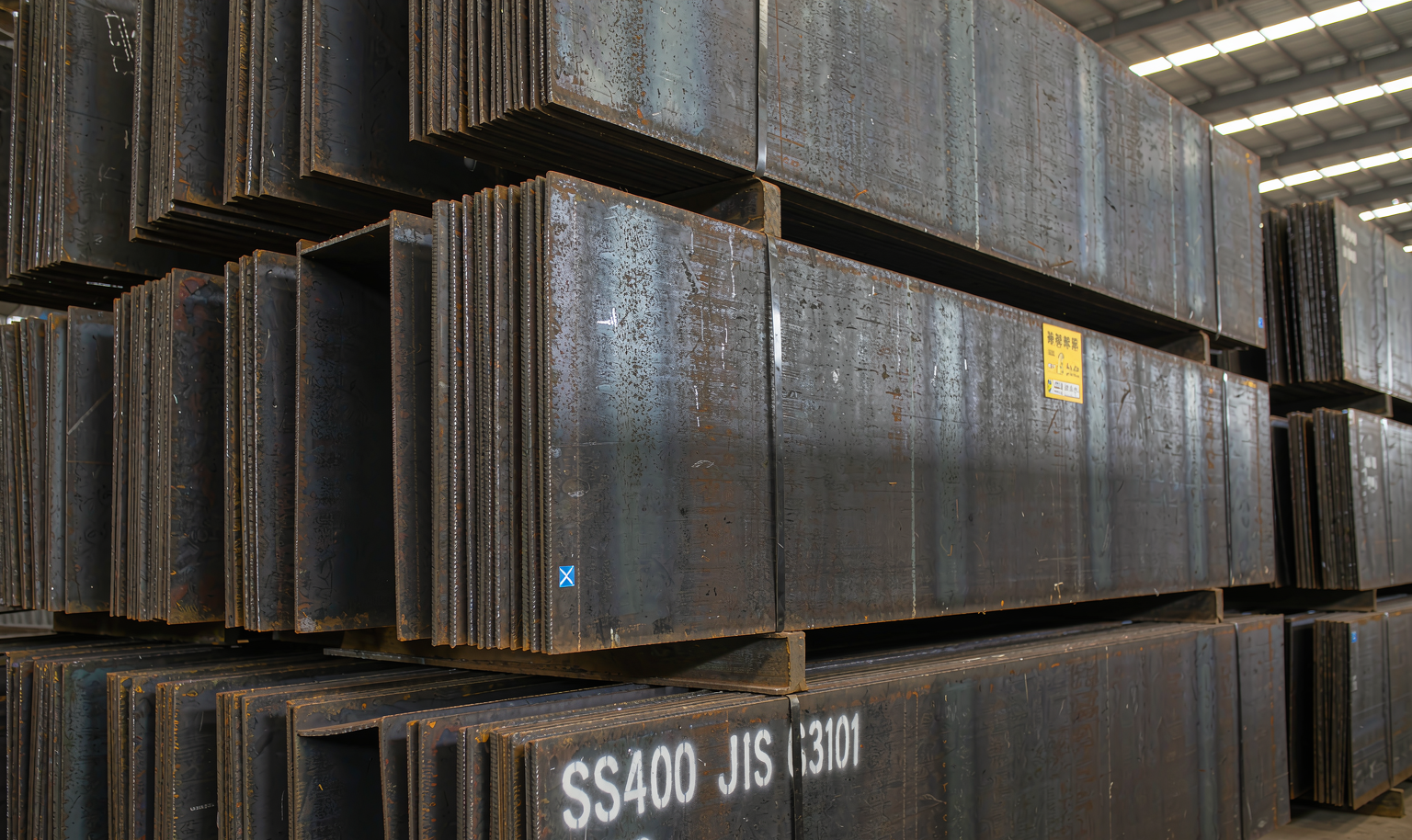
Huaxia-Steel supplies ASTM A36 and A283 Gr C/D hot-rolled carbon steel plate with full mill certificates, optional ultrasonic testing, and export packing. Send us your dimensions and quantity for a same-day mill quotation.