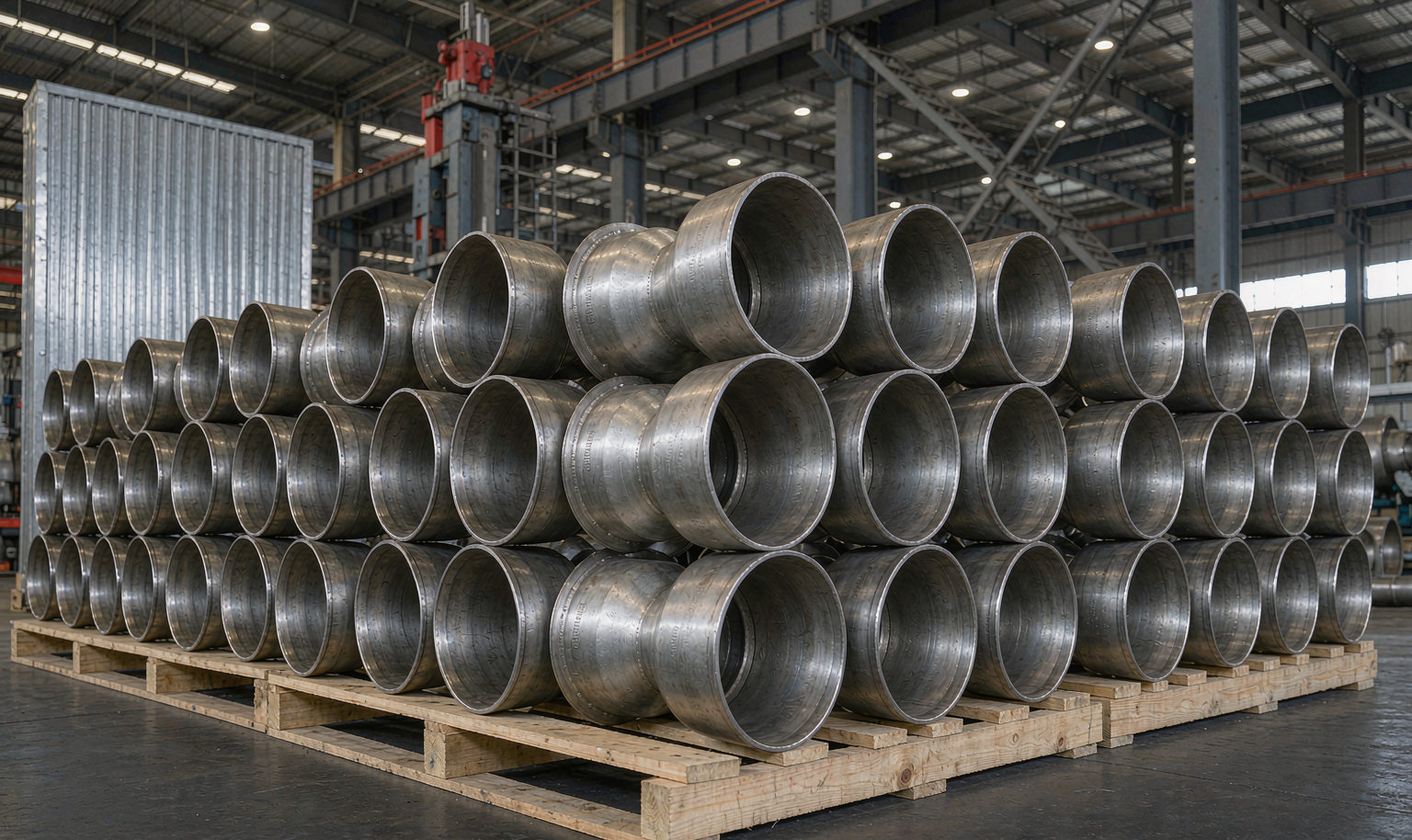
Butt weld fittings — elbows, tees, reducers, caps — are the backbone of every process piping system, and ASME B16.9 is the dimensional standard that makes fittings from different mills interchangeable. Yet every year buyers lose money on fittings ordered to the wrong standard version, with undefined NDE scope, or with marking that fails third-party review at site. Whether you are procuring a full piping package for a refinery or a small lot of A234 WPB elbows for a skid, this guide walks through what ASME B16.9 actually governs, which fittings it covers, the tolerances that matter, how it connects to material standards like ASTM A234, and the ten specification lines that prevent 90% of fitting disputes.
What Does ASME B16.9 Cover?
ASME B16.9, titled “Factory-Made Wrought Buttwelding Fittings,” governs the dimensions, tolerances, surface finish and marking of seamless and welded wrought fittings in sizes NPS 1/2 through NPS 48 (DN 15–1200). Critically, B16.9 is a dimensional standard, not a material standard: it tells the mill what shape and wall geometry a fitting must have, while the material itself is purchased separately to ASTM specifications such as A234 (carbon steel), A403 (stainless), A420 (low temperature carbon steel) or A860 (high strength). The fittings are designed to match the pressure-temperature ratings of matching-wall pipe — an ASME B16.9 fitting in the same material and schedule as its pipe is rated to the same pressure as the pipe wall itself.
Fittings covered by B16.9:
Long radius (LR) and 3D radius elbows 45° and 90°; LR returns (180°).
Straight tees, reducing tees, and laterals 45° (Y-branches).
Concentric and eccentric reducers.
Caps and crossed (rare, usually replaced by tees plus welds).
Stub ends (lap-joint stub ends per MSS SP-43 for thin wall variants).
Not covered: socket weld and threaded fittings (ASME B16.11), cast fittings (B16.5-adjacent flanged fittings, B16.34 valves), and grooved couplings. If a supplier quotes “B16.9 threaded elbows,” the document is being misapplied — that combination does not exist.
Key Dimensions and How Fittings Match Pipe
The genius of B16.9 is matching wall thickness to pipe schedules. A 90° LR elbow in NPS 6 Sch 40 has end wall thickness equal to Sch 40 pipe (7.11 mm nominal) and center-to-face dimension of 229 mm (1.5 × NPS). The standard defines critical dimensions precisely:
Fitting
Key dimension
Rule (NPS 1/2–24)
Example NPS 4
90° LR elbow
Center-to-face A
1.5 × NPS
152 mm
45° LR elbow
Center-to-face B
NPS × 0.667 (table)
95 mm
180° return
Center-to-center O
2 × NPS
203 mm
Straight tee
Center-to-end C/M
1.0 × NPS at run/branch
102 mm
Reducer
Overall length H
2 × NPS of large end
203 mm
Cap
Length E
NPS (≤ 24), table above
102 mm
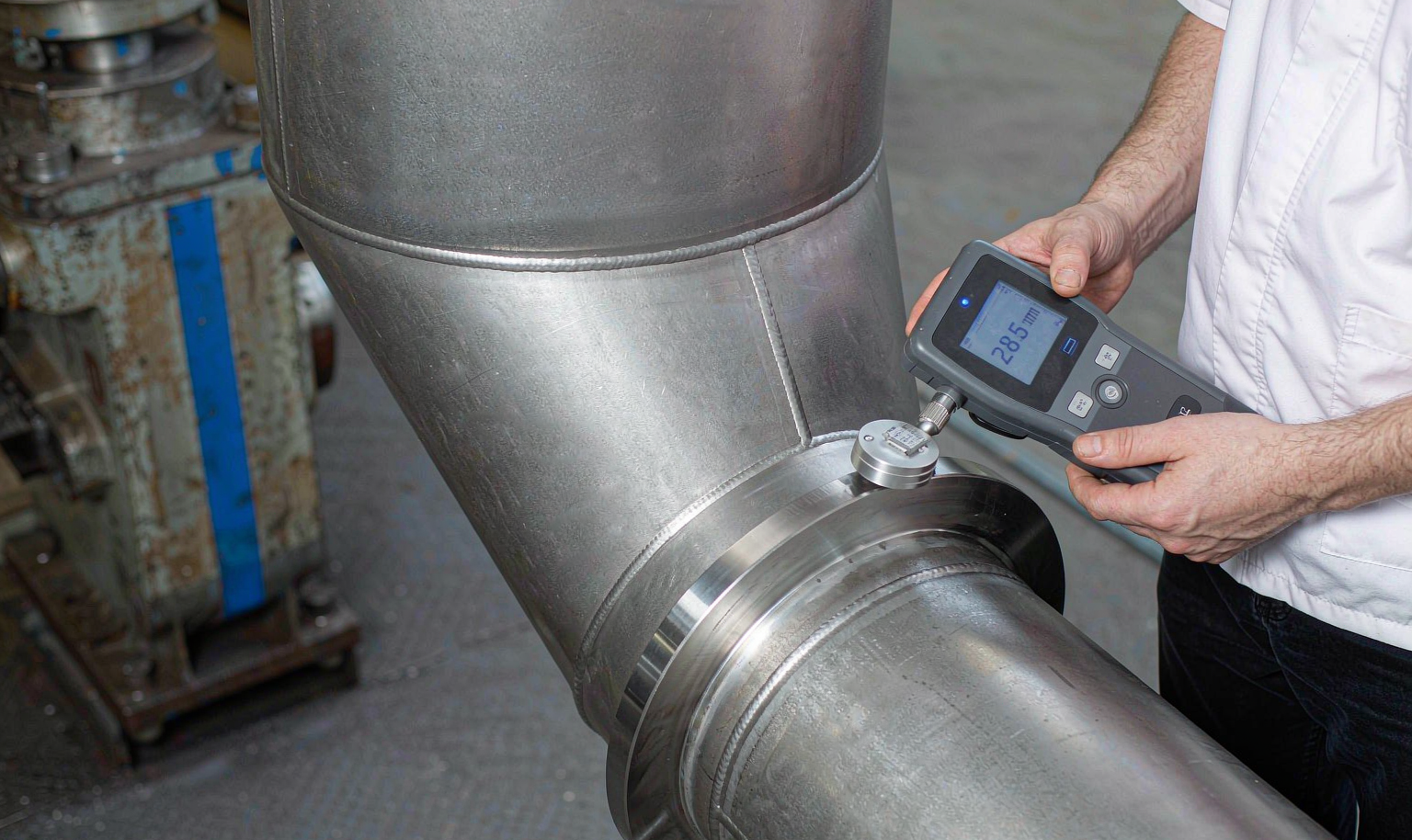
Wall thickness tolerance in B16.9 is notably different from pipe: the minimum wall at any point must be not less than 87.5% of the nominal thickness, because fitting forming redistributes metal. Thickness is checked at the welding ends (where it must match pipe bore and wall within tolerance) and at the crown/intrados of bends. For elbows and tees, the standard requires the extrados to be no thinner than 87.5% nominal; intrados thickening is expected and acceptable. This is why a fitting ordered “Sch 40” is not simply a bent pipe — the mill starts from heavier wall to guarantee the minimum after forming.
Tolerances That Get Fittings Rejected
Parameter
B16.9 tolerance
Why buyers care
Outside diameter at welding end
+1.6 / −0.8 mm (NPS 3–10, varies by size)
Root gap control in field welding
Inside diameter at end
Per ordering schedule ID tolerance
Mismatch with pipe bore, flow disruption
Center-to-face (elbows)
±2 mm (NPS ≤ 10)
Spool prefabrication fit-up
Angularity of ends
±0.5°
Weld gap and alignment on site
Wall thickness
≥ 87.5% nominal anywhere
Pressure retention
Overall length (reducers)
±2 mm (≤ NPS 10)
Cut length budget in spools
The two most common site rejections are angularity beyond 0.5° and end ovality (out-of-roundness of 2% max at the welding end per the standard) — both typically caused by cheap forming dies or skipped calibration. If your fabricator prefabricates spools from fitting dimensions, angularity errors multiply across a spool and the assembly no longer lands on its flange bolt holes; measure a sample before releasing full production.
How B16.9 Connects to Material Standards
A complete fitting designation on a purchase order has three layers. Layer one: geometry — ASME B16.9, 90° LR elbow, NPS 4. Layer two: wall — Sch 40S / Std / Sch 80 (or wall in mm for large sizes). Layer three: material — ASTM A234 WPB for carbon steel (W = weldable, P = pressure, B = grade), A420 WPL6 for low temperature service to −46 °C, A860 WPHY 52 for high strength line pipe fittings. The material standard governs chemistry, heat treatment (A234 WPB requires normalizing or normalized-tempered when ordered with impact testing), mechanical testing, and the certificate. B16.9 governs the shape. Both documents appear on the EN 10204 3.1 certificate — a certificate listing only “B16.9” with no material standard is incomplete and should be rejected.
Standard grade: A234 WPB for carbon steel to 425 °C service.
Low temperature: A420 WPL6 with Charpy at −46 °C.
Line pipe systems: A860 WPHY 42/52/60/65/70 matching API 5L pipe grades.
Seamless vs welded: both permitted under B16.9; welded fittings (from plate, ERW seam) need 100% radiography of the seam when specified for severe cyclic or critical service.
Marking and Traceability Requirements
B16.9 requires each fitting to be marked — by low-stress die stamping, etching or paint — with the manufacturer’s name or trademark, material grade (e.g., A234 WPB), size, schedule/thickness, and heat identification traceable to the mill certificate. Large fittings may carry the marking on a tag attached to the fitting. Common export failures: heat number absent (kills traceability at third-party inspection), size/schedule painted over with primer before marking, or marking showing “MSS SP-75” geometry with A860 material but quoting B16.9 tolerances — mixing standards confuses inspectors even when technically defensible. Ask for a marking photo of the first piece of each item before the batch ships; it takes the supplier one minute and prevents a container of untraceable fittings.
Buying Tips: Ten Lines That Prevent 90% of Disputes
Specify “ASME B16.9, latest edition” and name the edition year for critical projects.
State geometry and size exactly: “90° LR elbow NPS 6 × Sch 40, BW ends.”
Name the material standard and grade: ASTM A234 WPB, seamless or welded — say which.
Require EN 10204 3.1 certificate with heat numbers matching stamped marks.
Define NDE scope: MT or PT of formed areas, RT of weld seams for welded fittings if needed.
State surface: bare, black paint, or rust-preventive oil for export packing.
Request dimensional report per B16.9 tolerances for the first article of each item.
Set angularity and ovality checks into the pre-shipment inspection (PSI) scope.
Cap size range awareness: above NPS 24 many mills move to ASME B16.9 with special tooling — confirm capability, not just catalog presence.
Confirm flange-face style for stub ends if ordering lap joint systems (Type A vs Type B per MSS SP-43).
For sourcing economics: standard carbon steel WPB fittings are commodity items with deep inventory at Chinese export mills; the price spread between a quality mill and a marginal one is often under 8% — far less than the cost of one rejected fitting discovered during hydro test of a finished spool. Buy on certificate completeness and inspection track record, not lowest unit price.
Seamless vs Welded Fittings: Which to Specify
ASME B16.9 permits both seamless and welded construction, so a purchase order that says only “B16.9 elbow” may legally receive either. Seamless fittings are formed from pipe or bar stock: for elbows, hot extrusion or hot bending; for tees, hot extrusion with a branch pull-out; for reducers, pressing and spinning. Welded fittings are formed from plate or from ERW pipe with the longitudinal seam radiographed. The practical differences:
Seamless: no longitudinal weld, better for cyclic and high-pressure service, generally 15–35% more expensive, size availability drops above NPS 24.
Welded (plate-formed): economical, available in very large sizes, requires 100% RT of the seam when specified (state it in the PO), and is standard for NPS 26 and above.
Welded (from ERW pipe): common for thin-wall fittings; the seam is inherited from the pipe, so the pipe’s NDT record becomes part of the fitting’s documentation.
Service rule: for ASME B31.3 Category M (severe cyclic) or lethal service, seamless or 100% RT welded with documented seam removal from formed zones is the norm.
Do not accept a substitution from seamless to welded (or the reverse) without paperwork: the change alters the NDE scope and the certificate content, and inspectors at site will flag an unapproved change even when the fitting is dimensionally correct.
Fitting Selection by Service Condition
Service condition
Recommended fitting
Material
General process, ≤ 425 °C
B16.9 LR elbow / tee, Sch matching pipe
A234 WPB
Low temp −46 °C
B16.9 with Charpy at −46 °C
A420 WPL6
High pressure line pipe
B16.9 or MSS SP-75, matched grade
A860 WPHY 52–70
Severe cyclic / Category M
B16.9 seamless, 100% NDE
A234 WPB, normalized
Abrasive slurry
LR elbow, thickened wall extrados
A234 WPB with hardfacing option
Frequent maintenance breaks
Stub end + lap joint flange
A105 forged stub end
Schedule matching deserves one warning: a fitting ordered “Sch 40” may not equal your pipe’s wall if you are working to different standards (Sch 40S stainless pipe is thinner than Sch 40 carbon pipe above NPS 12 in some size ranges). Always specify the fitting wall by the same schedule designation as the pipe, or simply state the wall thickness in millimetres for sizes above NPS 12 — precise communication here prevents the classic taper-bore mismatch that shows up only during root pass welding.
Documentation Package for Export Projects
EN 10204 3.1 material certificate per heat: chemistry, tensile, impact where applicable, heat treatment condition.
Dimensional report per B16.9 tolerances, first article per item and size.
NDE reports: MT/PT of formed areas, RT films or reports for welded construction.
Marking photographs and a heat-number-to-item traceability matrix.
Packing list with item-wise counts, weights and heat references.
Supplementary: PMI (positive material identification) reports for alloy fittings, coating records for painted fittings.
Ask for the full documentation package at quotation stage, not after shipment. A mill that can list what it will issue — and send a sample certificate — is nearly always the mill that will still be responding when a claim arrives.
How Butt Weld Fittings Are Manufactured
Elbows are produced by hot pushing a heated pipe blank over a mandrel (the “hot push” method), or by hot bending and sizing; both thin the extrados and thicken the intrados, which is exactly why B16.9 permits 87.5% minimum wall at the extrados. Tees are made by hot extrusion: a pipe blank is placed in a die and a hydraulic ram pulls the branch outward while the run ends are held, producing the characteristic branch with a reinforcing collar — for high-pressure service the branch may be built up further by welding. Reducers are pressed or spun from pipe blanks and sized on both ends. Caps are pressed from plate or drawn from pipe. After forming, every fitting is trimmed to length on the welding ends, bevelled, heat treated per the material standard, and finally calibrated so that end ovality and angularity fall inside tolerance.
Quality clues visible in the finished part: a clean, evenly bevelled end with no burr or tear; a smooth extrados without orange-peel rippling (rippling indicates the blank was too cold during forming); a branch on a tee that is concentric with the run within 1–2 mm; and consistent wall thickness measured at four points around the end. Any of these failing on a first article is a reason to inspect the full lot before accepting it.
What Actually Drives Fitting Price
Material grade and construction: WPB welded is cheapest; seamless and WPHY grades add 15–40%.
Size and wall: above NPS 16 the tooling and handling cost per piece rises steeply, and heavy-wall fittings need multiple forming passes.
Heat treatment: normalizing adds furnace cost; impact-tested material adds testing.
NDE scope: MT/PT per piece and RT of seams each add measurable per-piece cost — and are usually worth it.
Lot size: a 50-piece order of mixed sizes costs far more per piece than 500 pieces of two sizes, because every size change means a tooling change.
Certification depth: 3.1 is standard; 3.2 witnessed adds inspection and scheduling cost.
For budgeting purposes the spread between a well-documented fitting and a minimally documented one is typically under 10% per piece — far smaller than the cost of one field rejection discovered after a spool has been welded and hydro-tested.
Receiving Inspection: What to Check on Arrival
Unload a fitting shipment with four checks in ninety minutes: count against the packing list per size and schedule; read the marking on a 10% sample and match heat numbers to the certificate matrix; measure end outside diameter, wall at four points and center-to-face on at least one piece per size; and look at the bevel and the formed surface for tears, laminations or heavy tool marks. Reject anything with illegible marking — untraceable material is unusable on a code project regardless of how good it looks. Store fittings off the ground with bevels protected; a damaged bevel costs more to repair on site than the fitting cost to ship.
Frequently Asked Questions
What is the difference between ASME B16.9 and B16.28?
B16.28 covers wrought buttwelding short radius elbows and returns in NPS 1/2–24; B16.9 covers long radius fittings and the full size range. A short radius elbow is technically a B16.28 part, and its center-to-face dimension is 1.0 × NPS. Most process piping uses LR (B16.9); SR fittings appear where space is tight and pressure drop is acceptable.
Can B16.9 fittings be used with API 5L line pipe?
Yes, provided wall schedules match. For high strength line pipe systems, fittings in ASTM A860 WPHY grades are dimensioned to B16.9 (or MSS SP-75 which adds its own tolerances and NDE requirements). Always match the fitting grade to the pipe grade (e.g., WPHY 52 for X52) so the weldment’s strength and toughness are uniform.
Why is fitting wall thinner than pipe at some points?
Forming redistributes material: the extrados of an elbow thins while the intrados thickens. B16.9 accounts for this by allowing a minimum of 87.5% of nominal thickness anywhere, with welding ends kept full. The fitting is designed so the thinned zone still carries the same pressure as the matching pipe.
Do B16.9 fittings need heat treatment?
The material standard decides. A234 WPB requires heat treatment (normalizing, or normalizing plus tempering) for grades requiring impact testing, and hot-formed fittings must be heat treated after forming; cold-formed fittings may require it depending on degree of deformation and thickness. The heat treatment condition must appear on the mill test certificate.
Source B16.9 Butt Weld Fittings From a Verified Factory
Huaxia-Steel supplies ASME B16.9 butt weld fittings in ASTM A234 WPB, A420 WPL6 and A860 WPHY grades — elbows, tees, reducers, caps and stub ends from NPS 1/2 to NPS 48 — with EN 10204 3.1 certificates, full marking traceability, dimensional reports and third-party inspection on request. Send your fitting schedule and our engineers will confirm sizes, walls and lead time within 24 hours.
If you require further information about our metal sheet products or architectural projects, please don’t hesitate to leave your contact details and message here.
Our team of experts will respond within 24 hours to continue the discussion and provide you with any additional information you requires.