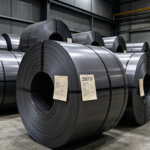
ASTM A1011 is the workhorse specification for hot-rolled carbon steel sheet and strip — the material behind structural tubes, guard rails, shelving, appliance frames, automotive reinforcements and a thousand rolled-form profiles that never get a plate mill’s attention. Yet it is one of the most mis-ordered grades in export trade, because A1011 is not one steel: it is a family of six strength levels and three chemistry routes, each with different substitution rules. This guide explains every A1011 type and grade, how it relates to ASTM A656, A570 and the EN/JIS systems, and how to order it so the coils that arrive actually match your forming dies and your customer’s spec.
What ASTM A1011 Covers — and What It Does Not
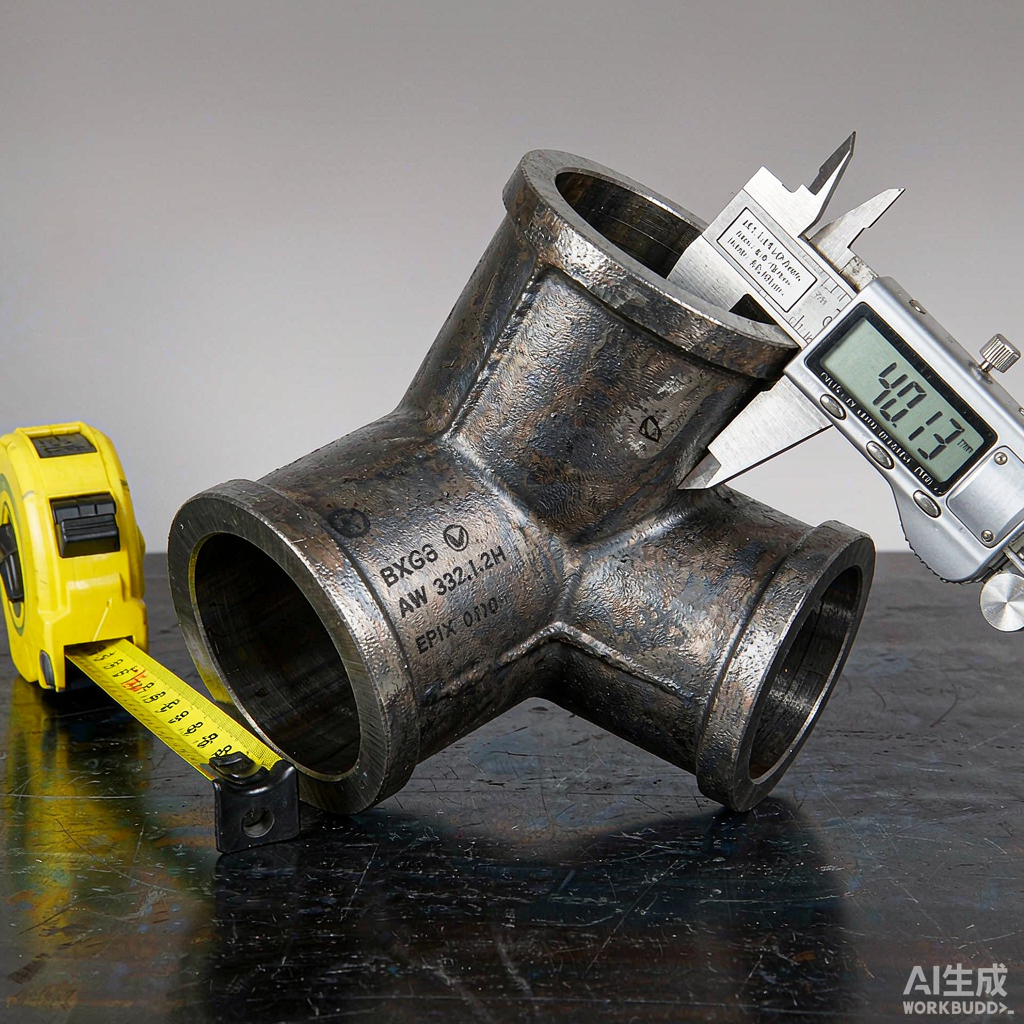
ASTM A1011 (full title: Standard Specification for Steel, Sheet and Strip, Hot-Rolled, Carbon, Structural, High-Strength Low-Alloy, High-Strength Low-Alloy with Improved Formability, and Ultra-High Strength) covers hot-rolled sheet and strip from roughly 1.2 to 25.4 mm in thickness, in widths up to 2,000 mm for sheet and narrower widths for strip mill products. It is the successor to several older specifications — ASTM A570 (hot-rolled structural sheet) and parts of A658 — and is maintained by ASTM committee A01 on Steel. The spec applies to coils, cut lengths and pickled-and-oiled product, and it is the normal feedstock specification for ERW tube mills, roll formers and service centers in North America.
What it does not cover matters just as much. Cold-rolled sheet belongs to ASTM A1008, hot-rolled plate above the sheet/plate boundary belongs to A36 or A572 depending on the product form, and galvanized or Galvalume-coated sheet belongs to A653 / A792 which reference A1011 chemistry for their substrate. If your drawing says “hot rolled pickled” for a laser-cut blank, A1011 is the right spec; if it says “cold rolled CR4” or “HRPO plate 12 mm”, the correct document may be A1008 or A36 respectively, and ordering A1011 will create a certificate mismatch at incoming inspection.
The A1011 Family: Types, Grades and Chemistry Routes
A1011 groups its products into three chemistry philosophies, each identified as a “Type”, with strength levels inside each type called “Grades”. The structure is easiest to read as a table:
| Type | Philosophy | Common grades | Min yield | Typical use |
|---|---|---|---|---|
| Type 1 (commercial) | C, Mn, Cu capped; no micro-alloys | CS Type A/B, DS Type A/B, DDS, EDDS | ~140–170 MPa (drawing grades) | deep drawing, general forming |
| Type 1 (structural) | same chemistry route, strength via Mn/C | Grades 30, 33, 36, 40, 45, 50, 55, 60, 65, 70 | 205–485 MPa (30–70 ksi) | tubes, purlins, general structure |
| Type 2 (HSLA) | micro-alloyed, niobium/vanadium or columbium-vanadium | Grades 45, 50, 55, 60, 65, 70, 80 | 310–550 MPa | high-strength frames, rails, guard components |
| Type 3 (HSLAS-F, improved formability) | micro-alloyed, low inclusion, tighter sulfur | HSLAS-F Grades 50–80 | 340–550 MPa | automotive and formed high-strength parts |
| Type 3 (UHSS) | ultra-high strength, dual-phase type chemistry | UHSS Grades 80, 100, 120 | 550–830 MPa | energy-absorbing and wear components |
The key insight for buyers: strength is achieved in two completely different ways. Type 1 structural grades reach yield through plain carbon-manganese chemistry, which is cheap but has a strength-formability trade-off. Types 2 and 3 use micro-alloying — small niobium or vanadium additions plus controlled rolling — to raise yield while keeping elongation, which is what lets a 50 ksi HSLA coil still form in a roll-forming line without cracking. Writing “A1011 Gr 50” without the type leaves the mill free to supply either route; if your part is roll-formed, omitting “Type 2” can double your scrap rate.
Mechanical Requirements in Real Numbers
The most ordered grades and their minimum properties are:
| Grade | Min yield (MPa) | Min tensile (MPa) | Min elongation in 50 mm |
|---|---|---|---|
| CS Type B (commercial) | ~170 | ~270 | 22–26 % |
| Grade 36 (Type 1) | 250 | 400 | 22 % |
| Grade 45 (Type 1) | 310 | 380 | 21 % |
| Grade 50 (Type 1) | 345 | 420 | 19 % |
| Grade 50 Type 2 (HSLA) | 345 | 450 | 22–24 % |
| Grade 60 Type 2 (HSLA) | 415 | 480 | 18–20 % |
| Grade 70 Type 2 (HSLA) | 485 | 550 | 16–18 % |
| HSLAS-F 50 | 345 | 450 | 26 % |
Notice the comparison between the two Grade 50 rows: same yield, but the HSLA version gives you 3 to 5 points more elongation and 30 MPa more tensile. That difference is exactly the micro-alloying premium, and for formed structural parts it is usually worth paying. For buyers who need yield consistency for tube making, note that A1011 requires tension tests per ASTM A370 on each lot, and mills typically report yield by 0.2 percent offset or extension-under-load — specify which method your design office assumes, because the two can differ by 10 to 20 MPa on the same coil.
How A1011 Maps to Other Standards
No formal equivalence exists between systems, but the practical cross-references used across the export trade are stable enough to quote with a caveat:
| A1011 | Nearest EN 10025-2 / 10346 | Nearest JIS G3131 / G3101 | Nearest GB/T |
|---|---|---|---|
| CS Type B | S235JR (weaker formability match) | SPHC | Q195/Q215 hot rolled |
| Grade 36 | S235JR | SS330/SS400 | Q235B |
| Grade 45 | S275JR | SS400 | Q275 (approx.) |
| Grade 50 Type 1 | S355JR (by yield) | SS490 | Q355B (by yield) |
| Grade 50 Type 2 HSLA | S355MC (EN 10149-2, better match) | SPFH540 (approx.) | QStE340TM family |
The HSLA row is the one to memorize: A1011 HSLAS Grade 50’s true European cousin is S355MC under EN 10149-2 (hot-rolled flat products for cold forming, high yield), not S355JR under EN 10025-2. They share the 355 MPa yield but S355MC is engineered for forming with lower CEV and better uniform elongation. Substituting S355JR for HSLAS-F 50 in a formed part frequently causes edge cracking on tight radii. Conversely, substituting HSLA 50 for S355JR in welded structures is usually accepted because chemistry is cleaner — but the certificate must show the EN-required CVN if the project asks for it.
Ordering Checklist: What to Write on the RFQ
- Full designation: “ASTM A1011, Type 2, HSLAS Class 1 Grade 50” — not just “A1011 Gr50”. Include Type and, for HSLA, Class 1 or 2 (Class 2 has improved formability).
- Thickness and tolerance: A1011 references ASTM A568/A568M tolerances; state full size, and for critical forming state whether you need “full tolerance” or a tighter internal range.
- Surface condition: as-rolled (mill scale), pickled and oiled (HRPO), or shot-blasted. HRPO costs 30 to 60 USD per ton more and saves you pickling in-house.
- Edge: mill edge, slit edge or trimmed edge; width tolerance if the coil feeds an automated line.
- Testing frequency: chemical analysis per heat, tension test per coil or per lot — A1011 allows lot-based testing for some products; tube makers usually require per-coil tension.
- Certificate: EN 10204 3.1 MTC per shipment with heat numbers matching coil tags.
One frequent export trap: thickness below 1.2 mm. Some Asian mills’ hot strip mills stop at 1.4 or 1.5 mm practical minimum with stable gauge, and thinner HR material prices jump because of rolling speed and yield losses. If your design allows, moving to 1.5 mm or considering cold-rolled A1008 substrate avoids both the premium and the gauge variation that ruins progressive-die feeding.
Quality Checks That Matter on Arrival
Hot-rolled sheet quality disputes concentrate in four areas, and all are checkable at the port warehouse in 30 minutes:
- Gauge: measure 5 points across the width at 3 positions along the coil; A568 tolerances for 2.0 mm sheet are roughly ±0.21 mm on full-width coils, and crown (center vs edge difference) beyond half the tolerance wrecks slitting plans.
- Camber: on slit strip, deviation from straight over 5 m should stay within about 5 mm for press feeding; more means a bad slitter setup.
- Surface: rolled-in scale, rust blooms and scratch lines are the top three claims. HRPO must be oil-film uniform, not patchy — patchy oil means pickling line speed problems and predicts flash rust in humid transit.
- Certificate match: coil tags and MTC heat numbers must agree one-to-one; a coil without a legible tag and matching heat number is unsaleable into most North American supply chains, so reject or renegotiate before the bill of lading is fixed.
How A1011 Coil Is Made — and Why the Route Affects Your Parts
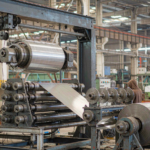
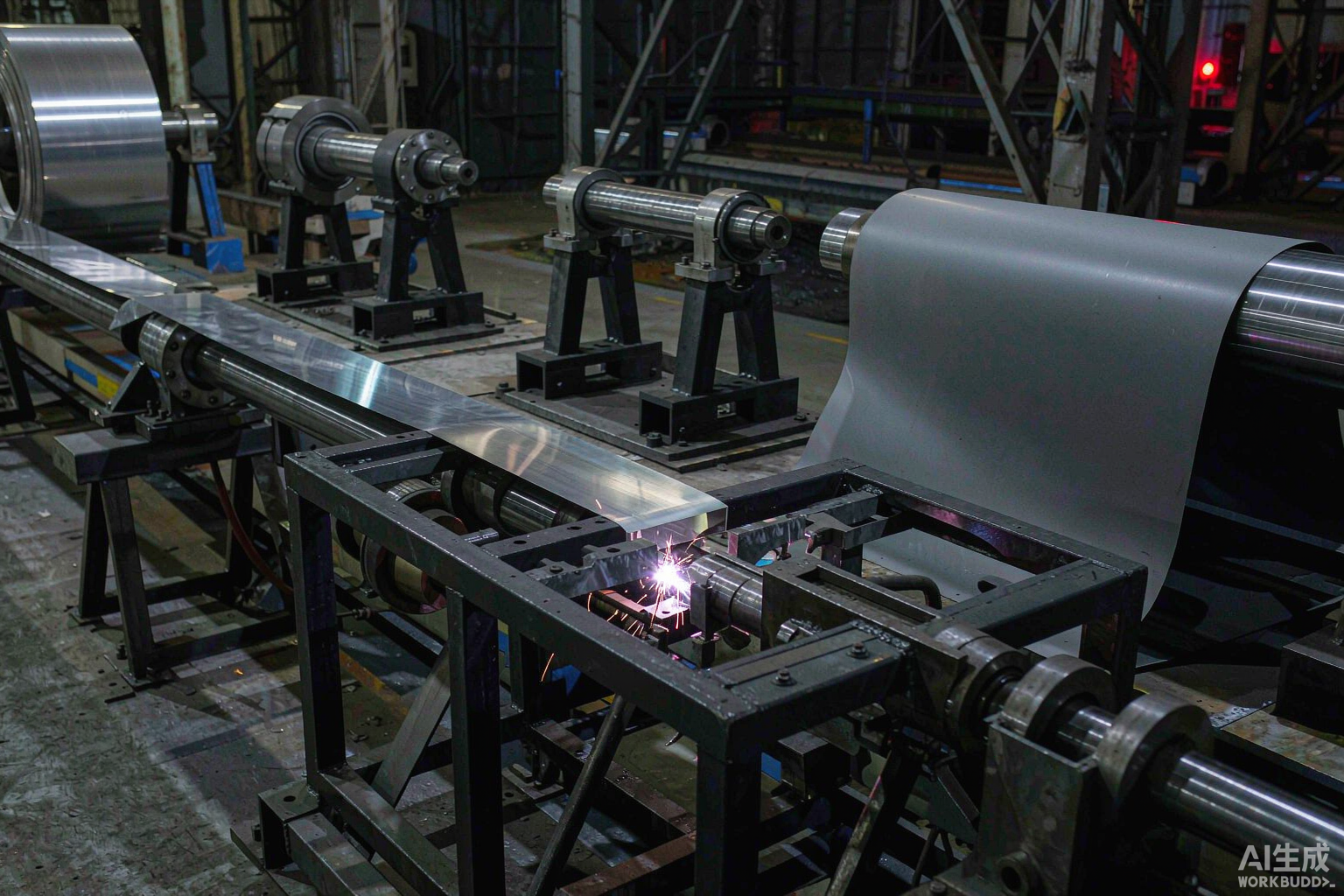
Understanding the production route explains most quality differences between suppliers. A1011 starts as continuously cast slabs, reheated to about 1,200 to 1,250 °C, then rolled through a hot strip mill: a roughing mill reduces the slab to a transfer bar around 25 to 40 mm thick, and a finishing train of 6 to 7 stands rolls it to final gauge while maintaining temperature above about 850 °C at the last pass. The strip is then run out on a runout table and cooled under water sprays at controlled rates before coiling at 550 to 650 °C. Every one of those numbers is a lever on your final properties: coiling temperature controls precipitation in micro-alloyed Type 2 grades, finishing temperature above Ar3 keeps grain size fine, and cooling rate decides whether niobium precipitates strengthen the steel or stays dissolved.
Two consequences matter to buyers. First, head-and-tail property variation: the front and back ends of a coil spend longer in the furnace and cool at different rates than the middle, so yield and thickness both vary along the coil length. Reputable mills trim the off-spec ends; marginal mills ship them. If your process makes safety-critical parts, ask whether the mill trims ends and what its length-wise yield scatter is — a per-coil tension test taken from the middle tells you nothing about the tail. Second, thin-gauge economics: below about 1.5 mm, the finishing train must run faster and the strip loses heat faster, so gauge control tightens while cost per ton rises. This is physics, not supplier greed, and it is why serious tube makers buy 1.6 mm and up in hot rolled and accept cold rolled substrate below that threshold.
Grade Selection Guide by End Application
Matching grade to application prevents both under-engineering and over-payment. The following pairings cover most export inquiries:
- ERW structural tube and pipe: Type 1 Grades 45–50 for standard frames and scaffolding systems; HSLA Type 2 Grade 50–60 when wall thickness must drop for weight targets while keeping yield. Tube makers prefer Type 2 for its tighter yield scatter, which keeps ovality and springback consistent at the weld stand.
- Roll-formed purlins, panels and racking beams: Type 2 Grade 50 or HSLAS-F 50 where the profile has tight inside radii; Type 1 Grade 45 where radii are generous and cost dominates. Racking systems designed to EN 15512 or RMI usually pin HSLA chemistry explicitly.
- Deep-drawn and multi-stage stamped parts: CS Type B for mild draws, DS and DDS for deeper draws, EDDS (extra deep drawing steel) for the hardest operations. These are Type 1 grades with controlled inclusion shape and very low yield, and they behave completely differently from structural grades in a press.
- Trailer crossmembers, brackets and reinforcement: HSLAS-F Grades 50–80; the improved-formability version exists precisely because high strength plus bending is where ordinary HSLA cracks at cut edges.
- Guard rail, culvert and highway hardware: Type 2 Grade 50–60 with the state or authority’s own supplementary requirements layered on top; always ask for the supplement sheet, because highway specs frequently add Charpy or bend tests beyond A1011 base.
Price Factors and Buying Strategy for Export Buyers
A1011 pricing moves with the hot-rolled coil (HRC) index — Shanghai, US Midwest or Northern Europe depending on origin — plus conversion extras. Understanding the extras line is where buyers save money. Typical ex-mill extras: HSLA micro-alloying +15 to 40 USD/ton depending on grade, HRPO +30 to 60 USD/ton, slit-to-width +10 to 25 USD/ton, cut-to-length +20 to 40 USD/ton, tight gauge below 2.0 mm +20 to 50 USD/ton. with the mill keeping original case records for traceability. A buyer who quotes “A1011 Gr50 HSLA, HRPO, slit to 4 widths” should expect a composite price 8 to 15 percent above the bare CS coil index — and a supplier who quotes barely above index is probably planning full-tolerance gauge, non-prime edges or lot-based testing instead of per-coil tension testing.
Strategy points that hold up in practice: book index-linked contracts with a fixed extras sheet rather than chasing spot quotes for repeat programs, because extras are where suppliers recover margin between index moves. Consolidate widths — a coil slit into four widths generates offcuts the mill prices into your quote; designing around mill-standard widths (typically 1,000, 1,219, 1,250 and 1,525 mm) removes that hidden cost. And for mixed-grade programs, ask for a combined coil plan: mills allocate tonnage across grades more readily when a buyer takes a full finishing-cycle weight of 300 to 500 tons in one production window, which routinely buys 2 to 4 percent off the composite price versus splitting the same tonnage across three months.
Transit protection completes the quality picture. Hot-rolled coils shipped in open-top or break-bulk stowage will flash-rust within weeks in tropical humidity; export coils should be eye-to-sky or eye-to-wall packed with VCI paper, waterproof wrap and steel banding on wooden cradles. For programs that transit through high-humidity ports, specify VCI inhibitor paper between wraps and reject coils showing white rust blooms deeper than surface discoloration — a bloom that wipes off with oil is cosmetic, one that resists light abrasion has begun pitting and will show as scale nests in your press shop. Photograph every coil at loading with its tag clearly visible and file the images against the packing list; this single habit resolves 80 percent of arrival-condition disputes without paid surveyors, especially when insurance surveys are requested weeks later.
Frequently Asked Questions
Is ASTM A1011 the same as A36?
No. They overlap in strength class but cover different product forms: A36 governs shapes, plates and bars under ASTM A6, while A1011 governs hot-rolled sheet and strip under coil-mill tolerances (A568). A 6 mm product can legitimately be sold under either spec depending on how the mill produced and trimmed it, and the certificates differ. Use the spec that matches the product form your customer’s inspection plan expects.
What is the difference between A1011 Type 1 and Type 2 Grade 50?
Both reach 345 MPa minimum yield, but Type 1 does it with plain carbon-manganese chemistry (lower cost, less elongation), while Type 2 uses niobium/vanadium micro-alloying (small premium, better elongation and more consistent yield for forming and tube making). For roll-formed or stamped structural parts, specify Type 2.
What is the EN equivalent of A1011 Grade 50?
For structural use, S355JR (EN 10025-2) matches the yield class; for cold-forming applications, S355MC (EN 10149-2) is the better and more honest match to A1011 HSLAS Grade 50. JIS G3101 SS490 is the common Japanese-system reference for Type 1 Grade 50 by strength, with SPFH grades covering the forming applications.
What thickness range does A1011 cover?
A1011 applies to hot-rolled sheet and strip, in practice from about 1.2 mm up to 25.4 mm thick, with the wide commercial sweet spot between 1.5 and 12 mm. Above the sheet/plate boundary, ASTM A36 or A572 typically takes over as the governing specification.
Can I get A1011 pickled and oiled for laser cutting?
Yes. HRPO is a standard A1011 supply condition and is preferred for laser and plasma cutting because the mill scale that causes inconsistent piercing is removed. Expect a 30 to 60 USD per ton premium and specify light oiling if material will sit for weeks before processing.
Sourcing A1011 CS, structural or HSLA grades for tube mills, roll forming or export distribution? We supply prime hot-rolled coils and cut lengths with A568 tolerances, per-coil MTCs and HRPO options. Send your grade, thickness and tonnage for a quote within 24 hours.