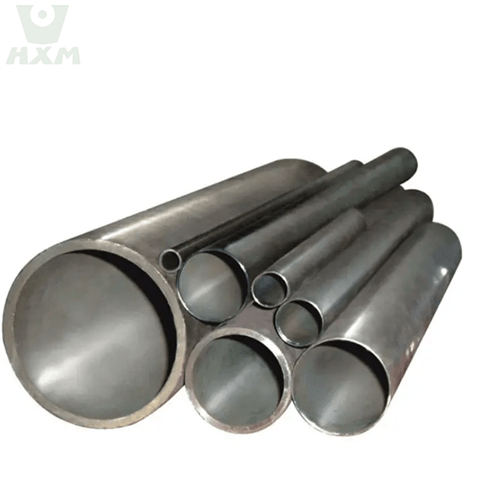
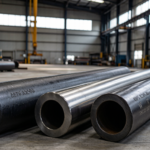
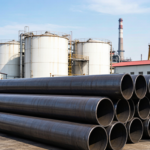
ASTM A106 / A106M is the most widely used specification for seamless carbon steel pipe in high-temperature service. Two grades dominate the market: Grade B and Grade C. Both are used for boilers, refineries, power plants and process piping, but the higher strength of Grade C comes with tighter chemistry and different availability. This guide compares ASTM A106 Grade B vs Grade C seamless pipe on composition, strength, applications and procurement.
1. Chemical Composition
ASTM A106 limits carbon, manganese, phosphorus, sulfur and silicon for each grade. Grade C allows a higher carbon content to achieve higher tensile strength, while Grade B remains more weldable and easier to form.
| Element | Grade B | Grade C |
|---|---|---|
| Carbon max | 0.30 % | 0.35 % |
| Manganese | 0.29 – 1.06 % | 0.29 – 1.06 % |
| Phosphorus max | 0.035 % | 0.035 % |
| Sulfur max | 0.035 % | 0.035 % |
| Silicon min | 0.10 % | 0.10 % |
| Chrome + Moly + Ni max | 0.40 % | 0.40 % |
| Copper max | 0.40 % | 0.40 % |
2. Mechanical Properties
The key difference between the two grades is tensile and yield strength. Grade C is roughly 50 MPa higher in tensile strength and is used when thinner walls or higher pressure ratings are needed.
| Property | Grade B | Grade C |
|---|---|---|
| Tensile strength min | 415 MPa | 485 MPa |
| Yield strength min | 240 MPa | 275 MPa |
| Elongation in 2 inch | See A106 formula | See A106 formula |
| Hardness | HRB 79 max | HRB 89 max |
| Typical use pressure | Moderate | Higher |
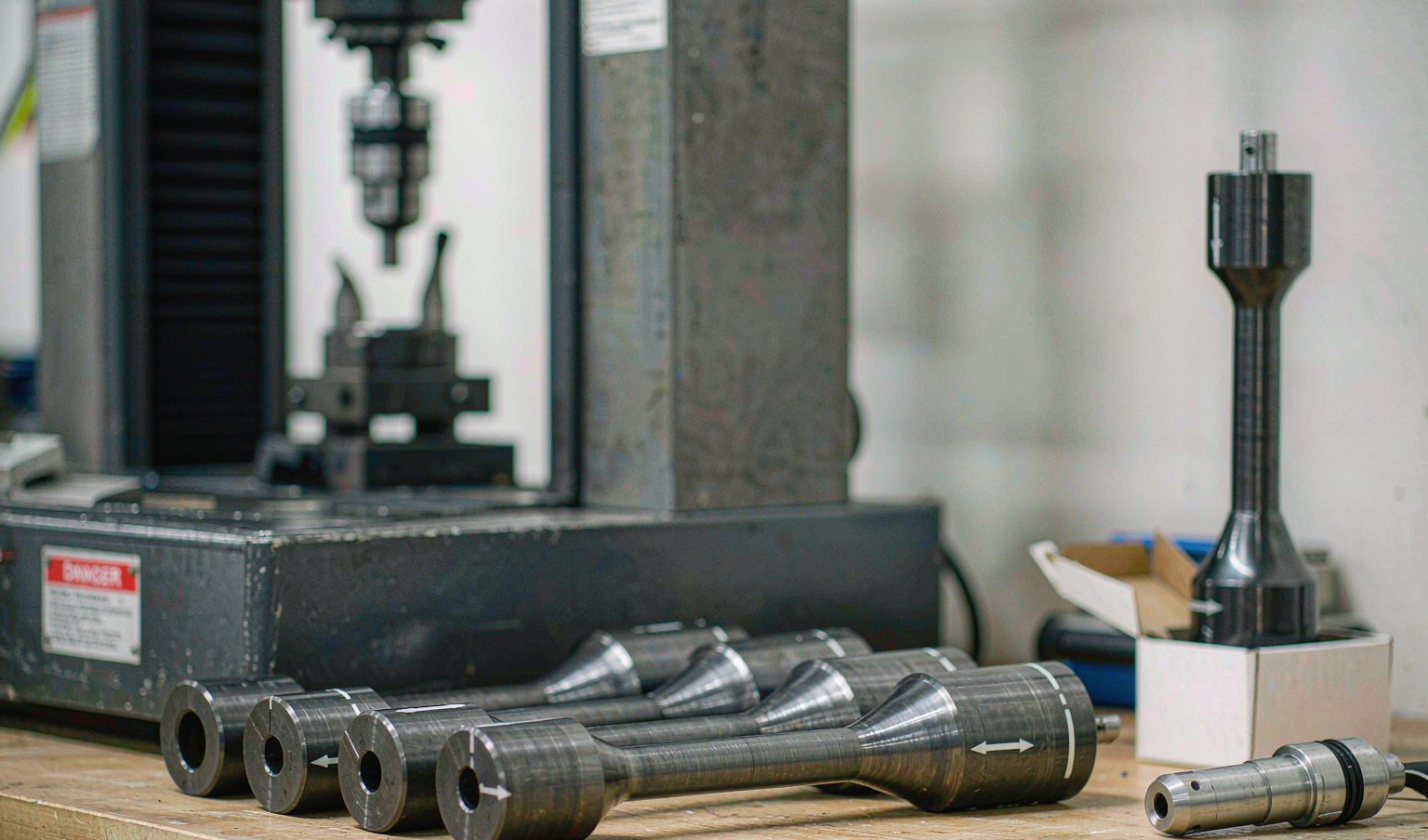
Both grades must pass flattening, bending and hydrostatic tests as specified in ASTM A106. The higher strength of Grade C makes it attractive for superheater and high-pressure boiler tubes.
3. Heat Treatment and Manufacturing
A106 seamless pipe is made by the hot-finished or cold-drawn process. Grade B is usually supplied in the hot-finished condition, while Grade C may be cold-drawn or hot-finished depending on size and customer requirements.
- Hot-finished: pipe is formed and finished above the upper critical temperature; no further heat treatment is required unless cold drawing follows.
- Cold-drawn: smaller diameters and tighter tolerances; may require a subcritical stress-relief anneal.
- Both grades must be killed steel to ensure uniform properties and minimize porosity.
- Galvanizing, threading, grooving and beveling are common value-added operations.
4. Standard Size Range
ASTM A106 covers nominal pipe sizes from NPS 1/8 to NPS 48, with schedules from STD to XXS and custom wall thicknesses. Grade B is stocked in the widest range of sizes; Grade C is more commonly supplied against mill orders.
| Size Range | Grade B Availability | Grade C Availability |
|---|---|---|
| NPS 1/2 – 2 | Sch 40 / 80 / 160 | Limited stock, usually mill order |
| NPS 2 – 12 | Sch 40 / 80 / 120 / 160 | Common for both grades |
| NPS 12 – 24 | STD / XS / XXS | Grade B more readily available |
| NPS 24 – 48 | Custom wall | Both grades usually made to order |
5. Typical Applications
- Grade B: general steam service, oil and gas transmission, boiler feedwater, process piping, structural and mechanical applications.
- Grade C: high-pressure boiler tubes, superheater coils, refinery process piping, power plant headers and high-temperature manifolds.
- Both grades are suitable for bending, flanging and similar forming operations when ordered in the appropriate condition.
- Neither grade is intended for low-temperature service below -20 °C; specify A333 for cryogenic applications.
6. Equivalent and Related Standards
Engineers often cross-reference A106 with other national standards. Grade B is roughly equivalent to DIN St45.8 / 1.0405 and EN P235GH, while Grade C is closer to DIN 17Mn4 / 1.0481 and EN P265GH for elevated-temperature service.
| ASTM | DIN | EN | JIS Approx. |
|---|---|---|---|
| ASTM A106 Gr B | 1.0405 / St45.8 | P235GH | 360 |
| ASTM A106 Gr C | 1.0481 / 17Mn4 | P265GH | 440 |
7. FAQ
Which grade is more common in stock?
Grade B is by far the most common and is stocked in a wider range of sizes. Grade C is usually sourced from mill production schedules or specialized distributors.
Can Grade C replace Grade B directly?
Only if the design code allows the higher strength and the buyer accepts the tighter chemistry and possible longer lead time. Always check the pressure-temperature rating.
Is Grade C harder to weld?
The higher carbon content means Grade C may require slightly higher preheat and more attention to low-hydrogen electrodes, but it is still readily weldable with proper procedure.
What certificates should I request?
A standard mill test certificate should show heat analysis, tensile test, flattening or bend test, hydrostatic test and NDE if specified. Third-party inspection can be added for critical orders.
8. Summary
Use ASTM A106 Grade B for general high-temperature service where availability and weldability matter. Use Grade C when higher tensile strength and pressure ratings justify the extra cost and lead time. State the grade, schedule, heat treatment and test requirements clearly on every purchase order.
Need a reliable carbon steel supplier for your next project? Huaxia-Steel supplies mill-certified carbon steel bars, plates, pipes, flanges and fittings with full inspection, export packing and fast delivery. Request a quote today and our team will reply within 24 hours.