ASTM A283 vs ASTM A285 Carbon Steel Plate Standard Comparison
ASTM A283 vs ASTM A285 Carbon Steel Plate Standard Comparison
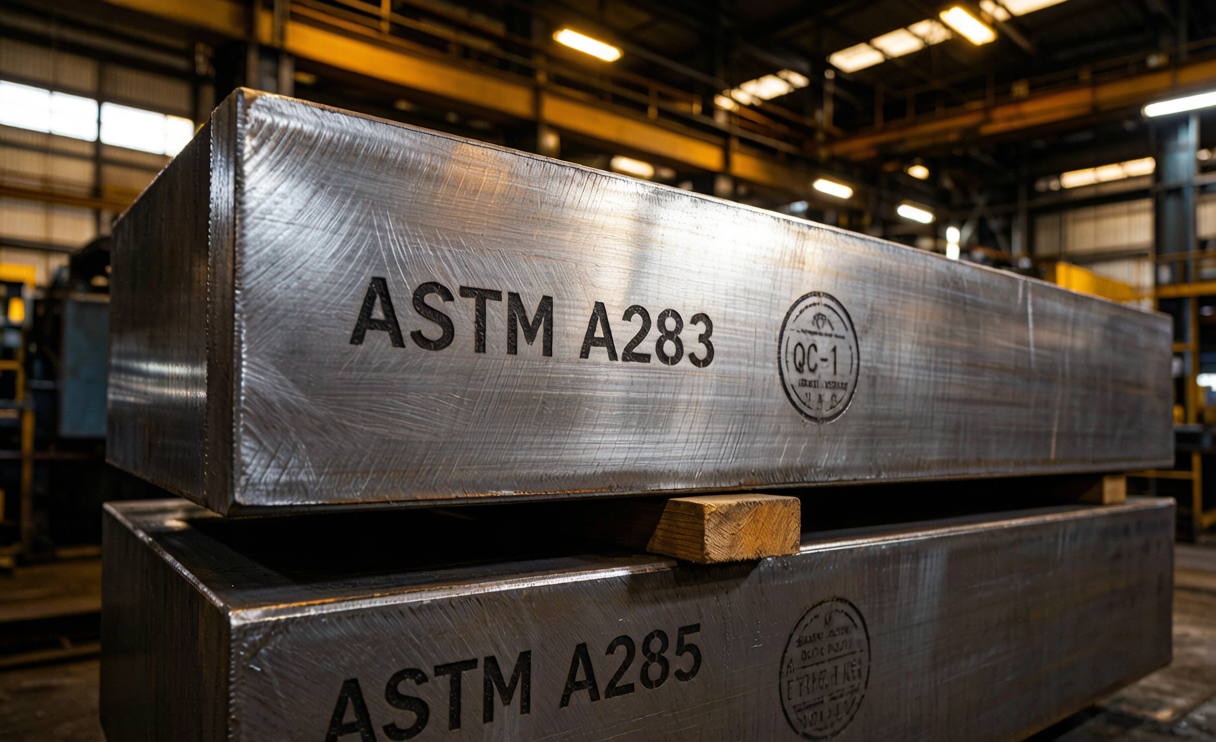
ASTM A283 and ASTM A285 are two widely specified American standards for carbon steel plates. Both are used in tanks, pressure vessels, and structural applications — but their mechanical requirements and intended uses differ. This guide helps you choose the right standard for your import order.
1. Overview of ASTM A283
ASTM A283 covers low- and intermediate-tensile-strength carbon steel plates of structural quality. It is intended for general structural applications where moderate strength is sufficient.
Grades: A, B, C, D (increasing strength)
Tensile Strength: 310–515 MPa depending on grade
Yield Strength: 165–230 MPa depending on grade
Common Uses: Storage tanks, structural components, bridges, buildings
2. Overview of ASTM A285
ASTM A285 covers carbon steel plates for pressure vessels. It is specifically designed for moderate- and lower-temperature service where notch toughness is not a critical requirement.
Grades: A, B, C (increasing strength)
Tensile Strength: 310–515 MPa depending on grade
Yield Strength: 165–230 MPa depending on grade
Common Uses: Pressure vessels, boilers, tanks, heat exchangers
3. Mechanical Properties Comparison
Standard
Grade
Yield (MPa)
Tensile (MPa)
Thickness (mm)
A283
A
165
310–415
≤ 200
A283
B
185
345–450
≤ 200
A283
C
205
380–515
≤ 200
A285
A
165
310–415
≤ 25
A285
B
185
345–485
≤ 25
A285
C
205
380–515
≤ 25
4. Key Differences Between A283 and A285
At first glance, the mechanical properties look identical. The critical differences are in scope, thickness limits, and intended service:
Scope: A283 is a general structural standard; A285 is specifically for pressure vessels.
Thickness limit: A285 is generally limited to 25 mm for pressure vessel code compliance; A283 covers up to 200 mm.
ASME compatibility: A285 is referenced in ASME Boiler and Pressure Vessel Code (Section II, Part A); A283 is not.
Certification requirements: A285 plates typically require more rigorous heat number traceability and UT testing for pressure service.
5. When to Choose A283
General structural fabrication (buildings, bridges, platforms)
Storage tanks at atmospheric pressure
Applications where ASME code compliance is not required
Thick plates (> 25 mm) for heavy structural sections
6. When to Choose A285
Pressure vessels and boilers under ASME jurisdiction
Petrochemical tanks and heat exchangers
Applications requiring ASME II-A material certification
Thin to medium plates (≤ 25 mm) for welded pressure components
7. Chemical Composition
Both standards have similar carbon and manganese limits. Neither requires alloying elements like chromium or nickel. The primary compositional control is on carbon content to ensure weldability:
C: ≤ 0.24% (max for Grade C)
Mn: ≤ 0.90% (varies by grade and thickness)
P: ≤ 0.035%
S: ≤ 0.040%
8. Sourcing A283 and A285 from China
Most Chinese mills capable of producing ASTM-certified plates can supply both A283 and A285. However, pressure vessel orders (A285) require stricter inspection protocols including:
Ultrasonic testing (UT) per ASTM A435
Normalized rolling or heat treatment
Charpy V-notch impact testing (if specified)
ASME material test reports (MTRs)
FAQ
Can A283 be used in a pressure vessel?
Only if the design code explicitly permits it. ASME Section VIII does not list A283 as an approved material; use A285 or SA-516 instead.
What is the price difference between A283 and A285?
A285 typically costs 3–8% more than A283 due to tighter testing and certification requirements. The gap widens for UT-tested or normalized plates.
Which grade within each standard is most popular?
A283 Grade C and A285 Grade C are the most commonly ordered because they offer the highest strength within their respective standards.
Do Chinese mills stock these grades?
Yes, major mills like Baosteel, Shougang, and Ansteel maintain ASTM-certified production lines. Huaxia-Steel sources from mills with full ASTM and ASME certifications.
Can I get plates cut to size before shipping?
Yes. Huaxia-Steel offers CNC plasma cutting, oxy-fuel cutting, and edge beveling before export packing.
Request an ASTM-Certified Plate Quote
Need A283 or A285 plates for your next project? Contact Huaxia-Steel with your grade, thickness, and quantity requirements. We provide mill certificates, third-party inspection, and global shipping.
If you require further information about our metal sheet products or architectural projects, please don’t hesitate to leave your contact details and message here.
Our team of experts will respond within 24 hours to continue the discussion and provide you with any additional information you requires.