ASTM A333 Grade 6 is the workhorse low-temperature carbon steel pipe grade: seamless or welded pipe designed to keep its toughness at service temperatures down to −45 °C (−50 °F), used wherever ordinary A106 or A53 pipe would become brittle in cold climates, cryogenic-adjacent processes, refrigeration circuits and winterized outdoor piping. The grade sits in a narrow but critical niche — it is not a stainless or nickel alloy, it is ordinary killed fine-grain carbon steel with chemistry, heat treatment and mandatory impact testing arranged so the pipe passes a Charpy V-notch test at the minimum advertised temperature. Because the standard’s requirements interact with heat treatment condition, wall thickness and welding procedure in ways that A106 never demands, buyers who treat A333 Gr 6 as “A106 with impact tests” regularly end up with non-conforming shipments. This guide walks through what ASTM A333 Grade 6 actually requires — chemistry, mechanicals, impact testing rules, heat treatments, manufacturing routes and marking — and how to specify it so the pipe arrives with the documentation your inspection authority expects.
What A333 Grade 6 Is and Where It Is Used
ASTM A333/A333M covers seamless and welded carbon and alloy steel pipe intended for low-temperature service, in nine grades; Grade 6 is by far the most common and is the killed carbon steel option with impact testing to −45 °C. Typical applications include process piping in cold climate plants, LPG and refrigerant circuits, air separation and CO2 plants, natural gas gathering lines in northern regions, and any outdoor piping where ASME B31.3 design minimum temperature falls below the toughness cutoff for ordinary carbon steel. Under ASME the grade carries the S prefix (SA-333 Gr 6) and is listed in B31.3 for down to −50 °F without impact-test exemptions at reduced stress ratios that would apply to A106. The key conceptual difference from A106: A106 is a seamless pipe for high temperature service whose toughness is not guaranteed at low temperature, while A333 guarantees notch toughness at the design minimum temperature — which is exactly the property that matters when a line sees a winter cold snap or a depressurization-cooled transient.
Chemistry Requirements
Grade 6 is a killed steel with deliberately narrow carbon and manganese windows and a silicon floor that distinguishes it from many A106 heats:
Element (%)
Grade 6 requirement
Practical note
Carbon, max
0.30 (seamless), 0.30 (welded), 0.19 for Gr 6 over certain sizes in some supplement contexts
0.30 max both routes; most mills run 0.12–0.20
Manganese
0.29 – 1.06
Wide band; mills target 0.7–1.0 for toughness
Silicon
0.10 min
Floor guarantees deoxidation (killed practice)
Phosphorus, max
0.025 (seamless), 0.025 (welded)
Tighter than A106’s 0.035
Sulphur, max
0.025
Tighter than A106’s 0.035
Other
Ni, Cr, Mo, Cu ≤ 0.40 each (residuals)
Keeps the grade non-alloy
The P and S ceilings of 0.025 % are the detail buyers overlook most often when substituting A106 for A333. Many A106 heats pass 0.035 % ceilings but fail 0.025 %, so an A106 pipe cannot simply be re-certified as Grade 6 — the heat chemistry must be checked against the A333 table first. The other direction works more smoothly: an A333 Gr 6 heat usually satisfies A106 Gr B chemistry and mechanicals, and dual certification A106 B / A333 Gr 6 is a standard mill offering, though the impact test certificate must accompany it and the delivery heat treatment must be the A333 one.
Mechanical Properties and Impact Testing
The tensile requirements are modest — this is a toughness grade, not a strength grade:
Tested at −45 °C; acceptance per table (typically 13 J transverse / 20 J longitudinal minimum, size-dependent)
Test temperature tolerance
±3 °C allowed on the test bath
The impact rules are where the standard gets strict, and where suppliers cut corners. A333 requires transverse impact specimens for pipe with wall thick enough to machine them, and the required energy values depend on specimen size because a sub-size Charpy absorbs less energy — the standard publishes the scaling table, and a certificate quoting only “impact tested” without values, temperature and specimen size is not a conforming certificate. Frequency is one test per lot, where a lot is limited by size band and heat, so large orders should state whether lot-size reduction or impact testing of every heat at every size is required. For welded pipe the weld seam and the base metal both need toughness — the standard requires impact tests on welded joints for the welded products, which is why only ERW mills with qualified low-temperature procedures offer A333 Gr 6 welded pipe with full compliance; many quote it without seam impacts, which fails a code review.
Heat Treatment and Manufacturing Routes
Grade 6 achieves its toughness through fine grain and a heat treatment that the standard mandates. The permitted treatments and their commercial meaning:
Normalized (N) — austenitize around 870–900 °C, air cool. The default route for seamless Gr 6, giving uniform fine-grain ferrite-pearlite and reliable −45 °C impact values. Most stock on the market is normalized.
Normalized and tempered (N+T) — tempering after normalize around 620 °C or higher. Used where the mill wants extra margin on impact values or where supplementary requirements demand it.
Quenched and tempered (Q+T) — permitted for some grades in A333, rarely used for Gr 6 because cost exceeds benefit at these strength levels.
Double normalized — an option for refining grain, occasionally seen on heavier walls.
As-rolled with impact testing — allowed under defined conditions with grain-refining practice, but many purchasers explicitly prohibit it; normalized material is the safer and near-universal commercial answer.
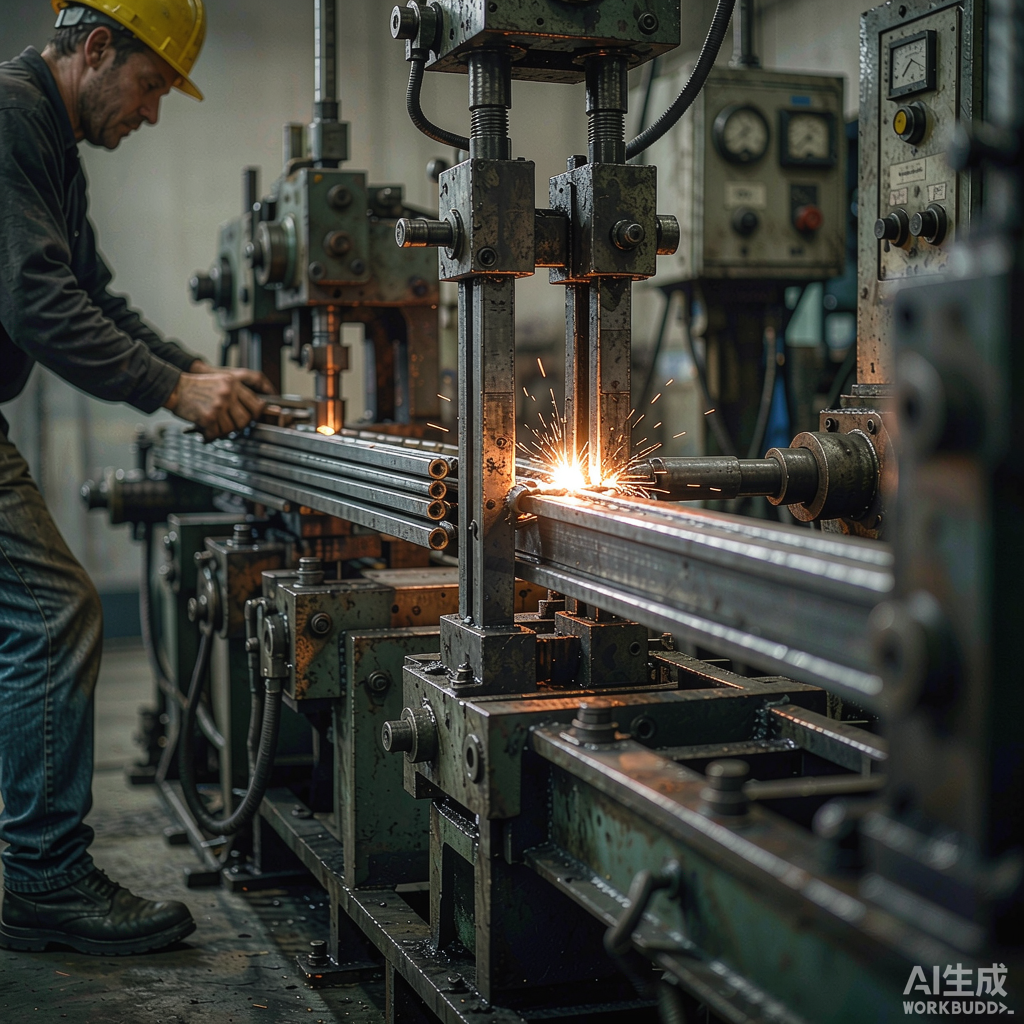
Seamless Gr 6 is produced by hot piercing (Mandrel Mill or cross-roll routes) followed by normalizing, in sizes from small bore to around 24 inch depending on the mill; welded Gr 6 is produced by ERW or longitudinal SAW with heat treatment of the weld seam. For small-bore instrument and compressor lines, cold drawn seamless Gr 6 is available and carries the same impact requirements — note that cold drawing does not exempt the impact test, and the pipe must still meet the −45 °C values in the delivered condition.
A333 Grade 6 vs A106 Gr B: The Substitution Question
Because the two grades share tensile floors (A106 B yield 240 MPa / tensile 415 MPa, nearly identical to Gr 6), the substitution question comes up on almost every project that has both ambient and cold sections. The honest engineering answer: A333 Gr 6 can generally replace A106 Gr B — its chemistry and tensiles satisfy A106, and it brings guaranteed low-temperature toughness that A106 lacks, at a price premium typically 5–15 %. The reverse substitution fails for two reasons: A106 does not guarantee impact toughness, and its P/S ceilings of 0.035 % are looser than A333’s 0.025 %, so the heat may not even be chemically eligible. The table below summarizes the comparison buyers need on file:
Aspect
A106 Gr B
A333 Gr 6
Service intent
High temperature
Low temperature to −45 °C
Toughness guarantee
None by default
Mandatory Charpy at −45 °C
Yield / tensile min
240 / 415 MPa
240 / 415 MPa (max 655)
P and S max
0.035 % each
0.025 % each
Heat treatment
Hot finished (or specified)
Normalized typical; mandated treatment rules
Price position
Baseline
+5–15 % typically
Replaceable by the other?
Gr 6 can replace it (check cert data)
A106 cannot replace it
One engineering caveat in the forward direction: in high temperature service, A106 is the more natural choice, and dual-certified A106 B / A333 Gr 6 stock resolves projects that see both extremes. Dual-certified pipe carries both designations and both test results on the MTC — confirm the impact values are actually printed, because a dual certificate without impact data is not dual certification in any meaningful sense.
Marking, Certificates and the Documents to Expect
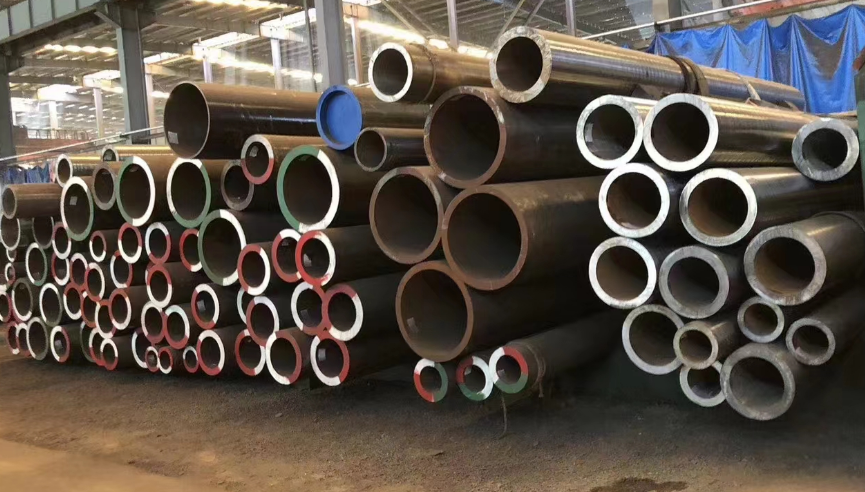
Compliant A333 Gr 6 pipe arrives with a defined paper trail. The pipe surface carries die or paint marking with the standard designation, grade, size, schedule, heat number and manufacturer’s mark; each length is traceable to a heat. The mill test certificate must show heat chemistry against the A333 table, tensile results, and — the section that makes the certificate worth anything — Charpy V-notch results with the test temperature, specimen orientation and size, and energy values for every specimen tested. For export orders we add EN 10204 3.1 certification as standard and can arrange 3.2 with a third party (SGS, BV, TUV, LR) witnessing impact tests where the project specification requires it. Hydrostatic or NDT per the standard’s testing section, flattening tests for welded pipe, and roundness/wall dimensional certificates complete the package. Buyers running ASME B31.3 lines should also confirm the heat treatment condition is stated — “N” on the MTC — because a lot delivered as-rolled with passing impacts can still be rejected by an inspector enforcing the standard’s treatment clause.
How to Buy A333 Grade 6 Without Surprises
The purchase order line that prevents 90 % of problems reads: “Seamless pipe ASTM A333 Gr 6, normalized, Charpy V-notch tested at −45 °C with transverse values reported, EN 10204 3.1 certificate, dimensions per ASME B36.10M, marking per standard.” From there, the options that matter are quantity-based: whether every heat is impact tested (default), whether third-party witness of impact testing is required, whether supplementary NDT (UT for laminations) applies on heavy walls, and whether the project requires the dual A106/A333 certification for mixed-service lines. Lead times run 15–30 days for stock sizes and 35–60 days for large bore or special walls; normalized stock in common sizes (1/2 to 12 inch, Sch 40/80) is usually available ex-mill in days.
Welding and Fabrication Notes for Grade 6
A333 Gr 6 welds like any well-behaved 0.20 % carbon steel, but low-temperature service adds two obligations that ordinary piping fabrication does not carry. First, the weld metal and HAZ must keep toughness at the design minimum temperature: consumables are selected for −45 °C impact performance (E7018 low hydrogen electrodes, or wire/flux combinations qualified at temperature), and the WPS should record impact test results from the procedure qualification record — ASME IX P-No. 1 qualification with supplementary essential variables applies when impacts are required. Second, weld preheat follows the wall thickness rules of any code: typically 50–100 °C above 25 mm wall, with low hydrogen practice mandatory for heavier sections. Post-weld heat treatment is required above the code thickness thresholds (around 19 mm for P-No. 1 under B31.3 depending on the stress ratio) and PWHT at 595–620 °C actually improves weld toughness for this grade, so the code requirement and the metallurgical preference point the same way. Field bends, flanged joints and orbital welds all work normally; the only genuinely restrictive fabrication rule is that heavy cold forming should be followed by renormalizing where the code demands restoration of properties.
Five Purchase Mistakes That Cause A333 Rejections
These are the findings our quality team sees most often when customers forward inspection reports on Gr 6 shipments bought elsewhere — each one is preventable at order placement:
Impact values missing or sub-size scaling ignored. A certificate that says “impact tested, OK” without energy values, temperature and specimen orientation fails every inspector. The sub-size scaling table must be applied when the wall cannot yield full-size (10 × 10 mm) specimens — quote the actual size and the scaled acceptance.
As-rolled delivery offered against the standard. Some stockists sell as-rolled pipe that passed impacts on the day. An auditor enforcing the treatment clause rejects it. Order normalized and check “N” on the MTC.
Chemistry failing the 0.025 % P/S ceilings. A106 dual-offers made without checking the heat analysis. Ask for the heat chemistry against the A333 table before release, not after shipment.
Welded pipe without seam impacts. ERW Gr 6 offered cheaply because the weld zone was never impact tested. If you buy welded, the PO must state weld and HAZ impact testing at −45 °C.
Lot definition stretched. One impact test covering multiple heats or size bands is a certificate shortcut. State your lot definition on the order — one test per heat per size — and the mill prices the testing honestly.
None of these points is exotic, and none of them costs the supplier much to satisfy when stated up front. They cost a fortune when discovered on site: demurrage on the container, re-export or scrap of non-conforming lengths, and a line shutdown waiting for replacements. Thirty words on a purchase order is the cheapest inspection you will ever buy.
FAQ
What temperature can A333 Grade 6 be used down to? The standard guarantees notch toughness at −45 °C (−50 °F), and that is the design minimum temperature most codes accept for the grade without additional qualification. Some mills qualify heats to lower temperatures on request with supplementary impact tests.
Can A333 Gr 6 be used at high temperature? Yes, within ordinary carbon steel limits — it behaves like A106 B up to around 425 °C — but there is no reason to pay the premium for hot service alone. The value of the grade is the cold end.
Is welded A333 Gr 6 pipe as good as seamless? Properly made ERW or SAW Gr 6 with weld-seam impact testing satisfies the same code requirements. The risk is not the process but the paperwork: many welded offers skip seam impacts. Seamless avoids that argument entirely and dominates the small-bore market.
What is the difference between A333 Gr 6 and A420 WPL6? A420 WPL6 is the forged fitting and flange counterpart — same temperature class, same toughness philosophy. A low-temperature piping system pairs A333 Gr 6 pipe with A420 WPL6 fittings, A350 LF2 flanges and A320 L7 bolting.
Does A333 Gr 6 need impact tests if the line never goes below freezing? The standard requires them regardless of your service, because the grade is defined by them. If your line truly never sees cold, A106 B is the cheaper specification — but many projects buy Gr 6 anyway for the tighter P/S chemistry and the toughness margin.
How is A333 Grade 6 marked, and what should we check at receiving? Each length carries the manufacturer’s mark, the standard and grade (ASTM A333 Gr 6), size and schedule, heat number and the heat treatment condition where required. At receiving, match the heat numbers on the pipe to the MTC line by line, confirm the Charpy results are printed with temperature and values rather than summarized, and check the wall thickness on a sample of lengths with an ultrasonic gauge. A ten-minute receiving check closes the gap between a compliant mill and a compliant shipment — and it converts any dispute from “your word against theirs” into a documented non-conformance raised before the pipe was cut.
Source ASTM A333 Grade 6 Pipe Factory Direct
Huaxia-Steel supplies seamless and welded ASTM A333 Grade 6 pipe, normalized with Charpy V-notch testing at −45 °C, dual A106 B / A333 Gr 6 certification on request, EN 10204 3.1 certificates standard and 3.2 third-party witness available. We stock common sizes in Sch 40 and Sch 80, cut to length, bevel and coat, and ship FOB/CFR/CIF from Shanghai and Tianjin with complete low-temperature documentation packages for ASME B31.3 projects. Send the size, schedule, quantity and design minimum temperature, and our export team will quote within one working day.
If you require further information about our metal sheet products or architectural projects, please don’t hesitate to leave your contact details and message here.
Our team of experts will respond within 24 hours to continue the discussion and provide you with any additional information you requires.