ASTM A53 vs A106 Grade B: Which Carbon Steel Pipe Should You Buy?
ASTM A53 and ASTM A106 Grade B are the two carbon steel pipe specifications that dominate international procurement — and they look confusingly similar on paper. Both cover seamless and (in A53’s case) welded pipe, both list Grade B as the workhorse, and both are quoted by every mill in Asia. Yet mixing them up can cause serious problems: A53 pipe in a 400°C steam line is a code violation waiting to be caught at inspection. This guide explains exactly where the two specs overlap, where they diverge, and how to choose for your application.
1. Quick Answer for Busy Buyers
- A106 Gr.B is seamless only and designed for high-temperature service (up to ~425°C and beyond per ASME B31.1/B31.3). Use it for boilers, steam lines, refinery piping.
- A53 Gr.B covers seamless, ERW, and furnace-butt-welded (Type F) pipe for general mechanical and pressure use at ambient to moderate temperatures — fencing, structural, low-pressure lines, water, air.
- Pressure systems: ASME B31.3 process piping in refinery service requires A106 or equivalent; A53 is permitted only with restrictions (ERW allowed for some services, Type F basically never for pressure piping).
- Price: A53 ERW is the cheapest; A53 seamless and A106 Gr.B are close in price (often within 2–5%), because the same seamless mill output serves both specs.
2. Scope and Manufacturing Routes
| Aspect | ASTM A53 | ASTM A106 |
|---|---|---|
| Process types | Type S (seamless), Type E (ERW), Type F (furnace butt weld) | Seamless only |
| Grades | A, B (Type F grade A only) | A, B, C |
| Size range | NPS 1/8″ – 26″ | NPS 1/8″ – 26″ (typical seamless limits apply) |
| Intended service | Mechanical and pressure, ambient service | High-temperature pressure service |
| ASME code use | Limited; ERW restricted in some services | Widely accepted (A106 = ASME SA106) |
| Test pressure | Hydro per spec tables | Hydro 1000 psi or 2/3 yield, whichever greater (unless NDE) |
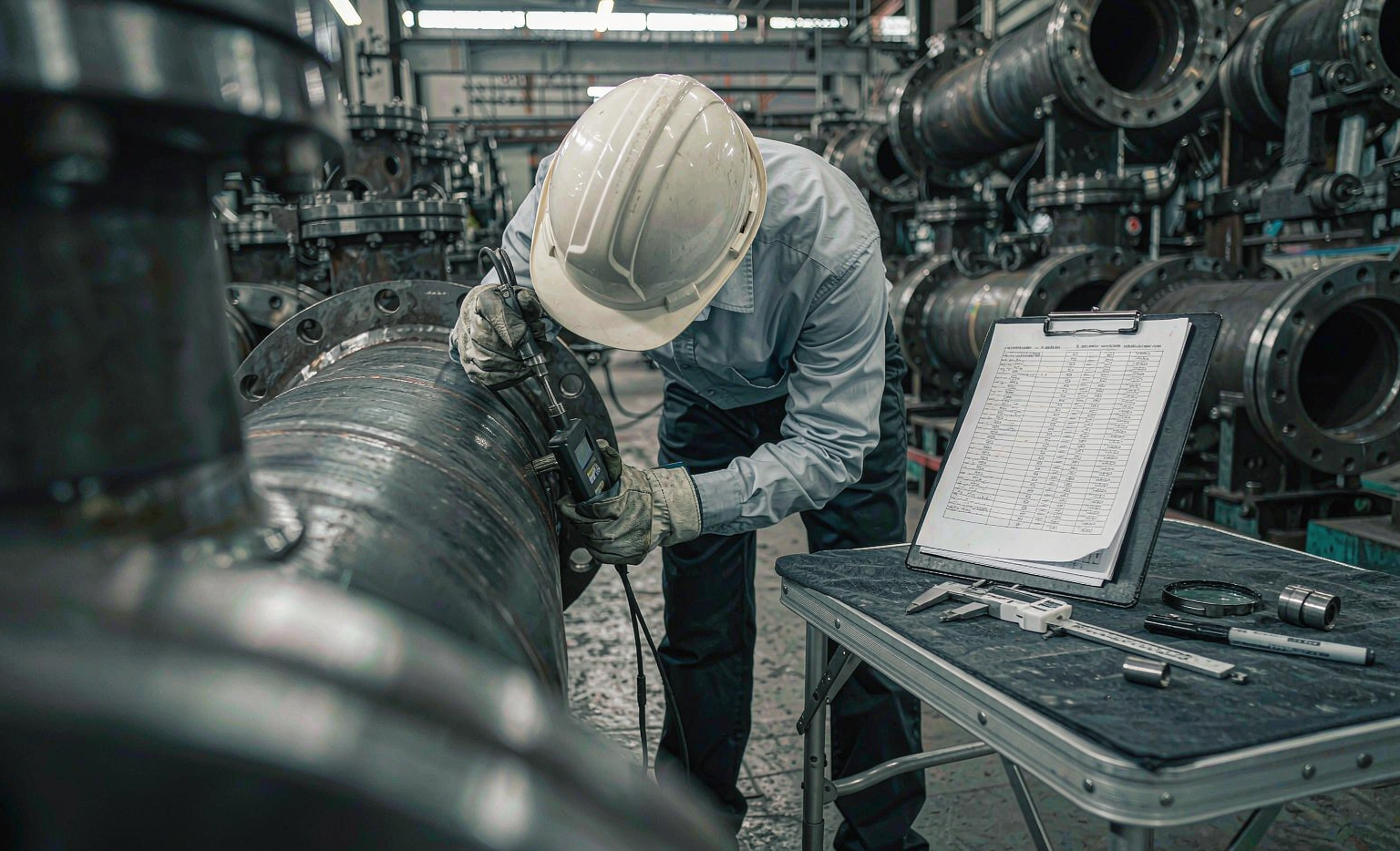
The Type E vs Type S distinction is where most quality disputes originate. Some suppliers sell ERW A53 pipe into seamless applications; the weld seam becomes a long-term weakness at elevated temperature. Always check the certificate for the process type letter.
3. Chemical Composition Comparison
| Element | A53 Gr.B (S/E) | A106 Gr.B |
|---|---|---|
| C max | 0.30% (seamless), 0.30% (ERW) | 0.30% |
| Mn max | 1.20% | 0.29–1.06% |
| P max | 0.05% | 0.035% |
| S max | 0.045% | 0.035% |
| Si (min) | Not specified | 0.10% min |
| Cu/Ni/Cr/Mo total | Not specified | Each ≤0.40%, total ≤1.00% (residual limits) |
Note the tighter phosphorus and sulfur caps in A106, plus the specified minimum silicon — both reflect its high-temperature mission, where clean steel and deoxidation practice matter for long-term creep and graphitization resistance.
4. Mechanical Properties
| Property | A53 Gr.B | A106 Gr.B |
|---|---|---|
| Min yield | 240 MPa (35 ksi) | 240 MPa (35 ksi) |
| Min tensile | 415 MPa (60 ksi) | 415 MPa (60 ksi) |
| Elongation | Per formula, varies with size | Per formula, varies with size |
| Hardness | HB 187 max typical intent | Not specified directly |
Room-temperature strength is essentially identical — which is exactly why A53 sometimes gets substituted for A106 by cost-driven suppliers. The difference appears at temperature: above roughly 250–300°C, A53’s practice and chemistry are not qualified for sustained creep service, and code rules push you to A106 (or better).
5. Typical Applications Side by Side
| Application | Correct Spec |
|---|---|
| Steam, boiler feed, superheated lines | A106 Gr.B (or Gr.C for higher strength) |
| Refinery process piping (ASME B31.3) | A106 Gr.B |
| Plant air, low-pressure water, hydraulic lines | A53 Gr.B (S or E) |
| Fencing, handrail, structural tube substitute | A53 Gr.B ERW |
| Fire sprinkler systems | A53 Gr.B (commonly ERW, black or galvanized) |
| Cryogenic or impact-critical service | Neither — specify A333 Gr.6 |
6. Buying Tips: Certificates, Markings, and Common Pitfalls
- Read the MTC process letter: “S” = seamless, “E” = ERW, “F” = furnace butt. Reject Type F for any pressure application.
- Marking: each length must show manufacturer mark, spec, grade, size, schedule, and heat number per the spec’s marking clause — verify against the certificate heat numbers.
- Wall tolerance: seamless A106: ±12.5% on wall; ERW A53: ±10% for D/t ratios commonly ordered. Counter-check random ultrasonic wall readings on arrival.
- Ends: plain, beveled, or threaded per order — confirm bevel standard (ASME B16.25) when pipe will be site-welded.
- Galvanized confusion: A53 has a zinc-coating clause (610 g/m² average interior+exterior reference); A106 does not. Never order “galvanized A106”.
- Third-party inspection: for export projects, add SGS/BV witness of hydrotest and PMI spot checks — a few hundred dollars that prevents whole-shipment rejection.
Frequently Asked Questions
Can I use A53 Grade B instead of A106 Grade B to save money?
Only for ambient-temperature, non-critical services where the design code permits it. For high-temperature or ASME-coded pressure piping, no — the chemistry limits, silicon minimum, and service qualification differ, and inspectors will reject it.
Is A106 Grade B seamless always more expensive?
In export markets, A106 Gr.B and seamless A53 Gr.B are priced almost identically since the same seamless output serves both. The real price gap is A53 ERW versus any seamless product — typically 10–25% cheaper.
What temperature limit applies to A106 Gr.B?
ASME B31.1/B31.3 allow allowable stress values for SA106 Gr.B from ambient up to around 540°C in short-term tables, with common design practice between 350–425°C. Follow your code’s allowable stress tables for the exact design temperature.
How do I verify a pipe shipment is really A106 Gr.B seamless?
Check: (1) seamless letter “S” on MTC and stenciling; (2) heat numbers on pipe match certificates; (3) silicon ≥0.10% on chemistry; (4) PMI spot check for residual element consistency; (5) if in doubt, cut a sample and look for a weld seam inside the bore.
Need A106 Gr.B Seamless or A53 Gr.B Pipe?
Huaxia-Steel supplies ASTM A106 Gr.B seamless pipe and A53 Gr.B pipe from 1/8″ to 24″, schedules 10–160, with EN 10204 3.1 certificates, hydrotest records, and third-party inspection. Send your size list for factory-direct pricing.
Request a Quote