ASTM A576 Carbon Steel Bars: Grades, Specs & Buying Guide
When a project calls for “special quality” carbon steel bars, the specification most often behind that phrase is ASTM A576. It is one of the most widely used standards for hot-rolled carbon steel bars intended for mechanical and structural parts that will be heat treated, machined, or cold worked. Yet A576 is frequently confused with ASTM A108 (cold-finished bars) and ASTM A29 (general requirements). This guide explains what A576 actually covers, the grades it defines, how its chemistry and mechanical expectations compare with neighbouring standards, and how to write it correctly into a purchase order.
Getting the standard right matters. A576 bars are supplied hot-rolled and are commonly used for parts that will be normalized, annealed, or quenched and tempered by the fabricator. Specifying A108 instead — a cold-finished product — changes the surface finish, dimensional tolerance, and price. Understanding the distinction helps you order exactly the bar you need without paying for processing you do not want.
What Is ASTM A576?
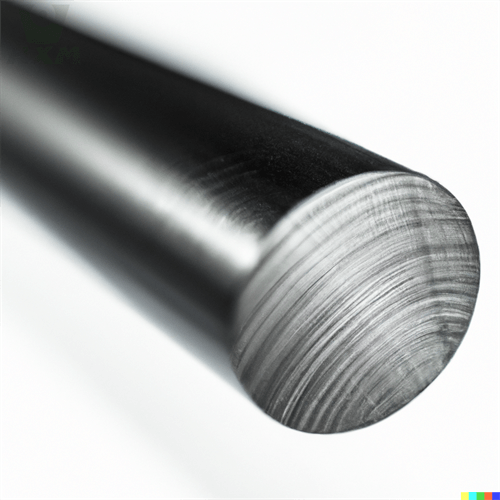
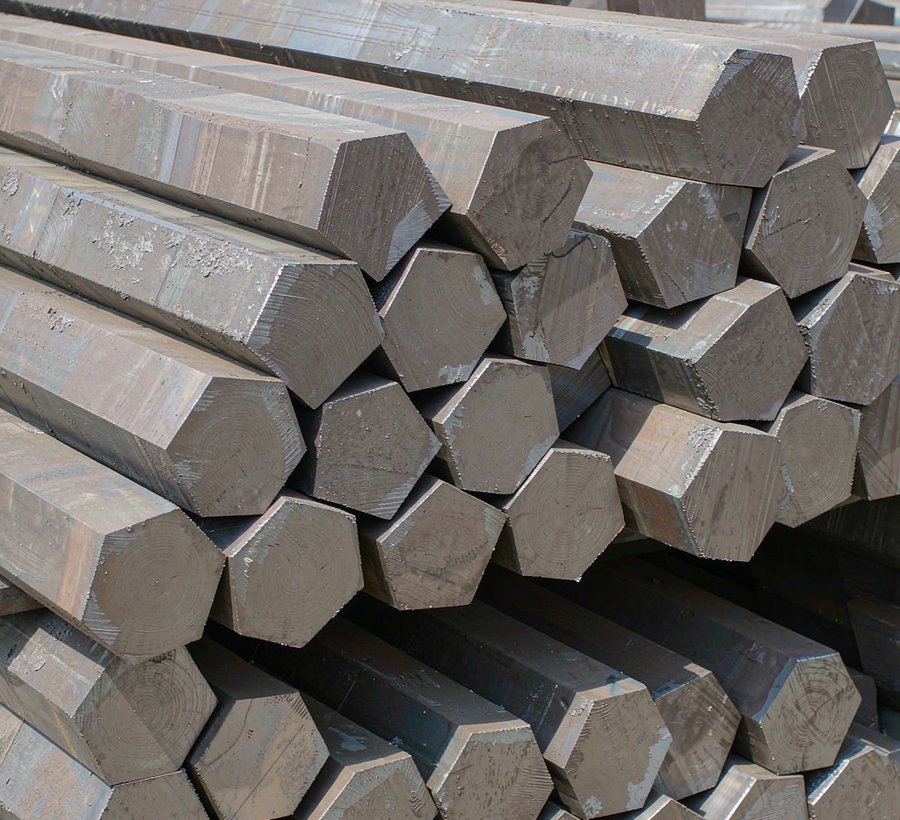
ASTM A576 / A576M is the standard specification for steel bars, carbon, hot-wrought, special quality. “Hot-wrought” means hot-rolled. “Special quality” distinguishes it from merchant-quality bar: special quality implies closer chemistry control, cleaner steel, and suitability for heat treatment and demanding mechanical applications. The standard covers rounds, squares, hexagons, and flat bars, and it defines a series of grade designations (for example G10100 through G10950) based on the UNS carbon-steel numbering system.
The grades in A576 span low-carbon to high-carbon compositions, roughly corresponding to the familiar AISI 1010 through 1095 range. Because the standard uses UNS numbers, buyers who are used to AISI designations need a cross-reference. For example, A576 G10450 is essentially AISI 1045, and G10200 corresponds to AISI 1020.
Scope and Covered Grades
A576 covers carbon steel bars intended for general mechanical use where special quality is required. The bars are normally supplied in the as-rolled condition, although they may be annealed, normalized, or otherwise heat treated when specified. The standard does not mandate specific mechanical properties for every grade in the as-rolled state; instead it establishes chemistry limits and quality requirements, with mechanical properties agreed between buyer and supplier or achieved after the buyer heat treatment.
- Product forms: hot-rolled rounds, squares, hexagons, and flats.
- Grade range: G10080 to G10950 in the UNS G10xxx series (approximately AISI 1008 to 1095).
- Condition: as-rolled by default; annealed, normalized, or tempered available on request.
- Quality level: special quality, with controlled chemistry and internal soundness.
- Typical use: shafts, pins, gears, bolts, and parts that will be heat treated or machined.
Chemical Composition of Common A576 Grades
The chemistry is what defines each grade. Carbon content drives the response to heat treatment: low-carbon grades (around 0.10-0.20 percent) are ideal for carburizing and forming, medium-carbon grades (0.30-0.50 percent) are the classic quench-and-temper steels, and high-carbon grades (0.60-0.95 percent) are used for springs, wear parts, and tools.
| UNS Grade | AISI equivalent | Carbon % | Manganese % |
|---|---|---|---|
| G10100 | 1010 | 0.08-0.13 | 0.30-0.60 |
| G10200 | 1020 | 0.18-0.23 | 0.30-0.60 |
| G10300 | 1030 | 0.28-0.34 | 0.60-0.90 |
| G10450 | 1045 | 0.43-0.50 | 0.60-0.90 |
| G10600 | 1060 | 0.55-0.65 | 0.60-0.90 |
| G10950 | 1095 | 0.90-1.03 | 0.30-0.50 |
Phosphorus and sulfur are held to 0.040 percent maximum in most grades, with tighter limits available for special applications. Buyers needing improved machinability may look instead to resulfurized grades in other specifications, since A576 is a straight-carbon series.
Mechanical Properties and Heat Treatment Response
In the as-rolled condition, A576 bars have modest, variable mechanical properties that depend on carbon content and cooling rate. The real value of the medium- and high-carbon grades is unlocked by heat treatment. A G10450 bar, normalized, will show roughly 570 MPa tensile strength and 310 MPa yield; quenched and tempered, it can exceed 900 MPa tensile with useful ductility. G10200, by contrast, is too low in carbon to harden significantly and is normally carburized when a hard case is needed.
| Grade | Condition | Tensile (approx.) | Yield (approx.) |
|---|---|---|---|
| G10200 | As-rolled | 380-470 MPa | 210-290 MPa |
| G10450 | Normalized | 570-620 MPa | 310-370 MPa |
| G10450 | Quenched & tempered | 850-1000 MPa | 550-700 MPa |
| G10600 | Quenched & tempered | 900-1100 MPa | 600-800 MPa |
These figures are indicative; final properties depend on section size, austenitizing temperature, and quenching medium. Always confirm the exact heat-treatment condition and expected properties with the supplier or mill certificate.
ASTM A576 vs A108 vs A29: Understanding the Difference
This is the single most common point of confusion. A576 covers hot-rolled special-quality bars. A108 covers cold-finished bars, which are produced by cold drawing or turning after hot rolling, giving tighter tolerances and a better surface at a higher price. A29 is not a product specification at all — it is a general-requirements document that provides common definitions and test methods referenced by other bar standards.
| Aspect | ASTM A576 | ASTM A108 | ASTM A29 |
|---|---|---|---|
| Finish | Hot-rolled | Cold-finished | N/A (general requirements) |
| Dimensional tolerance | Wider | Tight | N/A |
| Surface finish | Scale / rougher | Smooth, bright | N/A |
| Price | Lower | Higher | N/A |
| Best for | Heat treating, forging, general mechanical | Precision shafting, machining to close fit | Referenced by other specs |
If your part will be machined from oversized stock and heat treated, A576 is usually the economical choice. If you need ready-to-use shafting with tight diameter tolerance and a bright surface, specify A108.
Manufacturing and Quality Requirements
A576 bars are produced by hot rolling billets through a rolling mill to the required section. Special quality implies that the steel is made to controlled chemistry and is subject to inspection for surface defects and internal soundness. Depending on the order, bars may be descaled, annealed to soften for machining, or normalized to refine grain structure.
Quality assurance typically includes a mill test certificate showing heat analysis. Additional testing — such as hardenability (Jominy) tests, ultrasonic inspection, or inclusion rating — can be specified for critical components. Always agree the inspection scope up front, since extra tests affect both price and lead time.
Typical Applications
- Shafts, axles, and spindles for machinery and vehicles.
- Gears, pinions, and clutch parts that will be case hardened or through hardened.
- Bolts, studs, and fasteners requiring heat treatment.
- Pins, keys, and couplings in general engineering.
- Die and tool components in the higher-carbon grades.
How to Specify ASTM A576 in a Purchase Order
- State “ASTM A576 / A576M” and the exact UNS grade (for example G10450).
- Specify the section shape and size (round diameter, hexagon across-flats, flat width x thickness) and length.
- State the delivery condition: as-rolled, annealed, normalized, or quenched and tempered.
- Define the applicable dimensional tolerance and straightness requirement.
- Require a mill test certificate (EN 10204 3.1) and any supplementary testing needed.
Procurement and Certification Tips
Because A576 grades map closely to AISI numbers, a supplier may offer an AISI 1045 bar when you asked for G10450 — these are effectively the same chemistry, but confirm that the mill can certify to A576 if your drawing names that standard. For heat-treated material, request the actual mechanical test results rather than typical values. And remember that “special quality” is a meaningful term: buy from a reputable mill or supplier who can document it.
Frequently Asked Questions
Is ASTM A576 the same as AISI 1045?
Not exactly. A576 is a specification covering many grades; G10450 is the A576 designation whose chemistry corresponds to AISI 1045. A drawing may name either, but confirm the certification standard with your supplier.
Can A576 bars be machined directly?
Yes. Low- and medium-carbon grades machine readily in the as-rolled or annealed condition. High-carbon grades are often annealed first to reduce tool wear.
What does special quality mean?
It indicates controlled chemistry, cleaner steel, and inspection for surface and internal defects, making the bar suitable for heat treatment and demanding mechanical parts.
Which grade should I choose for carburizing?
Low-carbon grades such as G10100-G10200 are preferred for carburizing because they develop a hard case over a tough core.
Do A576 bars come with mill certificates?
Yes, a mill test certificate (EN 10204 3.1) with heat analysis is standard; ask for mechanical results and any supplementary testing up front.
Heat Treatment Practices for A576 Grades
The medium- and high-carbon grades in ASTM A576 are designed to be heat treated, and understanding the basic routes helps you specify the right delivery condition. Normalizing — heating above the critical temperature and air cooling — refines the grain structure, relieves rolling stresses, and produces a uniform, predictable strength. It is the most common treatment for 1045 shaft stock and is often sufficient for moderate-duty parts.
Annealing softens the steel for heavy machining. A full anneal produces a coarse pearlitic structure with minimum hardness, ideal when a part will be extensively machined before final heat treatment. Spheroidizing, a specialised anneal used on the higher-carbon grades, further improves machinability and cold-forming response.
Quenching and tempering develops the highest strength. The bar is austenitized, quenched in oil or water to form martensite, then tempered to reduce brittleness to the target hardness. Hardenability varies with carbon content and section size: a small 1045 bar will harden through, while a large-diameter bar may harden only at the surface. For deep hardening, buyers sometimes move to a low-alloy grade rather than a higher-carbon A576 grade.
Dimensional and Straightness Tolerances
Hot-rolled bar carries wider dimensional tolerances than cold-finished bar, and this is worth planning for. A bar ordered as 25 mm round may arrive within a tolerance band that varies by mill and standard. If your part needs a precise fit, allow machining stock rather than expecting hot-rolled bar to be net size.
| Feature | Hot-rolled (A576) | Cold-finished (A108) |
|---|---|---|
| Diameter tolerance | Wider (e.g. +/-0.5 mm typical) | Tight (e.g. +/-0.05 mm) |
| Straightness | Commercial, may require straightening | Straightened, much better |
| Surface | Mill scale, rougher | Bright, smooth |
| Machining allowance | Required | Minimal |
Straightness matters for shaft applications. Hot-rolled bar can develop bow during rolling and cooling; if your process feeds bar through a machine automatically, specify straightened material or plan a straightening step. Huaxia-Steel can supply straightened and peeled bar for customers who need better geometry without moving to a full cold-finished product.
Global Equivalents of Common A576 Grades
A576 grades are frequently cross-referenced to EN, JIS, and GB designations. These equivalences are useful for sourcing flexibility but are never exact — chemistry ranges and toughness requirements differ between standards. Always confirm that the substitute meets your drawing and code obligations.
| UNS / AISI | EN (approx.) | JIS (approx.) | GB (approx.) |
|---|---|---|---|
| G10200 / 1020 | C22 / 1.0402 | S20C | 20# |
| G10300 / 1030 | C30 / 1.1178 | S30C | 30# |
| G10450 / 1045 | C45 / 1.0503 | S45C | 45# |
| G10600 / 1060 | C60 / 1.0601 | S58C | 60# |
For example, AISI 1045, EN C45, JIS S45C, and Chinese 45# are widely treated as equivalents, and in many general engineering applications they are interchangeable. But where impact toughness, hardenability, or certification to a specific standard is required, verify the substitute with the mill certificate rather than the name alone.
Common Ordering Errors to Avoid
- Ordering by AISI name when the drawing requires A576 certification — confirm the standard on the certificate.
- Forgetting to state the delivery condition (as-rolled, annealed, normalized, or quenched and tempered).
- Not allowing machining stock on hot-rolled bar, then finding the section is undersize after cleaning up.
- Assuming equivalent grades are identical in toughness without checking the certificate.
- Omitting length, straightness, and tolerance requirements from the order.
Storage and Handling of A576 Bar
Carbon steel bar rusts quickly if stored outdoors without protection. Keep bars under cover, off the ground on dunnage, and with adequate ventilation to prevent moisture trapping. A light oil coating helps protect machined or peeled surfaces. For long-term storage, consider wrapped bundles with desiccant.
During handling, avoid dropping bundles or dragging bars across abrasive surfaces, which can dent edges and compromise straightness. Segregate bars by grade and heat number so traceability is preserved — mixing heats defeats the purpose of a mill certificate. Simple discipline in the warehouse prevents most quality complaints before the material ever reaches a machine.
How Carbon Content Drives Grade Selection
Selecting an A576 grade begins with the intended heat treatment and the balance of strength and ductility the finished part needs. Low-carbon grades around G10100 to G10200 cannot be through hardened to high strength, but they are ideal for carburizing: a carbon-rich case can be developed on the surface while the core stays tough and shock-resistant. This makes them the standard choice for gears, pins, and bearings subject to rolling or sliding contact.
Medium-carbon grades from G10300 to G10450 respond well to quenching and tempering. They develop a useful combination of strength and toughness and are the workhorses of shaft and fastener manufacture. Among them, G10450 is the most widely used, offering a good balance of hardenability, machinability in the annealed state, and cost. When higher hardenability is needed for a large section, a buyer may need to move outside A576 to an alloy grade such as 4140.
High-carbon grades from G10600 to G10950 achieve high hardness after heat treatment and are used for springs, wear plates, and cutting tools. Their high carbon content makes them less weldable and more prone to cracking during forming, so they are specified where hardness is the priority. Annealing before machining is common to keep tool wear acceptable.
A useful rule of thumb: below about 0.25 percent carbon, think forming and carburizing; between 0.30 and 0.50 percent, think quench and temper; above 0.60 percent, think hardness and wear. This simple framework narrows the grade choice before more detailed engineering analysis.
Comparing Delivery Conditions and Their Cost Impact
The same A576 grade costs differently depending on delivery condition. As-rolled bar is the least expensive but carries scale, wider tolerance, and variable properties. Annealed bar costs more but machines faster and more predictably. Normalized bar offers refined grain and uniform strength at a modest premium. Quenched and tempered bar commands the highest price because it adds a controlled heat-treatment cycle and mechanical testing, but it arrives ready for final machining and service.
| Delivery condition | Relative cost | When to choose |
|---|---|---|
| As-rolled | Lowest | Stock for general machining, further heat treatment planned |
| Annealed | Low-medium | Heavy machining, forming, high-carbon grades |
| Normalized | Medium | Uniform strength and grain, moderate-duty shafts |
| Quenched & tempered | Highest | Ready-to-use high-strength components |
Choosing the condition deliberately avoids two pitfalls: paying for heat treatment you will repeat, or buying as-rolled bar that cannot meet the mechanical requirements without a treatment you did not budget for. State the condition on every order and align it with your manufacturing route.
Final Thoughts on Specifying A576
ASTM A576 remains one of the most practical standards for carbon steel bar stock because it covers a broad range of carbon contents under a single, well-understood quality framework. By matching the UNS grade to the intended heat treatment, stating the delivery condition clearly, and confirming that your supplier can certify to the standard rather than merely to an equivalent AISI name, you remove most of the risk from the purchase. Whether the part is a carburized gear, a quenched-and-tempered shaft, or a simple machined pin, there is an A576 grade that fits the job at a reasonable cost. Take the time to specify it precisely and the material will perform as expected.
Request a Quote
Need ASTM A576 hot-rolled special-quality bars? Huaxia-Steel supplies G10100-G10950 rounds, hexagons, and flats with mill certificates, in as-rolled or heat-treated condition. Send us your grade, size, and quantity for a factory-direct quote.
Contact our sales team at [email protected] with your specification, quantity, and destination port. We reply with a mill-direct quotation, lead time, and full documentation within one business day.