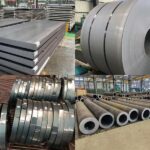
Anti-Dumping Duties on Carbon Steel: A Buyer’s Survival Guide
Anti-dumping duties can double the landed cost of carbon steel products overnight — and they now cover hundreds of product-country combinations worldwide, from HRC and rebar to fasteners, pipe fittings, and welded tube. For procurement teams, the risk is no longer abstract: an AD order issued mid-contract can turn a profitable import into a stranded shipment at customs. This guide explains how anti-dumping proceedings actually work, where duties are currently imposed on common carbon steel lines, how to check exposure before contracting, and the legitimate structures buyers use to keep supply flowing.
How an Anti-Dumping Case Works, Step by Step
Anti-dumping is a trade-remedy instrument, not a tariff in the ordinary sense. A domestic industry group petitions its government alleging imports are sold below “normal value” and cause injury. The timeline is broadly similar across jurisdictions (US Department of Commerce/ITC, EU Commission, India DGTR, and equivalents):
- Initiation (day 0): petition accepted; imports are now “under investigation” but no duty applies yet.
- Preliminary determination (~2–4 months): provisional duties or cash deposits may be imposed retroactively to roughly 90 days before this date — this is the classic mid-shipment trap.
- Final determination + duties (~5–12 months): definitive duty rates set, often per exporter (those who cooperated in questionnaires get individual rates; everyone else gets a higher “all-others” rate).
- Retrospective risk: in exceptional cases duties can be levied on entries made up to 90 days before preliminary measures — buyers carrying inventory financed on a duty-free assumption get burned here.
- Reviews: administrative reviews can change rates annually; sunset reviews every 5 years decide whether orders live on (they usually do, often for decades).
Where Carbon Steel Lines Are Covered Today
The table below illustrates the pattern buyers should internalize — the exact rates and scopes change, but the structure of exposure looks like this in 2026:
| Product line | Importing market | Typical exposure pattern |
|---|---|---|
| HRC / CRC / coated sheet | US, EU, India, Canada, Vietnam | Country-specific rates, wide scope, frequent new investigations |
| Rebar and wire rod | US, Canada, EU, Turkey, GCC | Long-standing orders, high rates (often 15–100%+) |
| Welded pipe & tube (OCTG, line pipe, standard pipe) | US, EU, Canada, Australia | Very granular scopes by size and grade |
| Flanges, fittings, fasteners | US, EU, India | Narrow scopes — small spec changes can move items in/out |
| Wire, mesh, nails | US, EU, Canada | Scope disputes common on coatings and alloys |
Three practical consequences follow. First, scopes matter more than headlines: a duty on “certain welded carbon steel pipe” may exclude pipe above a specific diameter or with specific end finishes — read the scope paragraph, not the press release. Second, duties are by country AND exporter: the same product can face 12% from one Chinese mill with an individual rate and 90% for non-cooperative exporters. Third, new investigations multiply: buyers should monitor dockets in their destination market quarterly, because a petition filed after your PO is signed still applies to goods entering months later.
Pre-Contract Due Diligence Checklist
- Classify exactly: get the 10-digit HS code and compare it against the scope language of every active AD/CVD order in your market — customs brokers read scopes, suppliers often do not.
- Check the exporter’s rate status: in the US, the company-specific dump rate is public; in the EU, ask whether the mill has an individual duty or is under the residual rate.
- Build the duty into the landed cost model at both the expected rate and the “all-others” rate, so a worse outcome is priced in before contract award.
- Put a trade-remedy clause in the contract: allocate who bears duties imposed or increased after the PO date, and define a price adjustment or exit mechanism.
- Verify origin truthfully: transshipment through third countries to dodge duties is customs fraud, and importers — not just exporters — pay the penalties, plus retroactive duties and possible criminal exposure.
- Ask the supplier for their track record: mills that regularly ship into the destination market know their duty status; vague answers are a red flag.
Legitimate Responses Buyers Actually Use
| Approach | How it works | Cautions |
|---|---|---|
| Source from non-subject countries | Shift orders to mills in countries without orders covering the product | Check for new petitions; price premium reflects scarcity |
| Use an exporter with a lower individual rate | Buy through the cooperative mill named in the final determination | Rate is exporter-specific, not transferable to other entities |
| Scope-excluded specifications | Genuinely different spec/size/coating outside scope language | Only with written scope analysis; artificial deviations = evasion |
| Duty drawback / FTZ mechanics | Import under bond, re-export processed goods | Complex; only fits re-export business models |
| Diversify tariff base | Qualify a second source in a duty-free country now, before you need it | Requires 3–6 months of qualification trials |
The one approach we actively discourage: anything involving relabeling, minor-transformation-through-free-zone schemes, or fake certificates of origin. Modern enforcement matches steel chemistry and rolling marks against mill production records, and penalties land on the importer of record — potentially several times the duty evaded, plus loss of bonding privileges.
What Suppliers Should Provide on AD-Sensitive Orders
A competent export mill supporting duty-sensitive destinations will provide: written confirmation of the product’s HS classification and its status under active orders in the destination market; evidence of its own duty rate where exporter-specific rates exist; willingness to print accurate origin and producer details on invoices and packing lists; and flexibility on scope-relevant parameters when a legitimate, documentable specification change exists. At Huaxia-Steel we maintain a live matrix of destination-market trade remedies across our carbon steel product lines and flag affected items before quoting — because a quote that ignores a 40% duty is not a quote, it is a liability.
Frequently Asked Questions
Who actually pays anti-dumping duties — the supplier or me?
The importer of record pays at customs. Under FOB or CIF terms that is the buyer; under DDP terms the seller bears it — which is why DDP quotes from duty-exposed lanes either carry the duty inside the price or quietly assume an exemption that may not survive.
Can duties apply retroactively to goods already on the water?
Yes. Provisional measures can reach entries up to ~90 days before the preliminary determination in critical-circumstance cases. Contract clauses should allocate this risk explicitly.
Do anti-dumping duties expire?
Only through sunset review, five years after imposition, and only if the importing authority finds revocation would not renew injury. Most steel orders are renewed repeatedly; plan around orders being permanent.
Is buying from a third country always safe?
Only if the goods are genuinely produced there. Authorities run origin verification visits and analyze production records; circular transshipment schemes are regularly exposed, and the importer pays retroactive duties plus penalties.

Check Your Duty Exposure Before You Order
Huaxia-Steel tracks trade-remedy orders across major destination markets and flags affected carbon steel lines before quoting, offering compliant alternative specifications and sourcing structures. Send us your product list and destination country for an exposure check and a duty-aware quotation.