
Carbon Steel Cold Drawing vs Hot Rolling: Process Comparison for Buyers
When sourcing carbon steel bars and wires, buyers must choose between cold drawn and hot rolled materials. This decision affects dimensional precision, surface finish, mechanical properties, and cost — often by 15 – 30%. Understanding the fundamental differences between these two manufacturing processes enables smarter procurement decisions and fewer quality disputes.
This article explains both processes, compares their outputs, and provides selection guidance for common industrial applications.
1. How Hot Rolling Works
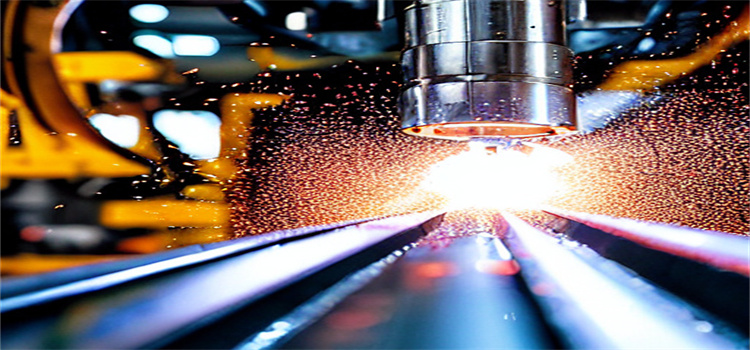
Hot rolling involves heating steel billets to approximately 1,100 – 1,250°C (above the recrystallization temperature) and passing them through successive roller stands to achieve the target cross-section.
Key characteristics:
- Temperature: 1,100 – 1,250°C throughout forming
- Dimensional tolerance: ±0.5 – 1.0mm for bars, wider for structural sections
- Surface finish: Mill scale (iron oxide layer), rough texture
- Microstructure: Equiaxed ferrite-pearlite grains, isotropic properties
- Production speed: High throughput, up to 50 tons/hour for large mills
2. How Cold Drawing Works
Cold drawing pulls hot-rolled wire rod or bar through a tapered die at room temperature, reducing cross-sectional area by 10 – 35% in a single pass. Multiple passes achieve greater reductions.
Key characteristics:
- Temperature: Room temperature (no heating)
- Dimensional tolerance: ±0.05 – 0.10mm (10× more precise than hot rolled)
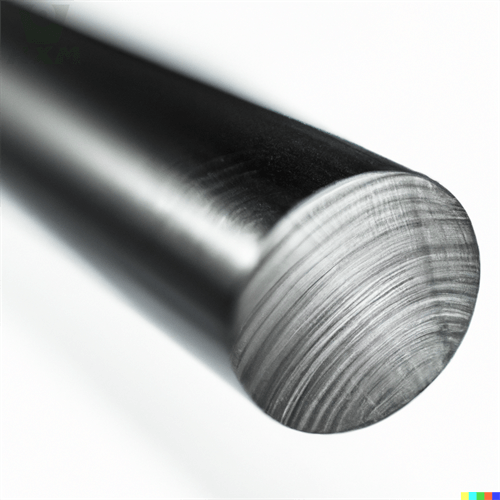
- Surface finish: Smooth, bright, scale-free
- Microstructure: Elongated grains, work-hardened, anisotropic
- Production speed: Slower, 2 – 5 tons/hour depending on section size
3. Direct Comparison Table
| Parameter | Hot Rolled | Cold Drawn |
|---|---|---|
| Tensile Strength | Base value (e.g., 400 MPa for S235) | +15 – 25% higher due to work hardening |
| Yield Strength | Base value | +20 – 40% higher |
| Elongation | Higher (≥ 22% for S235) | Reduced (≥ 15% after drawing) |
| Hardness | Lower, uniform | Higher, surface harder than core |
| Surface Quality | Scaled, rough (Ra 12 – 25 μm) | Smooth, bright (Ra 0.8 – 3.2 μm) |
| Straightness | 3 – 5 mm/m deviation | ≤ 1 mm/m deviation |
| Size Range | 5 – 300mm diameter | 2 – 80mm diameter |
| Cost per Ton | Base price | +15 – 30% premium |
4. When to Specify Hot Rolled
Hot rolled carbon steel is the right choice when:
- Structural applications: Building frames, bridges, ship hulls — where dimensional precision is secondary to load-bearing capacity
- Further processing planned: Materials destined for forging, welding, or extensive machining benefit from lower initial hardness
- Cost sensitivity: Budget-constrained projects where surface finish is not critical
- Large sections required: Cold drawing is impractical above 80mm diameter
- Isotropic properties needed: Applications requiring uniform strength in all directions
5. When to Specify Cold Drawn
Cold drawn carbon steel justifies its premium when:
- Tight tolerances required: Shafts, pins, and precision components where machining allowances must be minimized
- Surface finish matters: Hydraulic cylinders, decorative architectural elements, bearing surfaces
- Improved strength needed: Applications where higher yield strength permits section size reduction (weight savings)
- Straightness critical: Automated feeding in CNC machines, linear guide rails
- No heat treatment planned: Cold drawing provides “free” strengthening without additional processing cost
6. Quality Control Differences
| Inspection Item | Hot Rolled | Cold Drawn |
|---|---|---|
| Visual Surface | Scale coverage acceptable; check for cracks, seams | Must be scale-free; no scratches, die marks |
| Dimensional Check | Spot-check OD/width at 3 points | 100% or statistical sampling (SPC) |
| Tensile Test | One per heat/batch | One per production lot or shift |
| Straightness | Random check | Every bar checked on roller table |
| Decarburization | Not typically checked | Must verify ≤ 1% of diameter for bearing grades |
7. Sourcing Strategy from China
Chinese suppliers typically specialize in either hot rolling (large integrated mills) or cold drawing (smaller processors buying hot-rolled feedstock). Consider these factors:
- Hot rolled mills: Verify A1/A2/A3 quality classification per GB/T 702; request dimensional tolerance class (Group 1, 2, or 3)
- Cold drawing shops: Check die quality (tungsten carbide vs. tool steel), lubricant type (phosphate coating + soap vs. oil), and pass schedule
- Feedstock traceability: Cold drawn quality depends on hot-rolled starting material. Request heat number linkage between feedstock and finished product
- Annealing capability: For heavily drawn products (>25% reduction), intermediate annealing may be necessary. Confirm supplier has bright annealing or spheroidizing furnaces
FAQ
Can cold drawn steel be welded?
Yes, but residual stresses from cold working increase cracking risk. Preheat to 100 – 150°C for carbon contents above 0.30%, and stress-relieve after welding at 550 – 600°C.
Is cold drawn the same as cold rolled?
No. Cold rolling uses rollers to reduce thickness of flat products (sheets, strips). Cold drawing pulls bars or wire through a die. The mechanisms differ though both are cold working processes.
What is the maximum reduction achievable in cold drawing?
Single-pass reduction rarely exceeds 35% to prevent central bursting (chevron cracks). Total reduction from wire rod to finished wire can reach 90% through 5 – 8 passes with intermediate annealing.
How does cold drawing affect corrosion resistance?
Cold drawing itself does not change corrosion resistance significantly. However, the smooth surface reduces crevice corrosion sites compared to scaled hot-rolled surfaces. Proper oil coating during drawing provides temporary rust protection.
Can I order cold drawn bars in JIS-certified grades?
Yes. Chinese exporters supply cold drawn S45C, S35C, and SCM440 bars with JIS G4051/4053 compliance. Ensure the certificate specifies “cold drawn” condition, not just the base grade.
Need precision cold drawn bars or structural hot rolled sections from certified Chinese mills? Huaxia-Steel provides both with full MTC, third-party inspection, and custom cutting services.