Carbon Steel Export Tax Rebate Guide: China 2026 Policy Update
China’s export tax rebate (退税) policy directly affects the landed cost of carbon steel for international buyers. In 2026, rebate rates vary by product form and processing depth, ranging from 0% for some raw materials to 13% for higher-value finished products. This guide explains the current rebate structure for carbon steel, how it affects your invoice, what documents are required for rebate eligibility, and how to verify that your supplier is actually claiming the rebate rather than pocketing it.
Current Rebate Rates for Carbon Steel Products (2026)
| Product category | HS Code chapter | Typical rebate rate |
|---|---|---|
| Hot-rolled coil / plate (unpickled, uncoated) | 7208 | 0% – 9% |
| Cold-rolled coil / sheet | 7209 | 9% – 13% |
| Galvanized / coated coil and sheet | 7210 | 9% – 13% |
| Wire rod | 7213 – 7217 | 9% – 13% |
| Bars and rods (hot-rolled, cold-finished) | 7214 – 7215 | 9% – 13% |
| Angles, shapes, and sections | 7216 | 9% – 13% |
| Seamless tubes and pipes | 7304 | 9% – 13% |
| Welded tubes and pipes | 7305 – 7306 | 9% – 13% |
| Stainless and alloy steel | 7218 – 7229 | 0% – 9% |
Note: Rates are adjusted by the Ministry of Finance and State Taxation Administration. Raw semi-finished products and materials linked to overcapacity concerns (such as certain hot-rolled black coils) may carry 0% rebate to discourage exports. Value-added products such as cold-rolled strip, precision tubes, and machined components generally retain the full 13% VAT rebate. Always confirm the exact HS code and rate at the time of order because adjustments can occur quarterly.
How the Rebate Affects Your Price
Chinese exporters pay 13% value-added tax (VAT) on domestic purchases of raw materials, energy, and processing services. When they export, the government refunds part or all of this VAT, lowering the exporter’s effective cost base. In a competitive market, this rebate is typically passed through to the buyer as a lower FOB price. For example, if a mill’s cost-plus price for a galvanized coil is $700/ton before VAT, a 13% rebate returns $91, allowing the mill to quote approximately $609 plus margin and logistics.
Buyers should understand that the rebate belongs to the exporter, not the foreign buyer. There is no legal mechanism for a foreign buyer to claim the rebate directly. The practical impact is indirect: rebate-eligible products from legitimate exporters tend to be priced lower than the same products from traders who cannot obtain the rebate or who intentionally do not declare exports properly.
Documents Required for Rebate Claims
- Value-added tax (VAT) special invoice (增值税专用发票) from upstream suppliers — the primary proof that input VAT was paid.
- Export customs declaration (出口报关单) with the correct HS code, FOB value, and export date.
- Foreign exchange settlement slip (收汇水单) proving that foreign currency was received for the export.
- Export invoice and packing list matching the customs declaration.
- Shipping documents (BL or airway bill) showing the goods left China.
The exporter submits these documents through the electronic tax system. Processing time is typically 1–3 months. If documents are inconsistent — for example, if the HS code on the customs declaration does not match the VAT invoice — the rebate claim is rejected or audited.
Red Flags: When the Rebate Is Not Passed Through
- Price too low with no rebate logic: Some traders quote below market to win orders, then deliver substandard material or fail to ship. If a quote is significantly below the rebate-adjusted mill price, investigate rather than celebrate.
- Cash-only or no-VAT-invoice transactions: If the supplier cannot provide a VAT special invoice, they probably are not paying input VAT and cannot claim the rebate. This also means there is no paper trail for quality claims.
- Misclassified HS codes: A supplier might declare a higher-rebate HS code while shipping a lower-rebate product. This is customs fraud and exposes the buyer to shipment delays, fines, or confiscation.
- Trading companies without export rights: Some small traders use third-party export agents. This is legal but adds a layer; verify who holds the export license and who receives the rebate.
Practical Tips for Buyers
- Ask the supplier to confirm the HS code and current rebate rate in the quotation. A professional exporter knows this by heart.
- Request a copy of the VAT special invoice (sensitive data can be redacted) to confirm the supplier has proper tax documentation.
- Verify the supplier’s export registration and customs credit rating (AEO certification is a strong positive indicator).
- Include a clause in the purchase contract stating that the supplier warrants correct HS classification and export compliance.
- Use CIF or FOB terms with reputable forwarders to reduce the risk of customs misdeclaration at the export port.
FAQ
Can foreign buyers claim the Chinese VAT rebate?
No. The rebate is paid to the Chinese exporter who paid the input VAT. Foreign buyers benefit indirectly through lower FOB prices in competitive markets.
Does the rebate apply to CFR and CIF shipments?
Yes. The rebate is based on the FOB value of the exported goods, regardless of whether the trade term is FOB, CFR, or CIF. Freight and insurance are not part of the rebate base.
What happens if China cancels the rebate for my product?
If the rebate drops to 0%, the exporter’s cost rises by the former rebate amount. In a competitive market, this pressure may be shared between exporter and buyer through price renegotiation. Long-term contracts should include a rebate-change clause.
How often do rebate rates change?
Major adjustments typically happen once or twice per year, but the government can issue interim notices. Monitor announcements from the Ministry of Finance or ask your supplier to alert you to pending changes.
Is there a rebate for steel processed in bonded zones?
Goods exported from bonded zones or processed under customs supervision may have different VAT treatment. If your supplier operates through a bonded warehouse, confirm the specific tax arrangement because it may differ from standard export rebates.
Export-Compliant Carbon Steel Supply
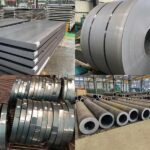
Huaxia-Steel exports carbon steel coils, plates, bars, tubes, and sections with full VAT documentation, correct HS classification, and AEO-certified customs clearance. Contact us for transparent FOB/CFR/CIF quotations with rebate-eligible pricing.