Carbon Steel Forging vs Casting: Structural Parts Selection Guide
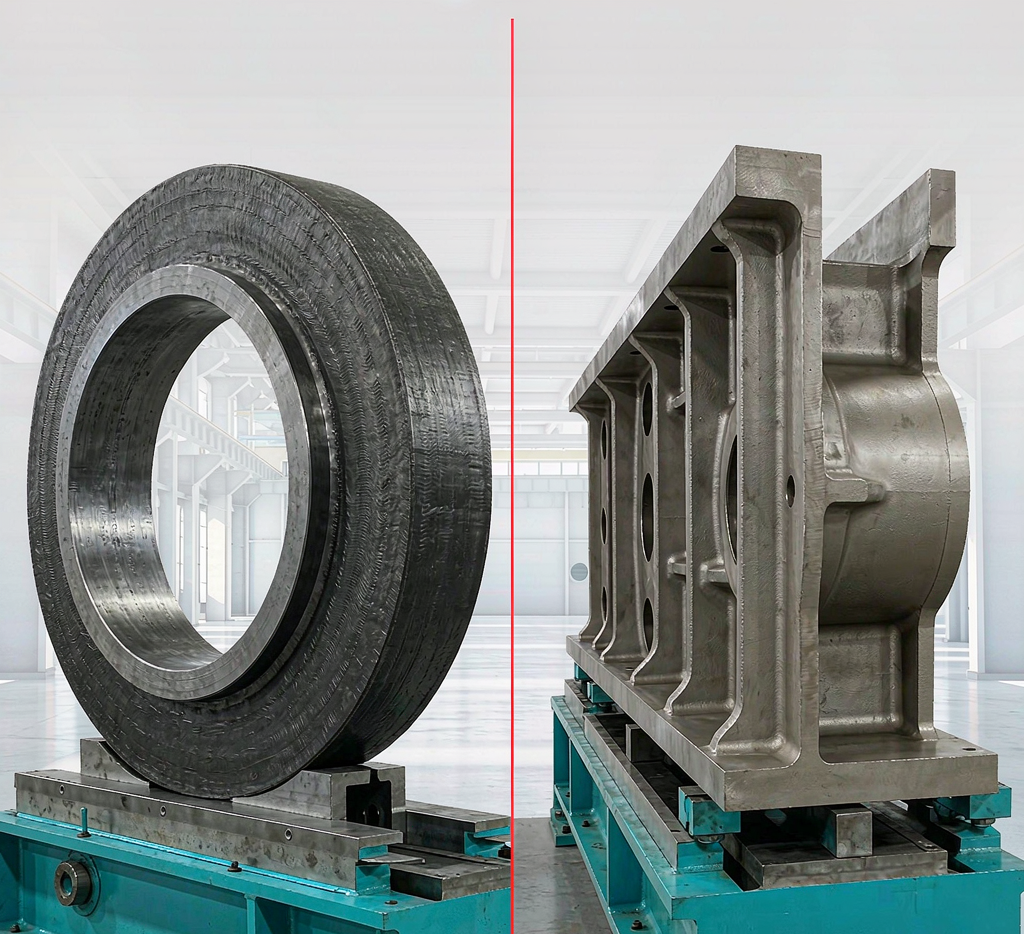
When producing load-bearing carbon steel components such as flanges, crankshafts, gears, brackets, and structural connectors, engineers must choose between forging and casting. Both processes shape metal into complex forms, but they produce very different internal structures, mechanical properties, and defect profiles. Selecting the wrong process can lead to premature failure, excessive machining, or unnecessary cost. This guide compares forging and casting for carbon steel structural parts and explains when each process is the better choice.
1. Process Fundamentals
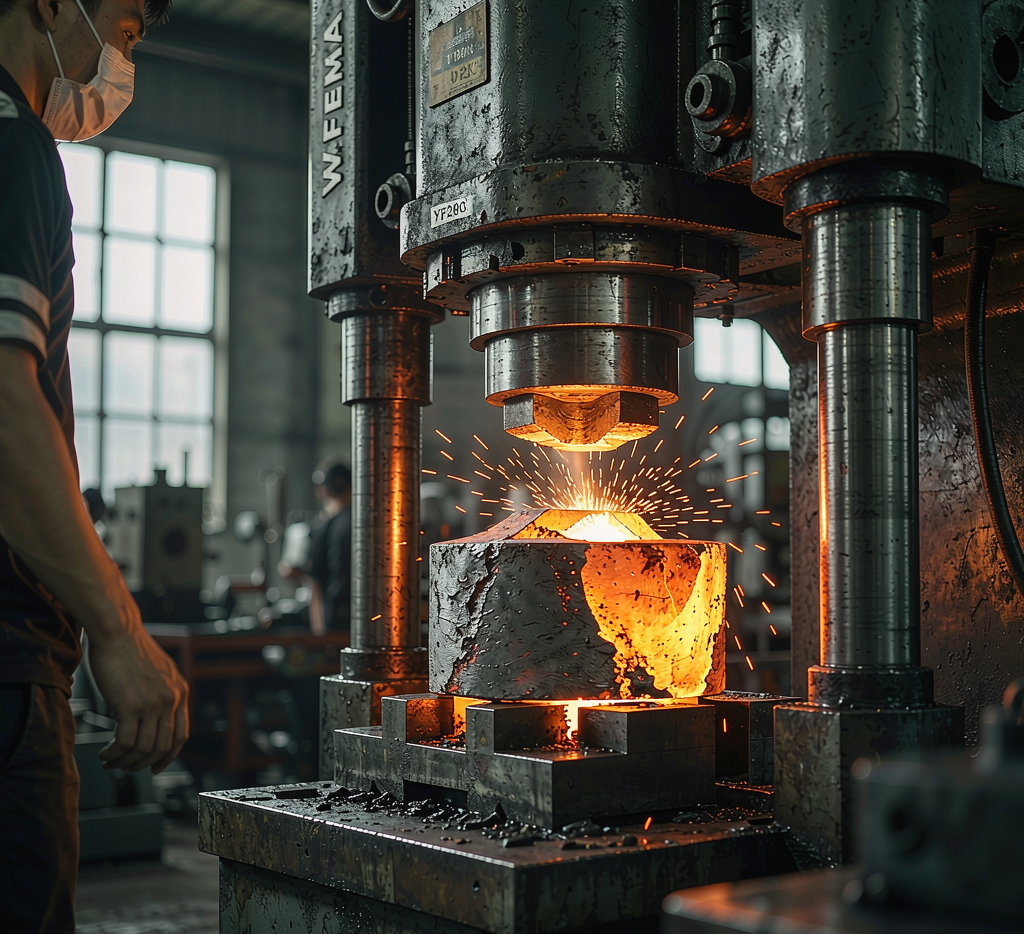
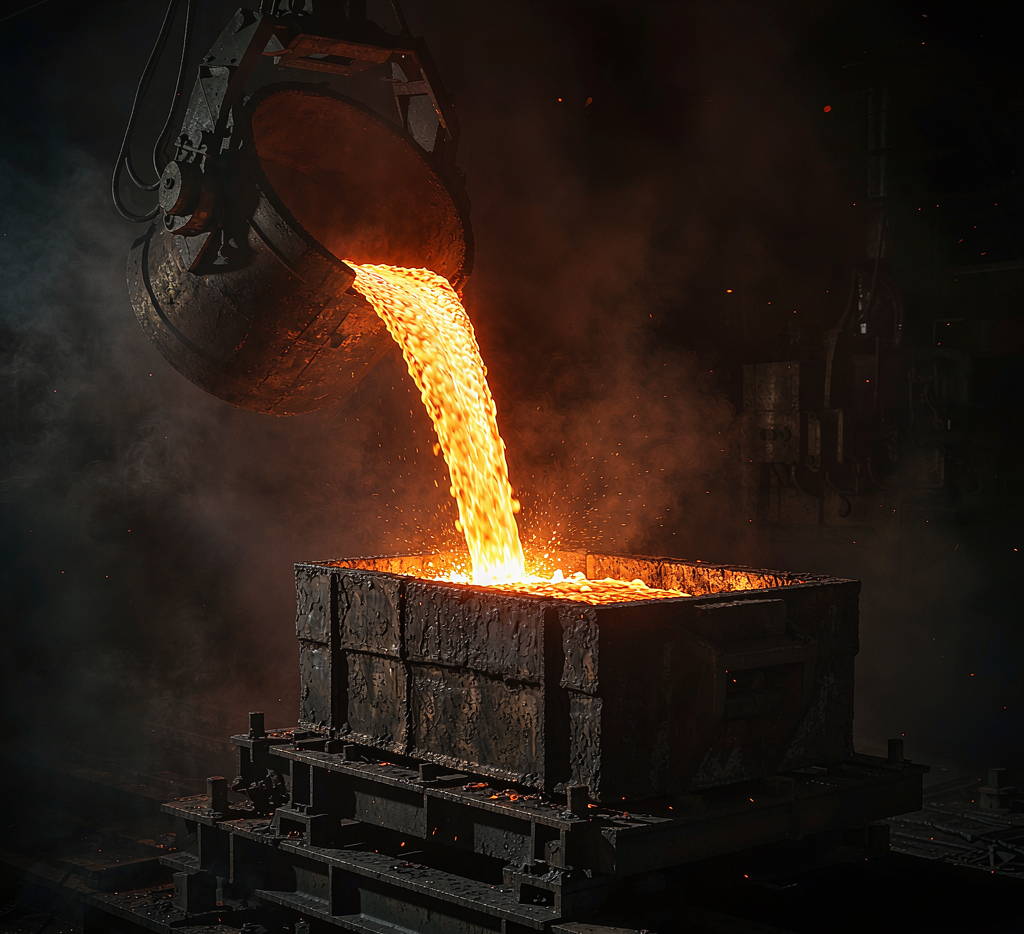
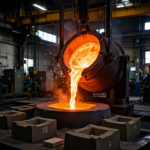
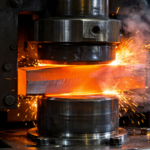
Forging shapes solid metal using compressive forces delivered by hammers, presses, or rollers. The starting material is typically a billet or bar heated to forging temperature. Casting melts metal and pours it into a mold cavity, where it solidifies into the desired shape. Each process creates a different grain structure and defect population.
Parameter
Forging
Casting
Starting material
Solid billet or ingot
Molten metal
Grain structure
Continuous, refined, aligned to shape
As-cast, often coarse and directional
Porosity risk
Very low
Higher (shrinkage, gas, sand inclusions)
Tolerance
Tighter (IT9-IT14)
Looser (IT11-IT16)
Minimum section thickness
Limited by forgeability
Thinner sections possible
Tooling cost
Moderate to high
Moderate (sand molds lower, die casting higher)
2. Mechanical Properties and Fatigue Life
The primary advantage of forging is its ability to produce a continuous, refined grain structure that follows the contour of the part. This grain flow improves fatigue resistance, impact toughness, and directional strength. Forged carbon steel parts typically exhibit 20-30% higher fatigue strength than cast equivalents of the same grade.
Castings can achieve good static strength but are more susceptible to internal defects such as porosity, shrinkage cavities, and inclusions. These defects act as stress concentrators and reduce fatigue life. For critical structural applications, castings require non-destructive testing such as radiography or ultrasonic inspection to verify internal soundness.
3. Common Carbon Steel Grades Used
Grade
Forging Applications
Casting Applications
AISI 1045 / C45 / S45C
Shafts, crankshafts, gears, hammers
Machine bases, wheels, housings
AISI 1020 / S20C / C22
General forged fittings, pins
Light-duty structural castings
AISI 4140 / 42CrMo4
High-strength shafts, couplings
Heavy machinery components
A105 / A350 LF2
Pipe flanges, valves, fittings
Valve bodies, pump casings
ASTM A216 WCB
Not typically forged
Pressure-containing castings
4. Dimensional Accuracy and Machining Requirements
Forgings generally achieve tighter dimensional tolerances and better surface finish than castings. This reduces machining allowance and improves material utilization. Closed-die forgings can achieve near-net shapes with minimal finish machining.
Castings are better suited to complex internal cavities, undercuts, and thin-walled geometries that would be difficult or impossible to forge. However, castings usually require larger machining allowances and more extensive surface cleaning such as shot blasting or grinding.
5. Cost Considerations for Production Volume
For very low volumes or one-off parts, sand casting is often cheaper because pattern and tooling costs are low. For medium to high volumes, forging becomes more economical due to higher production rates, lower scrap rates, and reduced machining time.
Break-even between forging and investment casting typically occurs between 1,000 and 10,000 pieces depending on part size and complexity. For high-strength critical parts, the safety margin of forging often justifies the higher initial tooling cost.
FAQ
Is forged carbon steel stronger than cast carbon steel?
Yes, for equivalent grades, forged carbon steel typically offers higher fatigue strength, better toughness, and more consistent properties due to its refined grain structure. However, castings can be designed with complex geometries that are not feasible in forgings.
Can castings replace forgings in structural applications?
Castings can replace forgings in structural applications when proper design margins, material grades, and inspection standards are applied. For highly stressed rotating or impact-loaded parts, forging remains the safer choice.
What inspection is required for forged and cast parts?
Forgings typically undergo dimensional checks, hardness testing, and surface inspection. Castings often require radiographic testing (RT), ultrasonic testing (UT), magnetic particle inspection (MPI), or dye penetrant inspection (DPI) to detect internal and surface defects.
Which process has shorter lead time?
Sand castings generally have shorter tooling lead times. Closed-die forgings require die manufacturing, which can add 2-6 weeks. However, forging production rates are higher once tooling is ready, leading to shorter per-part cycle times.
Need forged or cast carbon steel structural parts? Contact Huaxia-Steel for process recommendations, material selection, and mill-direct supply with full inspection certificates and third-party verification.
If you require further information about our metal sheet products or architectural projects, please don’t hesitate to leave your contact details and message here.
Our team of experts will respond within 24 hours to continue the discussion and provide you with any additional information you requires.