Introduction
Hot dip galvanizing is the most cost-effective corrosion protection system for carbon steel exposed to weather, water, or industrial atmospheres. A properly galvanized carbon steel pipe, bracket, or fastener set can survive 50–100 years in a rural environment and 20–40 years in a coastal or industrial one — often outlasting the paint systems that cost three times more to apply and maintain.
This guide explains the hot dip galvanizing process for carbon steel, the coating standards that govern it (ASTM A123/A153 and ISO 1461), how coating thickness is measured, what white rust really means, and the inspection points buyers should demand before shipment.
What Is Hot Dip Galvanizing?
Hot dip galvanizing (HDG) immerses fabricated carbon steel in molten zinc at approximately 450°C. The zinc reacts with the steel surface to form a series of zinc-iron alloy layers, topped by a nearly pure zinc layer. Unlike paint, which is a barrier only, the galvanized coating is metallurgically bonded and also provides sacrificial protection: if the coating is scratched to bare steel, the surrounding zinc corrodes preferentially and seals the damage.
Three industry variants matter for buyers:
- Batch (after-fabrication) galvanizing: finished articles — brackets, poles, flanges, grating — are galvanized after fabrication. Governed by ASTM A123 or ISO 1461. Coatings are thickest and most durable.
- Continuous galvanizing: sheet and strip pass through a zinc bath in coil form before fabrication. Governed by ASTM A653 or EN 10346. Coating designations like Z275 mean 275 g/m² total both sides.
- Pre-galvanized components: fabricated from continuously galvanized sheet; cut edges are bare unless re-galvanized or zinc-rich painted.
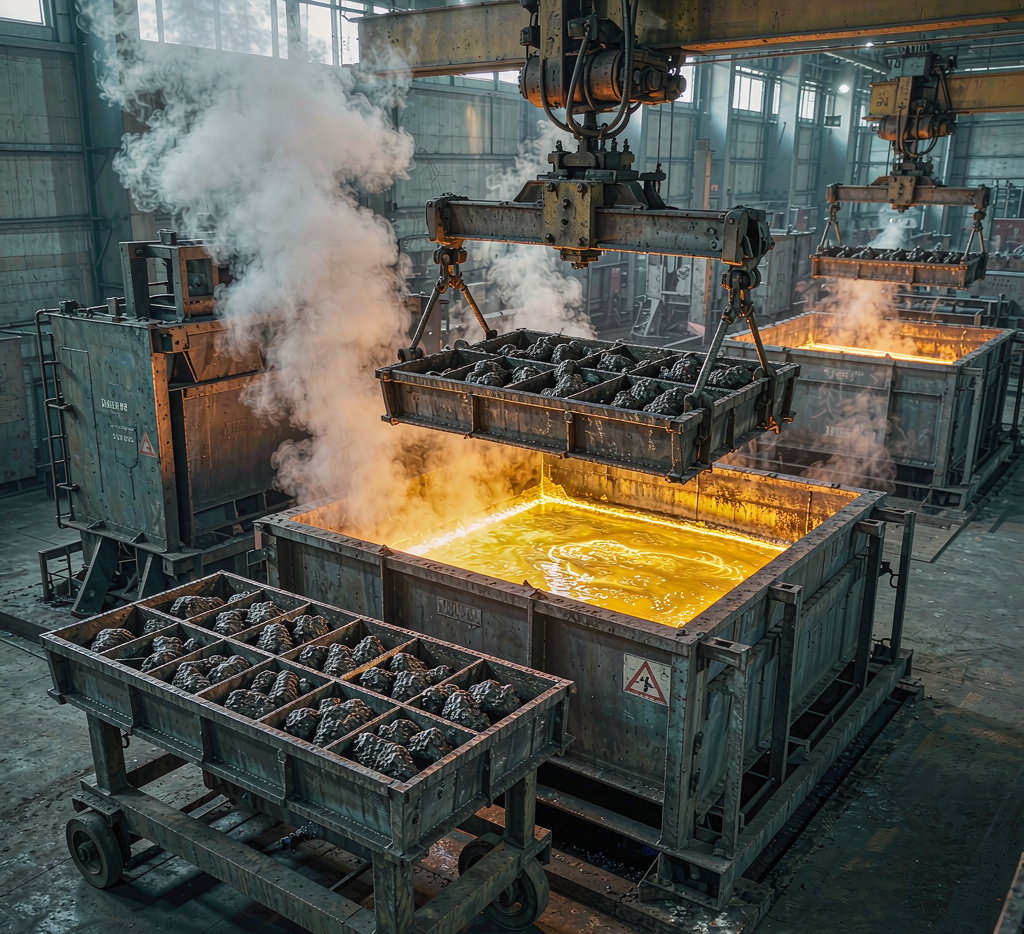
The Batch Galvanizing Process, Step by Step
- Inspection & degreasing: weld slag, oil, and markings are removed; vent and drain holes are checked so zinc can flow and air can escape.
- Pickling (acid cleaning): items are dipped in hydrochloric or sulfuric acid to remove mill scale and rust. Heavy scale may need grit blasting instead.
- Fluxing: a zinc-ammonium chloride solution (wet or dry flux) prepares the surface so the molten zinc wets the steel cleanly.
- Zinc bath immersion: 4–10 minutes at ~450°C, depending on section thickness. The zinc-iron alloy layers grow during this time and determine final thickness.
- Withdrawal & draining: controlled withdrawal speed sets the free-zinc layer thickness; excess zinc is drained or vibrated off.
- Quench & passivation: water quench cools the work; optional chromate or oil passivation suppresses early white rust during transit.
- Finishing & inspection: spikes and runs are dressed off; every article is measured for coating thickness and checked for bare spots.
Coating Thickness Standards: ASTM A123 vs ISO 1461
| Material category | ASTM A123 min. avg (mils) | ISO 1461 min. avg (µm) |
|---|---|---|
| Steel > 6 mm thick | 3.9 (100 µm) | 85 |
| Steel 3–6 mm | 3.4 (85 µm) | 70 |
| Steel 1.5–3 mm | 2.6 (65 µm) | 55 |
| Steel < 1.5 mm | 1.8 (45 µm) | 45 |
| Fasteners (ASTM A153 / ISO 10684) | 1.4–3.4 by diameter | 20–55 by diameter |
Key points buyers miss:
- Thickness scales with steel thickness — a 10 mm bracket must average 100 µm (A123) or 85 µm (ISO 1461); a 2 mm sheet article needs far less. Specifying “100 µm minimum everywhere” on thin parts is not achievable and will stall your order.
- ASTM A123 measures average of 5 specimens per lot plus each-piece minimums; ISO 1461 defines per-article averages and local minimums. Both are magnetic-gauge (or micrograph) measurements per defined procedures.
- Coating weight (g/m²) ≈ thickness (µm) × 7.05 for pure zinc; Z275 continuous-galvanized sheet averages only ~19 µm per side — fine for indoor, inadequate for marine structures.
Design Rules That Prevent Galvanizing Defects
- Drain and vent holes: hollow sections and closed boxes need vent holes (typically ≥ 8–10 mm) at high points and drain holes at low points; trapped zinc or air causes bare spots and pooling.
- Avoid mixed assemblies: welding galvanized assemblies before dipping beats bolting dissimilar-thickness parts that distort at different rates.
- Grind weld seams: heavy slag and porous welds trap acid and flux, producing black, uncoated patches.
- Distortion control: thin asymmetric fabrications (long angles, thin plates) can warp in the bath; specify reasonable length-to-thickness ratios or add temporary bracing.
- Masking: machined faces or threads can be masked or re-tapped after dipping; agree this with the galvanizer in advance.
White Rust, Dark Patches, and Other “Defects” Explained
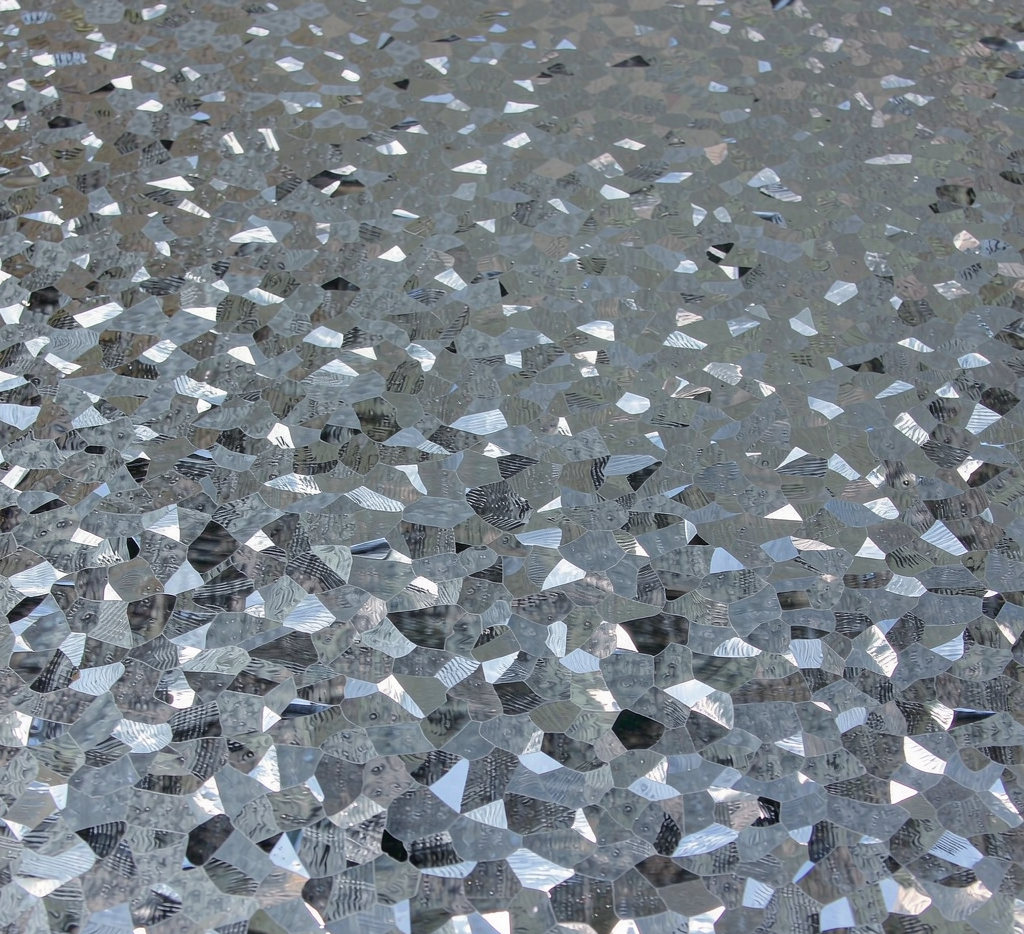
- White rust: white zinc corrosion products formed by moisture trapped between stacked surfaces during shipping. It is storage staining, not a coating failure — wipe, dry, and it does not affect service life. Prevention: passivation, VCI paper, ventilation, and not stacking wet bundles.
- Dark gray matte areas: thick alloy-layer growth on reactive steels (high Si/P). Cosmetically different but often thicker and fully protective.
- Wet storage stain vs bare spot: a bare spot (uncoated steel, reddish) is a true defect if it exceeds the standard’s allowable area; a gray-white bloom on zinc is not.
- Flux inclusions and zinc runs: small lumps and drip lines are acceptable unless they interfere with assembly; spikes must be dressed.
Inspection Checklist Before Shipment
- Certificate: galvanizing plant report with lot numbers, bath temperature, and coating results, tied to your PO/heat numbers.
- Magnetic gauge readings: average of 5 readings per article per the standard; compare against thickness tables for the steel thickness class.
- Visual: 100% coverage, no acid stains, no uncoated edges on fabricated articles; threads functional after dipping.
- Adhesion: coating is metallurgically bonded; “no peeling” — flaking indicates over-alloying or handling damage and must be re-galvanized.
- Packing: separated bundles, passivation or oiling agreed, VCI/dunnage for sea freight.
Cost and Lead Time Realities
Batch galvanizing in China typically adds USD $150–400 per ton depending on part mix (heavy simple sections at the low end; fasteners, small brackets, and thin walled parts at the high end, since pricing follows piece handling, not just weight). Add 3–7 working days to fabrication lead time for the galvanizing cycle, plus an extra day for double-dipping very long articles (bath length limits ~12–15 m; longer poles are dipped twice end-to-end).
FAQ
1. Hot dip galvanizing vs pre-galvanized — which should I order?
Pre-galvanized (continuous) sheet products are cheaper and flatter but have bare cut edges. Batch galvanizing coats every surface, including welds and cut edges. For outdoor structural work, specify batch galvanizing per ASTM A123 / ISO 1461; for indoor ducts, cabinets, and light framing, pre-galvanized is usually sufficient.
2. Can galvanized steel be welded after galvanizing?
Yes. Remove zinc locally (grind or burn through), weld, then repair the area with zinc-rich paint per ASTM A780 or re-galvanize. Ventilate properly — zinc fumes cause metal fume fever.
3. How long does a hot dip galvanized coating last?
Rule of thumb: roughly 1 µm of coating per year in a rural atmosphere, faster in coastal/industrial zones. A 100 µm coating lasts 70+ years in rural C2/C3 conditions, 20–40 years in C4/C5 before first maintenance.
4. Is white rust a reason to reject a shipment?
Not by itself. ASTM A123 and ISO 1461 judge coating thickness and continuity, not storage bloom. Reject if thickness is short, coating is flaking, or there are bare steel spots beyond allowed limits.
5. Can you galvanize to both ASTM A123 and ISO 1461?
Yes — export galvanizers in China routinely certify to either. State the standard, steel thickness categories, and any minimum local thickness requirement in your PO.
Conclusion
Hot dip galvanizing is a mature, standards-driven process: clean steel, flux, dip at 450°C, measure the coating, inspect continuity. Buyers who specify the right standard for the steel thickness, design vent/drain paths, and inspect thickness per ASTM A123 or ISO 1461 get coatings that genuinely last decades. Huaxia-Steel supplies galvanized carbon steel pipes, sheets, grating, and fabricated components with certified coating thickness and export-safe packing.
Need galvanized carbon steel with certified ASTM A123 / ISO 1461 coating? Send your specification and quantity for a 24-hour quotation.