Carbon Steel Hot Forging Process: A Complete Guide
The carbon steel hot forging process is one of the oldest and most reliable ways to turn a simple billet into a high-strength component. By shaping steel above its recrystallisation temperature, the forging refines the grain structure, aligns the fibre flow with the part geometry, and closes internal porosity that would otherwise weaken the finished piece. The result is a component with a strength-to-weight ratio and fatigue resistance that a casting or a bar-stock machining simply cannot match. This guide walks through the entire route — from billet selection and heating to die design, cooling, heat treatment, inspection, and the cost drivers that determine a competitive quotation.
Whether you are sourcing forged flanges, shafts, rings, anchors, or hand tools, understanding the process helps you ask better questions and avoid the most common specification errors. The sections below explain what actually happens in the forge, why temperature control matters more than most buyers realise, and which defects are preventable at the specification stage.
What Is Hot Forging?
Hot forging is a metalworking process in which a workpiece is plastically deformed between dies at a temperature above the steel recrystallisation point, typically between 900 and 1250 degC depending on composition. Above that temperature the steel becomes soft and ductile, allowing large shape changes with relatively low force. Crucially, the deformation also breaks up the cast dendritic structure of the ingot or billet and recrystallises it into a finer, more uniform grain size. This is why a forged part is mechanically superior to a casting of the same chemistry.
There are two main variants. Open-die forging uses flat or simple shaped dies and a series of controlled blows or presses to form large, relatively simple shapes such as shafts, rings, and blocks. Closed-die (impression-die) forging traps the heated billet in a cavity that gives the part its near-final shape, which is how high-volume flanges, fittings, and hand tools are produced. Most carbon steel components bought through a supplier are closed-die forgings with a small amount of final machining.
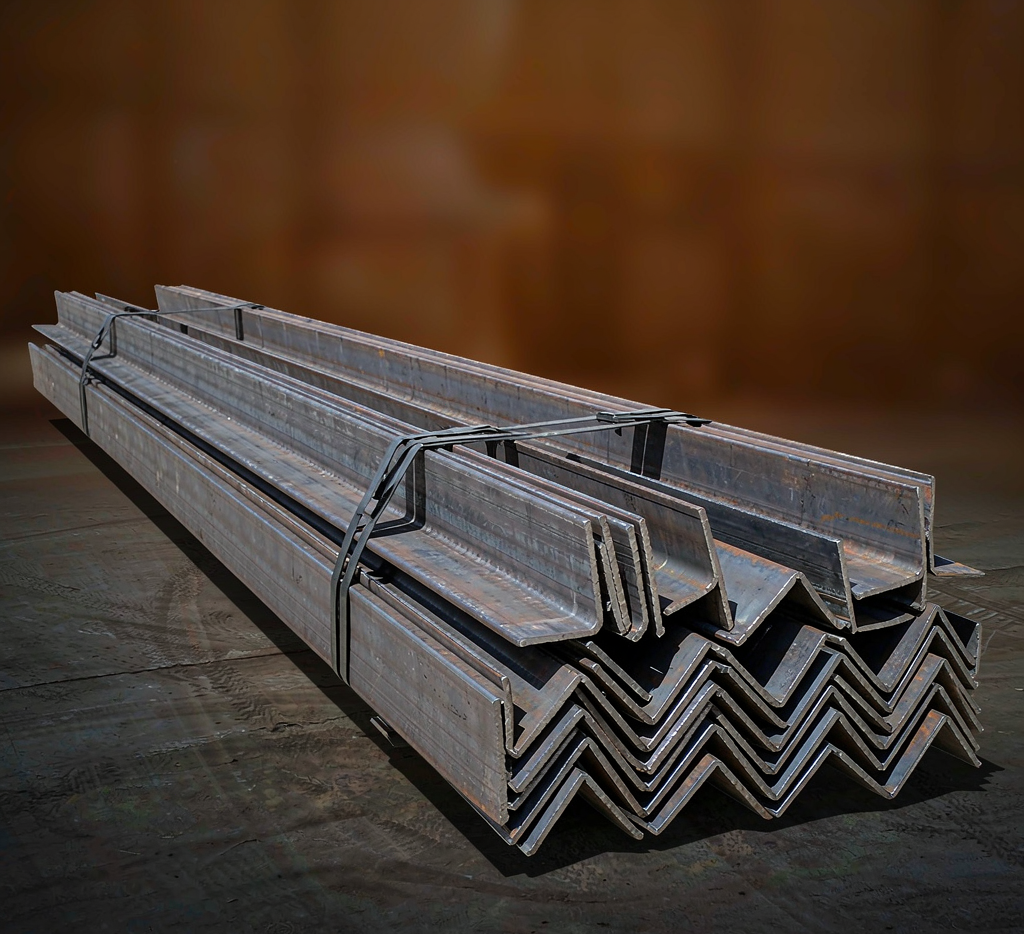
Hot Forging vs Cold Forging vs Casting
| Factor | Hot forging | Cold forging | Casting |
|---|---|---|---|
| Working temperature | 900-1250 degC | Room temperature | Molten metal poured |
| Grain structure | Refined and recrystallised | Work-hardened, fibrous | Cast dendrites, coarser |
| Strength | High, isotropic | High in worked directions | Lower, direction-neutral |
| Dimensional accuracy | Good, needs machining | Excellent, near-net | Good to fair |
| Surface finish | Scale, needs cleaning | Bright and smooth | Depends on mould |
| Best for | Large or complex high-load parts | High-volume small symmetric parts | Complex hollow shapes |
Cold forging is attractive for small, symmetric parts such as fasteners because it work-hardens the steel and needs no heating. But it demands much higher press loads and ductile starting material. Casting can produce intricate internal cavities that forging cannot, but it cannot match forged toughness. For load-bearing carbon steel components, hot forging remains the default industrial choice.
The Carbon Steel Hot Forging Process, Step by Step
A consistent forging is the result of tightly controlled steps. Skipping or rushing any one of them is the usual root cause of rejects and field failures.
- 1. Material selection and billet preparation: Choose a grade such as AISI 1045, 4140, 1018, or ASTM A105 according to the service requirement. Billets are cut to calculated volume with allowance for flash and scale loss, typically 3-8 percent.
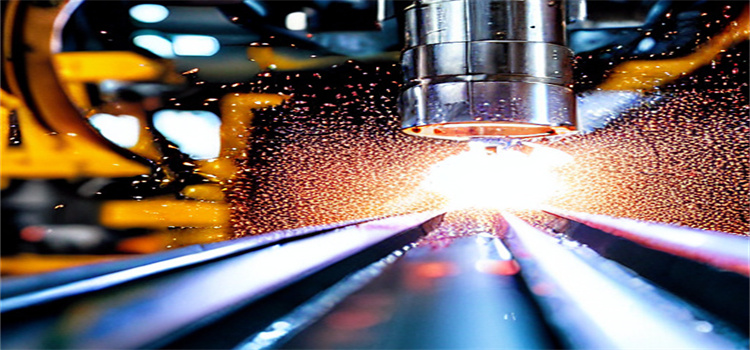
- 2. Heating: Billets are heated in a gas-fired or induction furnace to the specified forging range. Soaking time must be long enough for the core to reach temperature; a hot surface with a cold core causes uneven flow and internal cracks.
- 3. Descaling: Scale formed during heating is removed by high-pressure water or mechanical brushing. If left in place it is folded into the surface and creates pits and laps.
- 4. Preforming: The billet is given an approximate shape through rolling, upsetting, or blocking dies so material is distributed where the final die needs it.
- 5. Finishing: The preform is pressed or struck in the finishing die to final shape. Flash squeezes out into a surrounding gutter and is later trimmed.
- 6. Trimming and cooling: Flash is removed while the part is still warm. Cooling rate is controlled — air cooling, forced-air, or quenching — depending on the grade and target properties.
- 7. Heat treatment: Most forgings are normalised, annealed, or quenched and tempered to achieve the specified hardness and toughness.
- 8. Cleaning and inspection: Shot blasting removes residual scale, followed by dimensional checks, hardness testing, and, where required, ultrasonic or magnetic particle inspection.
- 9. Machining and coating: Functional surfaces are machined to tolerance and a protective coating such as zinc, phosphate, or black oxide is applied.
Forging Temperature Ranges for Common Carbon Steels
Temperature is the single most important variable in the process. Too low and the steel resists deformation and cracks; too high and the grain coarsens irreversibly, oxidation accelerates, and the part may suffer from “burnt” structure. The table gives typical starting and finishing ranges.
| Grade | Starting range | Minimum finishing | Notes |
|---|---|---|---|
| AISI 1018 / 1020 | 1150-1250 degC | 870 degC | Very ductile, wide forging window |
| AISI 1045 | 1120-1200 degC | 850 degC | Medium carbon, control cooling after forging |
| AISI 1060 | 1080-1170 degC | 870 degC | Higher carbon, narrower window |
| ASTM A105 | 1100-1200 degC | 870 degC | Standard piping forging grade |
| AISI 4140 | 1100-1180 degC | 850 degC | Alloy steel, slower heating recommended |
Finishing temperature matters as much as starting temperature. Working the steel too close to the lower boundary leaves unrecrystallised grains and residual stress, while finishing well above it allows grains to grow large. Experienced forgers aim to complete the last reduction with the part still comfortably inside the recrystallisation range, then cool at a controlled rate.
Equipment: Hammers, Presses and Upsetters
Forging hammers deliver a rapid series of blows and are flexible, relatively inexpensive, and well suited to open-die work and small batches. Mechanical and hydraulic presses apply a slow, sustained load, which is better for large sections and closed-die work because the deformation penetrates through the core rather than being concentrated at the surface. Upsetting machines are specialised presses that shorten and thicken bar stock, used heavily for bolt heads, flanges, and similar shapes.
The choice of equipment affects both cost and quality. Press forging generally produces a more uniform internal structure in large sections, while hammer forging can be faster for small parts and low volumes. A supplier with both capabilities can recommend the right route for your geometry and quantity instead of forcing every job through a single machine.
Die Design, Draft and Flash
Closed-die forging requires careful die design. The die cavity is made slightly larger than the finished part to allow for thermal contraction, typically 1 to 1.5 percent. Draft angles of 3 to 7 degrees are built into vertical walls so the part can be removed from the die; without draft the forging would stick and the die would wear rapidly. Radii are kept generous because sharp internal corners concentrate stress and inhibit metal flow.
Flash is the excess metal that squeezes out of the die cavity into a thin gutter around the part. It serves two purposes: it fills the cavity completely by creating back pressure, and it acts as a relief valve for excess billet volume. A correctly designed flash land extends die life and improves fill; too thin a land causes excessive pressure and die wear, while too thick a land allows the cavity to underfill. Trimming the flash after forging leaves a characteristic seam that is visible on most forged components.
Metallurgical Benefits: Grain Flow and Fibre Structure
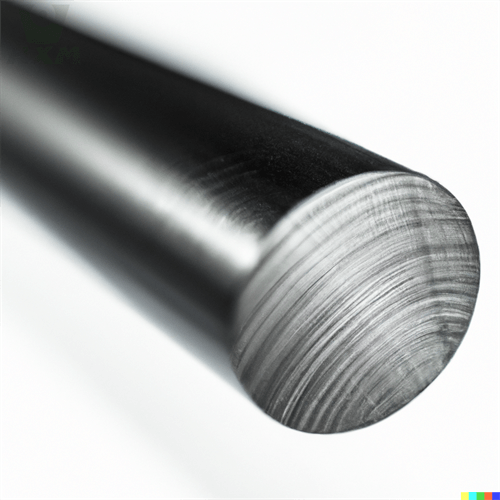
The main reason engineers specify forgings is grain flow. As the steel deforms, inclusions and grain boundaries elongate and follow the contour of the part. When the die is designed well, this fibre pattern wraps around features such as bolt holes, fillets, and transitions, giving the component high resistance to fatigue crack initiation. In a machined part cut from bar stock, the fibres run in one direction and are simply cut off at critical sections.
This difference is most pronounced in safety-critical and fatigue-loaded parts: crankshafts, connecting rods, hooks, lifting eyes, and high-pressure flanges. It is less critical in static, lightly loaded components, where a machined bar product may be more economical. A good supplier will tell you honestly when forging is not necessary rather than upselling the process.
Heat Treatment After Forging
Forging leaves the steel with a non-uniform structure and variable hardness, so almost all carbon steel forgings are heat treated before machining. Normalising — heating above the upper critical temperature and air cooling — refines grain size and produces a uniform, machinable structure. It is the standard treatment for low and medium carbon forgings such as A105 flanges and 1045 shafts. Annealing is used when maximum softness is needed for heavy machining.
Quenching and tempering is specified when high strength and toughness are required. The forging is austenitised, quenched in oil or polymer to form martensite, then tempered at a controlled temperature to reach the target hardness. A properly tempered 4140 forging, for example, offers an excellent combination of yield strength and impact resistance. Buyers should always state the required hardness range and, for critical parts, the impact test temperature on the purchase order.
Common Forging Defects and How to Prevent Them
| Defect | Likely cause | Prevention |
|---|---|---|
| Laps and folds | Metal folded over during preforming | Better preform design, larger radii, correct billet volume |
| Internal cracks | Low finishing temperature or cold core | Adequate soak time, minimum finishing temperature |
| Scale pits | Scale not removed before die entry | High-pressure descaling, controlled furnace atmosphere |
| Underfill | Insufficient billet volume or thin flash land | Correct volume calculation, proper flash design |
| Coarse grain | Excessive heating or slow cooling | Control temperature and soaking time, normalise after forging |
| Die shift | Misaligned dies | Regular die inspection and maintenance |
Several of these defects are invisible to the naked eye and only appear during machining or, worse, in service. That is why critical forgings are inspected by ultrasonic testing or magnetic particle inspection. Specifying the inspection level at the enquiry stage is far cheaper than discovering a defect after a batch has been shipped.
Quality Control and Documentation
A professional forging supply package normally includes a mill test certificate showing heat number and chemical analysis, a heat-treatment record with hardness values, and a dimensional inspection report. For pressure-containing or safety-critical forgings, add Charpy impact results, ultrasonic or magnetic particle reports, and a traceability map linking each part back to its billet. EN 10204 3.1 is the commonly requested certificate type; 3.2 adds third-party validation.
- Verify the certificate heat number matches the marking stamped on the forging.
- Check hardness on a ground flat, not on a scaled or decarburised surface.
- Confirm the inspection standard and acceptance level, for example ASTM A388 for ultrasonic testing.
- Agree on sampling frequency before production, not after a reject appears.
- For export orders, confirm that the certificate format satisfies the destination country customs and inspection authority.
What Drives the Cost of a Forged Part?
Forging cost is rarely proportional to weight. The biggest drivers are tooling (die design and manufacture), the number of forging steps required, material grade and yield, heat treatment, inspection level, and the amount of final machining. High-volume parts amortise die cost over many pieces and become very economical; one-off or small-batch forgings carry the full tooling charge and may be uneconomic compared with machining from plate or bar.
When comparing quotations, check that suppliers are quoting the same scope. One may include normalising, shot blasting, and certification while another quotes the raw forging only. Ask for a line-item breakdown and confirm the machining allowance on each face. A slightly higher unit price that includes proper heat treatment and documentation is usually cheaper than a low-price forging that fails incoming inspection.
Billet Selection and Volume Calculation
The starting billet is more than a piece of steel of the right grade. Its size, condition, and internal quality determine whether the die fills correctly and whether the finished part meets its mechanical specification. For closed-die work the billet volume is calculated from the volume of the finished forging plus an allowance for flash and scale, typically 3 to 8 percent depending on the complexity of the shape and the heating method. Induction heating produces less scale than a gas furnace, so the allowance can be smaller.
Billets should be sound, with no surface seams, laps, or internal shrinkage. A surface defect present before forging will be stretched and folded into the part, often appearing as a long seam that is only detected during final machining. Reputable mills supply billets that have been conditioned by grinding or machining, and they can provide ultrasonic inspection results for critical applications. Saving money on inferior billet stock is a false economy when the reject rate rises and delivery is delayed.
Cut length must also be controlled. An undersized billet leaves the die cavity incompletely filled, producing a part with rounded corners and reduced section at critical points. An oversized billet generates excessive flash, accelerates die wear, and can force the dies apart, leading to dimensional inconsistency. Automatic sawing with length verification is standard in high-volume forging shops.
Cooling, Descaling and Surface Preparation
Cooling after forging is a process step, not simply a pause. Still-air cooling is suitable for many low-carbon grades, but medium-carbon and alloy steels may air-harden unevenly or form brittle structures if cooled too quickly in one section and too slowly in another. Controlled cooling in insulated containers, or forced-air cooling with uniform airflow, produces a consistent starting structure for the subsequent heat treatment. This is particularly important for large sections where the core cools far more slowly than the surface.
After cooling, the scale layer is removed by shot blasting or high-pressure water. Beyond appearance, descaling matters for two practical reasons: scale is highly abrasive and destroys machining tools if it is left on the surface, and it hides surface defects that inspection is meant to find. A properly blasted forging has a uniform matte grey surface on which laps, cracks, and die-shift marks are easy to see.
Some forgings receive a phosphate coating before further processing. Phosphate provides a mild barrier against rust and, more importantly, acts as a lubricant carrier for cold drawing or subsequent forming operations. For carbon steel forgings that will be machined immediately, a simple shot-blasted surface with a light rust-preventive oil is usually sufficient. The coating choice should be agreed with the machine shop to avoid compatibility problems with cutting fluids.
Frequently Asked Questions
Why is a forging stronger than a casting?
Forging refines the grain structure and aligns the fibre flow with the part shape. Casting produces coarser dendrites and no directional fibre, so fatigue and impact resistance are lower.
What temperature is used for carbon steel hot forging?
Typically 900-1250 degC. The exact starting and finishing range depends on the grade; medium and high carbon steels use a narrower window.
Do all forgings need heat treatment?
Almost all carbon steel forgings are normalised, annealed, or quenched and tempered to produce uniform properties and machinability before final machining.
What is flash and why is it there?
Flash is excess metal squeezed out of the die cavity. It ensures complete die fill and relieves excess volume, then is trimmed off after forging.
Is hot forging economical for small quantities?
Often not. Die cost dominates at low volume. For small batches, open-die forging or machining from bar stock may be more cost effective.
Request a Quote
We supply hot-forged carbon steel flanges, shafts, rings, fittings, and custom shapes with full heat-treatment and inspection documentation. Send your drawing, grade, and annual quantity to receive a mill-direct quotation with tooling, lead time, and certification clearly itemised.
Contact our sales team at [email protected] with your grade, dimensions, quantity, and destination port. We reply with a mill-direct quotation, lead time, and full documentation within one business day.