Carbon Steel Plate vs Sheet vs Coil: Sourcing Differences and Order Tips
When you order “carbon steel” from a mill or trader, the most important question is not the grade but the product form: plate, sheet, strip, coil, or bar. Each form has different thickness tolerances, dimensional ranges, mill capabilities, minimum order quantities and shipping economics. Ordering the wrong form leads to over-priced material, mismatched downstream processing, or freight inefficiency.
This guide compares carbon steel plate, sheet, coil and strip head-to-head on dimensional range, thickness tolerance, manufacturing process, minimum order quantity, typical applications and procurement tips. Whether you source for shipbuilding, construction, pressure vessel, automotive or general fabrication, the same selection rules apply: pick the form whose thickness and width match your fabrication process and order quantity.
1. Product Form Definitions
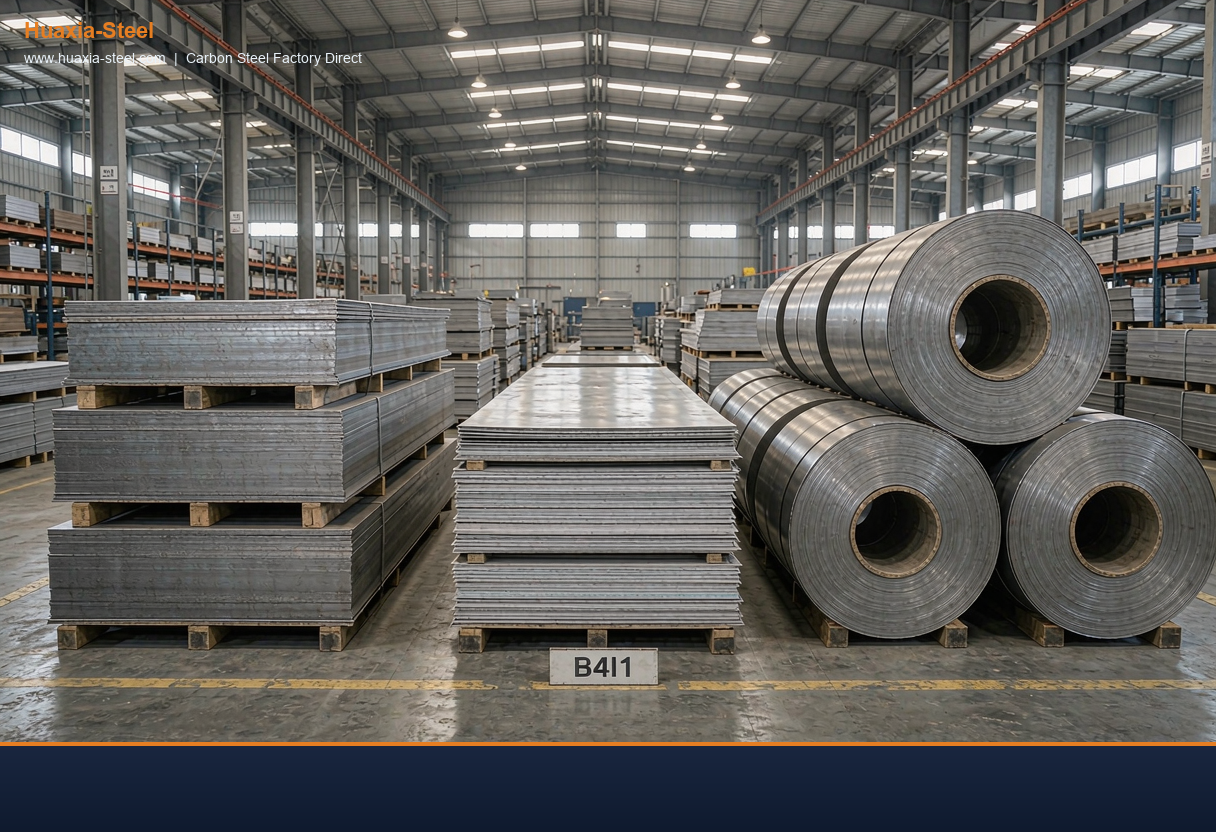
The flat-rolled carbon steel family divides into four primary forms. The distinction is mostly about how the steel is cut, coiled and supplied after the hot strip mill or plate mill.
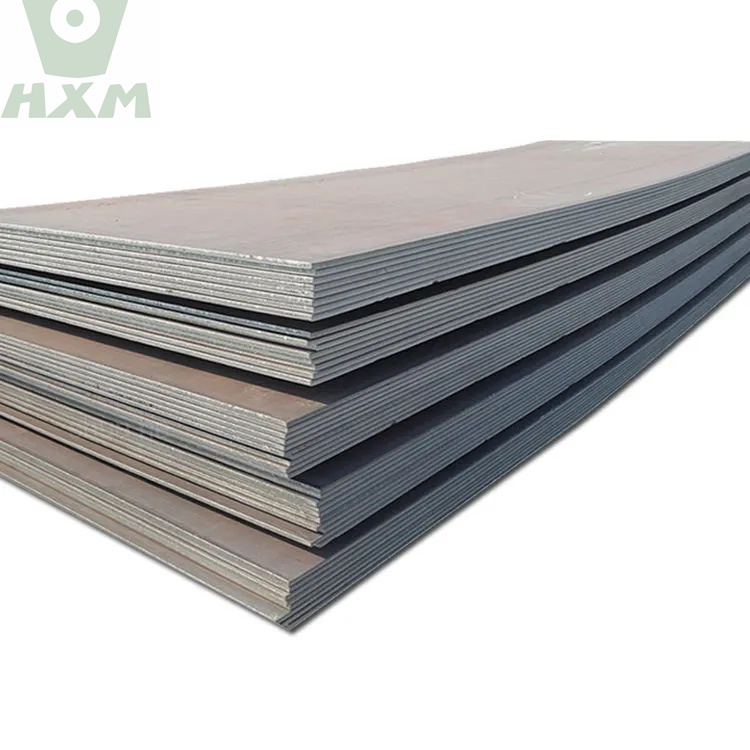
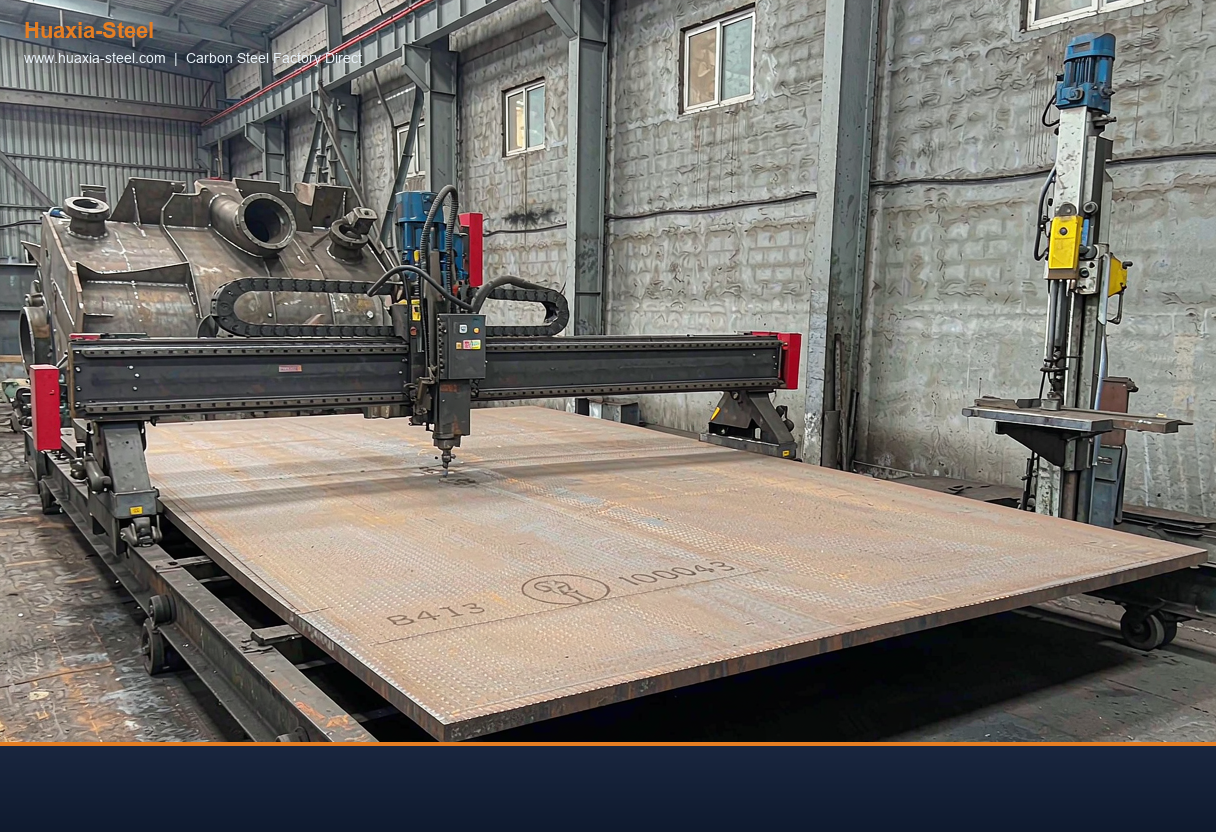
- Plate — flat-rolled product thicker than 3 mm (1/8 inch) supplied in cut lengths, typically up to 12 metres long. Produced by plate mill (reversing or continuous). Common thicknesses 5–200 mm. Common widths 1500–3500 mm. Used for shipbuilding, pressure vessels, bridges, structural fabrication.
- Sheet — flat-rolled product 0.3–3 mm thick, supplied in cut lengths or coil. Produced by continuous hot strip mill (HRC) or cold rolling mill (CRC). Common widths 1000–1830 mm. Used for general fabrication, automotive, appliances, roofing.
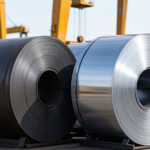
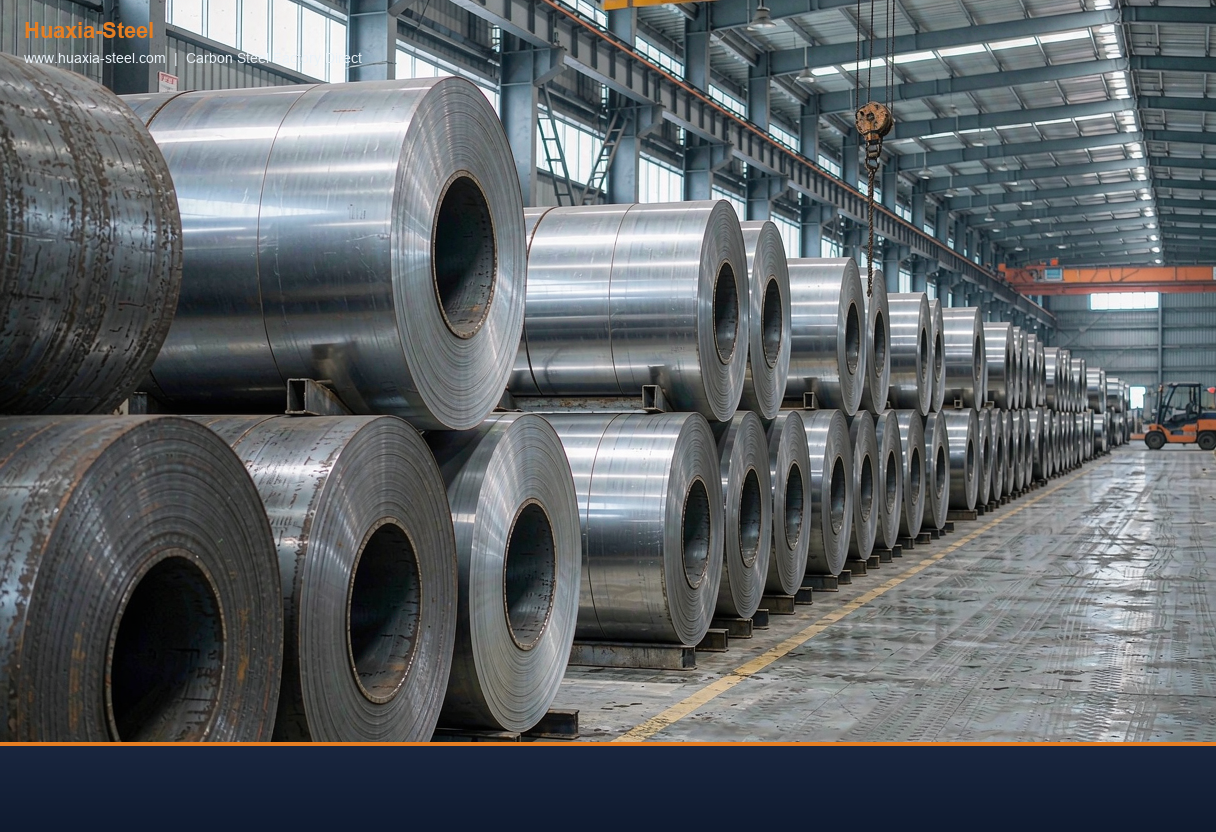
- Coil — hot-rolled or cold-rolled product supplied as a continuous rolled strip wound into a coil. Coils are then slit or cut-to-length into sheet, strip or plate downstream. Used for high-volume stamping, roll-forming, pipe-making and re-rolling.
- Strip — narrow flat-rolled product, typically less than 600 mm wide, supplied in coil. Includes cold-rolled spring steel, silicon steel, and high-carbon narrow strip. Used for stamping, springs, saws, tools.
The boundary between plate and sheet is 3 mm per ASTM A6. Below 3 mm = sheet; above = plate. Some European standards use 4 mm as the boundary. Cold-rolled sheet is typically under 3 mm; hot-rolled sheet up to 6 mm in some mills.
2. Thickness Range and Tolerance Comparison
The four forms cover different thickness ranges with different tolerance standards. The table below summarises the typical range:
| Form | Thickness Range | Width Range | Length Range | Tolerance Standard |
|---|---|---|---|---|
| Plate | 5 – 200 mm | 1500 – 3500 mm | Up to 12 m | ASTM A6 / EN 10029 |
| Hot-rolled sheet | 1.2 – 6 mm | 1000 – 1830 mm | Cut-to-length or coil | ASTM A568 / EN 10051 |
| Cold-rolled sheet | 0.3 – 3 mm | 600 – 1830 mm | Cut-to-length or coil | ASTM A568 / EN 10131 |
| Hot-rolled coil | 1.2 – 16 mm | 600 – 2000 mm | Coil (continuous) | ASTM A568 / EN 10051 |
| Cold-rolled coil | 0.3 – 3 mm | 600 – 1830 mm | Coil (continuous) | ASTM A568 / EN 10131 |
| Strip | 0.1 – 6 mm | < 600 mm | Coil | ASTM A109 / EN 10139 |
Plate tolerance is tighter on width and length but looser on thickness than sheet. Cold-rolled sheet has the tightest thickness tolerance (down to ±0.02 mm on thin gauge). Strip has the tightest width tolerance.
4. Minimum Order Quantity (MOQ) and Lead Time
MOQ and lead time vary dramatically by form. Coil and sheet benefit from continuous production at large mills; plate is typically made to order.
| Form | Typical MOQ | Typical Lead Time | Stock Availability |
|---|---|---|---|
| Plate (standard grade) | 5 – 20 t | 15 – 45 days | Limited stock; mill-run only |
| Plate (high-strength) | 20 – 100 t | 30 – 90 days | Mill-run only |
| Hot-rolled coil | 20 – 50 t | 7 – 30 days | Mill-run or stock |
| Hot-rolled sheet (cut-to-length) | 5 – 20 t | 10 – 20 days | Often stocked in service centers |
| Cold-rolled coil | 20 – 50 t | 15 – 30 days | Mill-run or stock |
| Cold-rolled sheet | 5 – 20 t | 10 – 25 days | Often stocked |
| Galvanized coil | 20 – 50 t | 15 – 30 days | Mill-run or stock |
| Strip | 5 – 20 t | 15 – 30 days | Mill-run; limited stock |
For small-quantity procurement, sourcing from a service center (steel service center) is often more cost-effective than direct mill order. Service centers stock standard grades in cut-to-length sheets and slit coils, with MOQs as low as 1–5 tonnes.
5. Surface Finish and Downstream Processing
Surface finish differs dramatically between hot-rolled and cold-rolled forms. Hot-rolled coil/sheet has a mill scale (iron oxide) coating that is rough and dark grey. The scale is often removed by pickling (acid bath) or shot blasting to produce a clean surface suitable for painting or further processing.
Cold-rolled sheet has a smooth, oily finish ideal for painting, galvanizing or direct use. Cold-rolled sheet is the standard feedstock for automotive, appliance, and painted-product applications.
Plate has a mill scale surface (hot-rolled plate) or shot-blasted surface (per ASTM A6). Plate is usually supplied as-rolled and descaled by the fabricator before painting or welding. For improved surface quality, specify shot-blasted and primed plate.
Is plate more expensive than sheet?
Not necessarily. For the same grade and quantity, plate and hot-rolled sheet have similar prices. Cold-rolled sheet is more expensive than plate due to extra processing. The cost difference is more about grade and processing than about plate-vs-sheet.
Can I order 2 mm carbon steel as plate?
No. Plate is defined as thicker than 3 mm (ASTM A6) or 4 mm (EN 10029). For 2 mm thickness, the correct term is hot-rolled sheet or cold-rolled sheet.
What is the difference between HRC and HRPO?
HRC is hot-rolled coil as produced by the hot strip mill, with mill scale on the surface. HRPO is hot-rolled coil that has been pickled (acid-cleaned to remove mill scale) and oiled for corrosion protection. HRPO has a cleaner surface and is ready for painting or further processing.
Can plate be supplied as coil?
No. Plate is produced by plate mill and supplied in cut lengths. Coil is produced by strip mill and supplied wound. Plate mills cannot produce the long continuous lengths typical of strip mills. For thick coil, see “heavy coil” (typically 6–16 mm) which is hot-rolled coil, not plate.
10. Mill Capabilities and Capacity Planning
Different mills have different capabilities. Knowing the mill’s product range avoids specifying dimensions the mill cannot produce:
- Plate mills — thickness 5–200 mm, width 1500–3500 mm, length up to 12000 mm. Common producers in China: Hebei Iron and Steel, Shougang, Baosteel, Ansteel.
- Hot strip mills — thickness 1.2–16 mm, width 600–2000 mm, coil weight up to 35 tonnes. Major Chinese producers: Baosteel, Shougang, Wuhan Iron and Steel, Hebei.
- Cold rolling mills — thickness 0.3–3 mm, width 600–1830 mm, coil weight up to 30 tonnes. Major Chinese producers: Baosteel, Ansteel, Shougang, Hebei Tangsteel.
- Galvanizing lines — coating 50–600 g/m² zinc, width 600–1830 mm. Most major flat-rolled mills have in-house galvanizing.
- Service centers — cut-to-length sheet, slit strip, blanking, shearing. Service centers handle small MOQ orders from 1–5 tonnes.
For unusual dimensions (e.g., 3500 mm wide plate, 16 mm thick coil over 1830 mm wide), confirm mill capability before issuing the PO. Some mills can produce custom widths but charge a premium and require longer lead time.
11. Cost and Lead Time Considerations
Pricing for carbon steel flat-rolled depends on the form, grade, thickness, quantity and delivery destination. As a rule of thumb:
- Hot-rolled coil (mill run) is the baseline reference price
- Hot-rolled sheet (cut-to-length) adds 3–5% over coil for processing
- Pickled and oiled (HRPO) adds 5–10% over black coil for pickling and oiling
- Cold-rolled coil adds 15–25% over HRC for cold-rolling processing
- Cold-rolled sheet adds 18–30% over HRC for cold-rolling and cutting
- Galvanized coil adds 20–35% over HRC for zinc coating
- Standard plate (A36, A516, A572) is typically 5–15% above HRC for processing
- Quenched-and-tempered plate adds 40–80% over standard plate for Q&T processing
Standard lead time is 15–30 days for stocked HRC and 30–60 days for mill-run orders. Plate orders typically require 30–60 days from order to delivery. Cold-rolled and galvanized products add 15–30 days to HRC lead time. Service centers can deliver in 3–7 days for stocked items.
Need carbon steel plate, sheet, coil or strip for your project? Huaxia Steel supplies A36, A516, A572, SS400, S235JR, S355JR and equivalent grades in plate, sheet, coil and strip, with mill-direct pricing and EN 10204 3.1 / 3.2 certification. Email [email protected] with your grade, form, thickness, width, quantity and delivery destination, and we will respond with a mill-direct quotation within 24 hours.