Introduction: Why Surface Treatment Matters for Carbon Steel
Carbon steel is strong, versatile, and economical — but it rusts. In humid, marine, or chemically aggressive environments, an untreated carbon steel surface can begin corroding within days of exposure. For buyers, the right surface treatment is not a cosmetic afterthought; it is the difference between a component that lasts twenty years and one that fails inspection in two.
This guide covers the three most common industrial surface treatments for carbon steel — hot-dip galvanizing, painting (shop primer and full coatings), and phosphating — with the specifications, costs, and selection logic buyers need when writing purchase orders.
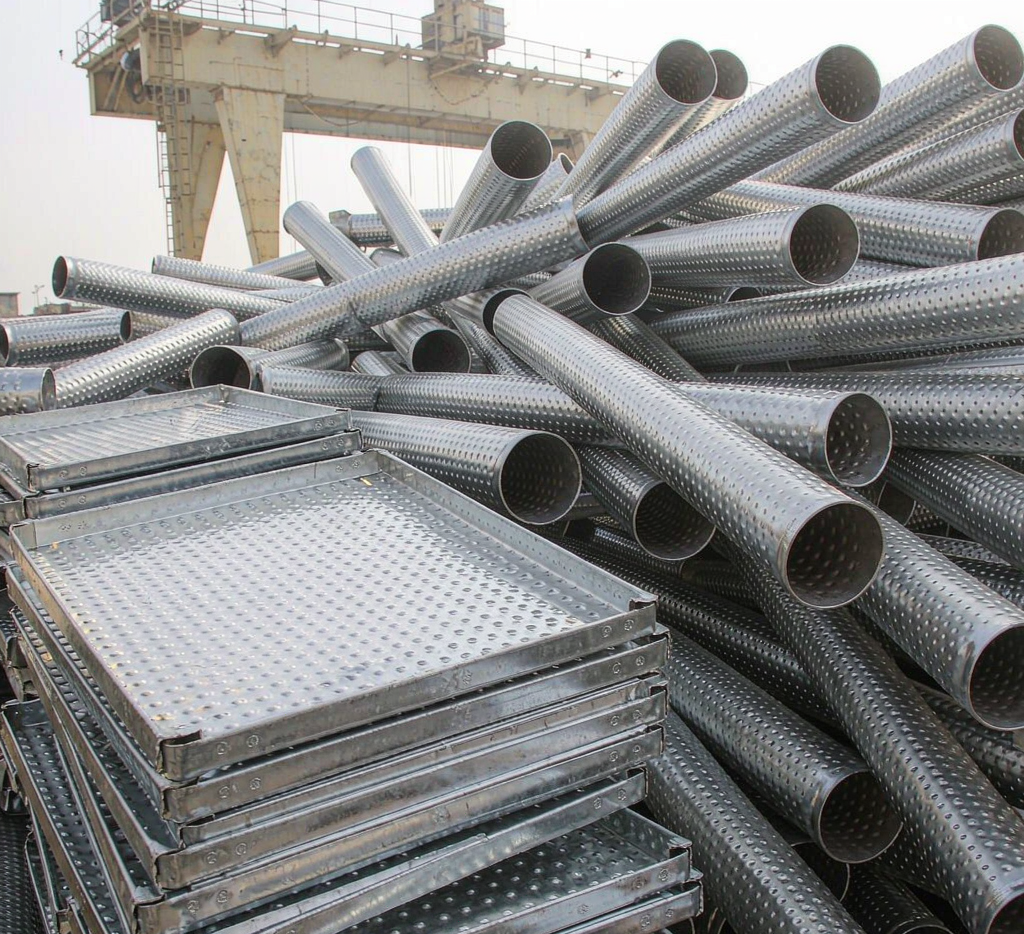
Treatment 1: Hot-Dip Galvanizing
What it is: the steel is cleaned in acid (pickling), fluxed, then dipped into a bath of molten zinc at approximately 450°C. A metallurgical bond forms between the zinc and iron, creating a multi-layer coating that protects the steel both as a physical barrier and through sacrificial cathodic action.
Typical coating thickness:
| Standard | Min Coating Mass (g/m²) | Approx. Thickness (μm) | Service Life (rural) |
|---|---|---|---|
| ASTM A123 (structural) | 610 – 1070 | 85 – 150 | 50 – 80 years |
| ISO 1461 (general) | ≥ 505 | ≥ 70 | 40 – 70 years |
| EN ISO 1461 | ≥ 505 – 1100 | 70 – 155 | 40 – 80 years |
When buyers need it: outdoor structural steel, transmission towers, guardrails, marine fasteners, solar farm frames, and any component exposed to rain or humidity. Galvanizing is the default for long-life outdoor carbon steel.
Limitations: galvanizing adds 3 – 8% to material cost and 3 – 7 days to lead time. The zinc layer can thicken threads; specify “tap after galvanizing” for threaded parts. Very large tanks or sections may require batch or spray galvanizing instead of dipping.
Treatment 2: Painting and Shop Primers
What it is: organic coatings applied by spray, dip, or brush after surface preparation (typically Sa 2.5 abrasive blasting). Shop primers are thin (15 – 25 μm) temporary coats applied at the mill to prevent rust during shipping and storage; full paint systems are 80 – 300 μm multi-layer coatings designed for the full service environment.
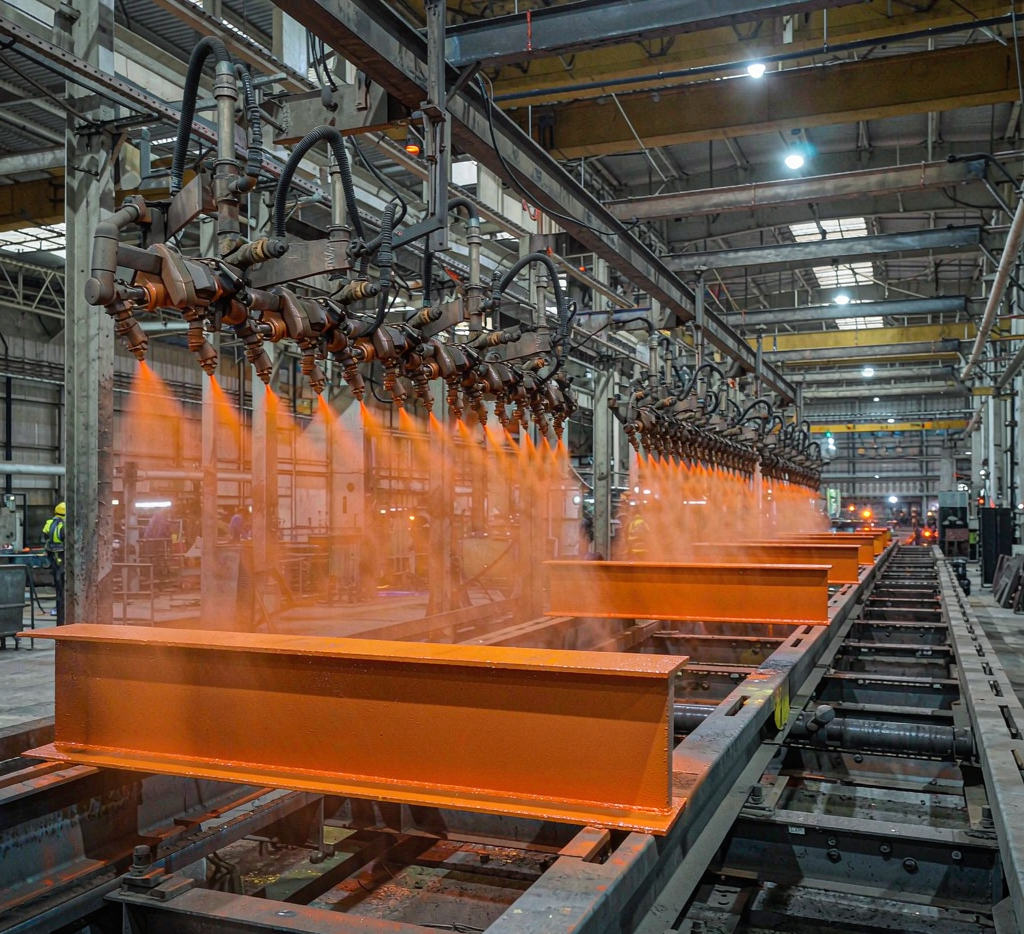
Common paint systems for carbon steel:
| System | Coats | Total DFT | Environment |
|---|---|---|---|
| Alkyd shop primer | 1 | 15 – 25 μm | Temporary protection, indoor storage |
| Epoxy zinc-rich + epoxy MIO | 2 – 3 | 150 – 250 μm | Marine, offshore, heavy industrial |
| Epoxy + polyurethane topcoat | 2 – 3 | 120 – 200 μm | Bridges, infrastructure, chemical plants |
| Waterborne acrylic | 2 | 80 – 120 μm | Light industrial, aesthetic finish |
When buyers need it: when the final color or aesthetic matters; when the steel will be over-coated on site; when galvanizing is too expensive or the part is too large to dip; when chemical or abrasion resistance beyond zinc is required.
Key specification point: state the surface preparation standard (ISO 8501-1 Sa 2.5 is standard for structural paint), the dry-film thickness (DFT) range, and the paint system standard (e.g., ISO 12944 for corrosivity categories).
Treatment 3: Phosphating
What it is: a chemical conversion coating formed by immersing steel in a phosphoric acid bath containing manganese, zinc, or iron phosphates. The surface develops a microcrystalline layer (1 – 10 μm) that improves paint adhesion, provides mild corrosion resistance, and reduces friction in moving parts.
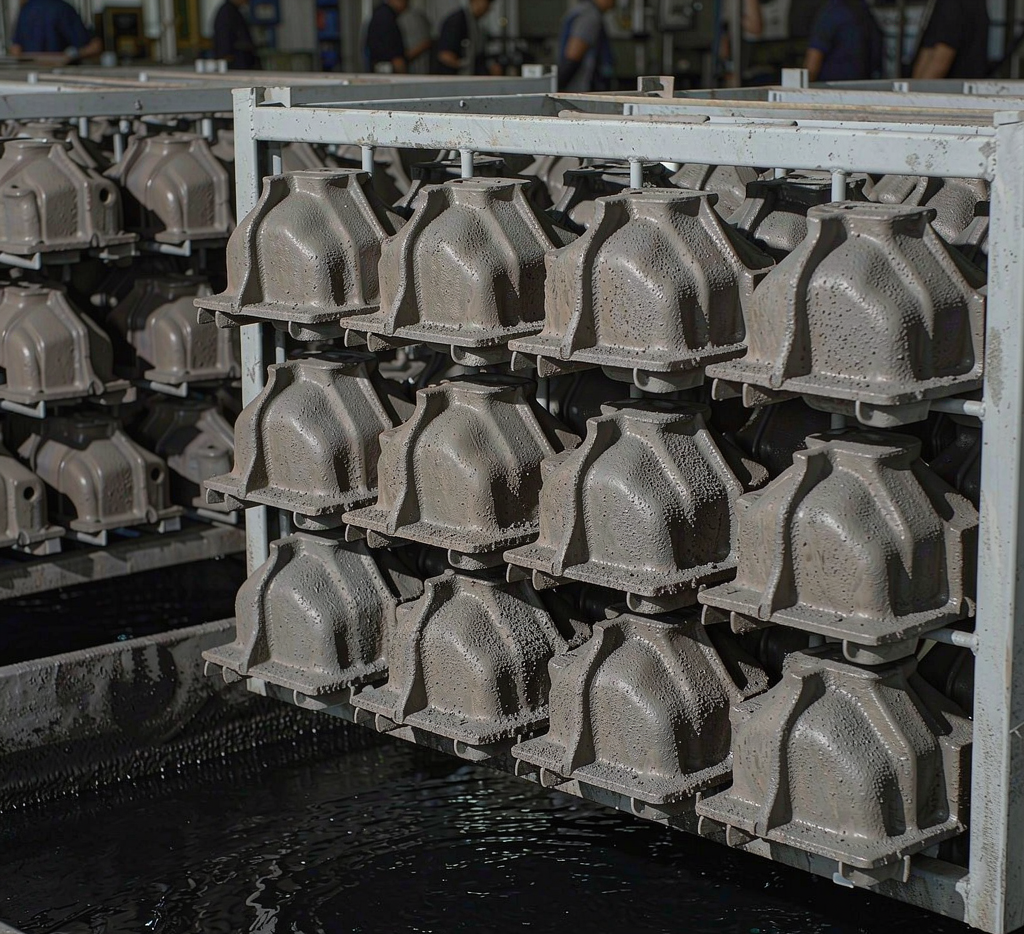
Types:
- Manganese phosphate (MnPh): heavy coating, dark gray, used on bearings and gears for break-in lubricant retention.
- Zinc phosphate (ZnPh): most common for pre-paint treatment; improves adhesion and under-film corrosion resistance.
- Iron phosphate (FePh): lighter coating, lower cost, used for indoor parts where corrosion exposure is minimal.
When buyers need it: as a pre-treatment before painting (especially on automotive and appliance parts); on friction components where oil retention matters; when a low-cost, electrically non-conductive surface is required.
Limitations: phosphating alone offers only short-term corrosion protection (weeks to months outdoors). It is almost always combined with oil, wax, or paint for real durability.
Comparison at a Glance
| Treatment | Thickness | Cost Adder | Lead Time | Best For |
|---|---|---|---|---|
| Hot-dip galvanizing | 70 – 150 μm | 3 – 8% | +3 – 7 days | Outdoor structural, long life |
| Shop primer | 15 – 25 μm | 1 – 2% | +1 day | Shipping protection, indoor storage |
| Full paint system | 80 – 300 μm | 5 – 15% | +3 – 10 days | Chemical resistance, color coding |
| Phosphating | 1 – 10 μm | 0.5 – 2% | +1 day | Pre-paint, friction, oil retention |
How to Specify Surface Treatment on a Purchase Order
- Galvanizing: “Hot-dip galvanized per ASTM A123 / ISO 1461, min 600 g/m² coating mass. Threads to be tapped after galvanizing.”
- Painting: “Blast cleaned to Sa 2.5 per ISO 8501-1. Apply epoxy zinc-rich primer 75 μm + epoxy intermediate 100 μm + polyurethane topcoat 50 μm. Total DFT 200 – 250 μm. Color RAL 7045.”
- Phosphating: “Zinc phosphated per MIL-DTL-16232 Type Z, Class 2, sealed with rust-preventive oil.”
Common Buyer Mistakes
- Specifying “galvanized” without a standard. A vague callout lets the supplier choose the thinnest acceptable coating. Always cite ASTM A123, ISO 1461, or EN ISO 1461 with a minimum mass.
- Ordering painted steel without surface prep requirements. Paint over mill scale fails within months. Specify blast cleaning grade and profile depth.
- Assuming phosphating is enough for outdoor use. It is not. Phosphated parts need oil, wax, or paint for outdoor durability.
- Ignoring thread allowances. Galvanizing adds 50 – 100 μm per surface. Threads must be tapped oversize or after dipping, or nuts will not fit.
Frequently Asked Questions
1. Can carbon steel be both galvanized and painted?
Yes — “duplex” systems combine galvanizing with a paint topcoat. This extends service life beyond either treatment alone, typically by 1.5 – 2.5x. Specify a paint compatible with zinc (e.g., epoxy-based, not alkyd).
2. How long does shop primer last?
Shop primer is temporary protection for storage and shipping, not a service coating. Indoors, it may prevent rust for 3 – 6 months. Outdoors, expect surface rust within weeks. Always over-coat or remove and repaint before final installation.
3. Is phosphating environmentally friendly?
Traditional zinc and manganese phosphating uses heavy metals and produces sludge. Modern zirconium-based thin-film pretreatments are lower impact and becoming standard in automotive. If environmental compliance matters, ask your supplier about thin-film alternatives.
4. What is the cheapest way to prevent rust on carbon steel?
For short-term indoor storage, a light oil or VCI film is cheapest. For long-term outdoor exposure, hot-dip galvanizing offers the lowest life-cycle cost despite higher upfront price.
5. Can I specify surface treatment after delivery?
Yes, but blast cleaning and coating at a local shop often costs more than mill-applied treatment, and logistics add handling damage risk. For export orders, specify treatment before shipment and verify with a coating-thickness gauge on arrival.
Conclusion
Surface treatment turns carbon steel from a raw commodity into a fit-for-purpose component. Galvanizing buys decades of outdoor life; painting provides chemical resistance and color; phosphating prepares the surface for what comes next. The wrong choice is not a minor defect — it is a warranty claim waiting to happen.
Huaxia-Steel supplies hot-dip galvanized, painted, and phosphated carbon steel bars, plates, pipes, and sections to ASTM, ISO, and EN standards. Tell us your environment and required coating standard for a quotation within 24 hours.