Carbon Steel Thread Rolling vs Cut Threading Comparison
Carbon Steel Thread Rolling vs Cut Threading Comparison
When you order carbon steel threaded bar, threaded pipe or fasteners, the thread manufacturing method directly affects mechanical strength, surface finish, production cost and lead time. The two dominant processes — thread rolling and cut threading — produce visually similar threads but have fundamentally different effects on the material microstructure, dimensional precision and fatigue performance. This guide compares both processes so procurement teams can specify the right method for their application.
We cover the mechanics of each process, metallurgical effects, dimensional accuracy, strength differences, cost structures, material suitability, quality inspection points and supplier selection criteria. Whether you are sourcing threaded rod for structural anchoring or precision-threaded shafts for machinery, understanding the thread production method is essential for quality control.
1. Process Overview
Thread Rolling
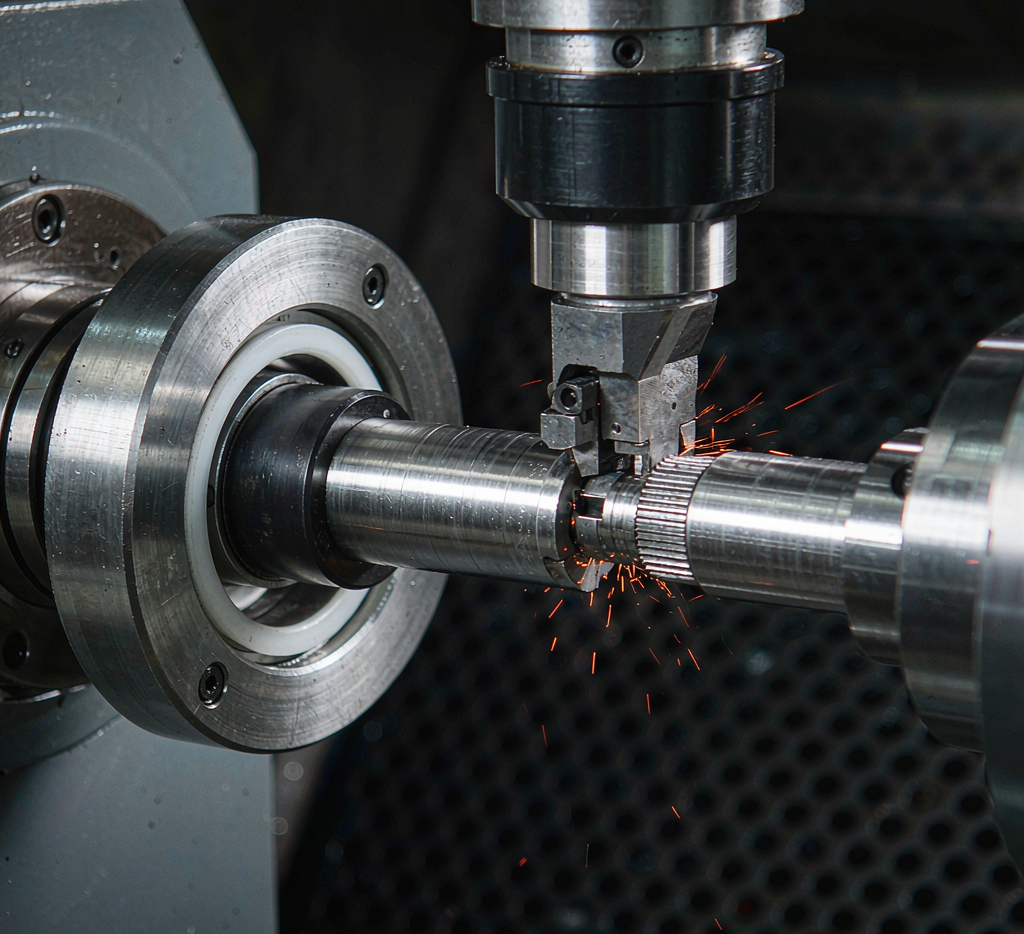
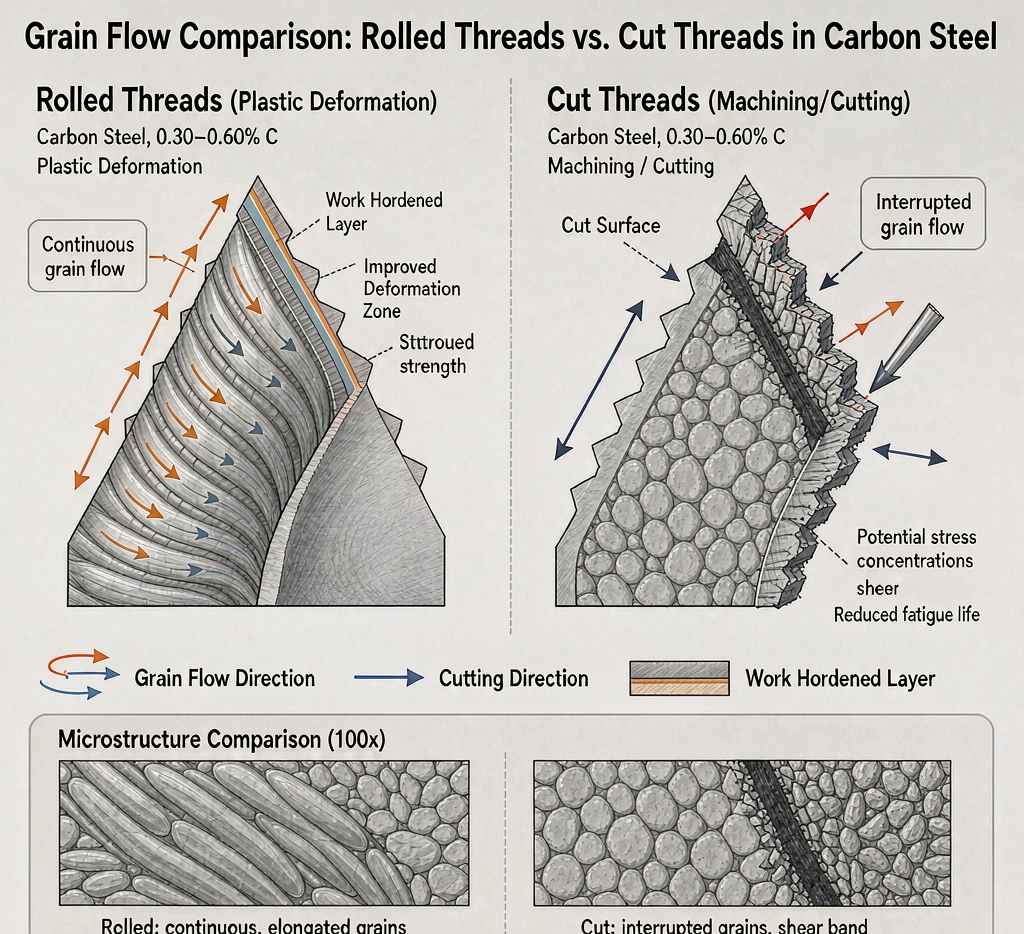
Thread rolling is a cold-forming process that displaces metal rather than removing it. Two flat or cylindrical dies with the thread profile pressed into their surfaces are brought together under high pressure. The bar stock is squeezed between the dies, and the thread form is impressed into the surface by plastic deformation. No material is cut or removed; the grain flow follows the thread contour.
Cut Threading (Single-Point or Die)
Cut threading removes material to create the thread form. In single-point threading, a lathe cutting tool traverses the bar in a helical path, peeling away metal to form the thread. In die threading, a self-opening die head with multiple cutting chasers removes material in a single pass. Both methods generate chips (swarf) and interrupt the natural grain flow of the steel.
Parameter
Thread Rolling
Cut Threading
Process type
Cold forming (compression)
Metal removal (cutting)
Material removed
None
Yes (chips)
Grain flow
Follows thread contour (uninterrupted)
Cut / interrupted
Surface finish
Ra 0.4 – 1.6 μm
Ra 1.6 – 6.3 μm
Production rate
20 – 80 pieces/min
2 – 10 pieces/min
Typical hardness limit
≤ 35 HRC
Up to 45 HRC
2. Metallurgical Effects and Strength
The most significant difference between the two processes is the effect on the material grain structure. Thread rolling cold-works the thread roots, producing a work-hardened layer with compressive residual stress. This compressive stress is beneficial for fatigue resistance because it opposes the tensile stress that causes crack initiation. Cut threading, by contrast, leaves a cut surface with residual tensile stress at the thread roots.
Property
Rolled Threads
Cut Threads
Tensile strength
5 – 15% higher
Baseline
Fatigue strength
20 – 50% higher
Baseline
Surface hardness (thread root)
+ 15 – 30 HV
No change
Residual stress at root
Compressive (beneficial)
Tensile (detrimental)
Stress concentration factor
Lower (smoother root)
Higher (tool marks)
For applications involving cyclic loading — such as tie rods, anchor bolts, machinery shafts and fasteners subject to vibration — rolled threads are strongly preferred. The fatigue life of a rolled M20 thread in SAE 1045 carbon steel can be 5 to 10 times longer than the same thread cut from identical stock.
3. Dimensional Accuracy and Tolerance
Both processes can produce threads to ISO 6H / 2A tolerance, but the consistency and achievable precision differ. Thread rolling produces a smoother, more uniform thread form because the die profile is precisely ground and the process is not subject to tool wear in the same way as cutting.
Dimension
Rolled Threads
Cut Threads
Pitch diameter tolerance
± 0.015 mm
± 0.025 mm
Major diameter variation
± 0.02 mm
± 0.05 mm
Thread angle accuracy
± 0.5°
± 1.0°
Root radius
Consistent (die-controlled)
Variable (tool-dependent)
Surface roughness (Ra)
0.4 – 1.6 μm
1.6 – 6.3 μm
The superior surface finish of rolled threads improves galling resistance, torque-tension relationship consistency and seal performance in threaded fittings. For pressure-bearing threaded connections such as carbon steel pipe nipples and threaded flanges, rolled threads reduce the risk of leakage under pressure.
4. Cost and Production Rate
Thread rolling is a high-volume process with low per-unit cost but requires significant capital investment in rolling dies and machines. Cut threading has lower tooling cost but slower production rates and higher per-unit labour cost.
Cost Factor
Thread Rolling
Cut Threading
Machine investment
$30,000 – $120,000
$8,000 – $40,000
Tooling cost per setup
$200 – $800 (dies)
$50 – $200 (chasers)
Tool life (threads before replacement)
50,000 – 200,000
2,000 – 10,000
Cycle time per piece (M20)
0.5 – 2 seconds
5 – 30 seconds
Break-even quantity
≈ 3,000 – 5,000 pieces
—
For orders below approximately 3,000 pieces, cut threading is usually more economical. Above that threshold, the faster cycle time and longer tool life of rolling reduce the per-unit cost below cut threading. Most large Chinese fastener and threaded-bar manufacturers offer both processes and will recommend the appropriate method based on quantity and grade.
5. Material Suitability and Limitations
Thread rolling works best on softer, ductile carbon steels. The material must have sufficient ductility to flow under pressure without cracking. Hardness above 35 HRC makes rolling impractical because the material resists deformation and can damage the dies.
Grade
Rolling Suitability
Cutting Suitability
SAE 1018 / 1020
Excellent
Good
SAE 1045 (annealed)
Good
Good
SAE 1045 (Q&T 28 HRC)
Marginal
Good
SAE 1055 (annealed)
Good
Good
SAE 1060 – 1070 (annealed)
Fair (requires careful setup)
Good
A36 / S275JR
Excellent
Good
Any grade above 35 HRC
Not recommended
Good
6. Quality Inspection Points
Regardless of the process, every order should be inspected for the following quality attributes before acceptance:
Thread gauge test — GO / NO-GO ring gauge must pass on every sample. This verifies pitch diameter is within tolerance.
Visual inspection — no torn threads, no burrs, no tool marks on flanks. Rolled threads should show a burnished, smooth finish.
Pitch measurement — thread pitch verified with a pitch gauge or optical comparator. Out-of-spec pitch causes assembly difficulty and load concentration.
Root radius check — for fatigue-critical applications, the root radius should be measured and should meet the minimum specified in the drawing.
Hardness test — verify that the base material meets the specified hardness; thread rolling work-hardens the surface but should not change the core hardness significantly.
7. Application Recommendations
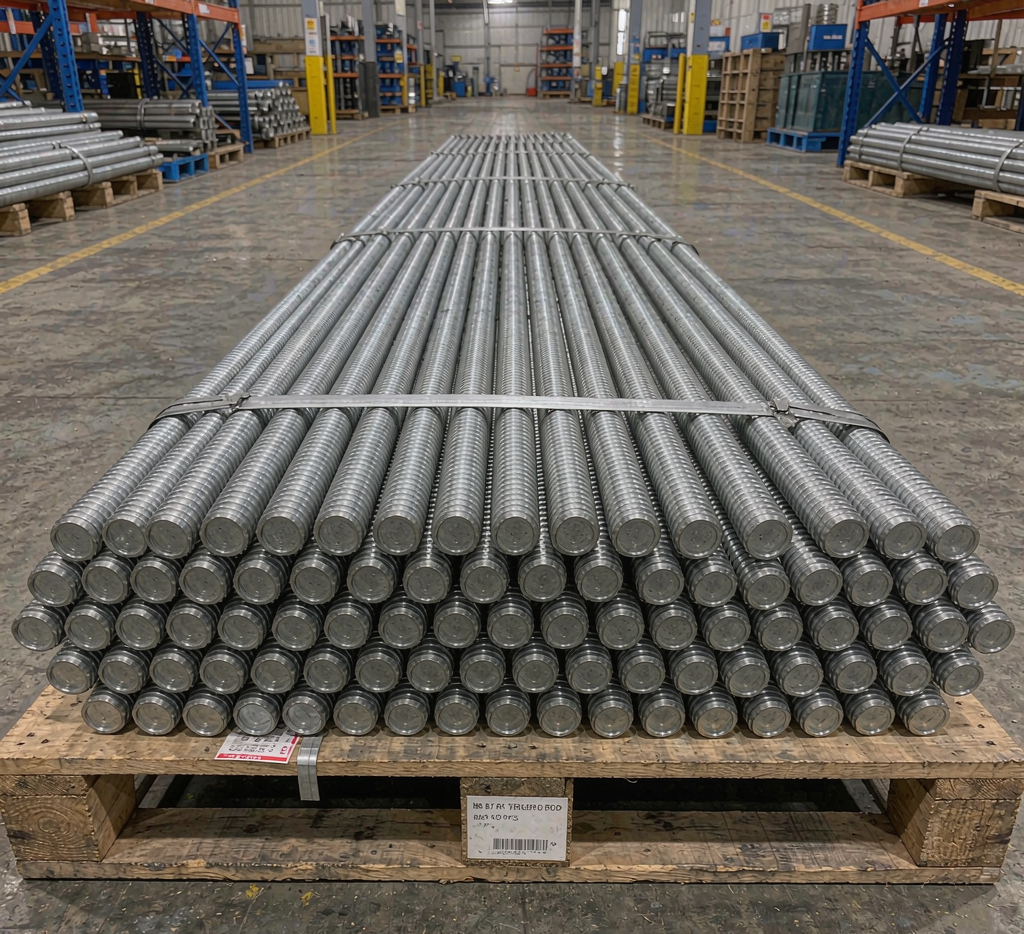
Structural anchor bolts and tie rods — use rolled threads for maximum fatigue resistance and tensile strength.
Threaded pipe nipples and fittings — use rolled or cut threads; rolled threads provide better pressure-sealing and are preferred for high-pressure applications.
General-purpose threaded rod (low stress) — cut threading is acceptable and economical for small quantities.
Machinery shafts with threaded sections — rolled threads are strongly recommended to prevent fatigue failure at the thread root.
Hardened steel (above 35 HRC) — cut threading is the only practical option; grinding may be required for precision threads.
FAQ
Are rolled threads always stronger than cut threads?
Yes, for ductile carbon steels below 35 HRC. The cold-work hardening and compressive residual stress at the thread root give rolled threads 5 – 15% higher tensile strength and up to 50% higher fatigue strength. For hardened steel above 35 HRC, rolling is impractical and cutting or grinding is used.
Can thread rolling be done on stainless steel?
Yes, austenitic stainless steel (304, 316) can be thread-rolled, though it work-hardens faster than carbon steel and requires more machine power. Martensitic stainless steel above 35 HRC cannot be rolled.
How do I specify rolled threads in a purchase order?
State “threads to be produced by rolling (cold-forming), not cutting” in the technical specification. Also reference the applicable standard (ISO 261, ASME B1.1, DIN 13) and the tolerance class (e.g., 6g, 2A).
Need Carbon Steel Threaded Bar or Rod?
Huaxia-Steel supplies carbon steel threaded rod, threaded bar and custom-threaded components in SAE 1018, 1020, 1045 and A36 grades. We offer both rolled and cut threading to your specification. All threads are gauge-tested and supplied with EN 10204 3.1 mill certificates. Contact us for a competitive quote.
If you require further information about our metal sheet products or architectural projects, please don’t hesitate to leave your contact details and message here.
Our team of experts will respond within 24 hours to continue the discussion and provide you with any additional information you requires.