Every year, millions of dollars of carbon steel fabrication is scrapped or reworked because of weld cracking that a single number could have predicted: the carbon equivalent (CEV). If you buy welded steel structures, pressure parts or machined weldments from overseas suppliers, understanding carbon equivalent and weldability lets you specify material correctly, review mill test certificates like an inspector, and reject risky heats before they ever reach your shop floor. This guide explains the two main CEV formulas, how to read them against thickness and hydrogen, and how to write weldability requirements into your purchase order.
What Is Carbon Equivalent (CEV)?
Carbon equivalent is a single weighted number that condenses a steel’s full chemistry into one indicator of hardenability — and therefore of cold cracking risk during welding. Carbon is the strongest hardenability driver, while manganese, chromium, molybdenum, vanadium, nickel and copper each contribute in proportion to their effect. The most widely used expression is the IIW formula:
CEV(IIW) = C + Mn/6 + (Cr + Mo + V)/5 + (Ni + Cu)/15
A second formula, the Ito-Bessyo crack parameter, better predicts cold cracking in low-carbon low-alloy steels:
Pcm = C + Si/30 + (Mn + Cu + Cr)/20 + Ni/60 + Mo/15 + V/10 + 5B
The IIW formula is quoted on most structural standards (EN 10025, ASTM A6 supplementary, GB/T 1591) and is the number you will see on export mill test certificates. Pcm appears mainly in pipeline and pressure vessel specifications (API 5L PSL2 uses a related CE(iiw) limit of 0.25 for PSL2 in some grades).
CEV Thresholds: What the Number Actually Means
CEV (IIW)
Weldability class
Typical requirements at 20–30 mm thickness
≤ 0.40
Excellent — welds like plain mild steel
No preheat for most joints; ambient above 0 °C
0.40–0.45
Good — mild hardenability
Preheat 50–100 °C for restrained or thick joints; low-hydrogen electrodes
0.45–0.60
Limited — hardenability significant
Preheat 100–200 °C; controlled interpass; PWHT often specified
> 0.60
Poor — special procedures mandatory
Full preheat + hydrogen bake-out + PWHT; qualified WPS with hardness limits
Two corrections are essential for real work. First, thickness matters more than most buyers realize: the same CEV that welds freely at 10 mm can crack at 60 mm because thicker sections quench the HAZ faster and restrain shrinkage. Second, hydrogen is the co-conspirator in every cold crack — a high-CEV steel welded with moist electrodes is dramatically worse than the same steel welded with properly baked low-hydrogen consumables.
Carbon Equivalent of Common Carbon Steel Grades
The table below shows typical mid-range chemistries for grades frequently quoted in export trade. Use it for orientation only — always compute CEV from the actual heat analysis on your MTC.
Grade
Typical C
Typical Mn
Typical CEV (IIW)
Weldability note
Q235B / SS400 / A36
0.16–0.20
0.60–0.90
0.28–0.36
Free welding, no preheat under 25 mm
S235JR
≤ 0.19
≤ 1.5 (CEV-limited)
≤ 0.35 guaranteed
EN 10025-2 sets CEV limits by thickness
S355JR
≤ 0.24
≤ 1.6
≤ 0.45 guaranteed
Preheat advised above 30 mm or high restraint
AISI 1045
0.43–0.50
0.60–0.90
0.55–0.65
Preheat 200–300 °C + PWHT for cracked-prone joints
AISI 4140
0.38–0.43
0.75–1.0 + Cr/Mo
0.80–0.90
Weld only with full procedure; prefer 4140 pre-hard
This table explains a common trade failure: a buyer orders 1045 shafts and asks the factory to weld a flange on the end “like they did on the last Q235 order”. Without preheat and PWHT, 1045’s HAZ transforms to martensite and cracks within hours. The CEV column is the warning.
Hydrogen Control: The Other Half of the Equation
Cold (hydrogen-assisted) cracking needs three ingredients simultaneously: a hard microstructure (high CEV), hydrogen, and restraint stress. Remove any one and the crack disappears. Since restraint and chemistry are fixed by design, hydrogen control is where fabrication quality is won:
Use low-hydrogen consumables (E7018, E7018-1, or GMAW/FCAW with low-diffusible-hydrogen wire, H8 or better).
Bake stick electrodes per manufacturer instructions (typically 300–350 °C for 1–2 h) and keep them in heated quivers on the floor.
Clean the joint area of oil, paint, rust and moisture — every contaminant is a hydrogen source.
Maintain preheat through the whole welding operation and allow slow cooling; never quench a hot weldment.
For CEV above 0.45, apply a hydrogen bake-out (200–250 °C for 2–4 h) after welding before any cold work.
Preheat: Practical Starting Points
Preheat slows the cooling rate of the heat-affected zone, letting diffusible hydrogen escape and preventing martensite formation. Starting points for common carbon steels (single-pass fillet or butt joints, SMAW/GMAW with low-hydrogen consumables):
Steel / CEV
≤ 12 mm
12–25 mm
25–50 mm
> 50 mm
Mild steel, CEV ≤ 0.40
None
None (50 °C if restrained)
50–100 °C
100 °C
CEV 0.40–0.45
None
50 °C
100 °C
100–150 °C
CEV 0.45–0.55 (e.g. 1045)
100 °C
150–200 °C
200–250 °C
250 °C + PWHT
CEV > 0.55 (e.g. 4140)
200 °C
250–300 °C
300 °C + PWHT
Special WPS
Interpass temperature should generally stay within 50 °C of the preheat (and never exceed 250–300 °C on hardenable steels, where excessive interpass can also be harmful to toughness). Measure preheat on the face opposite the arc, 75 mm from the joint, using contact pyrometers or thermal chalk.
How to Write Weldability Requirements Into Your PO
Four clauses convert this knowledge into contract protection:
CEV limit on the MTC: “Carbon equivalent (IIW) computed from ladle analysis shall not exceed 0.43 for plates over 20 mm; CEV shall be stated on the mill test certificate.”
Restricted chemistry option: for welded machined parts, cap carbon below the standard maximum (e.g. 1045 with C ≤ 0.46) to pull CEV down.
Welding procedure records: require WPS/PQR to EN ISO 15614-1 or AWS D1.1 for structural work, with preheat and interpass recorded.
Post-weld inspection: specify MT or UT on butt welds of hardenable grades after 48 h delay, when hydrogen cracks typically appear.
Frequently Asked Questions
Is CEV shown on a standard mill test certificate?
Not always automatically. EN 10025-2 requires the carbon equivalent value to be reported; ASTM certificates often omit it unless requested. Always ask the mill or trader to add the computed CEV line to the MTC — it costs nothing and tells you exactly what arrived.
Can I weld 1018 or Q235 with ordinary E6013 electrodes?
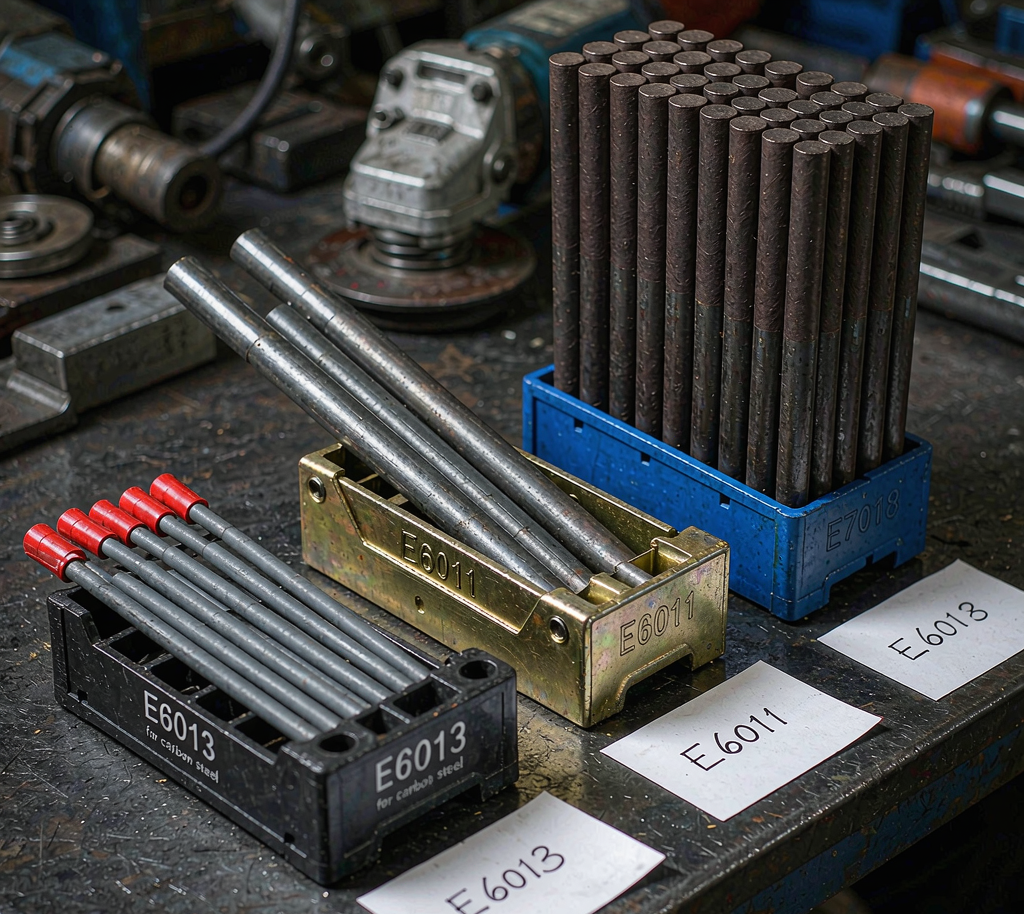
For thin, unrestrained joints in the shop, yes — these grades have CEV below 0.35. For thicknesses above 20 mm, low ambient temperature, or restrained joints, low-hydrogen E7018 is the safer choice and is what third-party inspectors expect to see.
Why did my 1045 welds crack days after welding, not immediately?
That is the signature of hydrogen-induced cold cracking: cracks initiate after the joint cools, often 24–72 hours later, as trapped hydrogen accumulates at hard HAZ sites. This is why inspection on hardenable grades is scheduled after a 48-hour delay and why preheat plus low-hydrogen practice is non-negotiable.
Does CEV affect bending and forming too?
Indirectly, yes. Higher CEV correlates with higher hardenability and lower ductility in the as-rolled condition, so bending minimum radii tighten. For cold-formed weldments, CEV below 0.42 keeps bend radii near 1.5t; above that, hot forming or larger radii are prudent.
Case Study: The 1045 Flange That Cracked in the Field
A European importer ordered 200 medium-carbon 1045 shafts with a welded-on mounting flange, quoting the factory simply “weld per your standard practice”. The factory welded at room temperature with rutile electrodes — routine for their Q235 work. Within two weeks of delivery, 15% of the shafts showed circumferential HAZ cracks; three failed during customer assembly. Root cause analysis told the story in numbers: heat analysis C 0.46%, Mn 0.75% gave CEV 0.58, the HAZ hardness measured 410–450 HV against a 380 HV acceptance line, and no preheat or PWHT had been applied.
The fix cost a fraction of the loss: revised WPS calling for 250 °C preheat, E7018 electrodes baked and issued from heated quivers, buttering passes on the flange face, immediate hydrogen bake-out at 250 °C for 3 hours, and MT inspection 48 hours after welding. Every subsequent batch passed. The lesson for buyers: welding requirements for hardenable grades must be written into the PO, because factory defaults are tuned to mild steel.
Weldability Testing: How Fabricators Prove It
CEV predicts weldability; procedure qualification proves it. The standard route is EN ISO 15614-1 (or AWS D1.1 for structural steel), where a representative joint is welded with the production parameters and then examined:
Transverse tensile and bend tests — soundness of the joint under plastic deformation.
Hardness survey (HV10) — maximum HAZ hardness capped at 380 HV for as-welded steels in ISO 15614-1 (350 HV for some grades; 450 HV for P91-type exceptions).
Charpy V-notch across the joint — weld metal, fusion line and HAZ each tested at the design temperature.
Macro examination — reveals lack of fusion, hydrogen cracks and porosity distribution.
Optional CTOD — fracture toughness for thick, critically loaded joints.
On-site verification after production welding includes visual inspection (ISO 17637), magnetic particle after a 48-hour delay for hardenable grades, and ultrasonic testing on full-penetration butts. A hardness survey across a production weld is the fastest early-warning check: spot values above 380 HV tell you the cooling rate was too fast — preheat was skipped or the steel chemistry drifted.
How Standards Cap CEV by Grade and Thickness
Several major standards bake weldability limits directly into their chemistry tables, which is why certified material usually behaves predictably:
Standard
Grade
CEV limit
Note
EN 10025-2
S235JR–S355K2
0.35–0.45 by thickness
CEV max rises with product thickness
API 5L (PSL2)
B to X70
0.25–0.43 by grade
Reported per heat on the MTC
EN 10025-3/4
S275NL–S460M
0.43–0.53
Fine-grain grades balance strength vs weldability
ASTM A913
Gr 50–Gr 65 shapes
≤ 0.45 (Quasi-beam-edge quench process)
Designed for seismic welding
When a mill offers “special chemistry” at a small premium — lower carbon, calcium-treated sulfur, or added niobium — for welded applications it is often money well spent, because it pulls CEV down and stabilizes HAZ toughness between heats.
Repair Welding Rules for Hardened Parts
Repairs on medium- and high-carbon steels follow stricter discipline than original fabrication: excavate the defect fully with grinding or arc gouging (never leave crack tails), preheat 50 °C above the original WPS value, use half-size initial passes to limit dilution, peen each pass lightly to counter shrinkage stress, and grind the final repair flush rather than leaving an overfilled crown. On through-hardened or induction-hardened parts, welding locally anneals the hardened zone — parts that relied on surface hardness must be re-hardened after any repair, which is why machinists prefer to redesign load paths away from welds on hardened components.
Welding Process Selection by Carbon Equivalent
Process
Typical hydrogen level
Comfortable CEV range
Notes for carbon steel
SMAW (E7018)
Low (H8/H4)
Up to 0.50 with preheat
Shop and site friendly; requires baking discipline
GMAW (solid wire, ER70S-6)
Very low
Up to 0.45
High productivity; needs clean surface and shielding control
FCAW (flux cored, T-1)
Low to moderate
Up to 0.45
Good for outdoor and thick sections; check diffusible hydrogen class
SAW (submerged arc)
Very low
Up to 0.55 with heat input control
Heavy plate and pipe; flux type sets hydrogen risk
SMAW (E6013 rutile)
High
≤ 0.40 thin sections only
Not for hardenable grades or thick restrained joints
Process choice interacts with CEV through heat input: too low a heat input on a high-CEV steel produces a fast-cooled martensitic HAZ, while too high a heat input on a low-CEV steel coarsens the grain and drops toughness. Ask your fabricator to state the target heat input range in kJ/mm on the WPS — a number that is easy to monitor and audit.
Copy-Paste Welding Requirements for Your Purchase Order
“Carbon equivalent (IIW) shall be reported on the mill test certificate and shall not exceed 0.43 for plate thickness over 20 mm.”
“Welding shall be performed to a WPS qualified under EN ISO 15614-1 (or AWS D1.1) using low-hydrogen consumables; preheat per the qualified procedure shall be applied and recorded.”
“Maximum hardness in the heat-affected zone of procedure qualification: 380 HV10 unless otherwise agreed.”
“Non-destructive examination: 100% visual, MT on fillet welds of hardenable grades after 48 hours; UT on full-penetration butt welds to EN ISO 11666 acceptance level 2.”
“Repairs shall be documented with location, NDE evidence and re-inspection results before shipment.”
Sending these five clauses with the RFQ turns weldability from an assumption into a contract term, and it filters suppliers instantly: factories with real welding controls accept them without comment, while those running mild-steel defaults will push back or price the extra work honestly.
CEV or Pcm: Which Formula Should You Trust?
The two formulas answer slightly different questions. CEV(IIW) is a hardenability indicator calibrated for medium-to-high carbon steels and is the one written into product standards (EN 10025-2, API 5L, most GB standards) — use it for material specification, MTC review and preheat estimation on structural and pressure grades. Pcm was developed for weld-metal cracking in low-carbon, low-alloy steels and correlates better with the cold cracking test (the Y-groove test) at carbon levels below 0.12–0.18%. Pipeline and offshore specifications rely on Pcm because their steels are low-carbon and microalloyed.
Practical advice for buyers: if your standard names a formula, use that one and insist it appears on the MTC. If you are comparing two offers from different mills on mixed grades, compute CEV yourself from the ladle analysis on both certificates — the arithmetic takes twenty seconds and makes the comparison objective.
Worked Example: Does This Joint Need Preheat?
A 40 mm thick S355 plate arrives with ladle analysis C 0.19%, Mn 1.45%, Si 0.35%, Cu 0.12%, Ni 0.05%, Cr 0.08%, Mo 0.01%, V 0.02%. Applying the IIW formula: CEV = 0.19 + 1.45/6 + (0.08 + 0.01 + 0.02)/5 + (0.05 + 0.12)/15 = 0.19 + 0.242 + 0.022 + 0.011 = 0.465. That sits in the limited-weldability band, and at 40 mm thickness with a restrained corner joint, the schedule should specify 100–150 °C preheat, low-hydrogen consumables, controlled interpass at 150–200 °C and slow cooling under a blanket. Without preheat, an HAZ hardness above 350 HV and hydrogen-induced cracking are realistic outcomes.
Now imagine the same joint in Q235B: C 0.17%, Mn 0.65% gives CEV around 0.29 — no preheat required even at 40 mm under normal restraint. That contrast is exactly why the number on the certificate matters more than the grade name.
Beyond Chemistry: Five Factors That Change the Outcome
Sulfur and inclusions: elongated manganese sulfide stringers create lamellar tearing risk in through-thickness loaded joints; order Z-quality plate for heavily restrained connections.
Free nitrogen: high free nitrogen raises strain-aging embrittlement in the HAZ, particularly after cold forming — ask for aluminum-killed, nitrogen-controlled steel.
Microalloys: niobium and vanadium raise strength at constant carbon, which is good for toughness but increases hardenability in ways CEV understates.
Surface condition: mill scale, primer, oil and zinc coating all inject hydrogen or porosity; remove coatings 25 mm either side of the joint and be strict about it.
Ambient conditions: a joint that welds perfectly in July can crack in January at 2 °C on a windy site; add 25–50 °C to preheat when the steel is cold to the touch.
These five rarely appear in a chemistry table, but they explain most of the “same grade, different result” complaints that reach us after a failed fabrication. A supplier who controls them will also be comfortable showing you the supporting data.
Welding Consumable Selection by Strength and Toughness
Matching the filler metal to the parent steel is the last link in the chain. For mild steel grades (Q235, A36, S235) an E6013 rutile electrode is fine for thin, lightly loaded shop work, but E7018 is the professional default: low hydrogen, higher toughness, and a weld metal that matches or slightly overmatches the 400–550 MPa tensile band. For S355 and X52-class linepipe, E7018-1 or the GMAW equivalent ER70S-6/E71T-1 give the −20 °C toughness that specifications increasingly demand. When welding carbon steel to a dissimilar or unknown chemistry, under-matching strength is usually safer: lower-strength weld metal yields first, absorbing strain instead of concentrating it at the fusion line.
Buy Weldable Grades With Verified CEV
Huaxia-Steel supplies Q235B, S235JR/S355JR, A36 and machinable bar grades with CEV computed and printed on every EN 10204 3.1 certificate. For welded assemblies we review joint design, recommend preheat schedules and can arrange third-party weld inspection before shipment. Send your drawings for a weldability review and quotation within 24 hours.
If you require further information about our metal sheet products or architectural projects, please don’t hesitate to leave your contact details and message here.
Our team of experts will respond within 24 hours to continue the discussion and provide you with any additional information you requires.