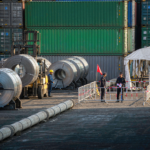
China CIQ Inspection Procedure for Imported Carbon Steel Materials
When you import carbon steel into China — whether for domestic distribution, re-export, processing, or an in-country project — the customs declaration is only the first gate. The second is the Inspection and Quarantine procedure, run by the General Administration of Customs of China (GACC, formerly AQSIQ/CIQ) and the local customs Inspection and Quarantine Bureau. The procedure catches misdeclared grades, missing documentation, non-compliant chemistry, and the occasional counterfeit certificate before the cargo clears the port. The procedure is well-documented, mostly predictable, and dramatically easier to handle when the buyer, the freight forwarder, and the mill are coordinated before the vessel berths. This guide walks through the steps, the documents, and the practices that prevent port delays.
Where China CIQ Fits in the Import Chain
For most carbon steel imports, the operational flow is:
On-arrival: Customs Inspection and Quarantine order is issued (full inspection, sampling inspection, or document inspection only).
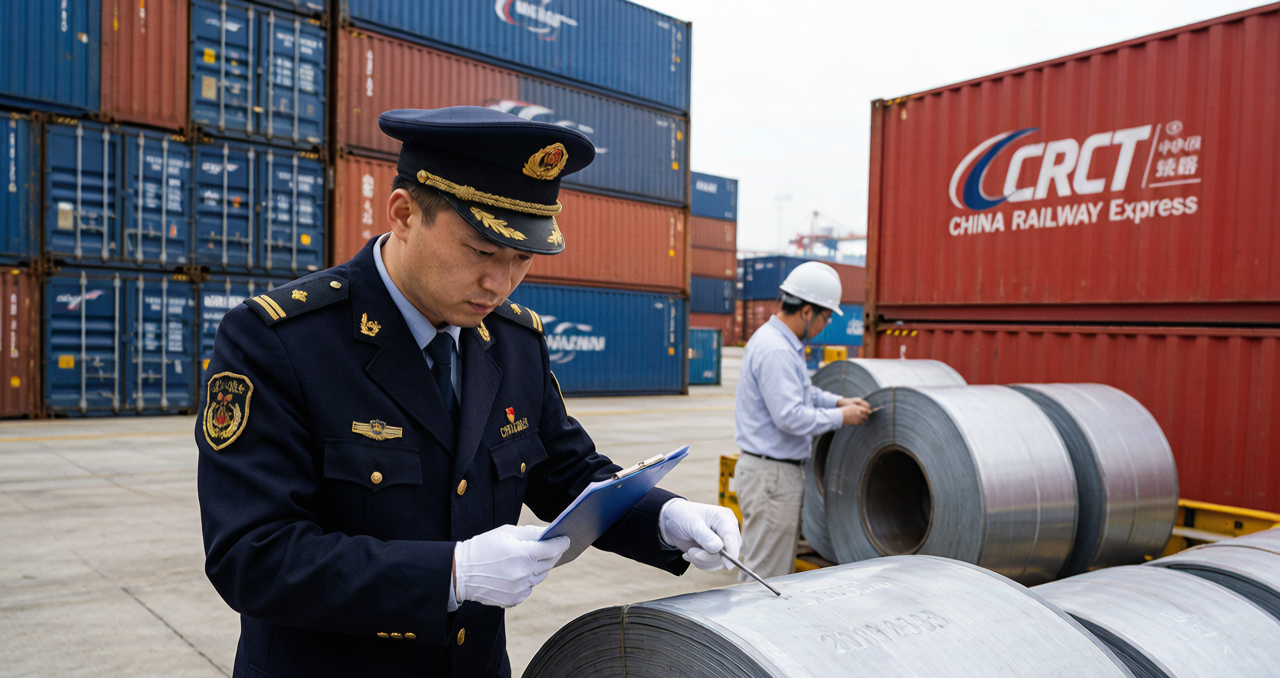
Inspection: Cargo is sampled, tested (chemistry and/or mechanical), and documentation is verified.
Release: Once cleared, cargo can leave the bonded area or be moved to the buyer’s warehouse.
Carbon steel plate, sheet, bar, pipe, and structural sections are almost always subject to inspection and quarantine under HS Code chapters 72 and 73, but the depth of inspection varies by HS sub-heading, by the origin country, by the buyer’s history, and by random selection. The inspection is, by and large, a sample-based review of documentation and a verification of declared chemistry against the test certificate.
What Documents Must Be on File Before the Vessel Berths
Carbon steel imports that sail through CIQ smoothly all share a complete document set. Anything missing is the most common cause of port delay.
The minimum document package
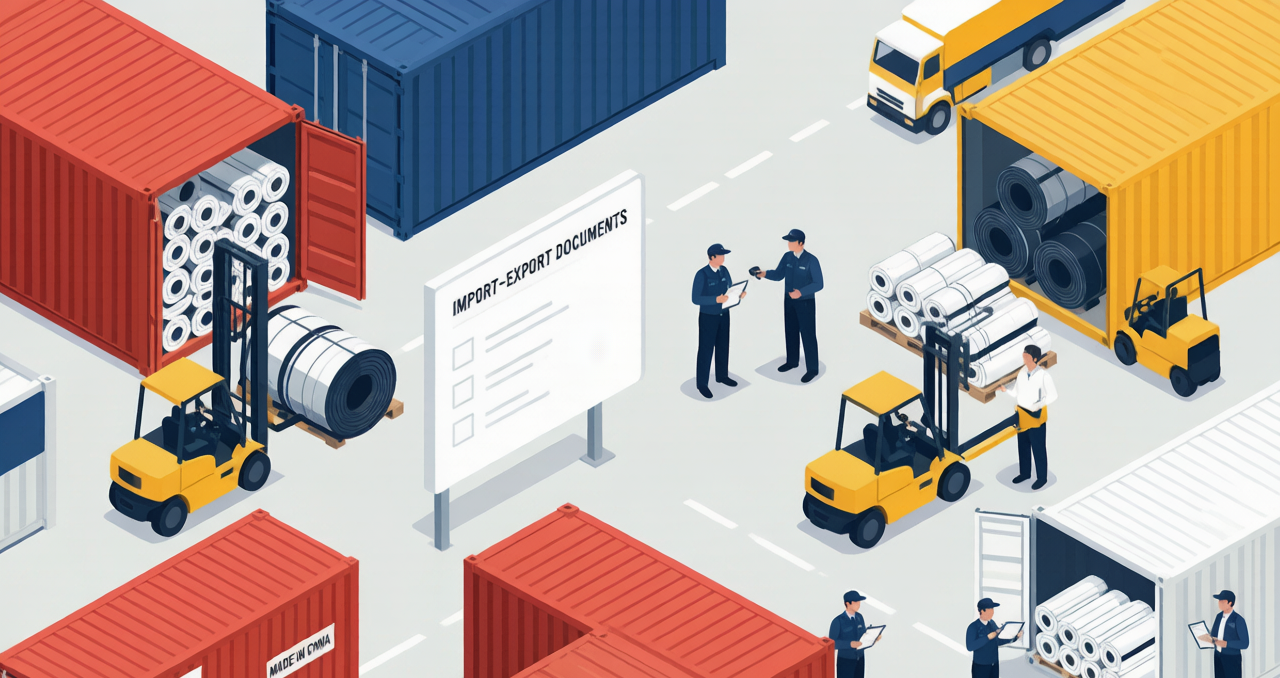
Commercial Invoice from the exporter, in English or bilingual, with full grade description (for example “hot-rolled carbon steel plate, ASTM A36, 12 mm thickness, 1500 x 6000 mm, 27.0 MT”).
Packing List with the same dimensions, weight, and bundle/carton count.
Bill of Lading or Air Waybill, endorsed to the Chinese consignee.
Mill Test Certificate (MTC) per EN 10204 3.1 or 3.2, or ASTM/SA equivalent, with heat number traceable to the marking on the plates.
Country of Origin Certificate such as FORM A (GSP), FORM E, FORM F, RCEP, FTA certificates, or non-preferential certificate of origin as appropriate.
Insurance Certificate (marine cargo, if CIF terms).
Customs Declaration Form submitted by the Chinese customs broker on the importer’s behalf.
Import/Export License for restricted categories (rare for ordinary carbon steel).
MSDS / Safety Data Sheet for surface-treated plate (galvanized, painted, oil-coated, etc.) — required for any surface-applied chemical.
Heat-treatment / coating certificate if a special supply condition was agreed (galvanizing mass, surface treatment).
For destinations outside a free-trade zone, an HS code pre-classification memo on the importer side is also helpful — mis-declared HS codes can trigger an inspection that should not have applied.
How CIQ Decides the Inspection Depth
The local Inspection and Quarantine Bureau applies a tiered regime to every shipment:
MTC + invoice + certificate of origin checked against manifest; no physical sampling
1-3 working days
Sampling inspection
Random selection, or moderate risk profile
Sample drawn from cargo; abbreviated chemistry / tensile test in CIQ lab; documentation verified
3-7 working days
Full inspection
First-time importer, new supplier, missing doc, or prior history of issues
Full sample; full chemistry; tensile; visual inspection; mark/label verification
7-14 working days
On-site quarantine
Surface-treated product with chemical residue, or sanitary-sensitive application
Quarantine order until laboratory clears the surface chemistry
Variable, 7-21 working days
The sampling test sequence is typically:
Verification of heat number and marking on plate, sheet, or coil against the MTC.
Sample drawn at the warehouse or container yard.
Chemistry check on the sample by XRF (X-ray fluorescence) or ICP-OES; results compared with MTC. Tolerance per GB/T 222 is normally applied (carbon +/- 0.02 %; manganese +/- 0.10 %; etc.).
Tensile test on a sampled plate; comparison to declared yield/tensile properties.
Visual inspection for surface defects, dimension, and packaging.
The Most Common Reasons CIQ Holds the Cargo
Patterns repeat across port operations. The biggest causes of hold-and-release orders are:
Heat number mismatch: the heat stamped on the plate does not match the MTC. This is almost always the supplier’s fault — a roll change in mid-production was not reflected on the certificate. Fix: ask the mill to record rolling heats at the time of stamping, not at the time of certificate generation.
Carbon or manganese drift: chemistry on the MTC is at the upper limit of the grade; sampling confirms within tolerance, but the lab holds the cargo for re-test. Fix: request that mill cap reported chemistry at 80 % of the grade window.
Missing certificate of origin: preferential tariff treatment requires a non-preferential or FTA-origin certificate. Without it, customs imposes MFN duties and may re-classify the import. Fix: secure the certificate from the exporter at the same time as the MTC.
Surface-treated steel without a Chinese-language label: any surface-applied chemistry (galvanized, painted, oil-coated, anti-rust) must carry a label that includes Chinese-language hazard classification if applicable.
Wrong HS code on the declaration: HS 7208 vs HS 7210, for instance, changes whether the cargo is subject to inspection or tax treatment. The CIQ officer will verify against the actual product during inspection.
How to Read a CIQ Inspection Report
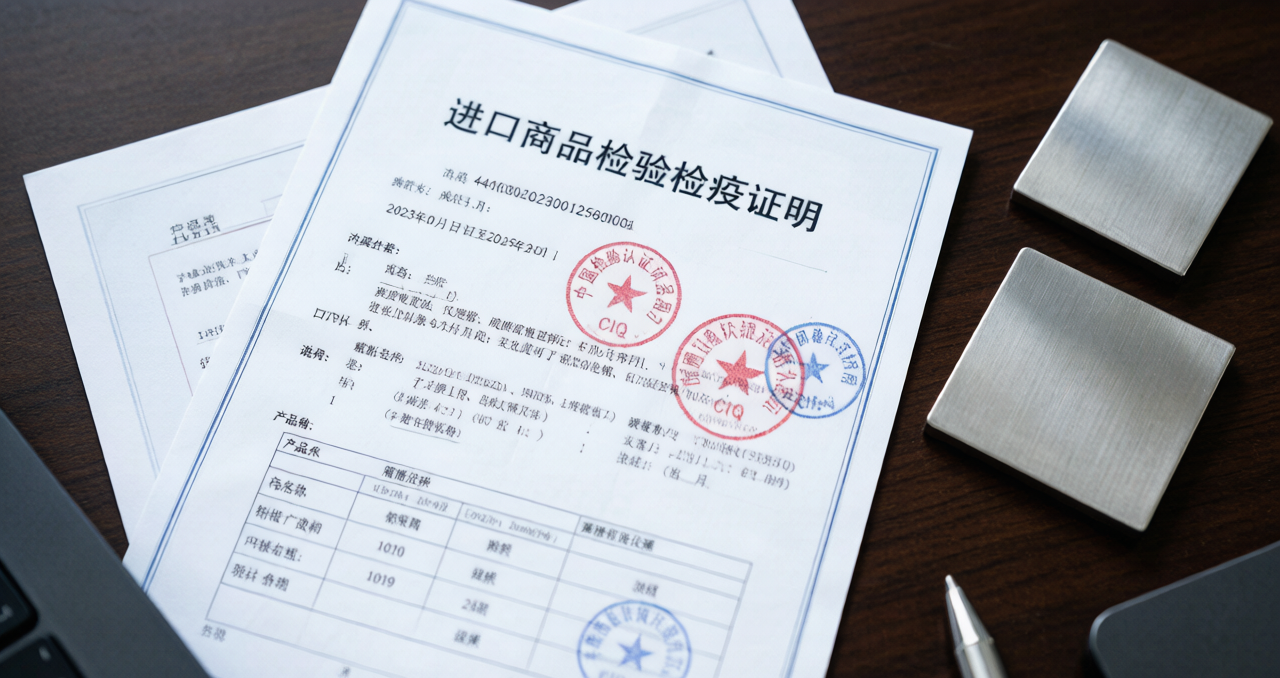
The CIQ Inspection and Quarantine Bureau issues a formal Inspection and Quarantine Certificate on release. The certificate carries the CIQ stamp, the inspector’s name, the inspection date, the test results, and a release decision. A typical release report for carbon steel plate shows:
Sample heat number and sample location on the bundle/coil.
Chemistry test results on the sample vs. MTC reported values.
Tensile and elongation results vs. the grade acceptance window.
“Passed-conditional” is the most common outcome on the first import: there is a minor documentation discrepancy that the importer resolves with a follow-up letter before the cargo leaves the bonded area. It is not a fail.
How Buyers Can Speed Up CIQ Clearance
Five practices make the biggest difference in practice:
Use an experienced Chinese customs broker. A broker who has handled your product previously knows the local port officer’s preferences. They file the declaration accurately and can pre-empt documentation requests.
Consolidate shipments by supplier. If you import from five mills into the same port, group them by supplier in a single declaration per quarter where possible. Importer history factors into the inspection depth.
Request “mill-direct” MTCs with traceability. A mill that issues MTCs in real time during rolling (not after-the-fact) will have heat-number discipline that survives CIQ scrutiny.
Pre-classify HS codes on the importer side. HS pre-classification memos reduce mis-declaration and shorten the inspection queue.
Ask the supplier to flag any unusual surface treatments. Galvanized, painted, and oil-coated steel each have specific label and MSDS requirements. Suppliers that ship the steel without telling you about the chemistry force CIQ to open a quarantine order.
What Happens if the Cargo Fails
Three paths after a fail result:
Re-export: cargo can be re-shipped out of China at the importer’s expense, usually within 30 days.
Re-classification: if the cargo is acceptable under a different HS code with different duty, the importer can apply for re-classification and re-clear.
Destruction: cargo that fails inspection and cannot be re-exported can be ordered destroyed under customs supervision. This is rare.
In practice, a failed CIQ test almost always comes down to a documentation mismatch that can be cleared by a corrective letter. A genuine chemistry or mechanical property failure is unusual when the mill is reputable and the MTC chain is intact.
Special Cases
Galvanized steel
Galvanized sheet and pipe enter under HS 7210/7306 and trigger surface-chemistry inspection. Verify zinc-coating mass, spangle size, and surface chemistry on the MTC. Chromium-free passivated (often called “RoHS-compliant” or “trivalent passivation”) is required for some end uses; confirm before ordering.
Pipe and tube
Welded pipe and tube (HS 7306) is subject to dimensional and hydrostatic-test verification. Seamless pipe (HS 7304) sometimes triggers additional non-destructive testing verification, particularly for high-pressure service.
Structural sections
I-beams, channels, angles, and H-beams (HS 7216/7221) trigger chemistry and tensile sampling. Z-direction properties are not standard but can be added on request.
Cold-rolled and coated sheet
Cold-rolled sheet (HS 7209/7210) and pre-painted (HS 7212) trigger the strictest surface-chemistry inspection. Lot acceptance is per coil; verify production date and coil ID on the MTC.
Frequently Asked Questions
How long does CIQ inspection take?
For document-only inspection, 1 to 3 working days from the date of declaration. For sampling inspection, 3 to 7 working days. For full inspection, 7 to 14 working days. Delays beyond 14 days usually indicate a documentation issue rather than a chemistry issue, and can often be cleared by an importer’s corrective letter.
What does CIQ test, exactly?
For carbon steel plate, sheet, and bar, the standard test suite is chemistry (C, Mn, Si, P, S, plus residual Cu/Ni/Cr if specified) plus tensile (yield, ultimate, elongation) on a sampled plate or sheet. Visual and dimensional checks run in parallel.
Is the inspection fee charged?
CIQ charges a sample-testing fee for the laboratory work. Document-only inspection has a smaller administrative fee. Both are billed to the importer through the customs broker.
Can the same MTC cover multiple shipments?
No. Each shipment (B/L or AWB) needs its own MTC that ties back to the specific heat number on the specific plates or coils in that shipment. Generic certificates without heat traceability will fail inspection.
What about an FTA tariff reduction?
If you have a valid country-of-origin certificate under a free-trade agreement (RCEP, China-ASEAN, China-Korea, etc.), the importer can claim preferential duty rates at the time of declaration. CIQ verifies the certificate of origin alongside the inspection; mismatch in certificate content (origin criteria, exporter details) can void the preferential rate.
How Huaxia-Steel Supports Imports
If you source carbon steel plate, sheet, bar, or pipe from China for re-export or processing, we prepare export-ready shipments with:
Mill-direct MTC (EN 10204 3.1 or 3.2) per heat, with C, Mn, Si, P, S and tensile results.
Country-of-origin certificate aligned to the importer’s preferred FTA.
English-Chinese bilingual labels on bundles and on the B/L annotation.
Pre-shipment chemistry recap at the discharge port request.
Sample MTC pack and product specification sheet before vessel berths, sent to your broker in advance.
Request a Quotation
Tell us your destination port, the grade and size list, surface condition, and whether you need FTA certification. We will return a mill-direct offer with MTC, certificate of origin, packaging, and the documentation schedule aligned to your broker’s CIQ declaration timing. Contact [email protected].
Browse the Huaxia-Steel news hub for more import-procedure guides, MTC walkthroughs, and customs-documentation checklists.
Related Images
Figure 2: China CIQ Inspection Procedure for Imported Carbon Steel MaterialsFigure 3: China CIQ Inspection Procedure for Imported Carbon Steel Materials
If you require further information about our metal sheet products or architectural projects, please don’t hesitate to leave your contact details and message here.
Our team of experts will respond within 24 hours to continue the discussion and provide you with any additional information you requires.