Cold Heading Carbon Steel: Grades, Process, Defect Control
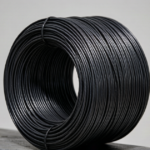
Every bolt, screw, rivet and nut starts life as a length of wire that is cut, gripped and punched into shape in a single stroke at room temperature. That operation — cold heading — is one of the highest-volume metalworking processes in the world, and it is unforgiving: the steel has to upset to two or three times its own diameter without splitting, without laps, and without work-hardening itself into cracks. Cold heading carbon steel is therefore not simply “mild steel in coil form.” It is a carefully specified product with controlled chemistry, a spheroidize-annealed structure, a phosphate and lubricant coating, and a drawing history chosen for the exact upset ratio the fastener requires. This guide explains the grades, the metallurgy, the wire preparation chain, the defects that ruin a heading run, and the specification items buyers should state when ordering cold heading quality wire or finished cold-headed parts.
1. What Cold Heading Does to Steel
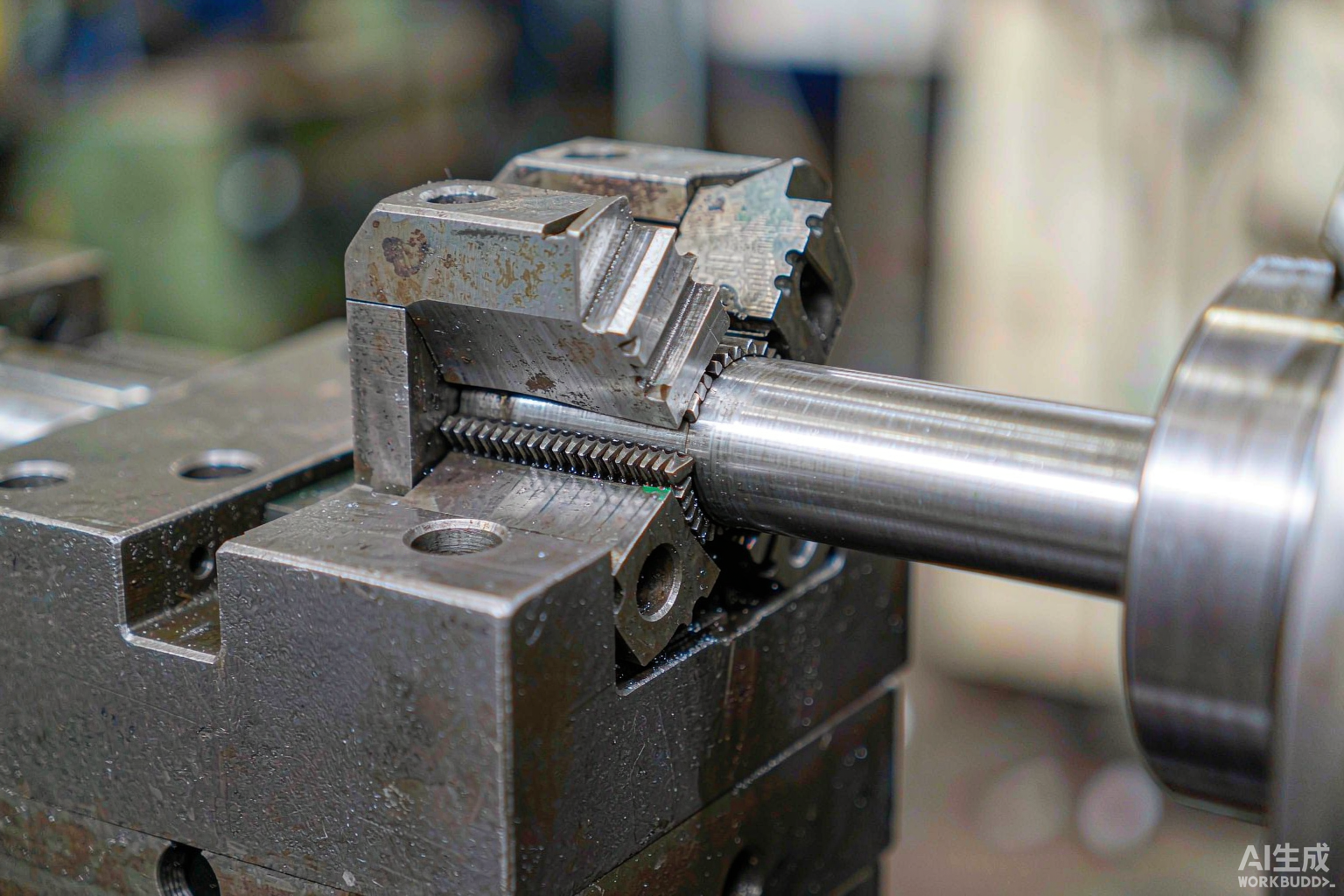
In a cold heading machine, wire is fed through a straightener and cut to a blank length, then transferred through a series of dies. A punch strikes the blank and forces the metal to flow radially outward into the die cavity, forming a head. A two-blow machine forms a simple hex head; a four- or five-station former can produce a socket head, a flange, a shoulder and a shank in successive blows at rates up to 400 parts per minute. Nothing is heated: the deformation happens at ambient temperature, which is precisely why the mechanical properties of the finished part are so good and why the tooling loads are so high.
Three consequences follow. First, cold working raises the strength of the steel through strain hardening — a 1018 wire drawn and headed may reach 20 % higher tensile than the same steel in annealed bar form. Second, the surface of the part becomes harder and more wear-resistant than the core, which is valuable in thread-forming screws. Third, because there is no heat to relax the metal, any metallurgical defect in the wire — a coarse carbide, a decarburized skin, a seam, an inclusion stringer — becomes a crack at the surface of the finished part rather than being healed by the process. Cold heading does not forgive. It only reveals.
2. Why Carbon Steel Dominates Cold Heading
Aluminium, copper and stainless steel are all cold headed, but low and medium carbon steel accounts for the overwhelming majority of volume because it combines three properties nothing else matches on cost: adequate ductility at low carbon levels, predictable strain hardening, and a price per tonne that supports making fasteners at fractions of a cent each. The ductility window is narrow, though. Above roughly 0.25 % carbon, the ferrite-pearlite structure becomes too hard to upset cleanly without heat treatment, so high-strength fasteners use either a spheroidize-annealed medium carbon wire (0.28–0.40 % C) or a micro-alloyed boron steel that achieves 10.9-grade strength after quenching and tempering with less carbon in the first place.
3. The Grades Used in Cold Heading
Grade selection follows the upset ratio and the final property requirement. The table below lists the steels most commonly specified, with their practical role in a fastener plant.
Grade
Typical C %
Upset ratio (max)
Typical use
Property class after HT
1006 / 1008
0.06–0.10
4.0+
Rivets, nails, deep-headed screws
Not quenched
1010 / 1012
0.08–0.13
3.5
General screws, wood screws
4.8
1018 / 1022
0.15–0.23
2.5–3.0
Hex bolts, machine screws
4.8 / 5.8
1035 / 1038
0.32–0.40
1.8 (annealed)
High-strength bolts, studs
8.8
10B21
0.18–0.23 + B
2.5
8.8 and 10.9 bolts
8.8 / 10.9
SCM435 / 35CrMo
0.33–0.38 + CrMo
1.5
10.9 and 12.9 automotive
10.9 / 12.9
ML08Al (GB/T 6478)
≤ 0.10 + Al
4.0+
Chinese-spec screws and rivets
4.8
ML35 (GB/T 6478)
0.32–0.40
1.8
Chinese-spec 8.8 bolts
8.8
Boron steels deserve a note. Adding 0.0005–0.003 % boron to a 0.20 % carbon steel gives the hardenability of a 0.35 % carbon steel without the ductility penalty, which is why 10B21 has become the standard route to property class 8.8 and 10.9 fasteners in Asia. The trade-off is that boron steels are sensitive to nitrogen pickup and to titanium or aluminium additions that “getter” the boron; a heat with the wrong Al/N ratio will not harden consistently, and the failure appears at heat treatment, long after the wire has been accepted.
4. Chemistry Controls That Actually Decide Whether It Heads
Carbon is the headline number, but four other elements do as much damage. Silicon raises strength and reduces ductility sharply in cold heading grades; good CHQ wire holds Si at or below 0.10 %, and anything above 0.20 % will cause head cracking in high-upset parts. Sulphur is a double-edged element: 0.02–0.03 % improves machinability of the finished thread, but stringer inclusions from higher sulphur act as crack initiators during heading, so free-machining grades are almost never specified for high-upset cold heading. Phosphorus must be held below 0.020 % because it segregates to grain boundaries and causes brittle fracture. Nitrogen above 0.008 % causes strain ageing — the wire heads fine on day one and cracks after a week in storage, a defect that costs plants entire batches before the cause is found.
Aluminium is the quiet hero. A fully killed, aluminium-killed steel with 0.020–0.050 % acid-soluble aluminium has a fine, uniform grain size that distributes the deformation evenly and produces a clean head. Rimmed or unbalanced steels head badly at high ratios because the core and surface flow at different rates. When a buyer specifies “cold heading quality,” the intent is really this: low silicon, low phosphorus, low nitrogen, controlled aluminium, and a documented inclusion rating.
5. Wire Preparation: The Chain That Makes Heading Possible
Spheroidize annealing. Medium carbon wire is held at 700–750 °C for several hours so that pearlite lamellae break down into spheroids of cementite in a ferrite matrix. Soft spheroidized structure can be upset at ratios that would shatter normalized wire. Low carbon grades may only need a process anneal.
Pickling. Hot rolled wire rod carries mill scale that must be removed in hydrochloric or sulphuric acid, followed by a rinse and a borax or lime neutralization.
Phosphate coating. A zinc or manganese phosphate layer converts the wire surface into a porous crystalline carrier for lubricant. Without it, the soap lubricant cannot stay in place and the die galling ruins both wire and tooling.
Soap lubrication. Sodium or calcium stearate is applied over the phosphate. The combination is what allows a wire to be drawn through a carbide die at 500 m/min without welding itself to the die.
Drawing. The wire is reduced to final diameter in one or several passes, which raises strength and improves dimensional accuracy but reduces remaining ductility — so the total reduction and the number of passes are part of the specification, not an afterthought.
6. Upset Ratio and How to Calculate It
The upset ratio is the ratio of the cross-sectional area of the largest part of the head to the cross-sectional area of the original wire. A bolt with a 20 mm across-flats hex head and an M10 shank has a head area of roughly 346 mm² and a shank area of 78.5 mm², giving an upset ratio of about 4.4 — which is why M10 hex bolts are made from 1018 at best and often from 1008 or 1010, and why the wire diameter is chosen from the head, not the shank. Rule-of-thumb limits for a single blow in a well-prepared wire are 4.5 for low carbon, 3.0 for 1018-class steel, and 2.0 for annealed medium carbon. Exceeding them requires a multi-blow sequence, a smaller head, or a softer grade.
Buyers rarely see this number, but it explains quotations that look inconsistent. Two suppliers quoting the same M12 bolt may be planning different wire grades and different numbers of blows; the cheaper quote may be running a higher-upset grade and accepting a slightly higher defect rate. Asking which grade and which former the part will run on tells you more about the price than any other single question.
7. The Six Defects That Kill a Heading Run
Defect
Appearance
Root cause
Fix
Head burst / split
Radial crack across the head
Upset ratio too high, wire too hard, Si too high
Softer grade, extra anneal, multi-blow
Laps and folds
Surface fold at head-shank junction
Poor die design, insufficient lubricant
Rework die radii, check coating weight
Shear crack
Straight crack on cut face
Cut-off blade dull or clearance wrong
Blade maintenance, cut quality audit
Decarburization
Soft skin, low hardness after HT
Furnace atmosphere in annealing
Control carbon potential, skin removal
Quench cracking
Longitudinal crack after hardening
Severe quench, sharp section change
Polymer quench, temper immediately
Hydrogen embrittlement
Delayed failure 24–72 h after plating
Acid pickling or plating without bake
Bake 200–230 °C within 4 h of plating
Hydrogen embrittlement is the most expensive of these because it does not appear in inspection — the parts pass visual and dimensional checks, ship, and then fail in the customer’s assembly line or in service. Any high-strength (class 10.9 and above) cold-headed part that is electroplated must be baked, and the bake must be documented. A supplier who cannot produce a bake record for a 10.9 zinc-plated bolt is a supplier who has not understood the risk.
8. Heat Treatment After Heading
Property classes 4.8, 5.8, 8.8, 10.9 and 12.9 correspond to tensile strength bands of 400–500, 500–600, 800–900, 1000–1100 and 1200–1300 MPa respectively, and the class is achieved by quenching and tempering after heading, not by the wire grade alone. Class 4.8 and 5.8 parts are usually supplied as-headed or stress relieved. Class 8.8 requires a proper austenitize, oil or polymer quench and a temper around 550–600 °C. Class 10.9 needs a hardenability that guarantees through-hardening at the part’s core diameter, which is where boron and CrMo steels earn their price. Class 12.9 is a different discipline: alloy steel, tight tempering control and mandatory hydrogen bake after plating.
Two quality controls separate a good heat treater from a cheap one. Hardness must be measured at the core of a sectioned part, not just on the surface, because a case-hardened skin over an untempered martensite core will pass a surface Rockwell test and fail in fatigue. And tempering temperature must be recorded per batch, because a 30 °C tempering error moves a 10.9 bolt out of its tensile band with no visible sign.
9. Inspection and Test Methods
Upset test (GB/T 233 / ASTM E290 type): compress a wire sample to one third of its height and inspect for cracks. The standard shop-floor screen for incoming CHQ wire.
Torsion test: twist a wire sample to failure and count turns; low turn counts indicate inadequate ductility.
Hardness traverse: section a finished part and measure core-to-surface hardness; confirms both heat treatment and decarburization.
Proof load and wedge tensile: the acceptance test for finished bolts, per ISO 898-1 or ASTM F606.
Coating weight: for phosphated wire, 3–8 g/m² is the normal working range; too little causes galling, too much causes die wear.
Microstructure: spheroidized structure rating and decarburization depth on a mounted cross-section, typically every fifth coil.
10. Specifying Cold Heading Steel on a Purchase Order
A complete CHQ wire specification states: grade and standard (for example 1018 per ASTM A510, or ML08Al per GB/T 6478), wire diameter with tolerance, coil weight, surface condition (phosphated and lubricated, or bright drawn), annealing condition (spheroidized, process annealed or as-drawn), decarburization limit, inclusion rating per ASTM E45, delivery tensile range, and the intended upset ratio. Adding the intended upset ratio is the single highest-value item, because it lets the mill choose the anneal and the drawing reduction instead of guessing — and it gives you a defensible position if the wire fails in your press.
For finished cold-headed parts, the specification shifts to the part: property class, thread standard, coating and coating weight, hydrogen bake record, dimensional tolerances, and the sampling plan for proof load. Buyers who specify only “M8 x 30, class 8.8, zinc plated” leave the entire quality system to the supplier and then discover, at the assembly line, that the suppliers interpreted it differently.
11. Cost Reality: Why the Cheapest Wire Is Rarely the Cheapest Bolt
Wire is roughly 55 to 65 percent of the cost of a cold-headed fastener, which is why purchasing teams push hard on the wire price — and why that push so often backfires. A grade that saves 40 USD per tonne but raises the heading scrap rate from 1.5 percent to 4 percent destroys the saving several times over once you count the machine time, the tooling wear and the sorting labour. On a 20-tonne order of M10 bolts, three extra points of scrap is 600 kg of steel converted into swarf, plus the inspection cost of screening the parts that did survive.
Die life behaves the same way. A wire with a thin or uneven phosphate coating raises friction in the die, and a carbide insert that should last 800,000 strikes may fail at 300,000. Tooling is a small line item individually and a large one in aggregate. The practical approach is to price the whole chain: wire cost per 1,000 good parts, plus tooling cost per 1,000 good parts, plus the cost of the incoming inspection you actually need. Suppliers who quote on that basis are almost always running a sensible grade, and their price per tonne tends to be unremarkable rather than lowest.
There is also a hidden cost in certification. A 10.9 bolt that fails a customer audit costs far more than the price difference between 10B21 and SCM435, and a heat traceability gap uncovered after shipment can force a recall. When you compare quotations for high-strength cold-headed parts, compare the test reports first and the price second — the report tells you which of the two suppliers understands what they are selling.
12. FAQ
Can I cold head Q235? Only at low upset ratios. Q235’s carbon range up to 0.22 % and its silicon up to 0.35 % make it marginal for anything above a 2.0 upset ratio, and its chemistry is not controlled for heading. Use a dedicated CHQ grade such as ML08Al or 1010 instead; the price difference is small and the scrap rate difference is not.
Why does my wire crack after a few days in storage? Strain ageing from nitrogen. Wire with more than about 0.008 % N hardens and loses ductility over days to weeks, so parts that headed cleanly on Monday crack on Friday. Specify nitrogen-limited steel and, where the risk is high, ask for an aluminium-killed grade.
Is spheroidize annealing always necessary? For carbon above about 0.25 %, yes — without it the pearlite colonies act as crack paths and medium carbon wire will not survive a 2.0 upset. For 1008 and 1010 grades at moderate ratios, a process anneal is usually sufficient.
What is the difference between CHQ and drawing quality wire? CHQ (cold heading quality) adds limits on silicon, nitrogen, inclusions and decarburization, plus a guaranteed response to upsetting. Drawing quality controls diameter and surface but not the metallurgy that governs headability. They are not interchangeable for fastener production.
Do cold-headed parts need stress relieving? Not usually. Cold heading leaves residual stress, but the resulting strain hardening is normally beneficial. Stress relief is used when a part will be machined afterwards, when dimensional stability matters, or when the part will be galvanized — where residual stress plus acid attack can trigger cracking.
Cold Heading Wire and Headed Parts, Factory Direct
Huaxia-Steel supplies cold heading quality carbon steel wire in 1006 through 1038, 10B21 boron grades and ML08Al/ML35 to GB/T 6478, in coil diameters from 2.0 mm to 16 mm, spheroidize annealed, phosphated and lubricated to your upset ratio, with inclusion ratings, decarburization depth and tensile range reported per coil. We also source and inspect finished cold-headed fasteners — hex bolts, socket screws, studs and rivets — with proof load testing, coating weight checks and documented hydrogen bake where class 10.9 or above is required. Send us the part drawing, the property class and your annual quantity, and we will come back with the correct wire grade, the achievable upset ratio and a landed-cost quotation within one working day.
If you require further information about our metal sheet products or architectural projects, please don’t hesitate to leave your contact details and message here.
Our team of experts will respond within 24 hours to continue the discussion and provide you with any additional information you requires.