DIN 17100 vs EN 10025 — Carbon Steel Standard Transition Guide
S355J2 and S355K2 may require 5–10 days additional lead time for specific rolling schedules and testing.
Always request EN 10204 Type 3.1 inspection certificate with chemical and mechanical test results specific to your heat number.
Specify CEV limits in your purchase order — this is your most important quality safeguard for structural applications.
FAQ
Q: Can I still buy St37-2 certified steel in 2026? A: Most mills no longer issue DIN 17100 certificates. You will receive EN 10025-2 S235JR material with an EN 10204 certificate. The material properties are equivalent or superior.
Q: Is S235JR the same as A36? A: Very close. S235JR has a minimum yield of 235 MPa vs. A36’s 250 MPa, but the tensile ranges overlap (360–510 vs. 400–550). For most structural applications, they are interchangeable. Verify with your engineer for critical connections.
Q: What is the difference between S355J2 and S355J2+N? A: The “+N” suffix indicates normalized or normalized rolled delivery condition. This guarantees fine-grain structure and consistent mechanical properties through the thickness, which is important for thicker plates (>40mm).
Q: Does EN 10025 cover hot rolled coil? A: Yes. EN 10025-2 covers plates, sections, bars, and wide flats in hot rolled condition. For hot rolled flat products specifically for cold forming, refer to EN 10111 instead.
Get EN 10025 Certified Carbon Steel from a Trusted Supplier
Huaxia-Steel supplies EN 10025-2 certified S235JR, S275JR, S355J0, and S355J2 carbon structural steel with full EN 10204 Type 3.1 documentation. All products are sourced from ISO 9001 certified mills with European notified body approvals. Contact us for a quotation with your thickness, quantity, and delivery requirements.
S235JR and S355JR are stock items at most Chinese mills, with the shortest lead times (15–25 days).
S355J2 and S355K2 may require 5–10 days additional lead time for specific rolling schedules and testing.
Always request EN 10204 Type 3.1 inspection certificate with chemical and mechanical test results specific to your heat number.
Specify CEV limits in your purchase order — this is your most important quality safeguard for structural applications.
FAQ
Q: Can I still buy St37-2 certified steel in 2026? A: Most mills no longer issue DIN 17100 certificates. You will receive EN 10025-2 S235JR material with an EN 10204 certificate. The material properties are equivalent or superior.
Q: Is S235JR the same as A36? A: Very close. S235JR has a minimum yield of 235 MPa vs. A36’s 250 MPa, but the tensile ranges overlap (360–510 vs. 400–550). For most structural applications, they are interchangeable. Verify with your engineer for critical connections.
Q: What is the difference between S355J2 and S355J2+N? A: The “+N” suffix indicates normalized or normalized rolled delivery condition. This guarantees fine-grain structure and consistent mechanical properties through the thickness, which is important for thicker plates (>40mm).
Q: Does EN 10025 cover hot rolled coil? A: Yes. EN 10025-2 covers plates, sections, bars, and wide flats in hot rolled condition. For hot rolled flat products specifically for cold forming, refer to EN 10111 instead.
Get EN 10025 Certified Carbon Steel from a Trusted Supplier
Huaxia-Steel supplies EN 10025-2 certified S235JR, S275JR, S355J0, and S355J2 carbon structural steel with full EN 10204 Type 3.1 documentation. All products are sourced from ISO 9001 certified mills with European notified body approvals. Contact us for a quotation with your thickness, quantity, and delivery requirements.
S235JR and S355JR are stock items at most Chinese mills, with the shortest lead times (15–25 days).
S355J2 and S355K2 may require 5–10 days additional lead time for specific rolling schedules and testing.
Always request EN 10204 Type 3.1 inspection certificate with chemical and mechanical test results specific to your heat number.
Specify CEV limits in your purchase order — this is your most important quality safeguard for structural applications.
FAQ
Q: Can I still buy St37-2 certified steel in 2026? A: Most mills no longer issue DIN 17100 certificates. You will receive EN 10025-2 S235JR material with an EN 10204 certificate. The material properties are equivalent or superior.
Q: Is S235JR the same as A36? A: Very close. S235JR has a minimum yield of 235 MPa vs. A36’s 250 MPa, but the tensile ranges overlap (360–510 vs. 400–550). For most structural applications, they are interchangeable. Verify with your engineer for critical connections.
Q: What is the difference between S355J2 and S355J2+N? A: The “+N” suffix indicates normalized or normalized rolled delivery condition. This guarantees fine-grain structure and consistent mechanical properties through the thickness, which is important for thicker plates (>40mm).
Q: Does EN 10025 cover hot rolled coil? A: Yes. EN 10025-2 covers plates, sections, bars, and wide flats in hot rolled condition. For hot rolled flat products specifically for cold forming, refer to EN 10111 instead.
Get EN 10025 Certified Carbon Steel from a Trusted Supplier
Huaxia-Steel supplies EN 10025-2 certified S235JR, S275JR, S355J0, and S355J2 carbon structural steel with full EN 10204 Type 3.1 documentation. All products are sourced from ISO 9001 certified mills with European notified body approvals. Contact us for a quotation with your thickness, quantity, and delivery requirements.
If your contract says St37-2: Accept S235JR as equivalent. It meets all mechanical requirements of St37-2 and adds explicit impact test and deoxidation guarantees.
If your contract says St52-3: Accept S355J2 or S355J0 depending on your impact requirements. S355JR is NOT equivalent to St52-3 because St52-3 required impact testing.
Avoid specifying St37-2 on new contracts: Always use EN 10025 designations for new procurement. Most mills have fully transitioned their quality systems to EN standards and may charge a “legacy specification” surcharge.
Sourcing EN 10025 Steel from China
Chinese mills are fully capable of producing structural steel to EN 10025-2 specifications. The major mills (Baosteel, Ansteel, Shougang, HBIS) are certified by European notified bodies including TUV Rheinland, Bureau Veritas, and Lloyd’s Register. Key points for procurement:
S235JR and S355JR are stock items at most Chinese mills, with the shortest lead times (15–25 days).
S355J2 and S355K2 may require 5–10 days additional lead time for specific rolling schedules and testing.
Always request EN 10204 Type 3.1 inspection certificate with chemical and mechanical test results specific to your heat number.
Specify CEV limits in your purchase order — this is your most important quality safeguard for structural applications.
FAQ
Q: Can I still buy St37-2 certified steel in 2026? A: Most mills no longer issue DIN 17100 certificates. You will receive EN 10025-2 S235JR material with an EN 10204 certificate. The material properties are equivalent or superior.
Q: Is S235JR the same as A36? A: Very close. S235JR has a minimum yield of 235 MPa vs. A36’s 250 MPa, but the tensile ranges overlap (360–510 vs. 400–550). For most structural applications, they are interchangeable. Verify with your engineer for critical connections.
Q: What is the difference between S355J2 and S355J2+N? A: The “+N” suffix indicates normalized or normalized rolled delivery condition. This guarantees fine-grain structure and consistent mechanical properties through the thickness, which is important for thicker plates (>40mm).
Q: Does EN 10025 cover hot rolled coil? A: Yes. EN 10025-2 covers plates, sections, bars, and wide flats in hot rolled condition. For hot rolled flat products specifically for cold forming, refer to EN 10111 instead.
Get EN 10025 Certified Carbon Steel from a Trusted Supplier
Huaxia-Steel supplies EN 10025-2 certified S235JR, S275JR, S355J0, and S355J2 carbon structural steel with full EN 10204 Type 3.1 documentation. All products are sourced from ISO 9001 certified mills with European notified body approvals. Contact us for a quotation with your thickness, quantity, and delivery requirements.
If your contract says St37-2: Accept S235JR as equivalent. It meets all mechanical requirements of St37-2 and adds explicit impact test and deoxidation guarantees.
If your contract says St52-3: Accept S355J2 or S355J0 depending on your impact requirements. S355JR is NOT equivalent to St52-3 because St52-3 required impact testing.
Avoid specifying St37-2 on new contracts: Always use EN 10025 designations for new procurement. Most mills have fully transitioned their quality systems to EN standards and may charge a “legacy specification” surcharge.
Sourcing EN 10025 Steel from China
Chinese mills are fully capable of producing structural steel to EN 10025-2 specifications. The major mills (Baosteel, Ansteel, Shougang, HBIS) are certified by European notified bodies including TUV Rheinland, Bureau Veritas, and Lloyd’s Register. Key points for procurement:
S235JR and S355JR are stock items at most Chinese mills, with the shortest lead times (15–25 days).
S355J2 and S355K2 may require 5–10 days additional lead time for specific rolling schedules and testing.
Always request EN 10204 Type 3.1 inspection certificate with chemical and mechanical test results specific to your heat number.
Specify CEV limits in your purchase order — this is your most important quality safeguard for structural applications.
FAQ
Q: Can I still buy St37-2 certified steel in 2026? A: Most mills no longer issue DIN 17100 certificates. You will receive EN 10025-2 S235JR material with an EN 10204 certificate. The material properties are equivalent or superior.
Q: Is S235JR the same as A36? A: Very close. S235JR has a minimum yield of 235 MPa vs. A36’s 250 MPa, but the tensile ranges overlap (360–510 vs. 400–550). For most structural applications, they are interchangeable. Verify with your engineer for critical connections.
Q: What is the difference between S355J2 and S355J2+N? A: The “+N” suffix indicates normalized or normalized rolled delivery condition. This guarantees fine-grain structure and consistent mechanical properties through the thickness, which is important for thicker plates (>40mm).
Q: Does EN 10025 cover hot rolled coil? A: Yes. EN 10025-2 covers plates, sections, bars, and wide flats in hot rolled condition. For hot rolled flat products specifically for cold forming, refer to EN 10111 instead.
Get EN 10025 Certified Carbon Steel from a Trusted Supplier
Huaxia-Steel supplies EN 10025-2 certified S235JR, S275JR, S355J0, and S355J2 carbon structural steel with full EN 10204 Type 3.1 documentation. All products are sourced from ISO 9001 certified mills with European notified body approvals. Contact us for a quotation with your thickness, quantity, and delivery requirements.
If your contract says St37-2: Accept S235JR as equivalent. It meets all mechanical requirements of St37-2 and adds explicit impact test and deoxidation guarantees.
If your contract says St52-3: Accept S355J2 or S355J0 depending on your impact requirements. S355JR is NOT equivalent to St52-3 because St52-3 required impact testing.
Avoid specifying St37-2 on new contracts: Always use EN 10025 designations for new procurement. Most mills have fully transitioned their quality systems to EN standards and may charge a “legacy specification” surcharge.
Sourcing EN 10025 Steel from China
Chinese mills are fully capable of producing structural steel to EN 10025-2 specifications. The major mills (Baosteel, Ansteel, Shougang, HBIS) are certified by European notified bodies including TUV Rheinland, Bureau Veritas, and Lloyd’s Register. Key points for procurement:
S235JR and S355JR are stock items at most Chinese mills, with the shortest lead times (15–25 days).
S355J2 and S355K2 may require 5–10 days additional lead time for specific rolling schedules and testing.
Always request EN 10204 Type 3.1 inspection certificate with chemical and mechanical test results specific to your heat number.
Specify CEV limits in your purchase order — this is your most important quality safeguard for structural applications.
FAQ
Q: Can I still buy St37-2 certified steel in 2026? A: Most mills no longer issue DIN 17100 certificates. You will receive EN 10025-2 S235JR material with an EN 10204 certificate. The material properties are equivalent or superior.
Q: Is S235JR the same as A36? A: Very close. S235JR has a minimum yield of 235 MPa vs. A36’s 250 MPa, but the tensile ranges overlap (360–510 vs. 400–550). For most structural applications, they are interchangeable. Verify with your engineer for critical connections.
Q: What is the difference between S355J2 and S355J2+N? A: The “+N” suffix indicates normalized or normalized rolled delivery condition. This guarantees fine-grain structure and consistent mechanical properties through the thickness, which is important for thicker plates (>40mm).
Q: Does EN 10025 cover hot rolled coil? A: Yes. EN 10025-2 covers plates, sections, bars, and wide flats in hot rolled condition. For hot rolled flat products specifically for cold forming, refer to EN 10111 instead.
Get EN 10025 Certified Carbon Steel from a Trusted Supplier
Huaxia-Steel supplies EN 10025-2 certified S235JR, S275JR, S355J0, and S355J2 carbon structural steel with full EN 10204 Type 3.1 documentation. All products are sourced from ISO 9001 certified mills with European notified body approvals. Contact us for a quotation with your thickness, quantity, and delivery requirements.
J0: 27 Joules at 0°C
J2: 27 Joules at -20°C
K2: 40 Joules at -20°C
DIN 17100 used less transparent suffixes: “-2” for killed steel at room temperature, “-3” for killed steel with impact testing. When you specify S235JR instead of just “St37-2,” you get an explicit impact energy guarantee that St37-2 did not always require.
2. Deoxidation Requirements
EN 10025-2 requires fully killed steel (designated by “FF”) for all grades with impact requirements beyond JR. DIN 17100 allowed rimmed and semi-killed steels for St37-2, which are no longer accepted under the EN standard. This means S235JR is inherently a higher-quality product than the original St37-2, even though the mechanical properties are similar.
3. CEV (Carbon Equivalent Value) Limits
EN 10025-2 introduced mandatory maximum CEV values to guarantee weldability, something DIN 17100 did not require:
Grade
Max CEV (t≤40mm)
Max CEV (40<t≤100mm)
S235JR
0.35
0.38
S275JR
0.40
0.42
S355J2
0.45
0.47
Practical Implications for Steel Importers
When sourcing from mills in China, Turkey, India, or Eastern Europe, you will frequently encounter both DIN and EN designations on quotations. Here is how to handle it:
If your contract says St37-2: Accept S235JR as equivalent. It meets all mechanical requirements of St37-2 and adds explicit impact test and deoxidation guarantees.
If your contract says St52-3: Accept S355J2 or S355J0 depending on your impact requirements. S355JR is NOT equivalent to St52-3 because St52-3 required impact testing.
Avoid specifying St37-2 on new contracts: Always use EN 10025 designations for new procurement. Most mills have fully transitioned their quality systems to EN standards and may charge a “legacy specification” surcharge.
Sourcing EN 10025 Steel from China
Chinese mills are fully capable of producing structural steel to EN 10025-2 specifications. The major mills (Baosteel, Ansteel, Shougang, HBIS) are certified by European notified bodies including TUV Rheinland, Bureau Veritas, and Lloyd’s Register. Key points for procurement:
S235JR and S355JR are stock items at most Chinese mills, with the shortest lead times (15–25 days).
S355J2 and S355K2 may require 5–10 days additional lead time for specific rolling schedules and testing.
Always request EN 10204 Type 3.1 inspection certificate with chemical and mechanical test results specific to your heat number.
Specify CEV limits in your purchase order — this is your most important quality safeguard for structural applications.
FAQ
Q: Can I still buy St37-2 certified steel in 2026? A: Most mills no longer issue DIN 17100 certificates. You will receive EN 10025-2 S235JR material with an EN 10204 certificate. The material properties are equivalent or superior.
Q: Is S235JR the same as A36? A: Very close. S235JR has a minimum yield of 235 MPa vs. A36’s 250 MPa, but the tensile ranges overlap (360–510 vs. 400–550). For most structural applications, they are interchangeable. Verify with your engineer for critical connections.
Q: What is the difference between S355J2 and S355J2+N? A: The “+N” suffix indicates normalized or normalized rolled delivery condition. This guarantees fine-grain structure and consistent mechanical properties through the thickness, which is important for thicker plates (>40mm).
Q: Does EN 10025 cover hot rolled coil? A: Yes. EN 10025-2 covers plates, sections, bars, and wide flats in hot rolled condition. For hot rolled flat products specifically for cold forming, refer to EN 10111 instead.
Get EN 10025 Certified Carbon Steel from a Trusted Supplier
Huaxia-Steel supplies EN 10025-2 certified S235JR, S275JR, S355J0, and S355J2 carbon structural steel with full EN 10204 Type 3.1 documentation. All products are sourced from ISO 9001 certified mills with European notified body approvals. Contact us for a quotation with your thickness, quantity, and delivery requirements.
JR: 27 Joules at +20°C (room temperature, no real impact guarantee)
J0: 27 Joules at 0°C
J2: 27 Joules at -20°C
K2: 40 Joules at -20°C
DIN 17100 used less transparent suffixes: “-2” for killed steel at room temperature, “-3” for killed steel with impact testing. When you specify S235JR instead of just “St37-2,” you get an explicit impact energy guarantee that St37-2 did not always require.
2. Deoxidation Requirements
EN 10025-2 requires fully killed steel (designated by “FF”) for all grades with impact requirements beyond JR. DIN 17100 allowed rimmed and semi-killed steels for St37-2, which are no longer accepted under the EN standard. This means S235JR is inherently a higher-quality product than the original St37-2, even though the mechanical properties are similar.
3. CEV (Carbon Equivalent Value) Limits
EN 10025-2 introduced mandatory maximum CEV values to guarantee weldability, something DIN 17100 did not require:
Grade
Max CEV (t≤40mm)
Max CEV (40<t≤100mm)
S235JR
0.35
0.38
S275JR
0.40
0.42
S355J2
0.45
0.47
Practical Implications for Steel Importers
When sourcing from mills in China, Turkey, India, or Eastern Europe, you will frequently encounter both DIN and EN designations on quotations. Here is how to handle it:
If your contract says St37-2: Accept S235JR as equivalent. It meets all mechanical requirements of St37-2 and adds explicit impact test and deoxidation guarantees.
If your contract says St52-3: Accept S355J2 or S355J0 depending on your impact requirements. S355JR is NOT equivalent to St52-3 because St52-3 required impact testing.
Avoid specifying St37-2 on new contracts: Always use EN 10025 designations for new procurement. Most mills have fully transitioned their quality systems to EN standards and may charge a “legacy specification” surcharge.
Sourcing EN 10025 Steel from China
Chinese mills are fully capable of producing structural steel to EN 10025-2 specifications. The major mills (Baosteel, Ansteel, Shougang, HBIS) are certified by European notified bodies including TUV Rheinland, Bureau Veritas, and Lloyd’s Register. Key points for procurement:
S235JR and S355JR are stock items at most Chinese mills, with the shortest lead times (15–25 days).
S355J2 and S355K2 may require 5–10 days additional lead time for specific rolling schedules and testing.
Always request EN 10204 Type 3.1 inspection certificate with chemical and mechanical test results specific to your heat number.
Specify CEV limits in your purchase order — this is your most important quality safeguard for structural applications.
FAQ
Q: Can I still buy St37-2 certified steel in 2026? A: Most mills no longer issue DIN 17100 certificates. You will receive EN 10025-2 S235JR material with an EN 10204 certificate. The material properties are equivalent or superior.
Q: Is S235JR the same as A36? A: Very close. S235JR has a minimum yield of 235 MPa vs. A36’s 250 MPa, but the tensile ranges overlap (360–510 vs. 400–550). For most structural applications, they are interchangeable. Verify with your engineer for critical connections.
Q: What is the difference between S355J2 and S355J2+N? A: The “+N” suffix indicates normalized or normalized rolled delivery condition. This guarantees fine-grain structure and consistent mechanical properties through the thickness, which is important for thicker plates (>40mm).
Q: Does EN 10025 cover hot rolled coil? A: Yes. EN 10025-2 covers plates, sections, bars, and wide flats in hot rolled condition. For hot rolled flat products specifically for cold forming, refer to EN 10111 instead.
Get EN 10025 Certified Carbon Steel from a Trusted Supplier
Huaxia-Steel supplies EN 10025-2 certified S235JR, S275JR, S355J0, and S355J2 carbon structural steel with full EN 10204 Type 3.1 documentation. All products are sourced from ISO 9001 certified mills with European notified body approvals. Contact us for a quotation with your thickness, quantity, and delivery requirements.
JR: 27 Joules at +20°C (room temperature, no real impact guarantee)
J0: 27 Joules at 0°C
J2: 27 Joules at -20°C
K2: 40 Joules at -20°C
DIN 17100 used less transparent suffixes: “-2” for killed steel at room temperature, “-3” for killed steel with impact testing. When you specify S235JR instead of just “St37-2,” you get an explicit impact energy guarantee that St37-2 did not always require.
2. Deoxidation Requirements
EN 10025-2 requires fully killed steel (designated by “FF”) for all grades with impact requirements beyond JR. DIN 17100 allowed rimmed and semi-killed steels for St37-2, which are no longer accepted under the EN standard. This means S235JR is inherently a higher-quality product than the original St37-2, even though the mechanical properties are similar.
3. CEV (Carbon Equivalent Value) Limits
EN 10025-2 introduced mandatory maximum CEV values to guarantee weldability, something DIN 17100 did not require:
Grade
Max CEV (t≤40mm)
Max CEV (40<t≤100mm)
S235JR
0.35
0.38
S275JR
0.40
0.42
S355J2
0.45
0.47
Practical Implications for Steel Importers
When sourcing from mills in China, Turkey, India, or Eastern Europe, you will frequently encounter both DIN and EN designations on quotations. Here is how to handle it:
If your contract says St37-2: Accept S235JR as equivalent. It meets all mechanical requirements of St37-2 and adds explicit impact test and deoxidation guarantees.
If your contract says St52-3: Accept S355J2 or S355J0 depending on your impact requirements. S355JR is NOT equivalent to St52-3 because St52-3 required impact testing.
Avoid specifying St37-2 on new contracts: Always use EN 10025 designations for new procurement. Most mills have fully transitioned their quality systems to EN standards and may charge a “legacy specification” surcharge.
Sourcing EN 10025 Steel from China
Chinese mills are fully capable of producing structural steel to EN 10025-2 specifications. The major mills (Baosteel, Ansteel, Shougang, HBIS) are certified by European notified bodies including TUV Rheinland, Bureau Veritas, and Lloyd’s Register. Key points for procurement:
S235JR and S355JR are stock items at most Chinese mills, with the shortest lead times (15–25 days).
S355J2 and S355K2 may require 5–10 days additional lead time for specific rolling schedules and testing.
Always request EN 10204 Type 3.1 inspection certificate with chemical and mechanical test results specific to your heat number.
Specify CEV limits in your purchase order — this is your most important quality safeguard for structural applications.
FAQ
Q: Can I still buy St37-2 certified steel in 2026? A: Most mills no longer issue DIN 17100 certificates. You will receive EN 10025-2 S235JR material with an EN 10204 certificate. The material properties are equivalent or superior.
Q: Is S235JR the same as A36? A: Very close. S235JR has a minimum yield of 235 MPa vs. A36’s 250 MPa, but the tensile ranges overlap (360–510 vs. 400–550). For most structural applications, they are interchangeable. Verify with your engineer for critical connections.
Q: What is the difference between S355J2 and S355J2+N? A: The “+N” suffix indicates normalized or normalized rolled delivery condition. This guarantees fine-grain structure and consistent mechanical properties through the thickness, which is important for thicker plates (>40mm).
Q: Does EN 10025 cover hot rolled coil? A: Yes. EN 10025-2 covers plates, sections, bars, and wide flats in hot rolled condition. For hot rolled flat products specifically for cold forming, refer to EN 10111 instead.
Get EN 10025 Certified Carbon Steel from a Trusted Supplier
Huaxia-Steel supplies EN 10025-2 certified S235JR, S275JR, S355J0, and S355J2 carbon structural steel with full EN 10204 Type 3.1 documentation. All products are sourced from ISO 9001 certified mills with European notified body approvals. Contact us for a quotation with your thickness, quantity, and delivery requirements.
JR: 27 Joules at +20°C (room temperature, no real impact guarantee)
J0: 27 Joules at 0°C
J2: 27 Joules at -20°C
K2: 40 Joules at -20°C
DIN 17100 used less transparent suffixes: “-2” for killed steel at room temperature, “-3” for killed steel with impact testing. When you specify S235JR instead of just “St37-2,” you get an explicit impact energy guarantee that St37-2 did not always require.
2. Deoxidation Requirements
EN 10025-2 requires fully killed steel (designated by “FF”) for all grades with impact requirements beyond JR. DIN 17100 allowed rimmed and semi-killed steels for St37-2, which are no longer accepted under the EN standard. This means S235JR is inherently a higher-quality product than the original St37-2, even though the mechanical properties are similar.
3. CEV (Carbon Equivalent Value) Limits
EN 10025-2 introduced mandatory maximum CEV values to guarantee weldability, something DIN 17100 did not require:
Grade
Max CEV (t≤40mm)
Max CEV (40<t≤100mm)
S235JR
0.35
0.38
S275JR
0.40
0.42
S355J2
0.45
0.47
Practical Implications for Steel Importers
When sourcing from mills in China, Turkey, India, or Eastern Europe, you will frequently encounter both DIN and EN designations on quotations. Here is how to handle it:
If your contract says St37-2: Accept S235JR as equivalent. It meets all mechanical requirements of St37-2 and adds explicit impact test and deoxidation guarantees.
If your contract says St52-3: Accept S355J2 or S355J0 depending on your impact requirements. S355JR is NOT equivalent to St52-3 because St52-3 required impact testing.
Avoid specifying St37-2 on new contracts: Always use EN 10025 designations for new procurement. Most mills have fully transitioned their quality systems to EN standards and may charge a “legacy specification” surcharge.
Sourcing EN 10025 Steel from China
Chinese mills are fully capable of producing structural steel to EN 10025-2 specifications. The major mills (Baosteel, Ansteel, Shougang, HBIS) are certified by European notified bodies including TUV Rheinland, Bureau Veritas, and Lloyd’s Register. Key points for procurement:
S235JR and S355JR are stock items at most Chinese mills, with the shortest lead times (15–25 days).
S355J2 and S355K2 may require 5–10 days additional lead time for specific rolling schedules and testing.
Always request EN 10204 Type 3.1 inspection certificate with chemical and mechanical test results specific to your heat number.
Specify CEV limits in your purchase order — this is your most important quality safeguard for structural applications.
FAQ
Q: Can I still buy St37-2 certified steel in 2026? A: Most mills no longer issue DIN 17100 certificates. You will receive EN 10025-2 S235JR material with an EN 10204 certificate. The material properties are equivalent or superior.
Q: Is S235JR the same as A36? A: Very close. S235JR has a minimum yield of 235 MPa vs. A36’s 250 MPa, but the tensile ranges overlap (360–510 vs. 400–550). For most structural applications, they are interchangeable. Verify with your engineer for critical connections.
Q: What is the difference between S355J2 and S355J2+N? A: The “+N” suffix indicates normalized or normalized rolled delivery condition. This guarantees fine-grain structure and consistent mechanical properties through the thickness, which is important for thicker plates (>40mm).
Q: Does EN 10025 cover hot rolled coil? A: Yes. EN 10025-2 covers plates, sections, bars, and wide flats in hot rolled condition. For hot rolled flat products specifically for cold forming, refer to EN 10111 instead.
Get EN 10025 Certified Carbon Steel from a Trusted Supplier
Huaxia-Steel supplies EN 10025-2 certified S235JR, S275JR, S355J0, and S355J2 carbon structural steel with full EN 10204 Type 3.1 documentation. All products are sourced from ISO 9001 certified mills with European notified body approvals. Contact us for a quotation with your thickness, quantity, and delivery requirements.
DIN 17100 vs EN 10025 — Carbon Steel Standard Transition Guide
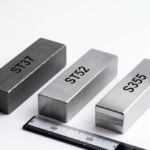
If you have been importing carbon structural steel from Europe, you have almost certainly encountered the transition from the old DIN 17100 standard to the current EN 10025 series. While DIN 17100 was officially withdrawn in 2004, its grade designations — St37, St44, St52 — remain deeply embedded in procurement specifications across Asia, the Middle East, and Africa. Understanding this transition is essential for accurate material sourcing, cost optimization, and avoiding costly specification mismatches.
The Standards at a Glance
Standard
Status
Full Title
Grade Notation
DIN 17100
Withdrawn (2004)
Hot rolled products in general structural steels
St33, St37-2, St44-2, St52-3
EN 10025-2
Current
Hot rolled products of structural steels — Part 2: Non-alloy structural steels
S235JR, S275JR, S355J2
EN 10025-3
Current
Normalized/normalized rolled weldable fine grain steels
S275N, S355N, S420N
The key conceptual shift: DIN 17100 named grades by tensile strength (St37 = minimum 37 kg/mm²), while EN 10025 names grades by yield strength (S235 = minimum 235 MPa yield). This fundamental difference in naming logic causes much of the confusion during specification conversion.
Complete Grade Equivalency Table
DIN 17100
EN 10025-2
ASTM Equivalent
JIS Equivalent
GB Equivalent
Yield (MPa min)
Tensile (MPa)
St33
S185
A283 Gr.A
SS330
Q195
185
290–510
St37-2
S235JR
A283 Gr.C / A36
SS400
Q235B
235
360–510
St37-3
S235J0
A36
SS400
Q235C
235
360–510
St44-2
S275JR
A529 Gr.50
SS490
Q275B
275
410–560
St44-3
S275J0
A529 Gr.50
SS490
Q275C
275
410–560
St52-3
S355J2
A572 Gr.50
SM490A
Q345D
355
470–630
Critical Differences That Affect Procurement
1. Impact Test Requirements (the “J” and “K” Designations)
EN 10025 explicitly encodes impact test temperature and energy in the grade designation:
JR: 27 Joules at +20°C (room temperature, no real impact guarantee)
J0: 27 Joules at 0°C
J2: 27 Joules at -20°C
K2: 40 Joules at -20°C
DIN 17100 used less transparent suffixes: “-2” for killed steel at room temperature, “-3” for killed steel with impact testing. When you specify S235JR instead of just “St37-2,” you get an explicit impact energy guarantee that St37-2 did not always require.
2. Deoxidation Requirements
EN 10025-2 requires fully killed steel (designated by “FF”) for all grades with impact requirements beyond JR. DIN 17100 allowed rimmed and semi-killed steels for St37-2, which are no longer accepted under the EN standard. This means S235JR is inherently a higher-quality product than the original St37-2, even though the mechanical properties are similar.
3. CEV (Carbon Equivalent Value) Limits
EN 10025-2 introduced mandatory maximum CEV values to guarantee weldability, something DIN 17100 did not require:
Grade
Max CEV (t≤40mm)
Max CEV (40<t≤100mm)
S235JR
0.35
0.38
S275JR
0.40
0.42
S355J2
0.45
0.47
Practical Implications for Steel Importers
When sourcing from mills in China, Turkey, India, or Eastern Europe, you will frequently encounter both DIN and EN designations on quotations. Here is how to handle it:
If your contract says St37-2: Accept S235JR as equivalent. It meets all mechanical requirements of St37-2 and adds explicit impact test and deoxidation guarantees.
If your contract says St52-3: Accept S355J2 or S355J0 depending on your impact requirements. S355JR is NOT equivalent to St52-3 because St52-3 required impact testing.
Avoid specifying St37-2 on new contracts: Always use EN 10025 designations for new procurement. Most mills have fully transitioned their quality systems to EN standards and may charge a “legacy specification” surcharge.
Sourcing EN 10025 Steel from China
Chinese mills are fully capable of producing structural steel to EN 10025-2 specifications. The major mills (Baosteel, Ansteel, Shougang, HBIS) are certified by European notified bodies including TUV Rheinland, Bureau Veritas, and Lloyd’s Register. Key points for procurement:
S235JR and S355JR are stock items at most Chinese mills, with the shortest lead times (15–25 days).
S355J2 and S355K2 may require 5–10 days additional lead time for specific rolling schedules and testing.
Always request EN 10204 Type 3.1 inspection certificate with chemical and mechanical test results specific to your heat number.
Specify CEV limits in your purchase order — this is your most important quality safeguard for structural applications.
FAQ
Q: Can I still buy St37-2 certified steel in 2026? A: Most mills no longer issue DIN 17100 certificates. You will receive EN 10025-2 S235JR material with an EN 10204 certificate. The material properties are equivalent or superior.
Q: Is S235JR the same as A36? A: Very close. S235JR has a minimum yield of 235 MPa vs. A36’s 250 MPa, but the tensile ranges overlap (360–510 vs. 400–550). For most structural applications, they are interchangeable. Verify with your engineer for critical connections.
Q: What is the difference between S355J2 and S355J2+N? A: The “+N” suffix indicates normalized or normalized rolled delivery condition. This guarantees fine-grain structure and consistent mechanical properties through the thickness, which is important for thicker plates (>40mm).
Q: Does EN 10025 cover hot rolled coil? A: Yes. EN 10025-2 covers plates, sections, bars, and wide flats in hot rolled condition. For hot rolled flat products specifically for cold forming, refer to EN 10111 instead.
Get EN 10025 Certified Carbon Steel from a Trusted Supplier
Huaxia-Steel supplies EN 10025-2 certified S235JR, S275JR, S355J0, and S355J2 carbon structural steel with full EN 10204 Type 3.1 documentation. All products are sourced from ISO 9001 certified mills with European notified body approvals. Contact us for a quotation with your thickness, quantity, and delivery requirements.
If you require further information about our metal sheet products or architectural projects, please don’t hesitate to leave your contact details and message here.
Our team of experts will respond within 24 hours to continue the discussion and provide you with any additional information you requires.