EN 10210 vs EN 10219: Hot-Formed vs Cold-Formed Structural Hollow Sections
EN 10210 and EN 10219 are the two European standards for structural hollow sections — square, rectangular, and circular tubes used in construction, machinery, and infrastructure. They look similar on a quote sheet, and mills often stock both, but they describe materially different products: hot-finished versus cold-formed. Choosing the wrong one can quietly change your connection design, fatigue life, and even your CE marking compliance. This guide compares EN 10210 vs EN 10219 across manufacturing route, mechanical properties, corner geometry, tolerances, grade designations, and cost, and tells you which to specify for common project types.
1. Quick Answer: Which Standard Should You Use?
2. Manufacturing Route: Why the Sections Are Not the Same Metal
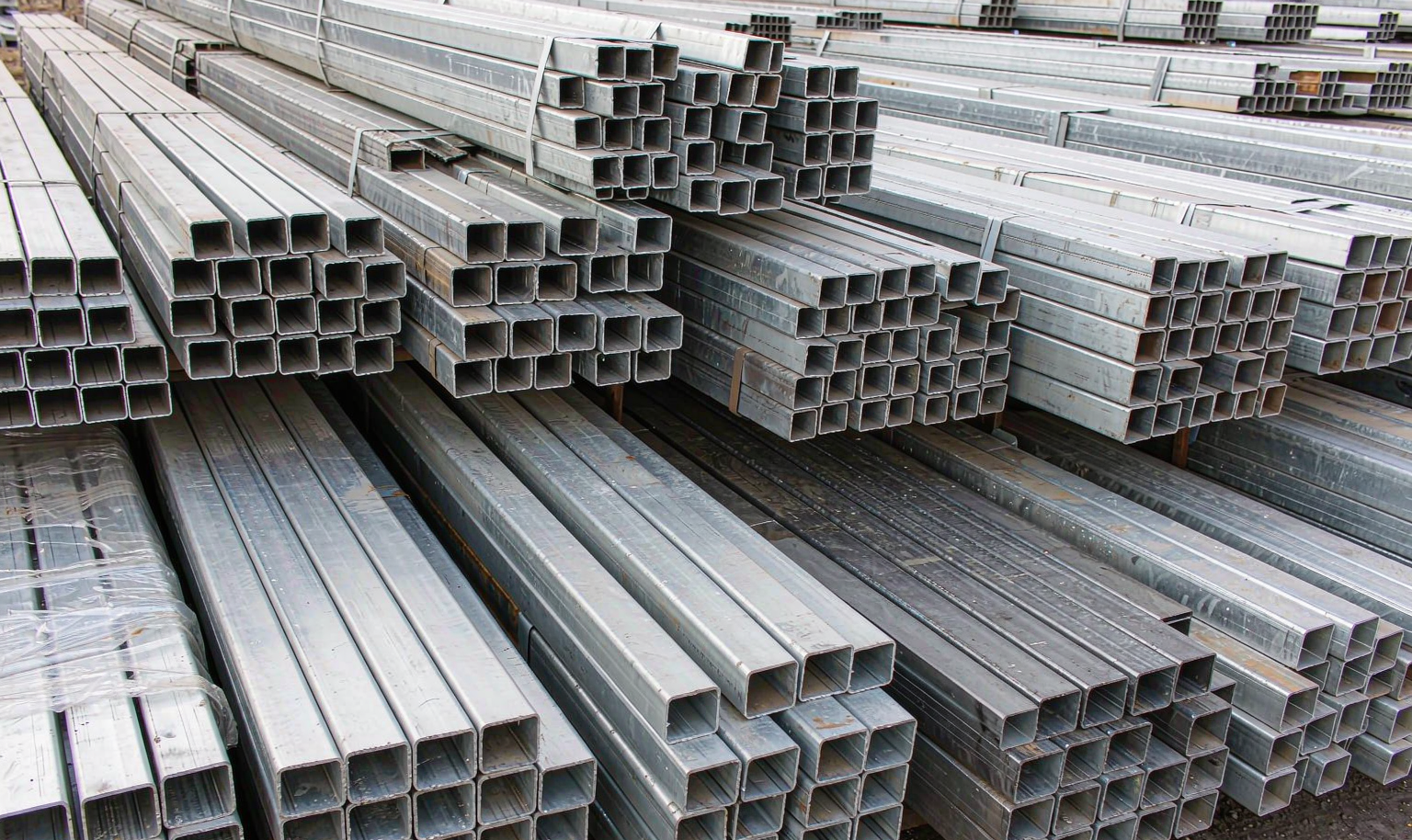
EN 10210 route: Either (a) seamless hollows or welded tubes are hot-finished — heated above Ac3 and rolled/sized hot — or (b) strip is hot-formed into an open section and welded while hot. The heat cycle recrystallizes the steel and relieves forming stresses, producing uniform mechanical properties around the perimeter, slightly larger tolerances, and a scaled surface that is usually shot-blasted.
EN 10219 route: Hot-rolled strip is cold roll-formed into shape and high-frequency (HF) welded, all at ambient temperature. No post-forming heat treatment for standard grades. The result: work hardening at the corners, residual stresses, a bright uniform surface, and excellent wall-thickness consistency because it inherits the strip’s gauge precision.
| Aspect | EN 10210 (Hot-Finished) | EN 10219 (Cold-Formed) |
|---|---|---|
| Forming temperature | > 900°C (hot) | Ambient |
| Residual stresses | Low — relieved by hot working | Significant — locked in by cold forming |
| External corner radius (RHS/SHS) | ≤ 1.5 t | ≤ 2 t (t ≤ 6 mm); ≤ 3 t (t > 6 mm) |
| Wall thickness tolerance | ±10% | ±5% (t < 3 mm), ±8–10% (t ≥ 3 mm) |
| OD / section tolerance | ±1% (min ±0.5 mm) | Tighter, per EN 10219-2 tables |
| Surface | Scaled, typically blast-cleaned | Bright as-rolled strip finish |
| Max yield advantage | Uniform around section | Corner zones strain-hardened (restricted in design) |
| Relative price | ~10–25% higher | Base price |
3. Mechanical Properties: Same Numbers, Different Fine Print
| Grade | Standard | fy ≤ 16 mm (MPa) | Impact Requirement |
|---|---|---|---|
| S235JRH | EN 10210 / EN 10219 | 235 | 27 J at +20°C (JR) |
| S275J0H / S275J2H | EN 10210 | 275 | 27 J at 0°C / -20°C |
| S355J0H | Both | 355 | 27 J at 0°C |
| S355J2H | Both (J2H common in 10210) | 355 | 27 J at -20°C |
| S355MH / S420MH | EN 10219 only | 355 / 420 | 40 J at -20°C (M = thermo-mechanical) |
| S460NH | EN 10210 | 460 | 40 J at -20°C (hot-rolled high strength) |
Two subtleties cost buyers money when missed. First, yield strength reduction for thick cold-formed walls: in EN 10219, S355 drops to 340 MPa for 16 < t ≤ 40 mm and lower again above, while EN 10210 S355H holds 355 MPa to 40 mm — a difference Eurocode design will actually consume. Second, strain hardening at corners: cold-formed corners exceed the nominal yield, but EN 1993 limits how much of this you may use (the “corner enhancement” rules), so don’t let a supplier sell you cold-formed tube on the basis of its unusually high corner hardness.
4. Tolerances and Geometry: What Your Fabricator Will Notice
5. Applications: Where Each Standard Wins
| Application | Recommended | Reason |
|---|---|---|
| Building columns / trusses | EN 10219 S355J0H | Cost-effective, full Eurocode coverage |
| Cranes, booms, fatigue-loaded frames | EN 10210 S355J2H | Low residual stress → better fatigue class |
| Low-temperature structures (-20°C and below) | EN 10210 J2H | Hot-finished toughness more uniform |
| Warehouse racking, shelving | EN 10219 | Tight tolerances, bright surface |
| Machine frames, conveyor systems | EN 10219 S235/S355 | Dimensional accuracy dominates design |
| Heavy lattice towers, chord sections | EN 10210 (thick walls) | Yield retention at t > 16 mm |
| Offshore / marine | EN 10210 S355J2H+ or EN 10225 | Toughness and weldability priority |
6. Buying Checklist
7. FAQ
Can EN 10219 replace EN 10210 on my project?
Often yes for static building loads, but only with the engineer’s approval — fatigue, low temperature, and thick-wall yield reductions are the usual blockers.
Is hot-finished tube actually stronger?
Not in nominal yield for thin walls — but it keeps its yield at heavy thickness, has lower residual stress, and performs more predictably in fatigue and brittle fracture checks.
What does the “H” suffix mean?
“H” marks hollow sections with specified impact requirements. JR/J0/J2/K2 define test temperature, and MH/NH denote thermo-mechanical and normalized (or hot-rolled) high-strength variants.
Do both standards allow seamless tubes?
EN 10210 explicitly covers hot-finished seamless hollows; EN 10219 is by definition cold-formed welded. For seamless circular sections, EN 10210 is the standard to specify.
Source EN 10210 / EN 10219 Hollow Sections With Correct Certification
SHS, RHS, and circular hollow sections from S235JRH to S460NH, hot-finished or cold-formed, with EN 10204 3.1 certs and CE documentation. Send your section list — quotation within 24 hours.
Request a quote: Contact Huaxia-Steel.