EN 10305 Precision Steel Tube: E235 and E355 Guide
The EN 10305 precision steel tube standard governs cold finished precision seamless and welded steel tubes for hydraulic, pneumatic and precision mechanical applications, where outside diameter tolerance is measured in fractions of a millimetre rather than half a millimetre. If you buy hydraulic cylinder tubes, shock absorber tubes, linear guide rails or fuel injection tubing, EN 10305 is the standard your design is built around. This guide explains the structure of the standard, the differences between its parts, the E235 and E355 grades, achievable tolerances, testing requirements and practical buying guidance for export procurement.
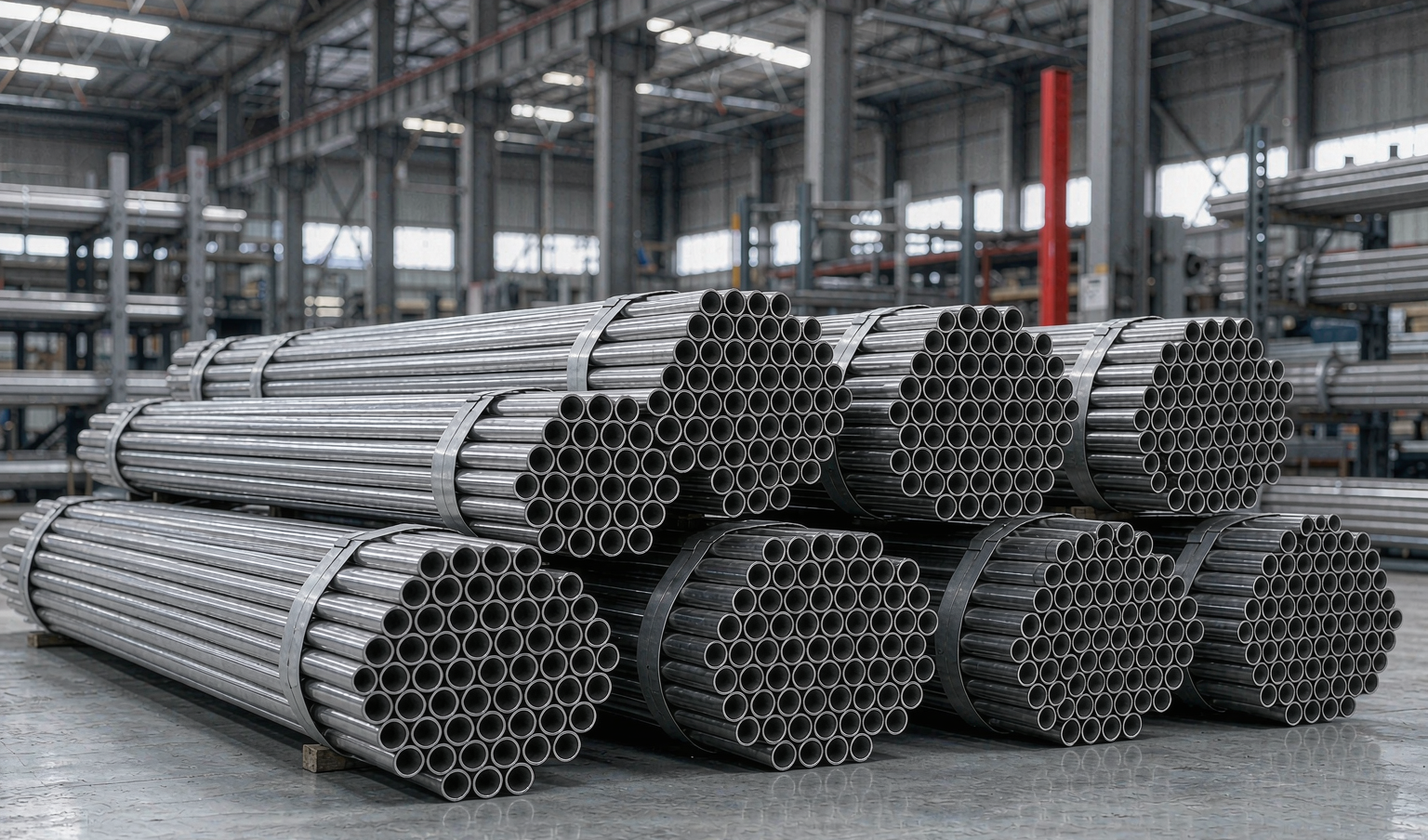
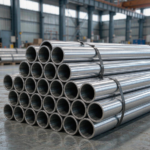
Precision cold drawn carbon steel tubes in a tube mill
What EN 10305 Covers: The Five Parts of the Standard
EN 10305 is not a single document — it is a family of five parts, and specifying the wrong part is the most common procurement error with precision tube.
Seamless cold drawn tubes for hydraulic and pneumatic power systems
+C, +LC, +SR, +A
Hose-less hydraulic circuit tubing, DIN 2353 fittings
EN 10305-6
Welded cold drawn tubes for hydraulic and pneumatic power systems
+C, +LC, +SR, +A
Lower-cost alternative to seamless for hydraulic lines
Parts 1 and 2 are the general-purpose precision tube specifications; parts 4 and 6 add requirements specific to hydraulic power systems — notably tighter cleanliness and pressure integrity expectations aligned with fitting systems such as DIN 2353 (24° flareless) and ISO 8434. When a customer says “EN 10305 tube for hydraulics”, the correct citation is almost always EN 10305-1 or -4 for seamless, and -2 or -6 for welded.
Steel Grades: E235, E255, E315 and E355
EN 10305 uses the “E + number” naming, where E denotes steel for engineering purposes and the number is the minimum yield strength in N/mm² in the stated delivery condition. Grade properties depend on both chemistry and the heat treatment condition:
Grade
Steel type
Min yield in +C (hard)
Min yield in +SR / +A
Typical Rm in +SR
E235
Low carbon (≈C22 equivalent)
470 MPa
235–290 MPa
290–480 MPa
E255
Low carbon
—
255 MPa
330–480 MPa
E315
Low carbon, higher Mn
610 MPa
315 MPa
390–560 MPa
E355
Medium carbon (≈C35/C45 base)
640 MPa
355 MPa
490–630 MPa
E235 (material number 1.0308, comparable to old St 37.4) is the workhorse for general hydraulic and pneumatic circuits — good formability, excellent flaring and bending behavior, weldable without preheat. E355 (1.0588, comparable to old St 52.4) is specified where circuit pressure is higher or components need more strength; it is the standard grade for hydraulic cylinder barrels and high-pressure lines. For aggressive cold forming, E220 and E255 variants with reduced carbon are available; for parts that will be galvanized, specify grade E235G or E355G, where the G marks steel suited to hot dip galvanizing.
Delivery Conditions: What +C, +LC, +SR and +A Mean
+C (cold drawn, hard): drawn without stress relief. Highest strength and hardness from work hardening; minimal residual stress control; not suited to bending or machining large allowances.
+LC (cold drawn, soft): drawn then annealed at low temperature; softer than +C, good for moderate forming.
+SR (stress relieved): cold drawn then stress relieved at 540–580 °C — the standard condition for hydraulic tube that will be bent, machined or honed. Best combination of dimensional stability and workability.
+A (annealed): full anneal after drawing; softest condition, best for severe bending, bulge forming and deep machining.
The same tube in +C versus +A condition differs by up to 300 MPa in yield strength, so the delivery condition is not an afterthought — it is half the specification. Always write it into the PO: “E355 EN 10305-1 +SR” rather than “E355 tube”.
Tolerances: The Heart of Precision Tube
EN 10305 outside diameter tolerances run to roughly one-third of ISO 1127 general tube tolerances. For cold drawn seamless tube (EN 10305-1):
Dimension
Standard tolerance
Selected tolerance (on request)
Outside diameter D ≤ 30 mm
± 0.10 mm
± 0.05 mm (H8/H9 class)
30 < D ≤ 50 mm
± 0.12 mm
± 0.08 mm
50 < D ≤ 219 mm
± 0.15 mm
± 0.10 mm
Wall thickness (D ≤ 100 mm)
± 10 %
± 7.5 % / ± 5 %
Inside diameter (honed tube)
—
H8 / H9 bore tolerance
For hydraulic cylinder barrels, buyers typically move from plain EN 10305-1 tube to honed tube (ID finished to H8/H9 with Ra ≤ 0.4 µm) or skived-and-roller-burnished tube, combining the EN 10305 base standard with an internal bore tolerance from ISO 286. Specify both when the ID matters — the base standard alone only controls ID by inference from OD and wall thickness.
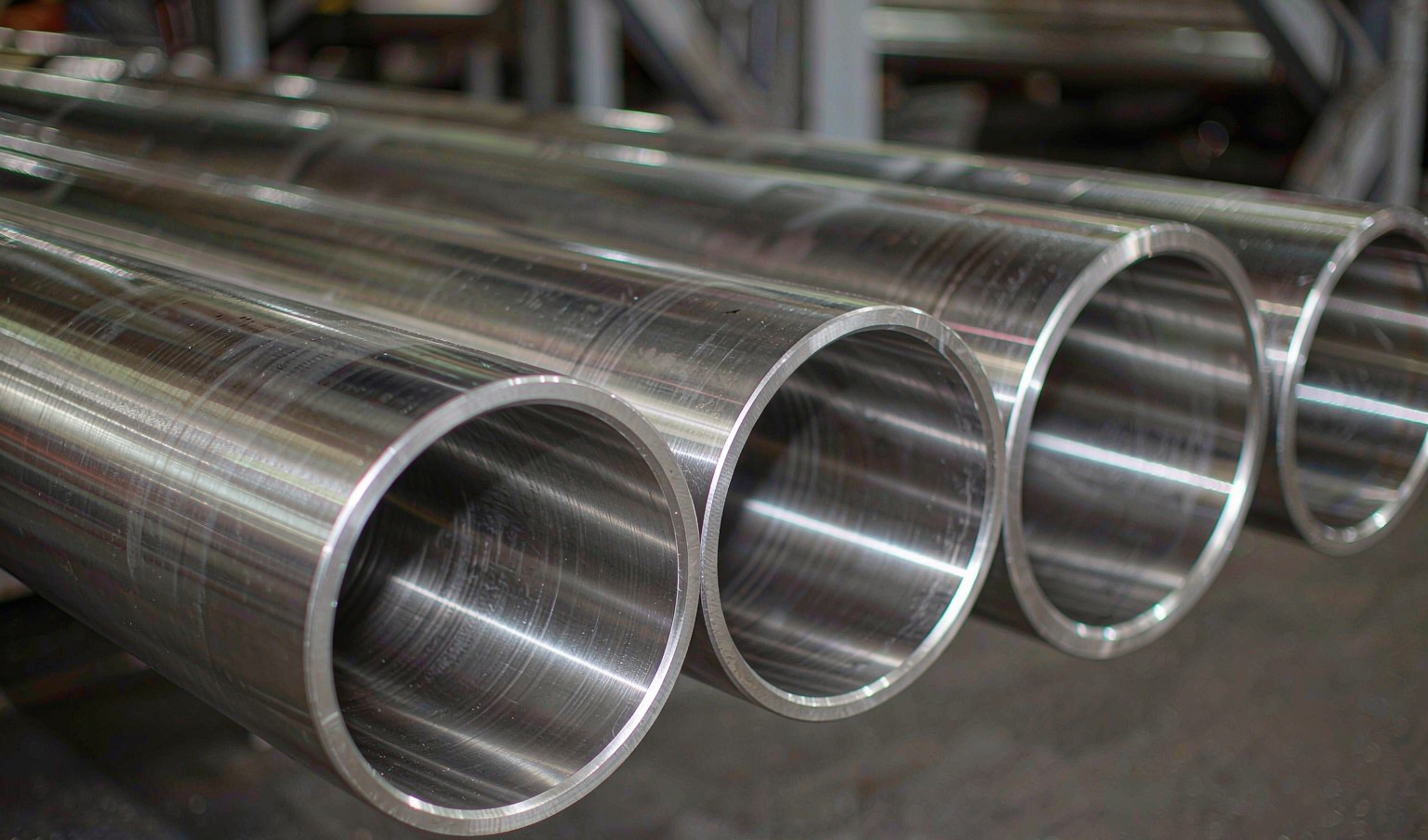
Honed precision tubes with smooth internal bore
Testing and Certification Requirements
EN 10305-1 and -2 specify: chemical analysis per heat; tensile test per delivery condition; flattening test on welded tubes (weld must show no crack after flattening to a specified height); drift expanding test on seamless sizes; leak-tightness by eddy current testing to EN 10246-6 (for hydraulic grades in parts 4/6 this is mandatory); and dimensional verification. Certificates are supplied to EN 10204 2.2 as standard, with 3.1 required when specified — and 3.1 is what most hydraulic OEMs insist on, because it ties actual test results to the delivered heat.
Two optional tests are worth specifying for critical circuits: hydraulic pressure test (typically 1.5× working pressure held 5–10 seconds, per the part 4 annex) and cleanliness of internal bore — for servo-valve circuits, order tubes internally pickled, phosphated and oiled with caps on both ends, since a single particle can cost more than the tube.
EN 10305 Versus Other Precision Tube Standards
Standard
Region
Scope
Nearest EN 10305 relation
DIN 2391
Germany (historic)
Seamless precision tube, St 30–St 52
Replaced by EN 10305-1 (grades remapped to E-series)
EN 10305-4
Europe
Seamless tube for hydraulic power systems
Subset of -1 with hydraulic specifics
ASTM A519
USA
Seamless mechanical tubing
Wider OD tolerance than EN 10305; grades 1026/4130 etc.
GB/T 3639
China
Cold drawn precision seamless tube
Direct Chinese equivalent; grades 20#/45# map to E235/E355
JIS G3445
Japan
Carbon steel tube for machine structural purposes
Comparable scope, looser tolerances
Applications and Typical Sizes
Hydraulic circuits: OD 6–42 mm, wall 1–8 mm, DIN 2353 straight-thread fittings; E235 or E355 in +SR.
Hydraulic cylinder barrels: OD 40–426 mm with honed or SRB bore; E355 dominant.
Pneumatic cylinders: E235, often ID honed with aluminum piston compatibility.
Fuel injection and high-pressure lines: small OD (4–10 mm) with wall ≥ 1 mm; +C or +LC condition.
Automotive shock absorbers and driveshafts: EN 10305-2/-3 welded products, volume priced.
Precision mechanical parts: bearing cages, spacers, rollers, linear motion components.
Cold drawn precision tube production line
Practical Buying Checklist for Export Orders
Cite the exact part number (-1, -2, -4 or -6) plus grade and delivery condition (e.g. E355 EN 10305-1 +SR).
State tolerance class if you need better than standard OD tolerance, and ID tolerance class (H8/H9) for honed products.
Require EN 10204 3.1 certificates with actual heat analysis and tensile results.
For hydraulic service, demand eddy current testing per EN 10246-6 and state the pressure test requirement.
Specify end finishing: deburred, faced and chamfered ends prevent fitting damage during assembly.
Ask for plastic end caps and internal oiling/pickling for tubes stored or shipped before fabrication.
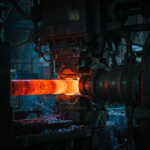
Understanding the production route explains both the price and the tolerances. Mother tube — hot finished seamless pipe or ERW tube, oversize by 10–25 % on OD — is pointed, lubricated with phosphate and soap, and drawn through a carbide die, either over a plug (fixed or floating, which also sizes the ID) or sink-drawn (ID controlled only by inference). Each draw pass reduces the section by 15–35 % and work-hardens the steel; after one or two passes the tube is annealed or stress relieved, then straightened in a cross-roll machine and cut to length. The result is a tube with dimensional accuracy of tenths of a millimetre, a bright smooth surface, and — in +C condition — yield strength 60–100 % above the mother tube. Every additional processing step adds cost, which is why a +A annealed tube with tight tolerances can cost twice an as-rolled general-purpose tube of the same size.
Surface Finish and Roughness
EN 10305 does not fix an Ra value in the main tables, but export buyers should specify surface roughness explicitly because it directly affects sealing and honing allowances. Typical delivered values: cold drawn tube Ra 0.8–3.2 µm depending on condition; honed bore Ra ≤ 0.4 µm; skived and roller-burnished bore Ra ≤ 0.5 µm with a defined bearing ratio for seal life. For galvanized hydraulic circuits, specify the G-variant grades and note that hot dip galvanizing raises the effective roughness and adds 50–100 µm of coating thickness that must be accounted for in fitting bores.
Storage and Corrosion Protection
Precision tube walls are thin and internal corrosion is invisible until assembly, so protection is part of the specification, not an extra. Standard export protection: internal oiling (soluble rust-preventative, 20–50 µm film), plastic end caps or shrink sleeves on both ends, VCI paper interleaving for tube in racks, and desiccant inside bundles for ocean transit. For tubes stored before fabrication, indoor stock below 60 % relative humidity keeps bright surfaces clean for months; outdoor storage requires full wrapping and sloped stacking to prevent water accumulation in the bore — standing water inside a hydraulic tube corrodes through the wall in a single wet season.
Key Takeaways for Buyers
Cite the part number, grade and delivery condition together: e.g. “E355 EN 10305-4 +SR”.
+SR is the default for tubes that get bent or machined; +A for severe forming; +C only for straight-cut parts.
OD tolerance of ±0.10 mm (small sizes) is what separates precision tube from general pipe — pay for tighter classes only when the design needs them.
For hydraulic circuits use parts -4/-6 (eddy current leak testing mandatory, fitting-aligned sizes).
Insist on EN 10204 3.1 with actual tensile results per heat.
Specify internal protection (oil, caps, VCI) — invisible internal corrosion is the most common rejection reason on arrival.
Pressure capacity follows from size and grade: a 25 × 2.5 mm E235 +SR tube holds roughly 500 bar burst (4:1 safety factor against working pressure), while 42 × 5 mm E355 in the same circuit doubles the margin. Most hydraulic OEMs design to a 4:1 burst ratio per ISO 4413, so the working pressure for small-bore E235 circuits lands at 100–250 bar and E355 at 250–400 bar. When the circuit runs above 400 bar — common in high-pressure power packs — move to heavier wall or forged manifolds rather than pushing precision tube beyond its design class. State the system working pressure and test pressure in your RFQ; the correct size/grade combination is a two-minute calculation for the mill’s engineering desk and prevents the most expensive class of field failures.
Frequently Asked Questions
What is the difference between EN 10305-1 and EN 10305-4?
EN 10305-1 is the general seamless precision tube standard, while EN 10305-4 adds requirements for hydraulic and pneumatic power systems — notably mandatory leak-tightness testing by eddy current and sizes aligned with hydraulic fitting systems. If your tube connects to DIN 2353 or ISO 8434 fittings, specify -4.
Is E235 the same as St 37.4?
Functionally yes — E235 (1.0308) is the successor designation to St 37.4 from the retired DIN 2391/1629 system. Likewise E355 (1.0588) replaced St 52.4. Drawings citing old DIN grades can be read directly against the E-series equivalents.
Can EN 10305 tubes be welded?
Yes. E235 in +SR or +A condition welds without preheat using standard MAG/TIG consumables. E355 over 3 mm wall or in +C condition benefits from 100–150 °C preheat and slow cooling. Note that welding in the fitting zone can distort bore tolerance — weld before final ID finishing where possible.
Which condition should I order for tubes that will be bent?
+A for severe bending (small bend radius, thin wall) and +SR for normal bending. Cold drawn +C tube tends to spring-back unpredictably and can crack at the bend; if you receive +C material, anneal locally before forming.
Source EN 10305 Precision Tube From Huaxia-Steel
Huaxia-Steel supplies EN 10305-1/-4 seamless precision tube in E235 and E355 from OD 6 to 426 mm, standard and honed bores, in +C, +LC, +SR and +A conditions, with EN 10204 3.1 certification and full traceability. Send your size list and application for a factory-direct quotation within 24 hours.
If you require further information about our metal sheet products or architectural projects, please don’t hesitate to leave your contact details and message here.
Our team of experts will respond within 24 hours to continue the discussion and provide you with any additional information you requires.