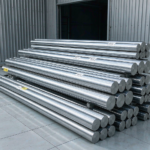
Japanese-standard carbon steel enjoys steady global demand — from Southeast Asian fabricators to Middle East machinery builders — and at the center of that system sits JIS G4051, the Japanese Industrial Standard for carbon steel steels for machine structural use. If your sourcing covers S45C, S50C, S40C or S55C bright bars, shafts, forged components or machined parts, this is the standard that defines their chemistry, delivery states and test rules. This guide explains what JIS G4051 covers, how its grades map to AISI/SAE, DIN and GB equivalents, what the delivery conditions +A, +N and +QT mean in practice, and how to write a purchase order that gets you genuine JIS-compliant material instead of a loosely “equivalent” substitute.
1. What JIS G4051 Covers — and What It Does Not
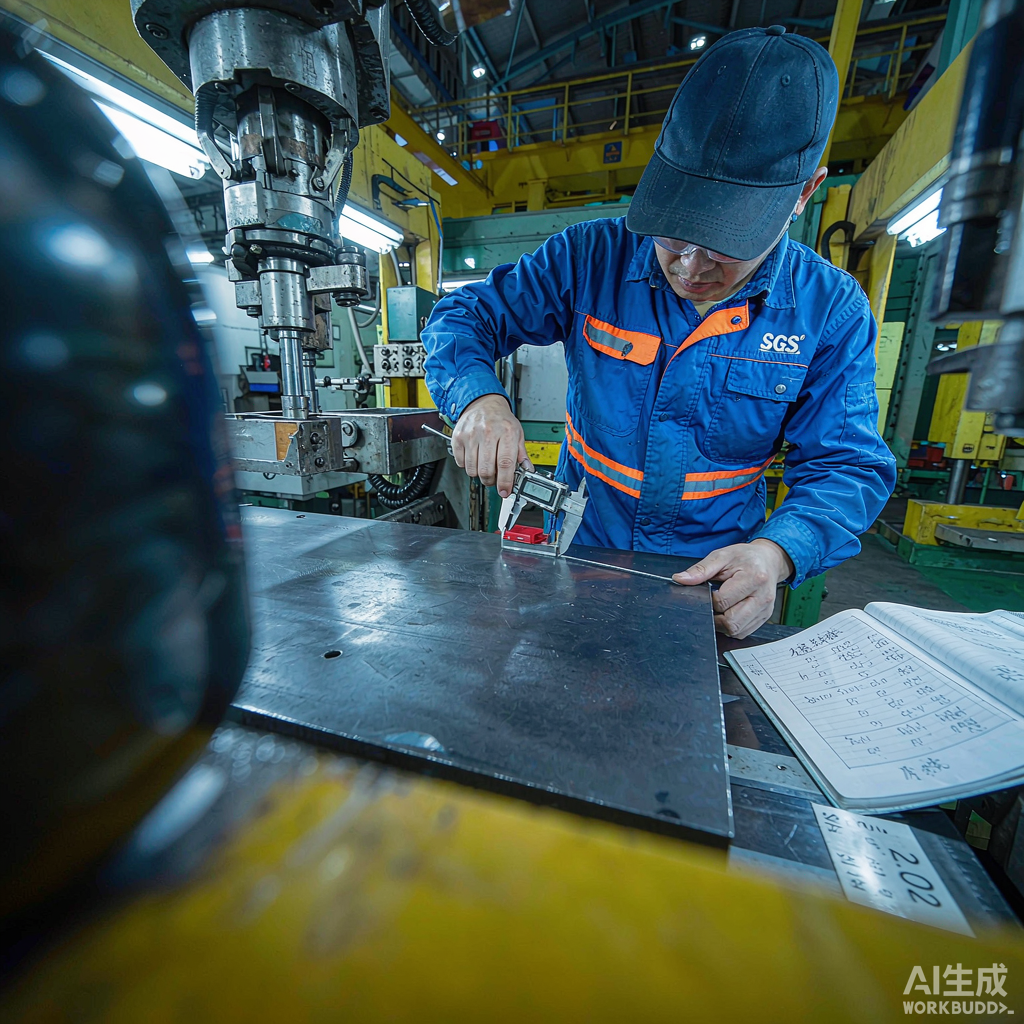
JIS G4051 (current edition 2019, titled “Carbon steels for machine structural use”) applies to carbon steel bars, wires and forgings intended for machining into machine parts — shafts, gears, bolts, pins, spindles and similar components. It defines chemistry for grades numbered by nominal carbon content, and it references separate JIS standards for test methods (JIS G0307 for steel forgings inspection, JIS Z 2245 for hardness) and dimensions (JIS G3191 for bar dimensions and tolerances).
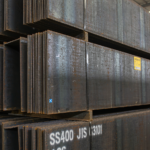
It does not cover: free-cutting steels (JIS G4804, SUM grades), spring steels (JIS G4801), alloy steels like SCM440 (JIS G4053), or structural plates (JIS G3101 SS400 family). Buyers sometimes ask mills for “G4051 plates” — technically the standard is written for bars, wires and forgings; plate orders should reference the actual product form standard or be explicitly agreed as a special case with defined test scope.
2. The Grade Family and Chemical Composition
JIS G4051 grades are named S + nominal carbon content ×100. The full regular grade list runs S09CK, S15CK, S17CK, S20CK (case-hardening carburizing grades), then the machine structural range S20C through S58C. The most traded export grades and their chemistry (ladle analysis, %):
| Element | S20C | S35C | S45C | S50C | S55C |
|---|---|---|---|---|---|
| Carbon (C) | 0.18–0.23 | 0.32–0.38 | 0.42–0.48 | 0.47–0.53 | 0.52–0.58 |
| Silicon (Si) | 0.15–0.35 | 0.15–0.35 | 0.15–0.35 | 0.15–0.35 | 0.15–0.35 |
| Manganese (Mn) | 0.30–0.60 | 0.30–0.60 | 0.30–0.60 | 0.30–0.60 | 0.30–0.60 |
| P max / S max | 0.030 / 0.035 | 0.030 / 0.035 | 0.030 / 0.035 | 0.030 / 0.035 | 0.030 / 0.035 |
Two details distinguish G4051 chemistry from its Western cousins. The manganese ceiling of 0.30-0.60% is lower than the 0.60-0.90% typical of AISI 1045 or C45 — a deliberate choice giving Japanese grades slightly lower hardenability but cleaner, more predictable response. And the P/S ceilings (0.030/0.035) are tighter than older ASTM bar standards, reflecting the standard’s machine-part orientation. When mills offer “S45C” with Mn up to 0.90%, they are quoting a compromise chemistry — acceptable for many uses, but it is no longer strictly G4051 and your documentation should say so.
3. Cross-Reference to AISI, DIN and GB Equivalents
| JIS G4051 | AISI/SAE | DIN/EN (W-Nr) | GB | Notes |
|---|---|---|---|---|
| S20C | 1020 | C22 (1.0402) | 20 | Carburizing, weldable-ish |
| S35C | 1035 | C35 (1.0501) | 35 | Light-duty shafts |
| S40C | 1040 | C40 (1.0511) | 40 | General machine parts |
| S45C | 1045 | C45 (1.0503) | 45 | The workhorse grade |
| S50C | 1050 | C50/C53 (1.0540) | 50 | Wear plates, blades |
| S55C | 1055 | C55 (1.0535) | 55 | Higher-strength shafts |
The mapping is close but not identity. C45 and 1045 carry higher Mn (to 0.90), so “C45 = S45C” is true by carbon but approximate by hardenability. For non-critical parts the difference is irrelevant; for hardened shafts with defined core requirements, specify the JIS grade itself or accept a documented chemistry deviation. Also note EN 10083-2 “S45C” designation exists in Europe, which eases paperwork when documents must reference EN standards.
4. Delivery Conditions: +A, +N and +QT
JIS G4051 defines heat treatment states with the same symbols used in EN 10083: annealed (+A), normalized (+N), and quenched and tempered (+QT). Typical hardness by state for the popular grades:
| Grade | +A max HB | +N typical HB | +QT typical |
|---|---|---|---|
| S20C | ≤ 156 | 120-160 | Rarely ordered |
| S35C | ≤ 167 | 140-180 | 200-250 HB |
| S45C | ≤ 187 | 160-200 | 220-285 HB (28-34 HRC common export spec) |
| S50C | ≤ 192 | 170-210 | 240-300 HB |
| S55C | ≤ 217 | 180-220 | 250-320 HB |
Quenching medium matters: JIS practice for S45C and above uses water quenching for smaller sections, which is one reason G4051 material performs predictably at the diameters Japanese machine builders actually use (typically ≤ 80 mm). As with all plain carbon steels, hardenability is limited — beyond roughly 40-50 mm diameter, +QT claims should be treated skeptically unless the mill documents its quench practice and hardness uniformity. For larger sections, the engineering answer is usually an alloy grade from JIS G4053 (SCM440) instead of pushing carbon steel beyond its physics.
5. Mechanical Property Requirements and Testing
G4051 specifies mechanical properties for the quenched-and-tempered state (with test piece diameter 25 mm) and hardness ranges for annealed bars. For S45C +QT at 25 mm, typical specified values are tensile strength around 700 MPa minimum, yield around 540 MPa, elongation around 17%, with Charpy and hardness by agreement. The standard’s test rules: chemistry per heat by JIS G0321 product analysis tolerances; tension tests per JIS Z 2241; hardness per JIS Z 2245; and one test set per heat and per 7 tons or fraction thereof for bars — tighter frequency than many Western bar standards, which is a genuine quality advantage of G4051-ordered material.
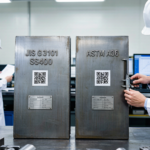
Certificates follow JIS G0307 (for forgings) or the mill’s ISO-format MTC referencing heat number, chemistry, heat treatment lot and results. When auditing Chinese mills supplying “S45C”, check whether their MTC format actually states JIS G4051 compliance and heat-treat condition symbols, or whether it silently references GB 45 chemistry instead — the two differ in Mn and P/S limits, as noted above.
6. Dimensional Tolerances and Surface for Export Bars
JIS G3191 governs hot rolled bar dimensions: for round bars 16-25 mm diameter, tolerance is ±0.4 mm with ovality within 70% of tolerance; larger diameters open proportionally. Most export trade, however, supplies bright/cold-drawn or peeled-and-polished bar to tighter limits — cold drawn S45C commonly ±0.05 mm on 20-50 mm with h9-h11 classes, and peeled +QT bar ±0.2 mm with 3.2 µm Ra or better. Specify the class explicitly: “cold drawn, h9, JIS G3191 based” or “peeled and polished, ISO h10” prevents the classic mismatch where a buyer expects ground finish and receives hot rolled scale.
- Hot rolled (+N): cheapest, mill scale surface, standard for further machining and forging.
- Cold drawn: size accuracy, brighter surface, higher yield from strain hardening — popular for CNC feed stock.
- Peeled/turned + polished: defect-free surface for shafts that will be induction hardened or plated.
- Ground: h7-h8 for precision spindles and hydraulic components.
7. Where Each G4051 Grade Gets Used
- S20C / S15CK: carburized pins, cam followers, light gears — core stays soft, case 55-60 HRC.
- S35C: small shafts, levers, studs where modest strength suffices.
- S45C: the volume grade — shafts, axles, sprocket hubs, machine frames, hydraulic cylinder components, mold bases; also the base steel for CK45 chrome plated rods.
- S50C: wear strips, shear blades for light duty, guide rails, plastic mold cavities where polishability matters.
- S55C: heavier shafts, forging die holders, crane wheels — chosen when S45C Q&T is marginally under strength.
8. Ordering Checklist for JIS G4051 Material
- State the full designation: “JIS G4051 S45C”, not just “S45C steel” — mills default to their own nearest chemistry otherwise.
- Delivery condition symbol: +A, +N or +QT, with hardness range or mechanical properties target.
- Size and tolerance class: diameter, length, and standard (JIS G3191 hot rolled / cold drawn h9 / ground h7).
- Surface: as rolled, peeled, polished or ground, with Ra if it matters.
- Tests: chemistry + tension + hardness per heat, MTC per JIS G0307 or EN 10204 3.1 by agreement.
- Special requirements: UT per JIS G0559 or SEP 1921 for forged blocks, grain size, cleanliness, straightness (0.5 mm/m typical for precision bars).
9. Heat Treatment Practice in Export Supply
Understanding what the mill actually does helps buyers evaluate offers. Normalizing for S45C runs at 850-880 °C followed by air cooling, producing a uniform fine-grained structure at 160-200 HB — the baseline condition for machined parts that will later be hardened by the customer. Full annealing at 820-850 °C with furnace cooling gives the lowest hardness (≤ 187 HB) and the best machinability, chosen when heavy material removal is planned. Quench and temper for S45C means austenitizing 840-870 °C, water or polymer quench, then tempering — 550-650 °C for 220-260 HB, or 400-500 °C where 28-34 HRC is required; tempering below 400 °C is rare in bar supply because toughness drops sharply.
The practical question for buyers is whether the mill heat treats in-house or subcontracts. Mills with in-house Q&T lines can certify the actual quench medium, load configuration and tempering record — information subcontracted heat treaters rarely document in full. For parts where core hardness matters (shafts above 30 mm, safety components), require the heat treatment record on the certificate: austenitizing temperature, quench medium, tempering temperature and time, and hardness measured at surface and core. It costs nothing to ask and it is the difference between a certificate and evidence.
10. Cleanliness, Grain Size and Special Requirements
JIS G4051 does not impose inclusion ratings or grain size requirements by default, but machine-part users frequently need them. Export orders commonly add: grain size per JIS G0551 / ASTM E112 (fine grain 5-8 achieved by aluminium treatment), inclusion control per JIS G0555 or ASTM E45 (with limits on A/B/C/D type ratings for polished or high-fatigue parts), and decarburization limits per JIS G0558 — the total decarburized depth limits matter enormously for parts that will be induction hardened, because decarburized surface cannot reach full hardness.
Buyers of bright bar should also specify surface defect allowance: cold drawn and peeled bar is essentially defect-free, but if hot rolled bar is being used for forging or machining with limited stock removal, request magnetic particle or eddy current screening for seams. Specifying these items costs a few percent on price and eliminates the most common rejection cause in delivered bar: surface seams discovered after rough machining has already consumed half the order’s value in labour.
11. JIS G4051 vs JIS G4053: When to Leave Carbon Steel
JIS G4053 covers alloy steels for machine structural use — the SCM (chromium-molybdenum), SCr (chromium), SNCM (nickel-chromium-molybdenum) and SNC families. The decision to move from G4051 to G4053 rests on three triggers: section size above roughly 40-50 mm where carbon steel cannot through-harden; fatigue or shock loading where core strength governs (SCM440 Q&T reaches 1000+ MPa versus S45C’s ~700 MPa ceiling); and requirements for high core toughness at large section where nickel-bearing SNCM grades excel.
Cost-wise, SCM440 typically runs 30-50% above S45C per ton — similar to the 4140/1045 relationship in Western standards. The engineering advice is unchanged: use carbon steel where the section and duty allow, move to alloy only when hardenability or fatigue demands it, and never substitute downward without the design authority’s written approval. Procurement savings achieved by quietly downgrading a specified alloy grade are the single most expensive saving available in steel buying.
Practical addendum for sourcing teams: when a drawing names a G4053 grade but the part is small and lightly loaded, an engineering review is genuinely worth requesting. We regularly see S45C-sized parts specified in SCM440 purely because a previous engineer copied an old drawing, and the annual saving from correcting such specifications often exceeds the entire negotiation margin on the rest of the bill of materials.
12. Common Specification Mistakes with G4051 Orders
- Ordering “S45C” with no condition. Bars arrive hot rolled and normalized by default; a buyer expecting 28-34 HRC receives material that cannot meet it. Always write +A, +N or +QT with the hardness range.
- Assuming S45C equals C45 in hardenability. The manganese difference (0.60% ceiling vs 0.90%) genuinely reduces through-hardening depth. For hardened shafts above 30 mm, verify core hardness expectations with the mill.
- Specifying +QT on large diameters. Above roughly 50 mm, plain carbon steel cannot through-harden regardless of grade name. Request a documented quench practice or move to an alloy grade.
- No surface defect allowance. Hot rolled bar seams discovered after machining are expensive; specify peeled or add MPI screening where surface matters.
- Impact requirements omitted. G4051 has no default Charpy requirement; cold-climate parts need the requirement written into the PO with test temperature and minimum energy.
- Confusing G4051 with G3101. SS400 is structural plate/bar; S45C is machine structural bar. Asking for “S45C plate” invites a substituted product with no controlling standard.
13. Storage, Handling and Machining Notes
Carbon steel bars corrode quickly in humid coastal yards; store under cover with dunnage off the floor, keep packing intact until use, and apply rust-preventive oil for long-term storage — bright bar in particular will flash-rust within days of unwrapping in a marine atmosphere. Machining: S45C in the normalized condition machines at roughly 55-65% of B1112 reference with carbide tooling at 150-220 m/min turning speeds; annealed material runs faster with longer tool life, and hardened Q&T bar requires 30-40% speed reduction and CBN or ceramic inserts above 40 HRC. For welding S45C parts, preheat 150-250 °C, use low-hydrogen consumables, and stress relieve after welding — the carbon level puts it in the cautious category, and repair welds on hardened components should be followed by re-tempering wherever geometry permits.
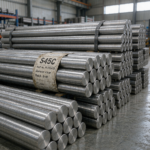
Finally, maintain identification through processing: when bundles are broken open, transfer heat numbers onto racks or tags. Traceability lost inside your own workshop is the most common reason a legitimate claim cannot be substantiated, and it is entirely preventable with a marker pen and a habit. On the logistics side, G4051 bars ship in strapped bundles of 1-3 tons with end protection, wrapped for bright finishes, loaded in containers with dunnage and desiccant; a 20-foot container carries roughly 18-22 tons depending on diameter and length. Stencil or tag every bundle with grade, condition, heat number and size, and ask the mill to photograph bundle markings before loading — the photograph is what identifies material if a claim arises weeks later at destination.
FAQ: JIS G4051 Carbon Steels
Is S45C the same as C45 and 1045?
Functionally similar, metallurgically close but not identical. All three sit at 0.42-0.50% carbon. Differences: S45C limits Mn to 0.30-0.60%, while C45 and 1045 allow up to 0.90%; P/S ceilings differ slightly. For most machined parts the grades interchange; for hardened shafts with defined core hardness, treat them as distinct and specify which one the drawing means.
Can Chinese mills supply genuine JIS G4051 material?
Yes — major Chinese bar and forging mills roll G4051 chemistries routinely for Japanese-market customers, and many can issue MTCs stating JIS compliance. The verification steps are the same as any import: confirm the mill name and heat number, ask for an MTC sample before ordering, and for critical orders add third-party testing of chemistry and hardness. Price premium over generic GB 45 material is typically 3-8%.
Which G4051 grade should replace 1045 when more strength is needed?
Move up the carbon ladder first: S50C or S55C in +QT gives roughly 10-15% higher strength than S45C at similar cost. Beyond that, the correct step is not more carbon — higher-carbon grades lose weldability and toughness — but the alloy grade SCM440 (JIS G4053), which adds the hardenability that carbon alone cannot provide.
Does JIS G4051 include impact test requirements?
No — impact (Charpy) testing is by agreement between purchaser and manufacturer. Machine structural use rarely demands it, but cold-climate applications and safety parts sometimes do; write the requirement into the PO with test temperature and minimum energy, and confirm the mill can certify it before awarding the order.
Need S45C / S50C / S55C round bar, bright bar or forged blocks to JIS G4051? Send your grade, size, quantity and delivery condition — we quote within 24 hours with MTC samples, heat treatment certificates and export packing to your port.