Letter of Credit Soft Clauses in Steel Trade: Risk Guide
A letter of credit soft clause is any L/C condition that the beneficiary cannot control, does not expect, or cannot satisfy — and in steel export it is the single most common cause of payment disputes between first-time trading partners. The instrument looks safe on paper (bank commitment to pay), but a soft clause quietly converts the bank’s unconditional promise into a conditional one: payment now depends on a document, signature, certificate or event controlled by the buyer. This guide lists the soft clauses we see most often in steel trade letters of credit, explains exactly why each one is dangerous, and gives a practical negotiation playbook for getting them removed before you ship.
L/C terms decide who controls payment — read every clause before shipping
What Makes a Clause “Soft”
Under UCP 600 the documentary principle is simple: banks deal in documents, not goods. If the documents comply, the bank must pay. A soft clause breaks that protection by tying payment (or part of it) to something outside the beneficiary’s control — an approval, a signature, an event, or a document issued by a third party who may simply refuse. The classic formulation: “Payment will be effected upon receipt of buyer’s written acceptance of the goods” or “Inspection certificate to be issued and signed by the applicant’s representative on site.” Both put your money in the buyer’s hands while the steel is already on the water. The risk is not only deliberate withholding — many soft clauses fail simply because the third party is slow, unresponsive, or the buyer’s representative cannot travel on time.
Soft clauses are most common from buyers in regions where L/C opening fees are structured per amendment, from intermediary traders who want to protect themselves against their own end-buyer, and from first-time importers copying bank templates without understanding the effect. None of that matters to you — the test is mechanical: can I produce this document, entirely on my own, from information I control? If not, it is soft.
The Ten Most Common Soft Clauses in Steel Trade L/Cs
1. Buyer’s representative inspection certificate. “Inspection certificate signed by applicant’s representative before shipment.” You cannot ship until the buyer sends someone; if he never comes, the L/C expires unpaid.
2. Payment subject to buyer’s acceptance. “Payment upon beneficiary’s documents acceptable to the applicant.” Turns the paying bank’s obligation into the buyer’s option — the entire point of the L/C is cancelled.
3. Shipment subject to L/C or vessel approval. “Shipment only after applicant advises vessel name / confirms shipping schedule.” You lose control of the shipment window and the latest shipment date at the same time.
4. Consulate/embassy legalization in a third country. Legalization is only possible where the consulate has jurisdiction; requiring it at a location you cannot reach is an automatic discrepancy.
5. Certificate issued by an unspecified third party. “Quality certificate issued by an independent internationally recognized agency acceptable to the applicant.” “Acceptable to the applicant” makes the buyer the gatekeeper of your compliance.
6. Freight collect confirmation. “Freight collect bill of lading acceptable to the applicant” — same trap as clause 5 in shipping form.
7. Double signature on documents. “Commercial invoice to be signed by both beneficiary and applicant.” The applicant can simply refuse to sign after you ship.
8. Beneficiary certificates referencing facts you cannot prove. “Beneficiary’s certificate confirming goods conform to samples approved by applicant.” You cannot certify what the buyer has not done.
9. Telex release conditional on applicant. “Original bill of lading to be released only upon applicant’s instruction” combined with payment terms elsewhere — enables leverage against payment.
10. Documents received by bank before deadline at applicant’s discretion. Late-arriving soft requirements that only become visible when the negotiating bank examines documents — often buried in “additional conditions.”
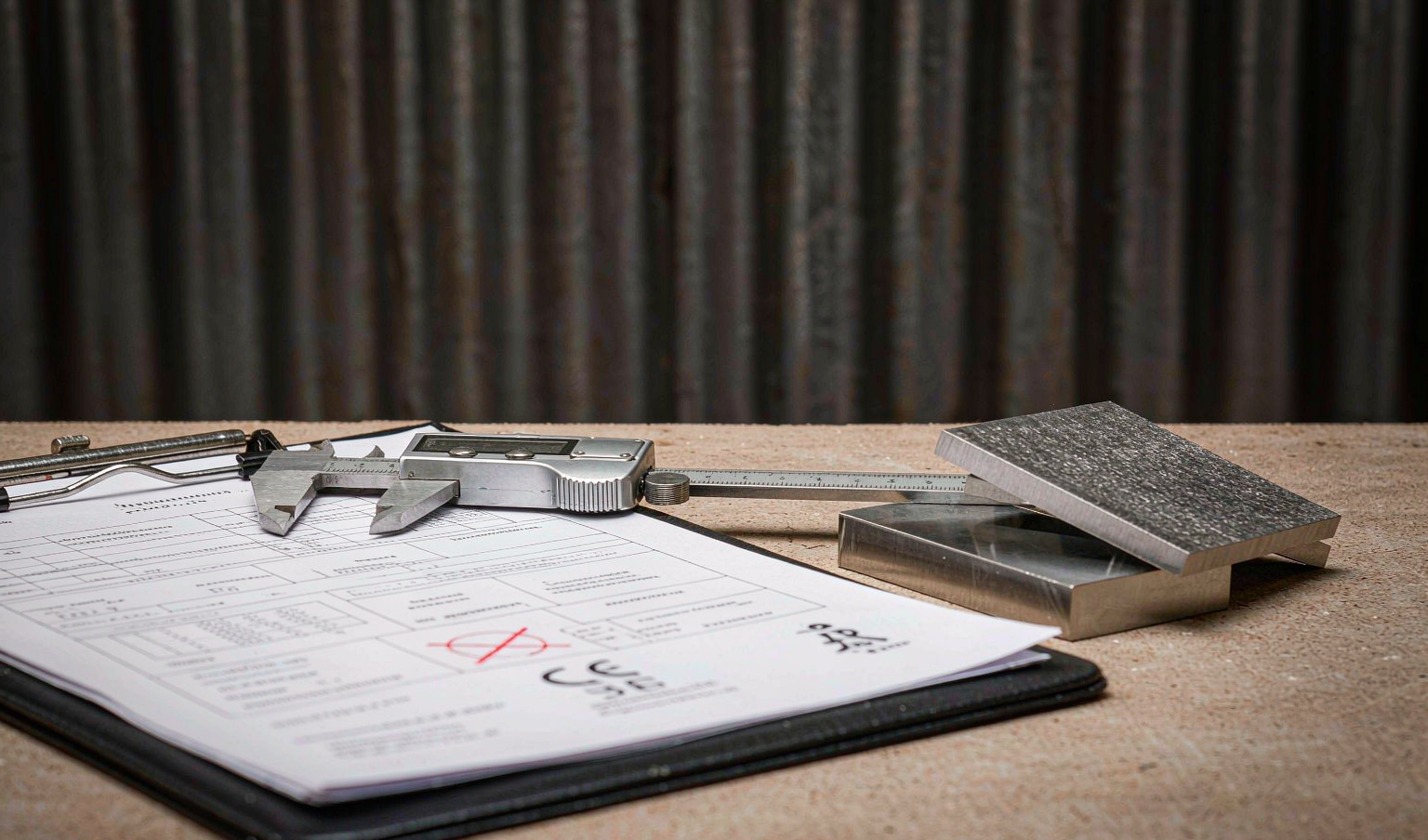
Every certificate named in the L/C must be one you can issue independently
Why Steel Shipments Are Especially Exposed
Steel cargoes concentrate soft-clause risk for structural reasons. Values are high (a single container of bar or a breakbulk plate parcel can be USD 50,000–500,000), so buyers have real incentive to hold leverage. Production lead times are long — often 30–60 days between PO and shipment — during which market prices can move against the buyer, and a soft clause becomes a convenient renegotiation tool. And the documentation set is heavy: MTC per heat, third-party inspection certificates, packing lists, and loading supervision reports all offer multiple places to hide conditions. A batch shipped breakbulk with pre-shipment inspection by a named agency, a chartered vessel subject to buyer approval, and payment terms split 70/30 against delivery documents can carry five or six soft conditions in a single instrument.
The Negotiation Playbook
Handle soft clauses at three stages, in order of decreasing leverage:
Before the contract: write the payment clause to say “irrevocable L/C at sight, subject to UCP 600, without soft clauses; terms of the L/C to conform strictly to contract annex.” A contract-side “no soft clauses” statement gives you the high ground when the L/C arrives wrong.
On receiving the draft L/C: insist on reviewing a draft before issuance. Screen every clause with the mechanical test above. Return amendments in one consolidated list — buyers handle one negotiation better than five rounds.
If a soft clause survives: quantify your exposure. Some are negotiable in practice (e.g. the buyer’s representative clause can be amended to “certificate issued by SGS/BV at beneficiary’s option, at applicant’s cost”). Others are deal-breakers — payment “acceptable to applicant” terms should end the negotiation unless the buyer’s credit is otherwise secured (advance payment, credit insurance, or bank guarantee).
One practical middle path: for borderline buyers, split the risk — 30 % T/T advance, 70 % at sight L/C cleaned of soft clauses. The advance funds production; the cleaned L/C removes the leverage. Buyers who refuse both a soft-clause-free L/C and any advance are telling you something about their payment intention.
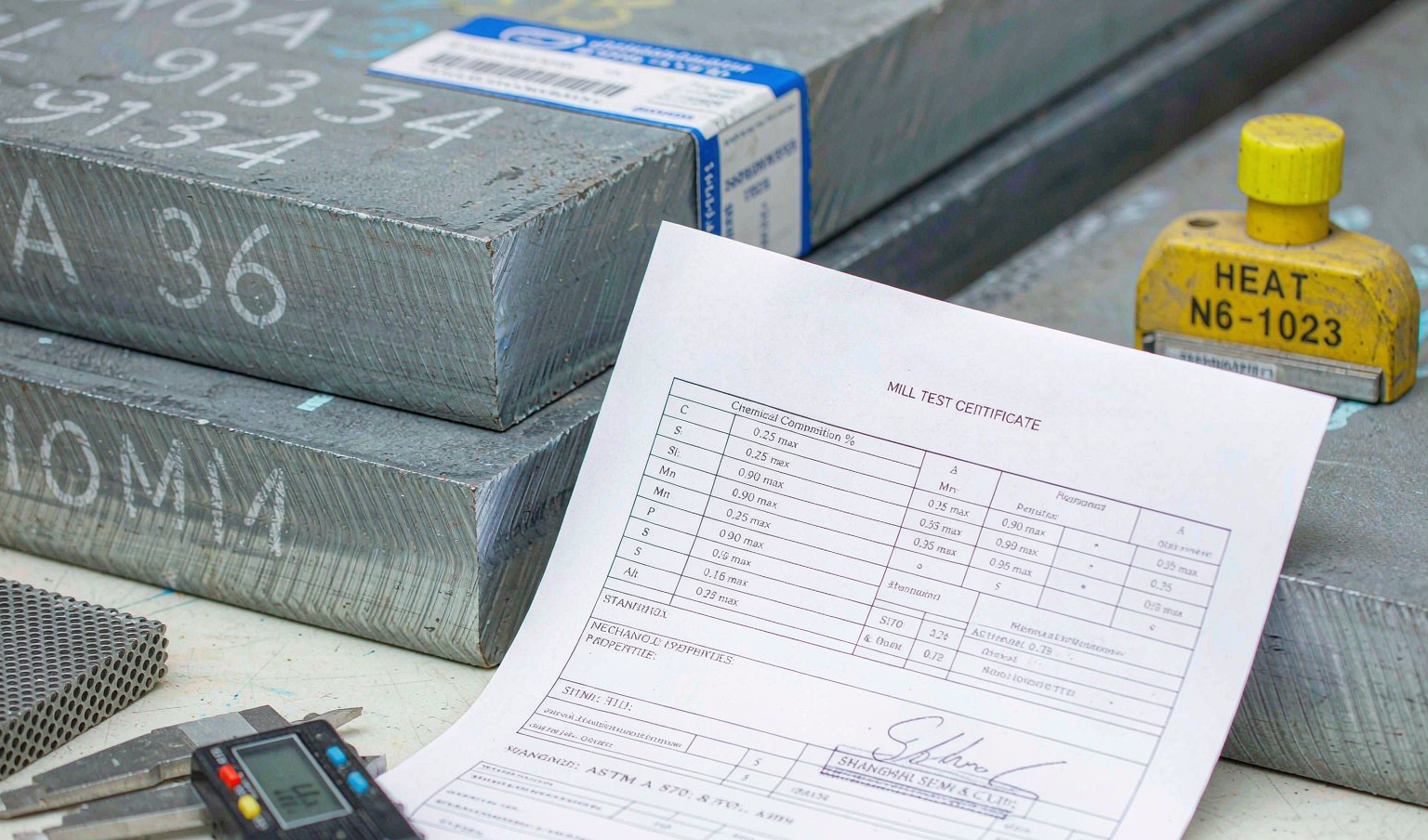
Documents must be producible on your own — before the steel leaves the mill
Document Compliance: Building the File Right
Even a clean L/C is lost to sloppy document work. Best practice for steel shipments: build the document set against the L/C text line by line — every document name, issuer, wording and data element must match exactly (UCP 600 Article 14); assemble drafts of every certificate before shipment, not after; check dates rigorously (latest shipment date, presentation period — 21 days after B/L date unless stated otherwise, and L/C expiry); and have the negotiating bank pre-check documents when the volume justifies it. The most frequent steel-trade discrepancies are mundane: MTC heat numbers not matching the packing list, vessel names differing by one character between B/L and invoice, and certificates issued to a name variant of the beneficiary. None of these are soft clauses — but they cost the same money when the bank refuses.
Two Case Studies: How Soft Clauses Actually Play Out
Case 1: the representative who never flew. A plate exporter accepted an L/C requiring a pre-shipment inspection certificate “signed by the applicant’s representative.” The representative visited the mill, approved the goods, then departed without signing — his company wanted a price reduction now that production was complete. With the steel crated and the latest shipment date approaching, the exporter faced a choice: discount 8 % via amendment, or lose the sale and pay demurrage. The clause, which had looked like a routine inspection formality, became a unilateral price renegotiation tool precisely because the goods were finished and the buyer controlled the signature. Cost of prevention at the draft stage: one amendment request.
Case 2: the vessel approval chain. A bar exporter’s L/C required shipment “on a vessel nominated and approved in writing by the applicant.” Approval arrived late — eleven days before the latest shipment date — for a vessel with transshipment that contradicted the L/C’s own transshipment prohibition, discovered only when documents were presented. The negotiating bank refused; the discrepancy went to the buyer, who used it to extend payment terms by 45 days interest-free. Neither case involved fraud. Both involved clauses that transferred scheduling risk and payment leverage to the applicant — the definition of soft.
Buyer and Bank Red Flags Worth Screening
L/C from a bank you cannot verify. Confirm the issuing bank’s standing through your own negotiating bank; in several steel-trade frauds the “issuing bank” was fictitious or the L/C was a forgery with soft clauses stacked deep in additional conditions.
First-order buyer unwilling to share end-user details while insisting on controlling inspection — a combination that signals an intermediary hedging a deal he has not actually closed.
Aggressive discount on L/C amendment fees — a buyer who resists paying to clean the L/C is telling you he expects to use the clauses.
Contract and L/C terms that do not match in quantity tolerances, part shipments or transshipment — deliberate mismatches create built-in discrepancies for later leverage.
Pressure to ship before the draft L/C is reviewed. “Start production now, we will amend later” inverts your leverage: once production is complete, clause cleanup negotiations begin from zero.
Alternative Payment Structures When the L/C Cannot Be Cleaned
When a buyer cannot or will not remove a dangerous clause, other structures preserve most of the protection: a standby letter of credit from a first-class bank covering 100 % of invoice value (the buyer pays T/T, the standby covers default — clauses in standbys matter less because they are only examined on default); export credit insurance over the receivable (Sinosure and equivalents price country-and-buyer risk and accept L/C-with-conditions risks at a premium); or documentary collection (D/P at sight) combined with a meaningful advance — weaker than an L/C, but with no clause games because the banks play no approval role. The worst option is accepting a soft-clause L/C “because it is an L/C.” A conditional bank promise is worth less than an unconditional buyer promise of the same size.
L/C Review Checklist: Copy This Into Your Order Procedure
Run every draft L/C through this ten-point screen before accepting it. Two minutes per point is cheaper than any discrepancy.
Is the credit irrevocable, at sight, and subject to UCP 600?
Does the L/C amount, quantity tolerance and unit price match the contract exactly?
Is every document named in the credit one that the beneficiary can issue or obtain independently?
Are there any words — “acceptable to,” “approved by,” “confirmed by,” “subject to” — that give the applicant control over a document or event?
Does the inspection clause name a third-party agency and a selection mechanism, or an “applicant’s representative”?
Is shipment conditional on any nomination, approval or advice from the applicant?
Are latest shipment date, presentation period and expiry consistent with the production and transit schedule — with margin?
Are transshipment and partial shipment allowances consistent between the L/C text and your logistics plan?
Are all fees on the applicant’s side as contracted, and does the credit forbid amendments without the beneficiary’s consent (it should, being irrevocable)?
Is the issuing bank verified, and has your negotiating bank confirmed the credit or agreed to negotiate without recourse?
A credit that passes all ten points is genuinely bank-guaranteed. One failed point is one negotiation at the draft stage — handle it there, in writing, as a condition of production start.
When a Discrepancy Happens Anyway: The Response Protocol
Even clean L/Cs generate discrepancies through accident, and how you respond in the first 48 hours decides whether it costs money. The protocol that works: get the negotiating bank’s discrepancy notice in writing and check it against UCP 600 Article 14 — banks must state the specific discrepancy, and vague notices (“documents not acceptable”) are themselves challengeable. Determine whether the discrepancy is curable within the presentation period (a correctable document — fix and re-present) or terminal (the shipment date has passed, or the buyer has the leverage). Curable discrepancies are free: re-present corrected documents inside the period. Terminal ones become a commercial negotiation — and this is exactly why pre-agreed fallback terms in the contract (interest on late payment, price adjustment mechanics, who bears demurrage) matter: they convert a panic phone call into executing a clause. Throughout, keep the goods’ control clear: original bills of lading stay with the seller or the bank until payment is secured. Handing over originals “to help customs clearance” before payment is the classic last-mile error that turns every payment dispute into a total loss.
Above all, document the L/C hygiene history. Keep the draft L/C, your amendment requests and the buyer’s responses in the order file — when a dispute escalates to credit insurance, bank intervention or arbitration, the paper trail showing you flagged the clause before production is the difference between an insured loss and an uninsured one. Suppliers who treat the draft L/C review as a formality sign away precisely the protection the instrument exists to provide; suppliers who screen every credit mechanically, in writing, rarely lose a dollar to soft clauses at all.
Frequently Asked Questions
Is a soft clause always a scam? No — most are inserted carelessly, copied from other trades or templates, or added by intermediaries protecting themselves against their end-buyer. The effect is the same whether careless or hostile: payment becomes conditional on something you cannot control. Treat the clause, not the motive.
What is the single most dangerous soft clause? Any wording that makes payment subject to the applicant’s acceptance, approval or signature of documents. It converts an irrevocable L/C into an option for the buyer and has been the mechanism behind most steel-export payment losses involving letters of credit.
Can a soft clause be fixed after the L/C is issued? Only by amendment — which requires the applicant to request it and the issuing bank to issue it, at extra cost and time. That is why the draft-L/C review stage is where soft clauses should be caught; after issuance you are negotiating from weakness, especially if production is already complete.
Does UCP 600 protect me from soft clauses? Only partly. UCP 600 requires banks to pay against compliant documents, but a soft clause simply adds a document you cannot produce — which makes the presentation discrepant, lawfully. The protection is in L/C hygiene before issuance, not in the rules afterwards.
Should I ever accept a buyer’s representative inspection clause? Only with amendments: replace the buyer’s representative with a named third-party agency (SGS, BV, TUV) selected by the beneficiary with costs to the applicant, and state that failure to inspect within X days of notification constitutes deemed acceptance. Even amended, it deserves a risk premium in the price.
Trade With a Supplier Who Handles L/Cs Cleanly
Huaxia-Steel exports carbon steel against sight L/Cs worldwide with a document team that flags soft clauses at the draft stage, builds discrepancy-free document sets, and coordinates third-party inspection and MTC documentation to match your bank’s requirements exactly.
Request a quotation and specify your payment terms — we will confirm documentability before you commit.
If you require further information about our metal sheet products or architectural projects, please don’t hesitate to leave your contact details and message here.
Our team of experts will respond within 24 hours to continue the discussion and provide you with any additional information you requires.