S355J2 vs S355JR Carbon Steel: Impact & Grade Differences
When buyers source structural steel to EN 10025-2, two grades appear again and again: S355JR and S355J2. Both deliver a minimum yield strength of 355 MPa, but the difference in impact toughness at low temperature can decide whether a beam, plate or section performs safely in a cold climate. This article compares S355J2 vs S355JR carbon steel on chemistry, mechanical properties, impact test requirements, availability, price and typical applications.
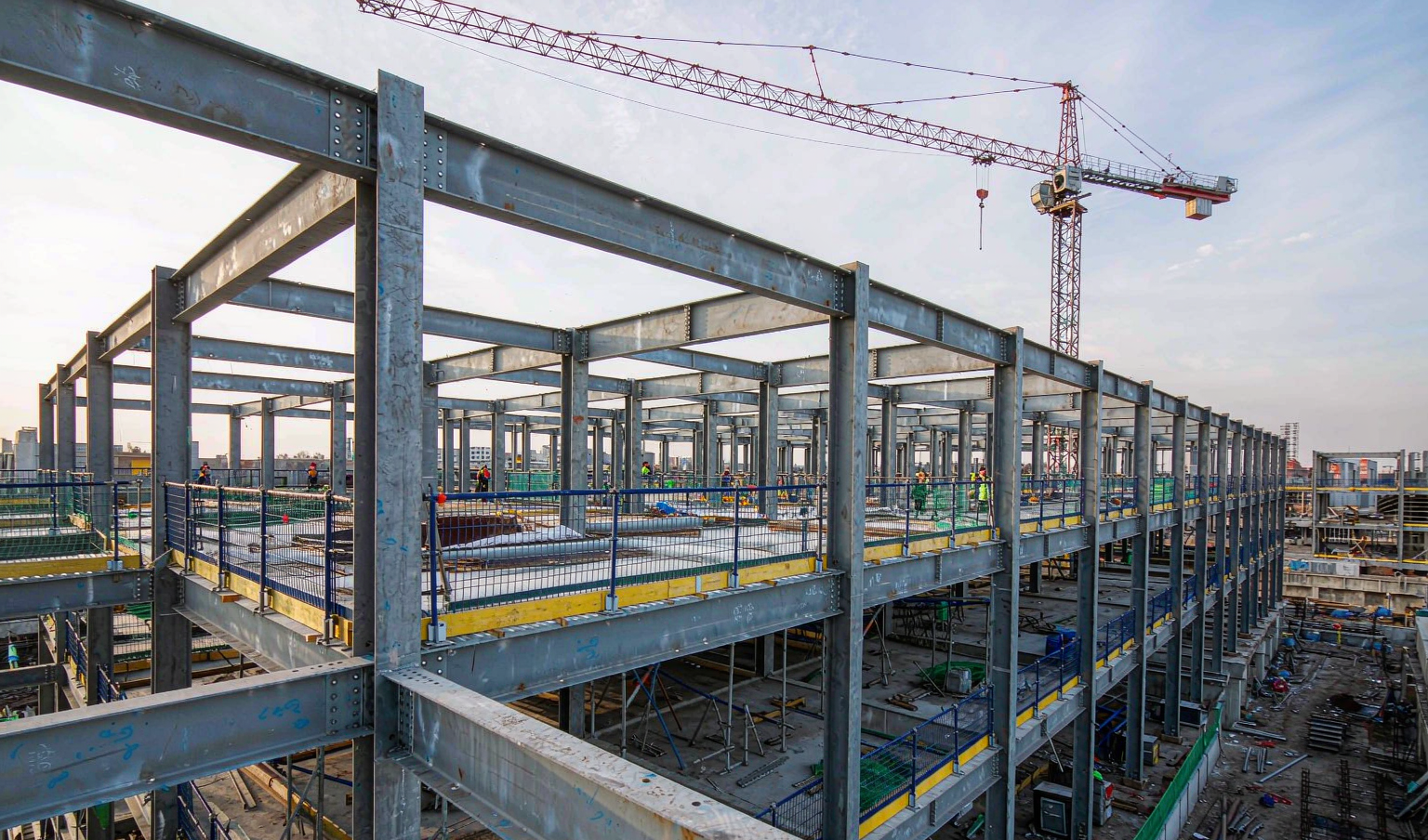
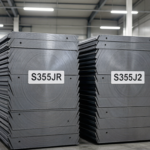
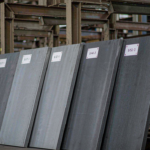
Comparison of S355JR and S355J2 structural steel plates
1. What S355JR and S355J2 Have in Common
Both grades belong to the S355 family defined by EN 10025-2. The letter S stands for structural steel, 355 is the minimum yield strength in MPa, and the suffix tells us the toughness grade and delivery condition. JR means a minimum 27 J impact energy at +20 °C in the longitudinal direction. J2 means 27 J at -20 °C.
Property
S355JR
S355J2
Yield strength ReH min
355 MPa
355 MPa
Tensile strength Rm
470 – 630 MPa
470 – 630 MPa
Elongation A5 min
22 % (t < 40 mm)
22 % (t < 40 mm)
Carbon max
0.24 %
0.20 %
Manganese
1.60 % max
1.60 % max
Phosphorus max
0.035 %
0.025 %
Sulfur max
0.035 %
0.025 %
The base strength is identical, which means the choice between JR and J2 usually comes down to toughness, welding performance and project specification rather than load-bearing capacity.
2. Impact Toughness: The Deciding Factor
Charpy V-notch impact testing measures how much energy a material can absorb before fracturing. For structural members exposed to cold weather, ships, offshore platforms or cranes operating in winter, the test temperature is critical.
S355JR: tested at +20 °C, average 27 J in longitudinal direction.
S355J2: tested at -20 °C, average 27 J in longitudinal direction.
S355K2: tested at -40 °C for extreme cold-service applications.
Sub-sized specimens follow EN 10025-2 reduction rules and are marked on the test certificate.
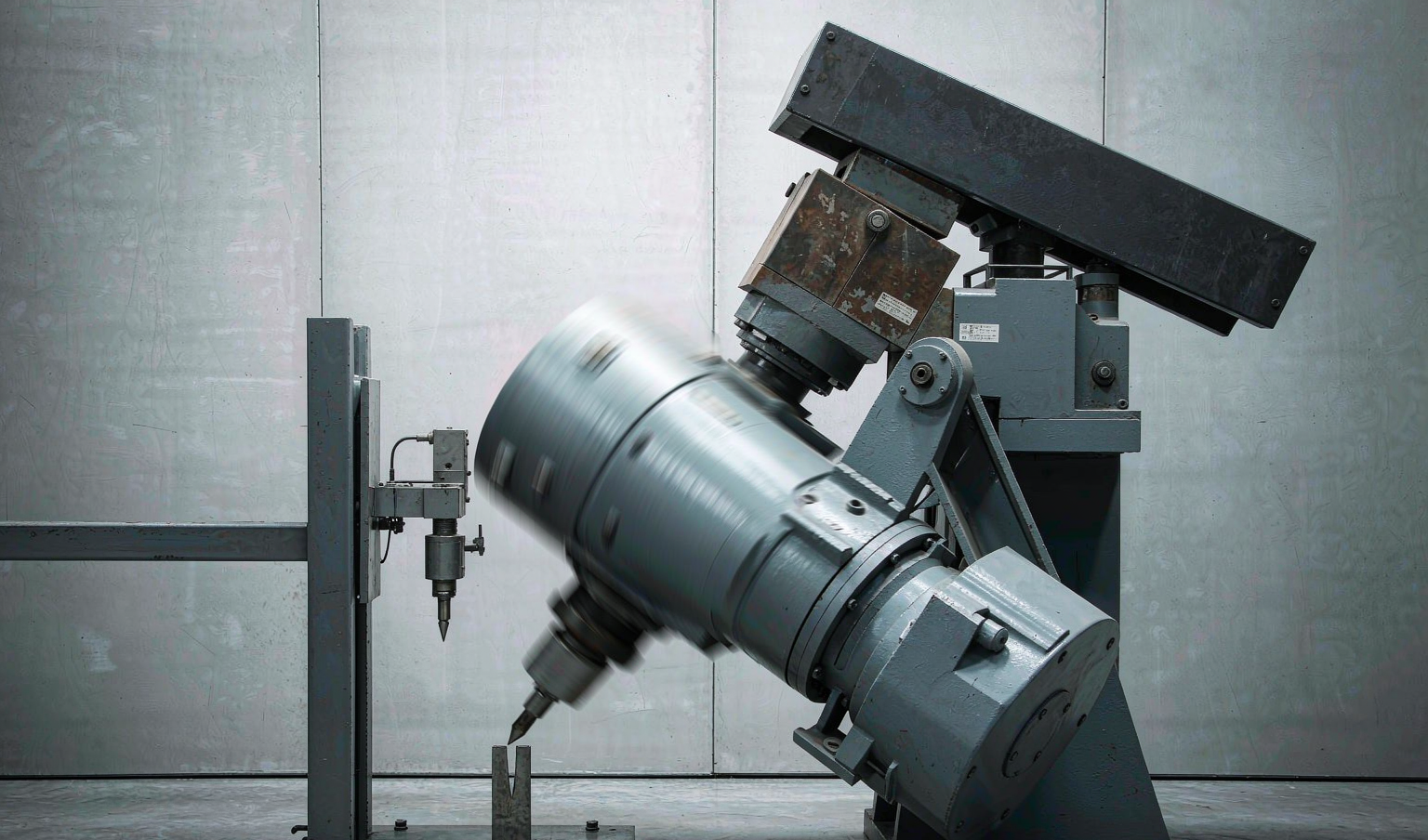
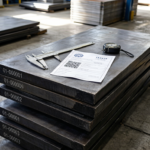
Charpy impact test specimens after low temperature testing
3. Chemical Composition and Weldability
S355J2 has tighter limits on carbon, phosphorus and sulfur than S355JR. Lower carbon equivalent generally improves weldability and reduces the risk of hydrogen-induced cracking in thick sections.
Element / Value
S355JR
S355J2
Effect
C max
0.24 %
0.20 %
Lower C improves weldability
P max
0.035 %
0.025 %
Reduces brittle fracture risk
S max
0.035 %
0.025 %
Improves through-thickness ductility
Si
0.55 % max
0.55 % max
Similar limit
CEV typical
0.43 – 0.47
0.40 – 0.45
Lower CEV for J2
For welded structures in thickness above 30 mm or in low-temperature service, S355J2 is usually specified because it permits lower preheat temperatures and better fracture resistance.
4. Delivery Condition and Plate Thickness
Both grades can be supplied as-rolled, normalized or normalized-rolled depending on thickness and customer requirements. EN 10025-2 sets maximum thickness limits for each grade and condition to guarantee properties through the section.
Plates up to 100 mm are commonly available for both JR and J2.
Normalized rolling improves toughness and is often required for thick J2 plates.
Ultrasonic testing to EN 10160 can be specified for pressure-part or critical structural plates.
Through-thickness properties to EN 10164 (Z-grade) are available for both grades when lamellar tearing is a concern.
5. Price Difference and Availability
S355J2 costs slightly more than S355JR because of tighter chemistry control, lower-temperature impact testing and higher production scrutiny. The premium is usually modest for common thicknesses but can increase for very thick plates or special dimensional requirements.
Item
S355JR
S355J2
Standard structural plate 10-20 mm
$620 – $720 / ton
$640 – $750 / ton
Heavy plate 40-80 mm
$680 – $820 / ton
$700 – $850 / ton
MOQ ex-mill
Usually 10-25 tons
Usually 10-25 tons
Typical delivery
2-4 weeks
2-5 weeks
Stack of normalized S355J2 structural steel plates ready for shipment
6. Typical Applications
S355JR: general building frames, columns, beams, braces, tanks and machinery structures in moderate climates.
Both grades are used in wind towers, transmission towers and heavy vehicles when the design code specifies JR or J2.
S355J2+N is the normalized version most often requested for critical welded fabrications.
7. FAQ
Can S355JR be used instead of S355J2 in cold climates?
Only if the design temperature never drops below +20 °C and the engineer accepts the lower impact toughness. For winter or offshore service, S355J2 is the safer and code-compliant choice.
What does the +N mean in S355J2+N?
+N indicates normalized or normalized-rolled delivery condition. It gives better toughness and more uniform properties through thick sections than as-rolled plate.
Is S355J2 better for welding?
Generally yes. The lower carbon, phosphorus and sulfur limits give a lower carbon equivalent, which reduces preheat requirements and cracking risk in thick welded joints.
What certificates should I request?
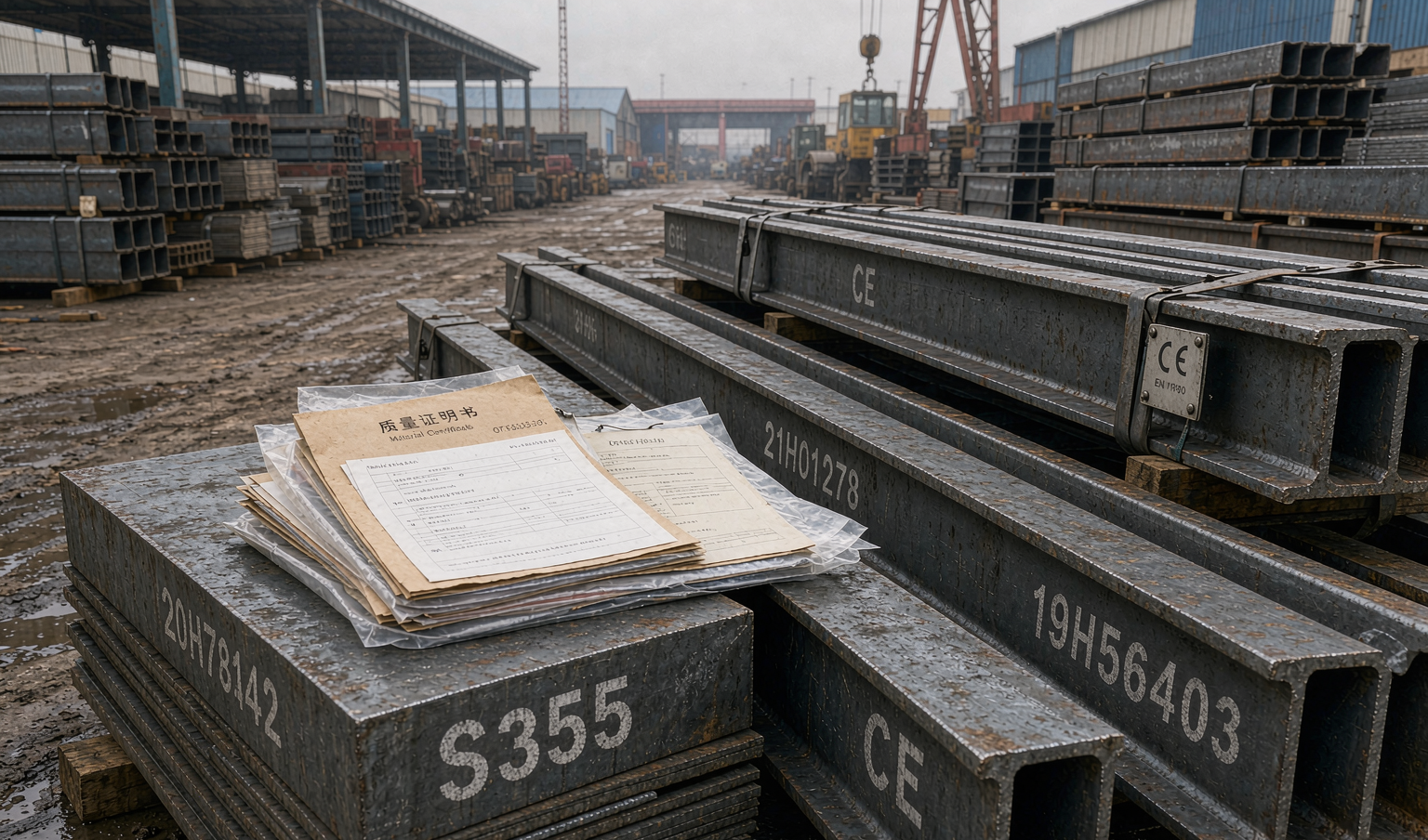
Request an EN 10204 3.1 mill certificate showing chemical analysis, mechanical tests and Charpy results at the correct test temperature. Third-party inspection can be added for critical projects.
8. Final Takeaway
Choose S355JR for cost-sensitive, room-temperature structural work. Choose S355J2 when the project faces low temperatures, heavy welding or demanding toughness requirements. Always confirm the suffix, delivery condition and impact-test temperature on the purchase order and mill certificate.
Need a reliable carbon steel supplier for your next project? Huaxia-Steel supplies mill-certified carbon steel bars, plates, pipes, flanges and fittings with full inspection, export packing and fast delivery. Request a quote today and our team will reply within 24 hours.
If you require further information about our metal sheet products or architectural projects, please don’t hesitate to leave your contact details and message here.
Our team of experts will respond within 24 hours to continue the discussion and provide you with any additional information you requires.