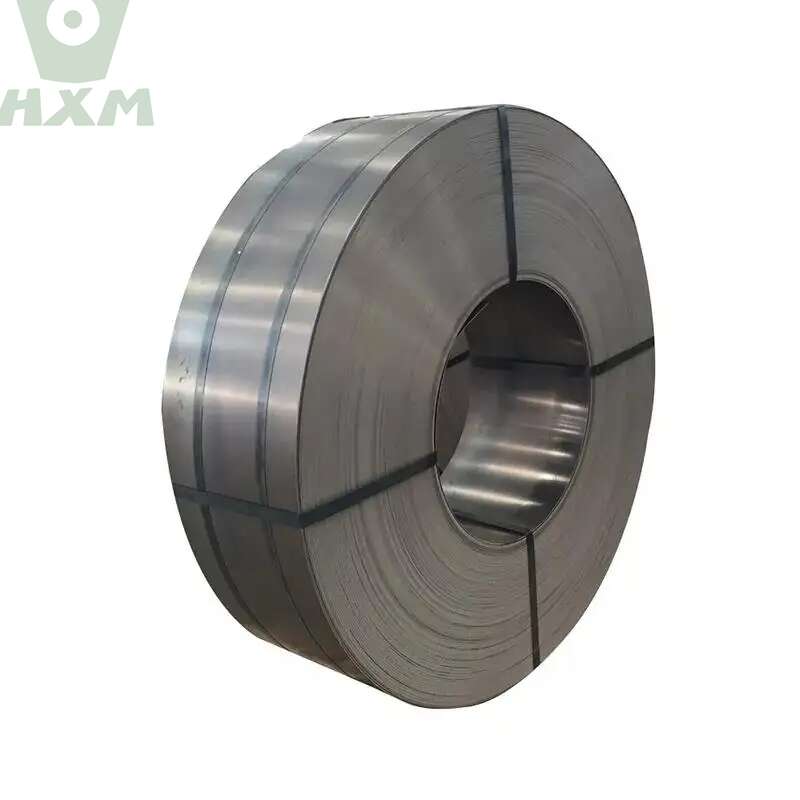
S45C vs S50C Carbon Steel: Grade Comparison for Buyers
Choosing between S45C vs S50C carbon steel is one of the most common procurement decisions for buyers sourcing medium-carbon steel from China. Both grades belong to the JIS G 4051 standard and are widely used in shafts, gears, crankshafts, bolts, and structural components. However, their carbon content, hardness, machinability, and price points differ in ways that directly affect part performance and total landed cost.
At Huaxia-Steel, we supply both S45C round bar and S50C plate to factories, distributors, and project owners across Southeast Asia, the Middle East, Africa, and Latin America. This guide compares the two grades across eight practical dimensions so you can specify the right material in your next purchase order.
1. Chemical Composition: The Core Difference
The main distinction between S45C and S50C is carbon content. S50C contains approximately 0.47–0.53% carbon, while S45C contains 0.42–0.48% carbon. This small difference raises hardness, tensile strength, and wear resistance, but it also reduces machinability and weldability.
| Element | S45C (JIS G 4051) | S50C (JIS G 4051) |
|---|---|---|
| Carbon (C) | 0.42–0.48% | 0.47–0.53% |
| Silicon (Si) | 0.15–0.35% | 0.15–0.35% |
| Manganese (Mn) | 0.60–0.90% | 0.60–0.90% |
| Phosphorus (P) | ≤ 0.030% | ≤ 0.030% |
| Sulfur (S) | ≤ 0.035% | ≤ 0.035% |
Both grades also carry equivalents in other standards. S45C is roughly comparable to 1045 steel under ASTM AISI/SAE, C45 under DIN EN 10083, and C45E under ISO. S50C aligns with 1050 steel in the AISI system and C50 in some European references.
2. Mechanical Properties: Tensile Strength and Hardness
Because S50C carries slightly more carbon, it reaches higher tensile strength and surface hardness after heat treatment. Buyers should match these properties to the duty cycle of the finished component.
| Property | S45C | S50C |
|---|---|---|
| Tensile strength | 570–700 MPa | 620–760 MPa |
| Yield strength | ≥ 345 MPa | ≥ 375 MPa |
| Elongation | ≥ 17% | ≥ 14% |
| Hardness (annealed) | 170–210 HB | 180–230 HB |
| Hardness after quenching/tempering | 28–34 HRC | 30–38 HRC |
If your part requires high surface hardness and moderate core toughness, S50C is usually the better choice. For parts that need more machining, welding, or forming before final heat treatment, S45C offers a safer processing window.
3. Machinability and Weldability
S45C machines more smoothly than S50C because its lower carbon content reduces tool wear and cutting forces. In high-volume turning, milling, or drilling operations, S45C can lower per-part tooling cost by 10–20% compared with S50C.
S50C, on the other hand, is harder and more abrasive. It requires slower cutting speeds, carbide or coated inserts, and more frequent tool changes. For weldability, neither grade is ideal without preheat and post-weld heat treatment, but S45C is slightly more forgiving due to its lower carbon equivalent.
4. Typical Applications
- S45C applications: automotive shafts, connecting rods, pins, bushings, hand tools, machine structural parts, and general medium-stress components.
- S50C applications: heavy-duty gears, sprockets, crankshafts, die holders, wear plates, high-strength bolts, and applications requiring higher fatigue resistance.
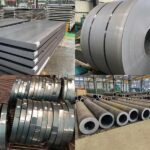
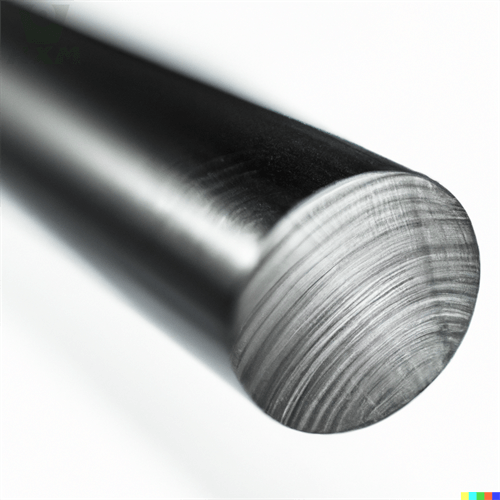
Many buyers order S45C round bar in turned, peeled, or ground condition, while S50C is often procured as hot-rolled plate or annealed flat bar for further machining.
5. Heat Treatment Response
Both grades respond well to normalizing, quenching, tempering, and induction hardening. S50C reaches slightly higher hardness after the same quenching cycle, which can reduce case-hardening time in some processes. However, its higher hardenability also increases the risk of distortion and quench cracking if the cooling rate is not controlled.
6. Price and Availability
S50C typically commands a 3–8% premium over S45C in the Chinese spot market, depending on diameter, thickness, and order volume. Both grades are widely stocked by Chinese mills in round bar, flat bar, plate, and forged block form. Lead times range from 7 days for common diameters to 25–35 days for custom sizes or vacuum-degassed quality.
7. Quality Risks to Control
When importing S45C or S50C from China, request the following documents and checks:
- Mill test certificate (MTC) with chemical and mechanical results
- Ultrasonic testing (UT) report for bars and plates above 50 mm thickness
- Straightness and tolerance confirmation to JIS G 3191 or EN 10060
- Spectral verification on arrival, especially for counterfeit grades
8. Which Grade Should You Choose?
| Buyer Need | Recommended Grade |
|---|---|
| Good balance of strength, cost, and machinability | S45C |
| Higher hardness and wear resistance | S50C |
| Heavy welding or forming before heat treatment | S45C |
| High-stress shafts, gears, or die plates | S50C |
FAQ
Q1: Is S50C stronger than S45C?
A: Yes. S50C has higher tensile strength, yield strength, and hardness due to its higher carbon content.
Q2: Can S45C replace S50C?
A: Only if the lower strength and hardness are acceptable for the application. Always confirm with your engineer before substituting grades.
Q3: What is the AISI equivalent of S45C?
A: S45C is approximately equivalent to 1045 steel under the AISI/SAE system.
Q4: Which grade is better for machining?
A: S45C machines more easily and is generally preferred when extensive machining is required.
Q5: Do you supply S45C and S50C cut to length?
A: Yes. Huaxia-Steel supplies S45C round bar, S50C plate, and cut-to-length service with chamfering and labeling.
Buy S45C and S50C Carbon Steel from Huaxia-Steel
We export JIS-standard carbon steel grades with full traceability, mill certificates, and third-party inspection support. Contact our sales team today for a quotation tailored to your specifications, HS code, and destination port.