SAE 1045 vs C45 vs CK45 Carbon Steel: Grade Comparison Guide
When sourcing medium-carbon steel for shafts, gears, bolts, and machine components, buyers frequently encounter three nearly identical grades: SAE 1045 (USA), C45 (European EN/DIN), and CK45 (German DIN with controlled sulfur). At first glance the chemistry looks interchangeable, yet subtle differences in sulfur control, delivery condition, and regional availability can affect machinability, lead time, and total cost. This guide provides a side-by-side technical comparison so procurement teams can specify the right grade with confidence.
1. Chemical Composition Comparison
All three grades are unalloyed medium-carbon steels centered on approximately 0.45 % carbon. The main divergence lies in sulfur limits and trace-element tolerances.
| Element | SAE 1045 (ASTM A29) | C45 (EN 10083-2) | CK45 (DIN 17200) |
|---|---|---|---|
| C | 0.43 – 0.50 | 0.42 – 0.50 | 0.42 – 0.50 |
| Si | 0.15 – 0.35 | max 0.40 | 0.15 – 0.35 |
| Mn | 0.60 – 0.90 | 0.50 – 0.80 | 0.50 – 0.80 |
| P | max 0.040 | max 0.030 | max 0.035 |
| S | max 0.050 | max 0.035 | 0.020 – 0.040* |
| Cr | max 0.20 | max 0.40 | max 0.40 |
*CK45 is often supplied with elevated sulfur (0.020–0.040 %) to improve machinability in automatic lathes.
2. Mechanical Properties at Delivery
Delivery condition dominates the as-received strength more than the grade name. Hot-rolled bar in normalized condition typically shows the following ranges:
- Tensile strength (Rm): 570 – 700 MPa for all three grades in normalized bar form.
- Yield strength (ReH): 300 – 350 MPa.
- Elongation (A5): 16 – 20 % depending on section size.
- Hardness: 170 – 210 HBW in normalized condition.
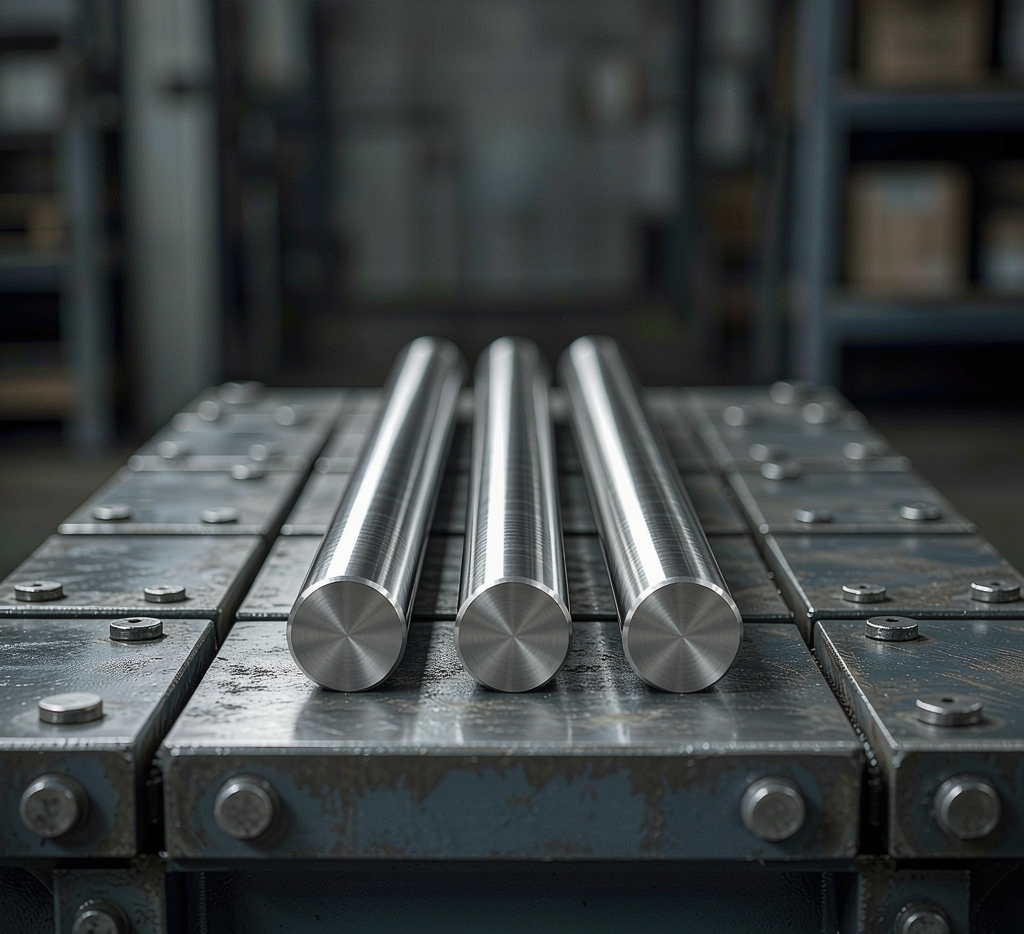
Cold-drawn bright bar raises tensile strength to 620 – 800 MPa and hardness to 190 – 240 HBW, but elongation drops to 10 – 14 %. When ordering, always state the delivery condition (hot rolled, normalized, cold drawn, quenched and tempered) rather than assuming properties from the grade alone.
3. Heat Treatment Response and Hardness
The 0.45 % carbon level places all three grades in the sweet spot for through-hardening in small sections and surface-hardening in larger bars.
- Normalizing: 840 – 880 °C, air cool. Refines grain structure and improves machinability. Hardness 170 – 210 HBW.
- Quenching and tempering (Q+T): Austenitize at 820 – 860 °C, oil or polymer quench, temper at 550 – 660 °C. Achieves 600 – 750 MPa tensile with 15 – 18 % elongation.
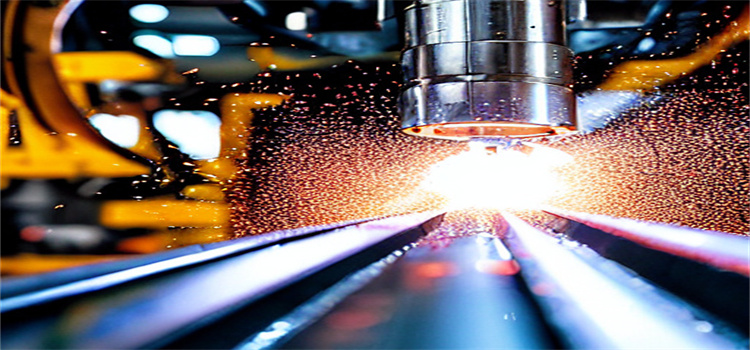
- Induction hardening: Surface hardness 55 – 60 HRC achievable with case depth 1 – 3 mm, leaving a tough core.
Because the hardenability is moderate (ideal critical diameter ~15 mm in oil), sections above 40 mm diameter may not through-harden uniformly. For larger forgings, consider 42CrMo4 or 4140 instead.
4. Machinability and Weldability
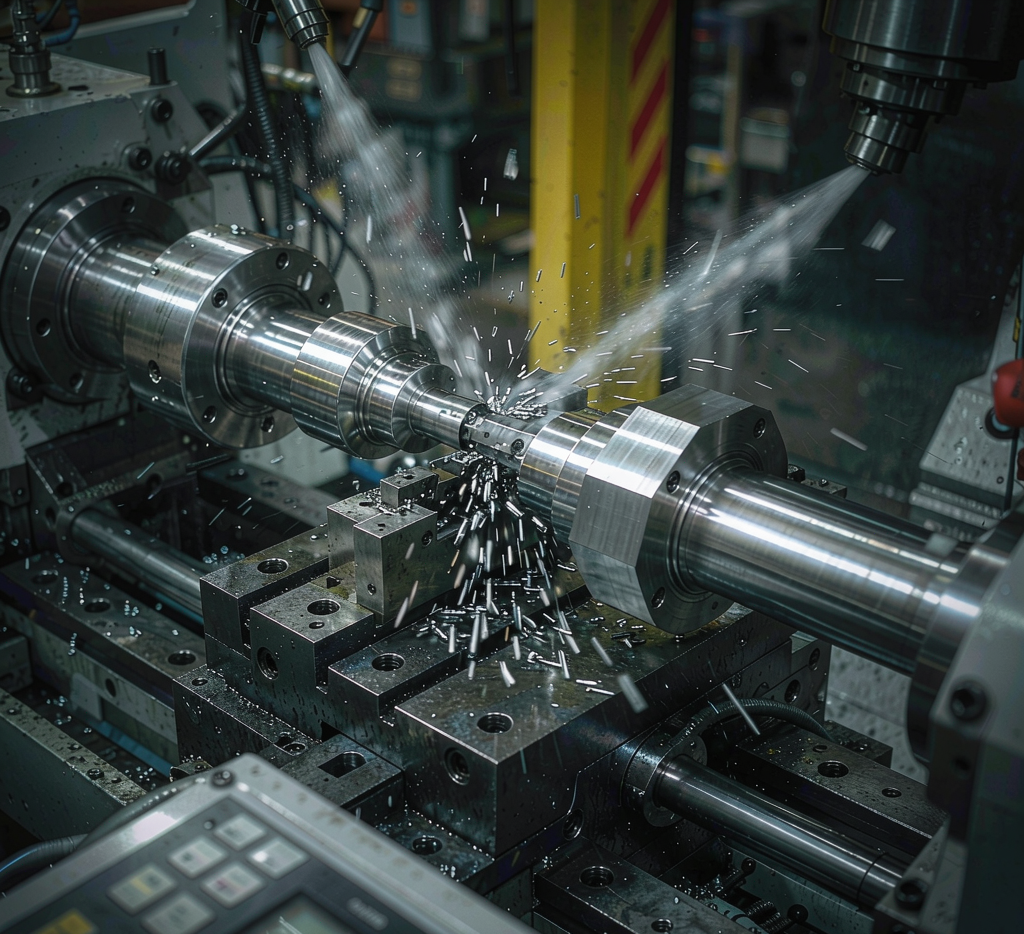
Machinability: In the annealed or normalized state, all three grades machine at roughly 55 – 65 % relative to free-machining 1212 steel. CK45 with elevated sulfur climbs to 70 – 75 %, making it the preferred choice for high-volume CNC turning. Use carbide inserts with positive rake geometry and adequate coolant flow to manage the long chips typical of medium-carbon steels.
Weldability: Fair. Preheat to 150 – 250 °C for sections over 25 mm. Use low-hydrogen electrodes (E7018) or solid wire (ER70S-6) with argon-CO2 shielding. Post-weld stress relief at 550 – 650 °C is recommended for critical fabrications. The carbon equivalent (CE) is approximately 0.58 – 0.63, which places these grades at the upper limit for routine fusion welding without special precautions.
5. Typical Applications by Grade
| Grade | Common Applications |
|---|---|
| SAE 1045 | Axles, shafts, crankshafts, hydraulic rams, studs, bolts, gears (induction hardened), king pins, spline shafts |
| C45 | General engineering components, machine frames, guide rails, spindles, couplings, pump shafts, hydraulic cylinder rods |
| CK45 | High-volume turned parts, automatic-lathe components, precision shafts, piston rods, tie rods, fasteners requiring good surface finish |
6. Global Standards Cross-Reference Table
| Standard System | Grade Designation | Closest Equivalent |
|---|---|---|
| USA (AISI/SAE) | 1045 | — |
| Europe (EN) | 1.0503 | C45 |
| Germany (DIN) | 1.1191 | CK45 |
| China (GB) | 45# | GB/T 699 45 steel |
| Japan (JIS) | S45C | JIS G4051 |
| Russia (GOST) | 45 | GOST 1050 |
| UK (BS) | 080M46 | BS EN 10083-2 |
7. How to Choose the Right Grade for Your Project
- Specify SAE 1045 when your end customer requires ASTM certification, when supplying into the North American automotive or oil-and-gas aftermarket, or when the drawing calls out AISI grade explicitly.
- Specify C45 (1.0503) for general European machinery projects where EN 10204 3.1 or 3.2 MTC is required and sulfur levels must stay below 0.035 % for weldability.
- Specify CK45 (1.1191) when the priority is high-speed machining on automatic lathes, when you need a bright turned finish without secondary operations, or when the German supply base is already qualified.
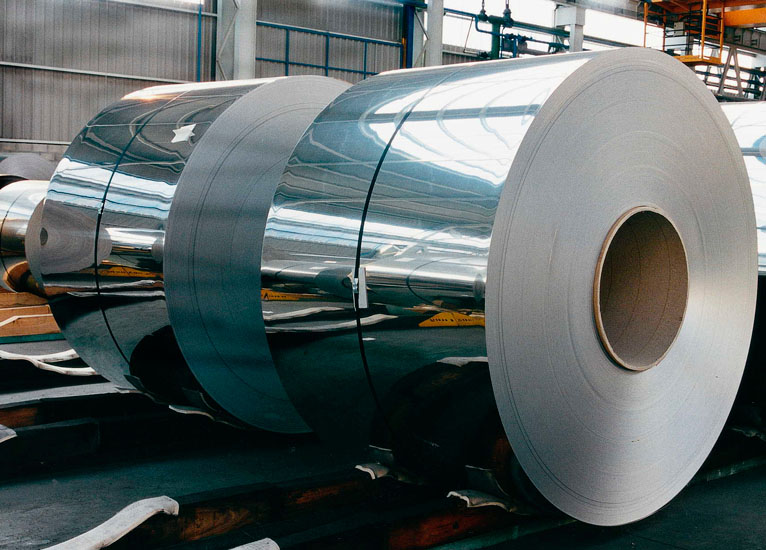
From a procurement perspective, all three grades are commodity items with mill MOQs typically starting at 5 – 10 metric tons for hot-rolled bar and 1 – 2 tons for cold-drawn bright bar. Lead times from Chinese mills range from 20 to 35 days ex-works depending on diameter and condition.
FAQ
Can I substitute C45 for 1045 without notifying my customer?
Only if the drawing or contract allows cross-reference equivalents. For safety-critical or automotive PPAP parts, any grade change requires formal customer approval and updated material test certificates.
Is CK45 always free-machining?
No. The “K” in CK45 originally denoted “kaltgezogen” (cold drawn), but modern usage often implies elevated sulfur. Always confirm the sulfur range on the inquiry and the MTC.
What is the price difference between 1045 and C45?
In global spot markets the difference is usually negligible—within $20–40 per ton. Cold-drawn bright bar commands a $150–250 premium over hot-rolled bar regardless of grade.
Can 1045 bar be induction hardened?
Yes. The 0.45 % carbon content is ideal for induction or flame hardening to 55–60 HRC surface hardness with a tough unhardened core.
What delivery conditions are stocked?
Most distributors stock hot-rolled (+AR) and cold-drawn (+C) round bar. Normalized (+N) and quenched-and-tempered (+QT) are mill-order items with longer lead times.
Need SAE 1045, C45, or CK45 round bar, flat bar, or plate? Huaxia-Steel supplies all three grades in hot-rolled, normalized, cold-drawn, and Q+T conditions with EN 10204 3.1 MTC. Request a quote with your diameter, length, and delivery condition.