Buying Steel From a Mill vs a Trading Company: Pros and Cons
Every steel importer eventually faces the same fork in the road: buy direct from a Chinese mill and save the middleman margin, or buy through a trading company and outsource the coordination risk. Both answers can be right — and both can go badly wrong. The honest comparison is not “mill vs trader” but “which risks do you want to own yourself, and which do you want to pay someone else to carry?” This guide breaks the decision down by price, MOQ, quality control, lead time, flexibility, and dispute handling, then gives a decision framework by order profile.
1. What a Mill Actually Offers
2. What a Trading Company Actually Offers
3. The Risk Profile Nobody Puts in the Brochure
The uncomfortable truth is that many “mills” online are traders with mill-sounding names, and many “traders” are actually agents for one specific mill. Before deciding, verify what you are talking to: ask for the manufacturing license number and cross-check it, ask which heats are produced at which facility, and — most effectively — book a factory visit or third-party audit (SGS, Bureau Veritas, TÜV) before the first big order. An entity that resists a verifiable audit on a 300-tonne commitment has told you everything you need to know.
| Risk | Buying Mill-Direct | Buying via Trader |
|---|---|---|
| Fake identity risk | Low if audited; some “mills” are resellers | Higher — identity is inherently an intermediary |
| Substitution/spec drift | Lower — one production route, one MTC | Higher — blended lots from secondary mills possible |
| Certificate integrity | Original MTC from producing mill | Re-issued certs — insist on true copies with heat numbers |
| Payment exposure | Larger deposits to a single entity | Spread across lots possible; escrow/inspection-gated TT easier |
| Communication speed | Slow for export novices; fast once relationship built | Fast — it is their core business |
| Dispute leverage | Mills can be slow to resolve small-lot claims | Traders often absorb fixes to keep the account |
The substitution risk deserves emphasis. A trader promising “ASTM A36 plate” may source from whichever partner mill has space this week — sometimes a legitimate A36 producer, sometimes a re-rolled or downgraded product with paperwork to match. This is not universal, but it is common enough that every trader shipment should get independent verification: pre-shipment inspection with chemistry check (PMI or lab), hardness sampling, and dimensional audit against the MTC heat numbers. A $500 inspection on a $60,000 container is not paranoia; it is the cheapest insurance in the trade.
4. Cost Anatomy: Where the Money Actually Goes
| Cost Component | Mill-Direct (typ.) | Via Trader (typ.) |
|---|---|---|
| Base material price (FOB equivalent) | 100 (index) | 100 (same source) |
| Intermediary margin | 0–2% | +3–8% |
| MOQ premium (small lots) | +5–15% below heat size | Usually none (stock or blended) |
| Third-party inspection | Buyer arranges (or mill hosts) | Often coordinated by trader |
| Consolidation across products | Buyer manages N shipments | Included |
| Document handling | Mill’s export dept (variable quality) | Trader’s specialty |
Run the arithmetic on your own order profile before assuming mill-direct is cheaper. A 40-tonne order that sits below the mill’s heat size may pick up an MOQ surcharge plus a separate inland logistics cost that together exceed a trader’s 5% margin. Conversely, a single-product 300-tonne contract through a trader is usually pure margin leakage — provided you have the bandwidth to run quality control and logistics yourself.
5. Decision Framework by Order Profile
6. Hybrid Strategies That Work in Practice
Most experienced importers end up running a hybrid: mill-direct for their two or three highest-volume items (negotiated annually, inspected quarterly), and a small panel of vetted traders for everything else — the odd grades, the urgent top-ups, the mixed containers. They also use traders as intelligence: a good trader quotes fast across the market and tells you what mills’ real price levels are, which strengthens your hand when negotiating direct. Keep both channels warm; the switching cost between them is low, and each keeps the other honest.
7. FAQ
How can I verify a supplier is a real mill?
Three checks: (1) manufacturing license + business scope documents cross-checked against official registries; (2) a third-party audit (SGS/BV/TÜV) or a video factory tour with production running; (3) MTC heat numbers that match mill stenciling and test records produced at that facility. Any resistance to these is a red flag.
Do traders ever get better prices than mills offer direct?
Sometimes. Large traders buy at annual-volume rates from mills and can undercut a mill’s small-lot list price, especially with stock material or when mills want to clear production slots. Always price both routes — the “middleman costs more” rule is a tendency, not a law.
What payment terms should I use for a first order?
30% deposit / 70% after pre-shipment inspection for T/T, or an L/C with inspection certificate as a presenting document. Avoid full advance payment to any first-time counterparty, mill or trader alike.
Who is responsible if the material fails inspection — trader or mill?
Contractually, whoever signed your sales contract. Practically, this is why the sales contract matters: name the producing mill, require original MTCs, and include a claims clause with inspection rights. A trader will push claims down to the mill; you need the paperwork to make that push effective.
Is it worth having both a mill and a trader for the same product?
Yes — dual sourcing keeps pricing honest and protects supply during mill maintenance shutdowns or export bottlenecks. Many buyers keep the trader as the secondary source precisely because traders can react faster to disruption.
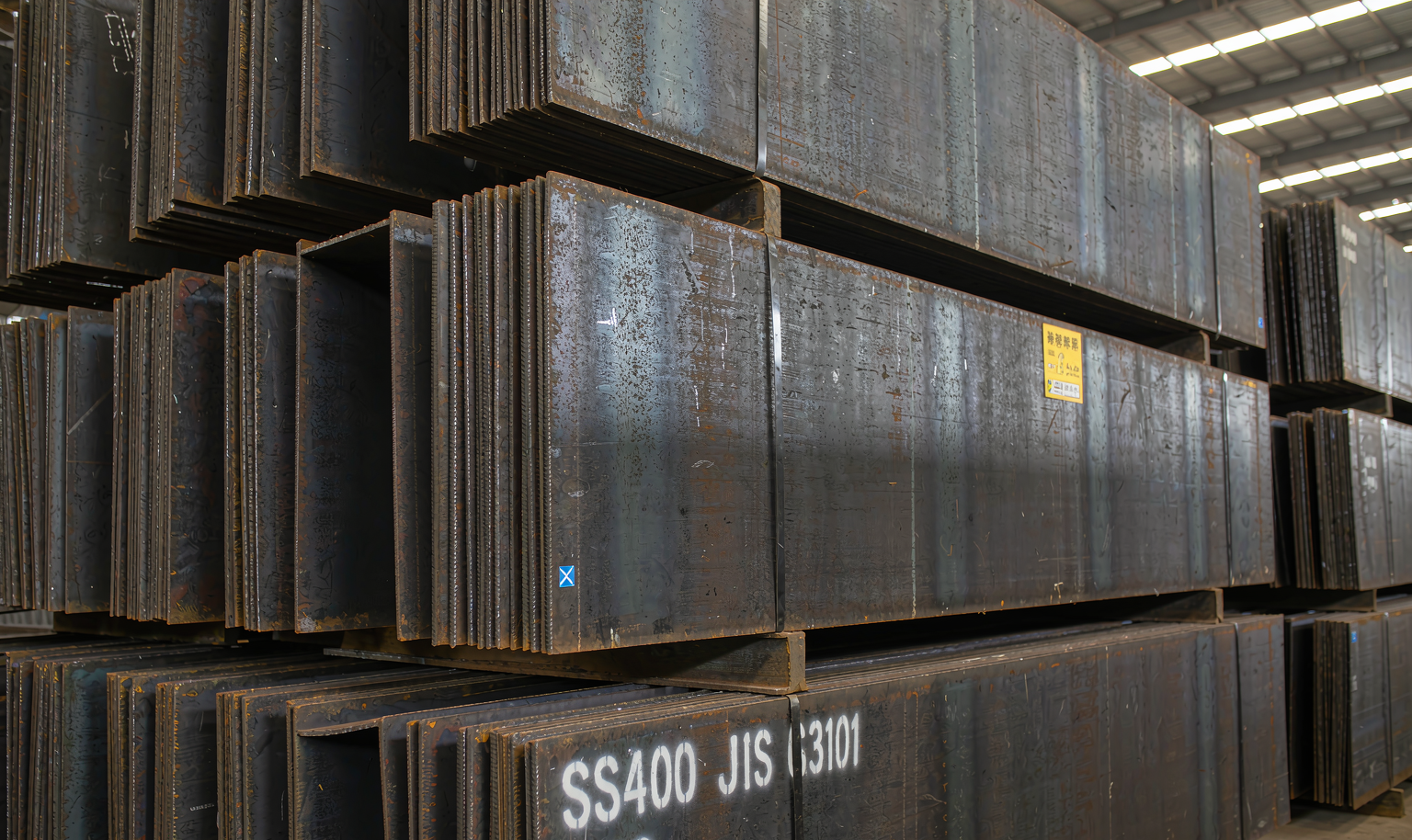
Factory-Direct Carbon Steel, Without the Guesswork
Huaxia-Steel ships factory-direct with EN 10204 3.1 certification, third-party inspection welcome, and transparent mill-to-port logistics. Whether your order is one heat or a mixed container, you get real mill pricing and honest lead times.
Request a quote: Contact Huaxia-Steel.