How to Handle Steel Quality Claims with Chinese Suppliers: A Buyer’s Playbook
Even with good suppliers, steel shipments occasionally arrive with problems: hardness out of range, dimensional drift, surface defects, or missing mill certificate data. What separates professional buyers from frustrated ones is not whether problems happen — it’s whether the claim process was designed before the order. This playbook walks through the full lifecycle: prevention at contracting, evidence collection at arrival, negotiation strategy, and escalation options that actually work with Chinese mills and trading companies.
1. The Top Causes of Steel Quality Claims
| Cause | Typical Frequency | Preventable at Contract Stage? |
|---|---|---|
| Dimensional out-of-tolerance (OD, wall, thickness, length) | Very common | Yes — state tolerance table + sampling plan |
| Certificate discrepancies (heat numbers don’t match, missing results) | Common | Yes — require EN 10204 3.1 with defined fields |
| Mechanical properties below minimum | Less common, high impact | Partially — add third-party witness testing |
| Surface defects (scabs, laminations, rust, coating failure) | Common | Yes — define surface class and inspection standard |
| Wrong grade substitution (A53 sold as A106, Q235 sold as S355) | Rare but severe | Yes — PMI / chemistry audit clause |
| Transit damage (bundle collapse, water staining) | Common | Yes — packing spec + insurance terms |
Notice that most claim triggers are cheap to prevent and expensive to resolve after the fact. The single highest-leverage clause in any steel PO is a clear acceptance standard with a defined sampling and inspection method.
2. Prevention: Five Contract Clauses That Pay for Themselves
- Acceptance standard clause: name the exact standard and revision (e.g. “ASTM A106 Gr.B including hydrostatic test and marking clauses; dimensions per ASME B36.10M tolerances”).
- Third-party inspection clause: buyer’s right to have SGS/BV/TÜV inspect before shipment, at buyer’s cost, with the supplier obligated to provide free access and re-test support.
- Certificate clause: EN 10204 3.1 certificates per heat, including chemical composition, mechanical results, heat treatment records, and heat numbers traceable to stenciled markings.
- Inspection window clause: e.g. “buyer may inspect within 30 days of arrival at destination; notice of latent defects within 90 days”. Without a window, suppliers argue claims are time-barred.
- Remedy ladder clause: agreed responses in order — replacement goods, rework/repair, price reduction, or refund — with timelines (e.g. replacement within 45 days).
3. When Problems Arrive: The First 48 Hours
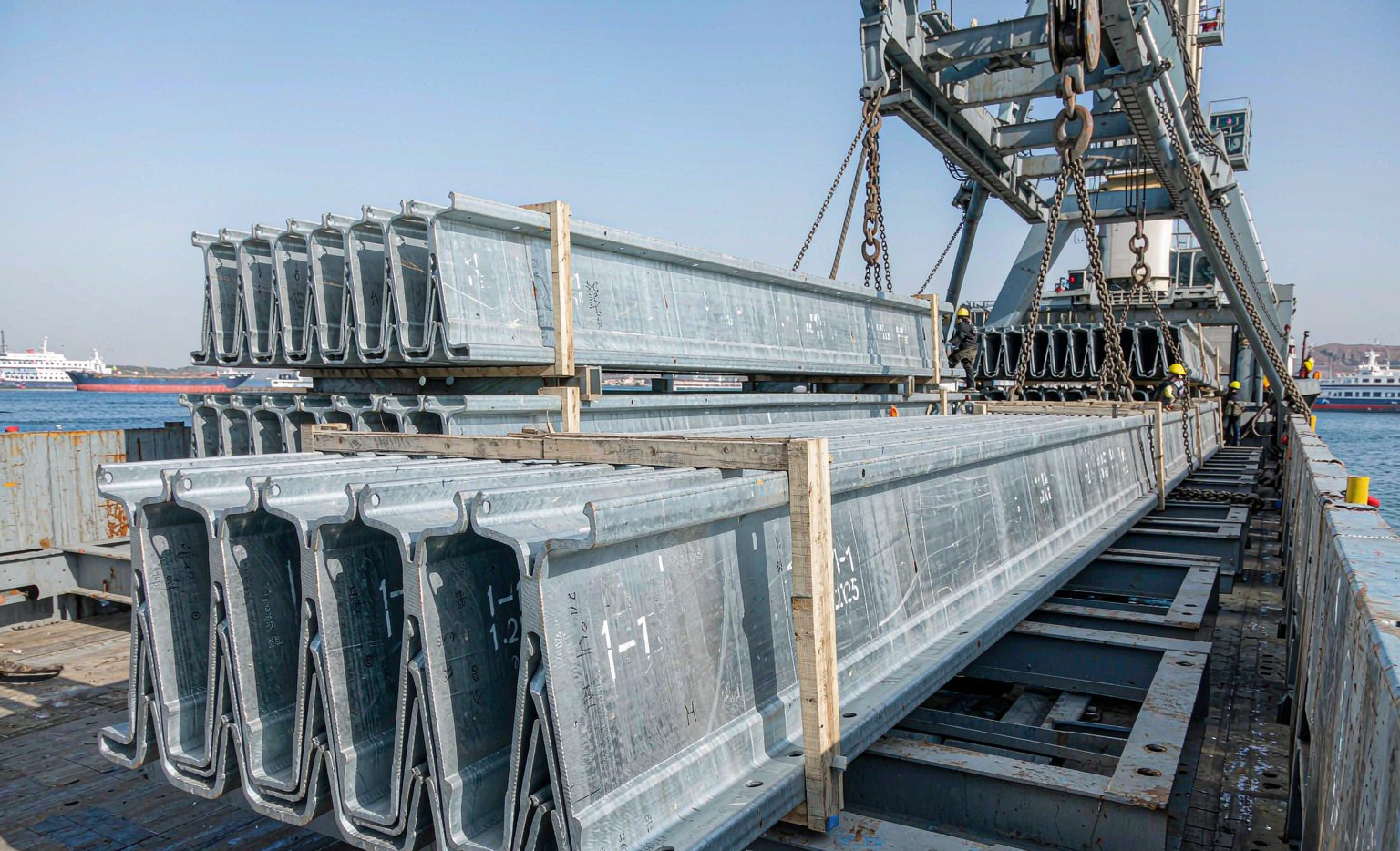
- Photograph everything before unloading finishes: container condition, seal number, bundle strapping, stencils and heat numbers, and the defect itself with a ruler or caliper in frame.
- Quarantine affected material and do not process it — cutting or machining destroys the evidence and the supplier’s ability to investigate.
- Notify in writing within the contractual window, referencing the PO number, contract clause, and a precise description (heat number, piece count, defect type, measured values).
- Book an independent survey (SGS, BV, or a local inspection agency) for significant claims — a surveyor’s report is the document that shifts negotiations from opinion to fact.
- Preserve samples: retain at least two full-length defective pieces per heat for any potential destructive testing.
4. Building the Claim File: Evidence Checklist
| Document | Purpose | Must-Have? |
|---|---|---|
| Commercial invoice + PO with spec reference | Establishes contractual specification | Yes |
| EN 10204 3.1 MTC(s) | Supplier’s certified properties per heat | Yes |
| Packing list / weight slips | Reconciles delivered quantity | Yes |
| Photo/video log with heat numbers | Links defects to certified heats | Yes |
| Independent inspection or survey report | Neutral third-party findings | For significant claims |
| Laboratory test report (tensile/chemistry/hardness) | Proves non-conformance technically | For property/grade disputes |
| Bill of lading and surveyor’s container report | Transit damage responsibility (carrier vs supplier) | For transit claims |
The heat number chain is the backbone of any steel claim: markings on the material must trace to the certificate, and the certificate must trace to the PO. If heat numbers on the goods don’t exist or don’t match the MTC, you have a documentation claim that is often easier to win than a technical one.
5. Negotiation Strategy: What Suppliers Will and Won’t Do
- Small dimensional deviations: expect a 3–10% price adjustment or credit note. Fastest resolution path — accept the discount if the material is still usable in your application.
- Surface defects: suppliers typically offer rework (grinding within allowance) or discount; rework at their cost requires you to tolerate a second transit cycle or agree local repair.
- Hardness/mechanical failures: reputable mills will replace the heat; traders may stall. This is where third-party inspection at origin proves its worth — claims supported by origin inspection resolve in days, not months.
- Grade substitution: if chemistry proves a cheaper grade, you have strong leverage for replacement plus costs. If the supplier refuses, preserve the option of arbitration (below) before accepting anything.
- Relationship leverage: claim sizing matters — professional buyers separate “must-replace” items (code-critical) from “discount-acceptable” items, and suppliers respond far better to a rational, tiered claim than an all-or-nothing ultimatum.
6. Escalation Options That Actually Work
- Payment leverage: if payment is by T/T with a balance after inspection, hold the balance until resolution — the cleanest lever. Under letters of credit, discrepant documents (missing MTC fields, wrong spec on invoice) allow legitimate refusal of payment.
- Trade platform complaints: orders placed through export platforms have mediation channels; document everything in-platform from day one.
- Arbitration: Chinese contracts commonly choose CIETAC arbitration in Shanghai/Shenzhen; international contracts may choose ICC or SIAC. Arbitration clauses with agreed venue and language resolve in 6–18 months; without a clause, foreign court enforcement of a Chinese judgment is much harder.
- Pragmatic route: for claims in the low five figures, negotiation plus a shared inspection report resolves far more cases than legal escalation ever will. Write the claim letter as a business document, not a legal threat.
7. A Worked Timeline Example
| Day | Action |
|---|---|
| 0 | Container arrives, wall thickness readings 8–10% under nominal on 20% of lengths, heat 8B2147 |
| 1 | Photos + measurement log compiled; written notice to supplier with PO and MTC references |
| 3 | Supplier requests third-party survey; SGS booked for destination inspection |
| 8 | SGS report confirms 31 of 96 lengths below B36.10M wall tolerance |
| 12 | Claim quantified: replacement of 31 lengths OR 18% discount; supplier offers 12% |
| 15 | Settled at replacement of 20 lengths + 6% credit on remainder; replacement shipped day 40 |
Total elapsed time: about six weeks from arrival to closure, with zero material processed before settlement. That is what a well-documented claim looks like.
Frequently Asked Questions
How long do I have to file a steel quality claim?
Whatever your contract says — that’s why the inspection window clause matters. Without one, Chinese supplier standard terms often require notice within 30 days of arrival and bar latent claims later. Negotiate 30 days for obvious defects and 90 days (or 6 months for latent defects like laminations) at contracting.
Who pays for third-party inspection — buyer or supplier?
Convention: buyer pays for routine pre-shipment inspection; for claim verification, the losing party reimburses. Put the cost-allocation sentence in the claim letter up front to avoid arguing about it later.
The supplier says the problem is our steel yard’s rust, not their defect. Now what?
Rust responsibility depends on protective coating compliance and transit records. If the supplier’s packing spec required VCI or painted protection and photos at unloading show failed coating, the claim stands. Weather staining on unprotected mill finish is usually a gray zone settled by discount.
Is it worth taking a Chinese steel supplier to arbitration for a USD 20,000 claim?
Usually not — costs and time often exceed recovery. Arbitration earns its keep on large claims, repeated bad-faith patterns, or when a precedent protects your future orders. For small claims, payment leverage plus a surveyor report is more effective.
Buy Steel from a Supplier Who Makes Claims Rare
Huaxia-Steel ships carbon steel pipes, plates, bars, and flanges with EN 10204 3.1 certificates, third-party inspection welcome, and clear remedy clauses in every contract. Fewer surprises, faster settlements.
Request a Quote