Steel Weight Calculation Formulas Every Buyer Should Verify
Steel is bought by weight and shipped by weight, yet most buyers accept invoice tonnages they have never cross-checked. That is a gap worth closing: a 2% error on a 40-tonne container order is the profit of the whole deal, and deliberate basis-weight inflation is one of the oldest games in the trade. The formulas are simple, they fit on one page, and checking a packing list against them takes minutes. This guide gives the standard theoretical weight formulas for plates, bars, pipes and sections, with worked examples and the buyer-side rules for theoretical vs actual weight.
1. The Universal Starting Point: Density
All theoretical weight formulas derive from volume × density. Steel density is taken as 7.85 g/cm³ (7,850 kg/m³) for carbon and low-alloy steel. That gives the two constants used everywhere in the trade:
Stainless austenitic grades run ~1–2% lighter (7.9 vs density convention differs by grade family); never apply 7.85 to non-ferrous or clad products. For practical purposes on carbon steel export orders, 7.85 is both the convention and the audit standard — invoices computed at any other density should be challenged.
2. Plates and Sheets
Formula: weight (kg) = length (m) × width (m) × thickness (mm) × 7.85. Worked example: a 6 × 1.5 m plate at 12 mm: 6 × 1.5 × 12 × 7.85 = 847.8 kg. For a 20-plate order: 16.96 t. This is the formula to run against every plate invoice, and it is also the formula used (correctly) by most mills — the games happen at the edges, literally: width and length tolerances. A “cut-to-size” plate quoted at 2000 × 1000 mm but delivered at 1995 × 995 mm is 1% short of the invoiced weight. Mills supply at the tolerance limits permitted by the standard (often +only or ± ranges per ASTM A6 / EN 10029); buyers who care should order with “minimum thickness” or “minimum weight” conditions explicitly stated.
Note the difference between theoretical weight (calculated from nominal dimensions) and actual weighbridge weight. Plate priced “on theoretical” assumes nominal dimensions at the midpoint of tolerance; priced “on actual”, the scale decides. For mill-edge plates bought on actual weight, expect weight slightly above theoretical because mills bias to the positive side of the thickness tolerance. Both practices are legitimate — but the PO must state which applies, or you will pay twice for the same tonne.
3. Round Bars, Billets and Wire
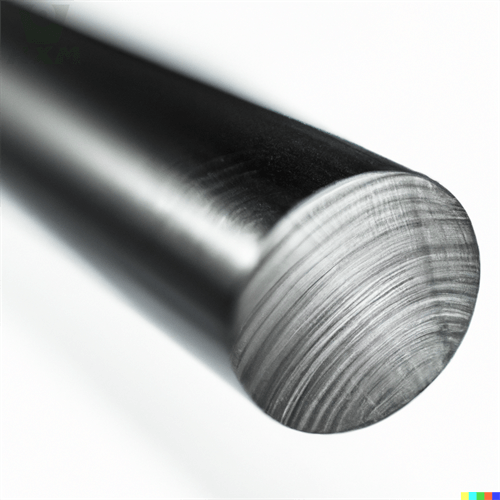
Formula: weight (kg/m) = diameter (mm)² × 0.00617. Multiply by length in metres for total weight. Worked examples: 100 m of 40 mm bright bar: 40² × 0.00617 = 9.87 kg/m → 987 kg. A 6 m length of 150 mm round: 150² × 0.00617 = 138.8 kg/m → 833 kg.
For hexagons and squares: square bar (kg/m) = side (mm)² × 0.00785; hexagon (kg/m) = across-flats (mm)² × 0.0068. Wire and rod in coils is normally invoiced on actual coil weight from the coiler scale, not theoretical — but the coil count and unit weights should still reconcile with the theoretical weight of the ordered dimensions within coiling tolerance. If a “50 kg coil” of 5.5 mm wire averages 47 kg across the shipment, that is a 6% quantity shortfall, not coiling scatter.
4. Pipes and Tubes
Formula: weight (kg/m) = π × (OD − WT) × WT × 0.00785, with OD and wall thickness (WT) in millimetres. Equivalently: (OD − WT) × WT × 0.02466. Worked example: 8-inch schedule 40 pipe, OD 219.1 mm, WT 8.18 mm: (219.1 − 8.18) × 8.18 × 0.02466 = 42.55 kg/m. For a 12 m length: 510.6 kg.
Two buyer checks specific to pipe. First, wall is the lever: a −5% wall deviation on 8.18 mm (to 7.77 mm, inside many standards’ −12.5% tolerance) cuts weight 5% — priced per tonne, the buyer pays the same per kg but receives fewer metres of pressure capability. For pressure service, order with minimum wall requirement and verify with ultrasonic spot checks at discharge. Second, seam weld bead and end finishes don’t change theoretical weight, but the standard’s thickness tolerance applies at the body, not at the bead — read the product standard before reconciling a pipe packing list.
5. Structural Sections: Use the Standard kg/m Tables
| Section | Nominal size | Theoretical weight |
|---|---|---|
| Equal angle | L 50 × 50 × 5 | 3.77 kg/m |
| Equal angle | L 100 × 100 × 10 | 15.0 kg/m |
| Channel | 200 × 75 (PFC-type) | ≈ 22–25 kg/m (by standard) |
| I-beam (IPE 200) | 200 × 100 | 22.4 kg/m |
| H-beam (HEB 200) | 200 × 200 | 61.3 kg/m |
| Flat bar | 100 × 10 | 7.85 kg/m |
| Square hollow section | 100 × 100 × 6 | 17.2 kg/m |
Sections are the one case where buyers should not recalculate from first principles — flange radii, taper and root geometry make hand formulas unreliable. Instead, take the kg/m from the governing standard (EN 10365, JIS G3192, GOST, or ASTM A6 tables) and multiply by length. The procurement check here is different: confirm which standard’s section tables the quote used. The same “200 × 200 H-beam” spans roughly 50–75 kg/m across different standards’ series — a quote that doesn’t name the series (HEB vs W8 vs Chinese HW) is not yet a price.
6. Theoretical vs Actual Weight: The Commercial Rules
7. Worked Reconciliation Example
Order: 120 plates, 6 × 1.5 × 12 m, theoretical basis, price USD 620/t. Theoretical unit weight: 6 × 1.5 × 12 × 7.85 = 847.8 kg. Total: 101,736 kg = 101.74 t → material value USD 63,078. The packing list arrives showing 101.74 t — consistent. Now suppose it shows 103.2 t “per mill actual weights”: on a theoretical-basis PO, that is a USD 900 overcharge to challenge, since the basis was fixed at nominal dimensions. Conversely, if the PO said actual weight and the plates were supplied at +0.5% thickness (the standard’s positive tolerance), 103.2 t is correct and you received slightly heavier-than-nominal plate — legitimate, but worth remembering when comparing quotes on different bases.
8. A One-Page Buyer’s Audit Routine
Why does my supplier’s weight differ from my calculation by about 1–2%?
Most commonly: tolerance-side dimensions (thickness at top of tolerance), edge conditions (mill edge vs trimmed), or a different pricing basis than you assumed. Ask which. Differences beyond ~2.5% on theoretical basis usually indicate wrong dimensions (nominal vs actual), a unit error, or basis-weight inflation.
Is 0.00617 exact?
It is π/4 × 7.85 = 0.006165 rounded for shop use. Using 0.00617 introduces error under 0.1% — immaterial against dimensional tolerances of ±0.5–1%. Don’t “improve” it with more decimals while ignoring the tolerance question, which is where the real money is.
Do galvanized or painted products change the weight?
Hot-dip galvanizing adds roughly 3–6% to mass on thin sections (zinc at ~600 g/m² both sides on light gauges) and 1–2% on heavy sections. Paint adds under 1%. Standards and quotes usually price galvanized product on the steel’s theoretical weight plus coating surcharge — confirm that convention, or you will pay steel-price margin on zinc weight.
What’s the best check on a container of mixed bars and plates?
Piece count first, then weight. Count pieces against the packing list during unloading, weigh the container gross and reconcile tare, then apply the formulas per line item. A container that is 300 kg light with a correct piece count is a dimension/tolerance question; one that is 300 kg light with pieces missing is a claim.
8. Weight Formulas for Coils, Strip and Wire Products
Flat products and wire dominate export tonnage, and their invoicing conventions differ from plates and bars. Coil and strip weight (kg) = length (m) × width (mm) × thickness (mm) × 0.00785. A 500 m coil of 1250 mm × 1.5 mm strip: 500 × 1250 × 1.5 × 0.00785 = 7,359 kg. When length is unknown (common for coils), mills calculate it from coil OD, ID and density — which is why the invoice should state the density assumption; some conventions use 7.85, others a “coil packing factor” that quietly reduces apparent length.
Wire in coils is weighed on the coiler scale (actual weight), and the check is arithmetic rather than physics: ordered 100 coils × 50 kg should arrive as 100 coils averaging 50 kg, not 96 coils at 52 kg. Count and unit-weight distribution matter for your own production feed — automatic mesh and nail machines misfeed on underweight, tangled coils. Galvanized product: as noted, zinc adds 1–6% by section; confirm whether the quoted price per tonne applies to coated or uncoated weight — on thin wire the difference is real money.
9. Shortage Scenarios: How to Document and Claim
Claim discipline: document at discharge, notify the seller within the claim window (typically 30 days — check the contract), preserve samples and, for certified material, the MTC lot linkage. Claims filed with photos, weighbridge records and your own formula-based computation resolve in weeks; claims filed as “we feel short-shipped” resolve in months, if ever.
10. Quick Reference: The Formulas on One Card
11. Worked Weight Table: Common Export Line Items
| Item | Dimensions | Unit weight | Formula used |
|---|---|---|---|
| MS plate | 6 × 1.5 m, 12 mm | 847.8 kg | L×W×T×7.85 |
| Round bar | 100 mm × 6 m | 370.2 kg | D²×0.00617×L |
| Square bar | 50 mm × 6 m | 117.8 kg | A²×0.00785×L |
| Flat bar | 100 × 10 mm × 6 m | 47.1 kg | W×T×0.00785×L |
| Seamless pipe | 219.1 OD × 8.18 WT × 12 m | 510.6 kg | (OD−WT)×WT×0.02466×L |
| Equal angle | L 100×100×10 × 12 m | 180.0 kg | Standard table kg/m |
| Strip coil | 1250 mm × 1.5 mm × 500 m | 7,359 kg | L×W×T×0.00785 |
Print the card from Section 10 next to this table and the reconciliation of any steel packing list becomes a five-minute spreadsheet job: multiply, sum, compare, flag anything beyond 1% on theoretical basis. Buyers who run this check on every shipment report the side benefit that suppliers begin pre-checking their own packing lists — the audit changes behavior on both ends of the transaction.
Finally, make the weight audit a routine, not an event: it takes one trained person ten minutes per shipment, and it compounds. Buyers who reconcile every packing list build a data set of real supplier behavior — which mills sit at tolerance midpoints, which quote honest bases, which drift positive over time. That data is worth more than any single claim: it tells you where the next order should go, and it gives you a defensible factual baseline the day a genuine shortage dispute arrives.
Use the card as a quote-checking discipline as well as an audit tool: when a supplier’s unit weight for a listed item differs from your formula result by more than the standard’s tolerance band, ask for the calculation basis in writing before awarding the order. The question costs nothing, and the answer — a clean derivation, a standard reference, or an evasive silence — tells you more about the counterparty than another round of price negotiation ever will.
Density caveats worth one line in your quality file: castings run 2–4% below wrought density on account of porosity, so casting weights are always weighbridge figures, never theoretical; high-alloy grades deviate from 7.85 (austenitic stainless at 7.9 is actually denser; aluminum is obviously a different game entirely); and coated products as discussed carry their coating mass. The formulas in this article are for wrought carbon and low-alloy steel — apply them inside that envelope and they are accurate to well under 1%, which is tighter than any tolerance the product standards impose on the dimensions feeding the calculation.
Order Steel With Honest, Verifiable Weights
Huaxia-Steel quotes on stated theoretical or actual weight basis, ships with detailed packing lists and weighbridge certificates, and welcomes buyer-side verification.
Request a quote: Contact Huaxia-Steel.