AISI 1020 Carbon Steel: Properties, Machining & Sourcing Guide

AISI 1020 is one of the most widely used low-carbon steels in the world. Its combination of excellent weldability, good machinability, and low cost makes it the default choice for applications ranging from machinery components to structural fabrications. For steel buyers, understanding 1020’s properties — and its limitations — is essential for specifying the right material and avoiding costly over-engineering.

Chemical Composition of AISI 1020
| Element | Min (%) | Max (%) | Typical (%) |
|---|---|---|---|
| Carbon (C) | 0.18 | 0.23 | 0.20 |
| Manganese (Mn) | 0.30 | 0.60 | 0.45 |
| Phosphorus (P) | — | 0.040 | 0.020 |
| Sulfur (S) | — | 0.050 | 0.020 |
| Silicon (Si) | — | 0.30 | 0.15 |
| Iron (Fe) | Balance | — | 99.0+ |
The low carbon content (0.18–0.23%) gives 1020 its signature weldability and formability. It cannot be hardened through quenching to high hardness levels — for wear-resistant applications, consider AISI 1045 or 4140 instead.
Cross-Reference to Other Standards
| Standard | Equivalent Grade |
|---|---|
| ASTM/AISI | 1020 |
| SAE | 1020 |
| GB (China) | 20 steel / 20# |
| JIS (Japan) | S20C |
| DIN (Germany) | 1.0402 (C22) |
| EN (Europe) | C22E / C22 |
| ISO | C20 |

Mechanical Properties of AISI 1020
As-Rolled Condition
| Property | Value | Unit |
|---|---|---|
| Tensile strength (ultimate) | 395–420 | MPa |
| Yield strength | 245–295 | MPa |
| Elongation (50 mm) | 15–25 | % |
| Reduction of area | 40–50 | % |
| Hardness (Brinell) | 120–145 | HB |
| Impact toughness (Charpy V, 20°C) | 40–60 | J |
Normalized Condition (870–920 °C, air cool)
| Property | Value | Unit |
|---|---|---|
| Tensile strength | 415–440 | MPa |
| Yield strength | 275–310 | MPa |
| Elongation | 20–28 | % |
| Hardness | 126–160 | HB |
Machining Parameters for AISI 1020
1020 machines well but produces longer chips than free-cutting grades like 12L14. The following parameters are starting points for CNC operations on as-rolled 1020 round bar.
Turning Parameters
| Operation | Cutting Speed (m/min) | Feed (mm/rev) | Depth of Cut (mm) | Tool Material |
|---|---|---|---|---|
| Rough turning | 90–150 | 0.2–0.5 | 2–5 | Carbide (P10–P20) |
| Finish turning | 150–220 | 0.05–0.15 | 0.5–1.5 | Carbide (P10) |
| Threading | 60–100 | — (pitch) | — | Carbide insert |
Drilling Parameters
| Drill Diameter (mm) | Speed (RPM) | Feed (mm/rev) | Cutting Speed (m/min) |
|---|---|---|---|
| 3 | 4000–6000 | 0.05–0.08 | 40–60 |
| 8 | 1500–2500 | 0.10–0.15 | 40–60 |
| 15 | 800–1200 | 0.15–0.25 | 40–60 |
| 25 | 500–800 | 0.20–0.30 | 40–60 |
Milling Parameters
| Operation | Cutting Speed (m/min) | Feed per Tooth (mm) | Depth of Cut (mm) |
|---|---|---|---|
| Face milling | 100–180 | 0.05–0.15 | 1–3 |
| End milling | 80–140 | 0.03–0.08 | 0.5–2.0 |
| Slot milling | 60–100 | 0.02–0.06 | 0.5–1.5 |
**Machinability rating:** 1020 rates ~65% on the AISI machinability scale (B1112 = 100%). For high-volume machining where productivity is critical, consider 12L14 (190% machinability) or 1144 (85%).
Heat Treatment of AISI 1020
1020’s low carbon content limits the hardness achievable through heat treatment. However, case hardening (carburizing) can produce a hard surface layer while maintaining a tough core.
Heat Treatment Parameters
| Process | Temperature (°C) | Cooling Medium | Result |
|---|---|---|---|
| Normalizing | 870–920 | Still air | 130–160 HB, uniform grain |
| Annealing | 870–900 | Furnace (≤25 °C/h) | 120–145 HB, max machinability |
| Stress relief | 550–650 | Furnace/air | Removes welding/forming stress |
| Carburizing | 900–950 | — | 0.5–2.0 mm case depth |
| Quench after carburize | 790–830 | Water/oil | Case: 55–62 HRC, Core: 25–30 HRC |
| Temper after quench | 150–200 | Air | Case: 55–60 HRC (reduced brittleness) |
**Buyer note:** If your application requires a hard-wearing surface with a tough core (gears, shafts, cams), specify “carburized and hardened” on the PO. The MTC should report case depth and surface hardness.
Welding AISI 1020
1020 is one of the most weldable carbon steels available. No preheat is required for sections up to 25 mm thickness.
| Process | Filler/Wire | Current (A) | Preheat | Notes |
|---|---|---|---|---|
| SMAW | E7018 (3.2 mm) | 90–140 | None ≤25 mm | Structural welds |
| GMAW | ER70S-6 (0.8 mm) | 140–180 | None | Production welding |
| GTAW | ER70S-2 (2.4 mm) | 80–120 | None | Root passes, precision |
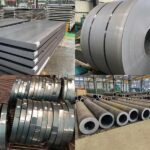
Forms and Availability
| Form | Size Range | Standard Delivery | Surface Condition |
|---|---|---|---|
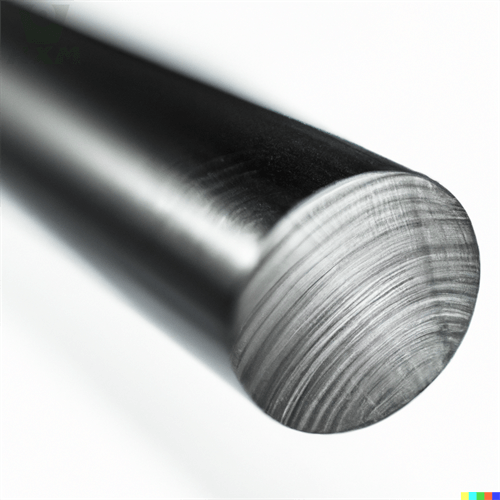
| Round bar | 6–300 mm Ø | As-rolled, cold-drawn | Black, peeled, polished |
| Flat bar | 10–100 mm × 3–50 mm | As-rolled | Black, pickled |
| Plate | 1.5–80 mm thick | Hot-rolled | Black, pickled |
| Sheet | 0.8–3.0 mm | Cold-rolled | Bright, oiled |
| Seamless tube | OD 10–200 mm | As-drawn | Black, pickled |
| Wire rod | 5.5–22 mm | Hot-rolled | Black, annealed |
FOB Price Ranges (2025–2026, Shanghai)
| Form | Size | FOB ($/ton) | MOQ |
|---|---|---|---|
| Round bar (hot-rolled) | 20–80 mm | 580–680 | 5 tons |
| Round bar (cold-drawn) | 10–50 mm | 720–880 | 3 tons |
| Plate (hot-rolled) | 6–20 mm | 600–680 | 5 tons |
| Sheet (cold-rolled) | 1.0–2.0 mm | 620–720 | 3 tons |
| Seamless tube | OD 25–100 mm | 850–1050 | 3 tons |
FAQ
**Q: What is the difference between AISI 1020 and 1018?**
A: 1020 has slightly higher carbon (0.18–0.23% vs 0.15–0.20%) and manganese (0.30–0.60% vs 0.30–0.60%). In practice, 1018 is more commonly available as cold-drawn precision bar stock, while 1020 is more common as hot-rolled plate and structural sections. Mechanical properties are nearly identical.
**Q: Can AISI 1020 be hardened through quenching?**
A: Only marginally. Water quenching from 870 °C achieves ~25–30 HRC at the surface. For meaningful hardness (>50 HRC), you must carburize the surface first, then quench. If you need through-hardened steel, use 1045 or 4140 instead.
**Q: Is AISI 1020 the same as Chinese 20# steel?**
A: Nearly identical. GB/T 699 20 steel has carbon 0.17–0.24%, which overlaps with AISI 1020’s 0.18–0.23%. Minor differences exist in phosphorus and sulfur limits. For most applications, 20# is an acceptable substitute. Always verify on the MTC.
**Q: What is the best surface finish for 1020 round bar?**
A: For machining: cold-drawn (tolerance h9–h11, surface Ra 1.6–3.2). For shafts: peeled and polished (Ra 0.8–1.6). For structural use: as-rolled black (Ra 12.5+). Specify the surface finish on the PO to avoid receiving the wrong condition.
**Q: Where can I source AISI 1020 carbon steel from China?**
A: Huaxia Steel supplies 1020 (and its Chinese equivalent 20#) in round bar, plate, sheet, and seamless tube with full MTC documentation. Contact us for mill-direct pricing.
Source AISI 1020 from Huaxia Steel
**Huaxia Steel** supplies AISI 1020 (20#) carbon steel in round bar, plate, sheet, and tube — with ASTM-compliant MTCs, third-party inspection, and flexible MOQs.
**[Request a quote →](https://www.huaxia-steel.com/contact/)** — specify form, size, quantity, and delivery condition. We will confirm pricing and lead time within 24 hours.