AISI 1020 Carbon Steel Round Bar — Factory Direct Supplier | Huaxia-Steel
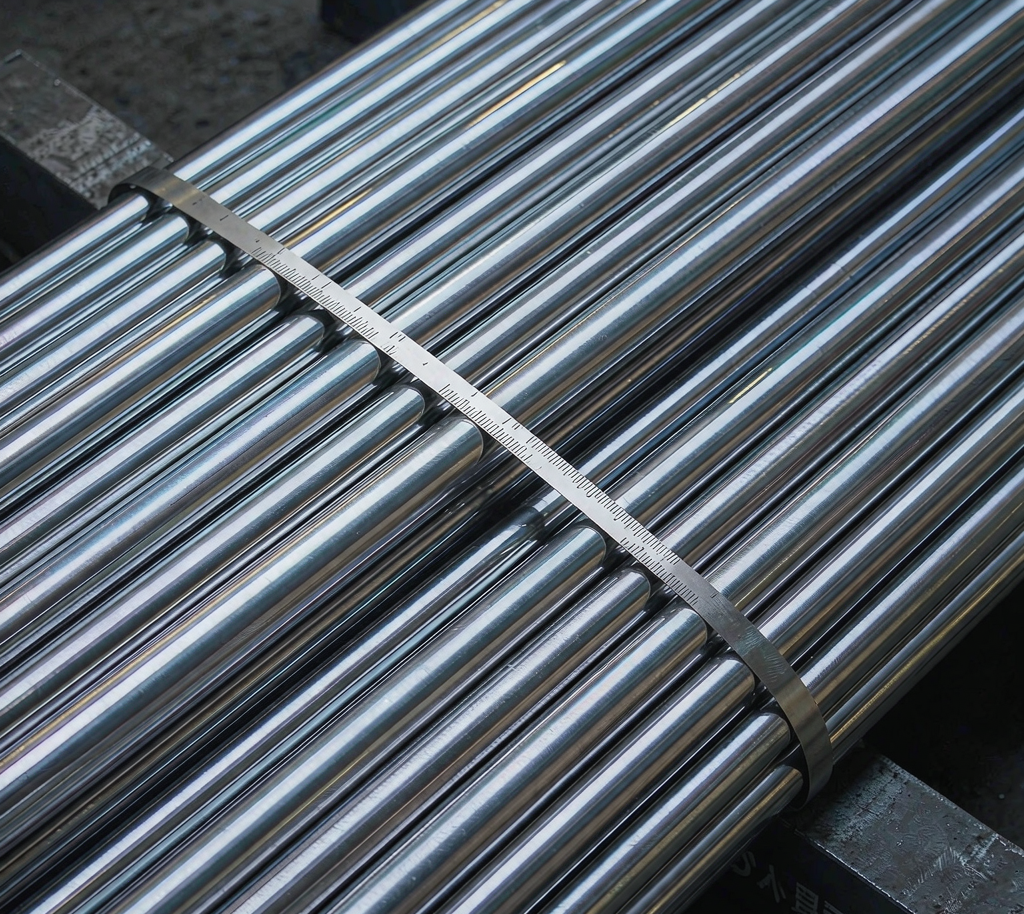
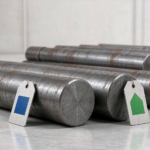
Huaxia-Steel supplies AISI 1020 carbon steel round bar in hot rolled, cold drawn and turned conditions, cut to length or supplied in random bars. AISI 1020 is a low-carbon, general-purpose steel that machines well, welds readily and case hardens predictably, making it a workhorse for shafts, pins, axles, studs and general machinery parts. We stock common diameters and roll or draw non-standard sizes to order.
This page covers the chemistry, mechanical properties, available diameters and tolerances, supply forms, standards, applications, quality assurance and packing for 1020 round bar. Send your drawing or size list and we will quote price, lead time and certificate type within 24 hours.
Product Overview
AISI 1020 (also written SAE 1020) is a low-carbon steel with a nominal 0.20% carbon content and moderate manganese. It sits between 1018 and 1045 in the carbon range, offering more strength than 1018 while remaining far more weldable and formable than the medium-carbon grades. In the hot rolled condition it is a general structural and machining grade; cold drawn, it becomes a bright, tight-tolerance bar for automatic machining.
The grade is widely available and economical, which is why it appears on so many general engineering drawings. It is not a high-strength or through-hardening steel, and it is rarely specified where high fatigue strength or wear resistance is needed without a surface treatment. Used within its limits, it is one of the most reliable and cost-effective carbon bar grades in the market.
Specifications: Size, Weight and Tolerance
We supply 1020 round bar across a broad diameter range in three supply conditions. Tolerances depend on the condition: hot rolled bar carries the mill tolerance, cold drawn bar holds a tighter h-class tolerance, and turned or peeled bar gives the best straightness and surface finish.
| Parameter | Range | Tolerance |
|---|---|---|
| Diameter | 6–350 mm | Depends on condition |
| Hot rolled tolerance | Per ASTM A29 | Wide, mill standard |
| Cold drawn tolerance | h9–h11 typical | Tight, bright finish |
| Turned / peeled | ±0.1 mm typical | Best straightness |
| Length | 3–6 m random, or cut | Per order |
| Straightness | ≤1–3 mm/m | By condition |
Diameter and tolerance should be stated explicitly on the purchase order, because “1020 round bar” alone does not fix either. A buyer who expects bright drawn tolerance but orders hot rolled bar will receive a material that is dimensionally coarser and needs machining to size. We will confirm the intended condition before quoting so the delivered bar matches the drawing.
Available Grades and Chemistry
AISI 1020 chemistry is specified by SAE J403 and ASTM A29. The heat analysis below is typical; actual values are reported on the mill certificate.
| Element | AISI 1020 |
|---|---|
| Carbon (C) | 0.18–0.23% |
| Manganese (Mn) | 0.30–0.60% |
| Phosphorus (P) | ≤0.040% |
| Sulfur (S) | ≤0.050% |
| Silicon (Si) | 0.15–0.35% (killed) |
Near-equivalent grades include JIS S20C, DIN C22 and GB/T 20#. These are close but not identical in manganese and impurity limits, so a substitution should be documented. If your drawing names 1020 and the supplier offers S20C, we will provide a cross-reference comparison so you can approve or reject the substitution on the record.
Mechanical Properties
Properties depend strongly on supply condition. Hot rolled 1020 is softer and more ductile; cold drawn 1020 is stronger and harder with a bright surface. The table shows typical values.
| Condition | Tensile | Yield | Elongation | Hardness |
|---|---|---|---|---|
| Hot rolled | ~420 MPa | ~240 MPa | ~25% | ≤143 HB |
| Cold drawn | ~470 MPa | ~390 MPa | ~15% | ~150–180 HB |
| Annealed | ~395 MPa | ~295 MPa | ~28% | ≤131 HB |
1020 case hardens well: a carburizing cycle produces a hard wear-resistant case over a tough low-carbon core, which suits pins, gears and small shafts. It is not intended for through hardening in heavy sections; where core strength is needed, a medium-carbon or alloy grade is the better choice.
Manufacturing Standards
1020 bar is produced to ASTM A29/A29M for hot worked carbon steel bars, ASTM A108 for cold finished bars, or SAE J403 for chemistry, depending on the supply condition and the customer’s specification. Cold drawn bar is drawn through dies to the required size and may be turned, ground or polished for tighter tolerance and better finish. Marking and certification follow the governing standard.
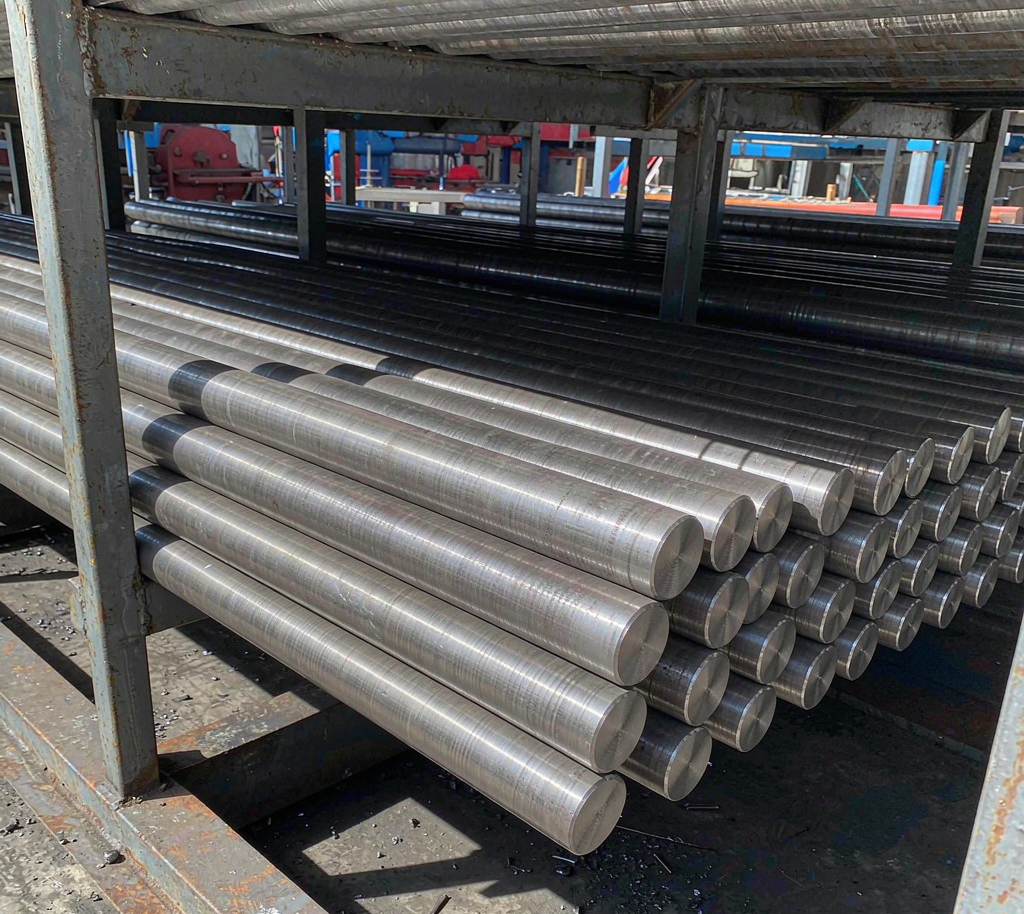
We supply EN 10204 3.1 mill certificates as standard and can arrange 3.2 certification or third-party inspection on request. For customers with a validated machining process, we will match the heat treatment condition (annealed, spheroidized or as-drawn) that their process was qualified with, since condition affects both machinability and dimensional stability.
Applications
AISI 1020 round bar is used for a wide range of general engineering parts: shafts, axles, pins, studs, bolts, spacers, bushings, rollers, tie rods, brackets and machinery components. It is common in agricultural equipment, automotive parts, general fabrication and repair work. Its combination of machinability, weldability and low cost makes it a default choice where no higher strength or wear resistance is required.
Where the part will be carburized, 1020 is a sound base steel because the low carbon core stays tough while the case hardens. Where the part must be welded, its low carbon makes welding straightforward with no preheat in normal sections. Where the part must be quenched and tempered for core strength, a medium-carbon grade such as 1045 is the correct specification instead.
Quality Assurance
Each heat is verified for chemistry, and mechanical properties are tested per the governing standard. Bar is inspected for surface defects, dimensions and straightness before packing, and cold drawn bar is checked for surface finish and tolerance. Traceability runs from heat number to bundle marking, and records travel with the shipment.
- Heat chemistry and mechanical results on EN 10204 3.1 certificate.
- Dimensional and surface inspection to the governing standard.
- Condition control: annealed, spheroidized, or as-drawn per order.
- Optional third-party inspection before shipment.
- Bundle marking with heat number and size for traceability.
Packing and Shipping
Round bar is supplied in strapped bundles, with end protection and, for cold drawn or bright bar, rust-preventive oil and wrapping to protect the surface in transit. Bundles are marked with size, grade, heat number and quantity. We use ISPM 15 compliant dunnage for export and can arrange container loading or breakbulk depending on quantity and destination.
For bright bar and machined parts, moisture protection during ocean transit is important; we recommend VCI wrapping or oil coating for humid destinations. Shipping documents are prepared to contract or letter of credit requirements, and we can consolidate multiple sizes into a single shipment to reduce freight cost.
Machining and Heat Treatment Guidance
AISI 1020 machines well in the cold drawn or annealed condition, with clean chip formation and stable tool life in turning, drilling, milling and threading. In the hot rolled condition it is softer and gummier, which can produce built-up edge on some operations; a light normalization or annealing before machining often improves surface finish. For high-volume automatic machining, cold drawn bar is preferred because of its consistent hardness and tight tolerance.
The grade case hardens predictably, which is one of its main attractions. A gas carburizing cycle at 900–925°C followed by quench and temper produces a hard case over a tough core, ideal for pins, gears and small shafts that see wear but not heavy shock. It is not a through-hardening steel; where core strength is required, a medium-carbon grade such as 1045 should be specified instead of trying to harden 1020 through its section.
Welding 1020 is straightforward because of its low carbon content: no preheat is needed in normal sections, and standard E7018 or ER70S-6 filler works well. Thick sections or highly restrained joints still benefit from a modest preheat and controlled cooling, and any carburized or heavily worked surface should be ground back to sound metal before welding to avoid porosity and cracking.
Ordering Checklist
- State the grade (AISI 1020) and the supply condition: hot rolled, cold drawn, or turned.
- Give the diameter and the tolerance class, not just the nominal size.
- Specify length, cut tolerance and whether random or fixed lengths are acceptable.
- Confirm the heat treatment condition if the bar will be machined or hardened.
- Require an EN 10204 3.1 certificate with heat chemistry and mechanical results.
- Agree packing, surface protection and marking for export.
Grade Selection Tips for Common Parts
Choosing 1020 is usually straightforward, but a few practical points help avoid rework. If the part will be machined to a tight tolerance, order cold drawn bar rather than hot rolled and save the sizing operation. If the part will be carburized, confirm the case depth and core hardness with the heat treater before cutting metal. And if the part is heavily welded, remember that 1020 welds freely but still benefits from clean surfaces and controlled fit-up.
- Machined precision parts: order cold drawn or turned bar for tolerance and finish.
- Carburized wear parts: 1020 is an excellent base steel; specify case depth with the heat treater.
- Welded fabrications: low carbon welds easily; clean surfaces and control fit-up.
- Through-hardened parts: choose a medium-carbon grade such as 1045 instead.
Get a Quote from Huaxia-Steel
Factory-direct carbon steel with MTC, third-party inspection, and fast export shipping. Tell us your grade, size, quantity and destination — we return a firm quote within 24 hours.