Carbon Steel Angle Bar — Factory Direct Supplier | Huaxia-Steel
Carbon steel angle bar (L-shaped section) is a fundamental structural profile used in framing, bracing, support and fabrication across construction, manufacturing and infrastructure. Huaxia-Steel supplies equal-leg and unequal-leg angles directly from the mill in a wide size range, with optional hot-dip galvanizing for corrosion protection. This page details product overview, specifications, grades, standards, applications, quality control and packaging.
Product Overview
Angle bars are produced by hot rolling billets into an L-section with two legs at 90 degrees. Equal angles have identical leg lengths; unequal angles have one longer leg. The right-angle geometry makes them ideal for connecting members, edge protection, stiffeners and structural corners where both strength and ease of welding matter. They are among the most economical ways to add rigidity to a frame.
Specifications (Size, Weight, Tolerance)
| Type | Leg size | Thickness | Length | Tolerance |
|---|---|---|---|---|
| Equal | 20×20 to 200×200 mm | 2-24 mm | 6-12 m | Per ASTM A6 / EN 10056 |
| Unequal | 30×20 to 200×150 mm | 3-18 mm | 6-12 m | Per ASTM A6 / EN 10056 |
Theoretical weight follows standard section tables; we can cut to length and punch holes per drawing. Both equal and unequal patterns are stocked for fast shipment.

Available Grades
| Standard | Grade | Yield MPa |
|---|---|---|
| ASTM A36 | A36 | 250 |
| ASTM A572 | Gr50 | 345 |
| EN 10025 | S235 / S355 | 235 / 355 |
| JIS G3101 | SS400 | 245 |
| GB/T 700 | Q235B | 235 |
Manufacturing Standards and Process
Hot-rolled angles are produced to ASTM A36/A572, EN 10056, JIS G3101 or GB/T 700. Billets are reheated, passed through a series of rolls that form the L-shape, then cooled and straightened. Straightness, leg angle (90 +/- 2 degrees) and surface condition are controlled during rolling and cooling. For corrosive environments we apply hot-dip galvanizing to ASTM A123.
Applications
Angles are used in building frames, tower and truss bracing, equipment supports, shipbuilding, shelving, stair stringers, fence posts and general fabrication. Galvanized angles serve outdoor and coastal structures, while plain angles are common indoors and in machinery bases.
Quality Assurance
We check leg dimensions, angle accuracy, straightness, surface defects and chemistry via mill certificate. Tensile and yield verification, plus optional hot-dip galvanizing to ASTM A123 with coating-thickness checks, are available. Third-party inspection can witness any test, and we retain heat-traceability for every bundle.
Packaging and Shipping
Angles are bundled by size with steel strapping, tagged with heat number, and protected for sea transport with rust inhibitor and woven wrapping. Container or break-bulk loading is supported, with mixed profiles in one container on request to lower freight cost. Ends can be painted or capped for handling safety.
Why Buy Direct from Huaxia-Steel
Mill-direct supply means consistent section geometry, fast repetition orders and competitive pricing. We keep common sizes in stock and can match any major standard grade your project requires, with documentation ready for customs.
Galvanizing and Surface Protection Options
For outdoor or corrosive service we offer hot-dip galvanizing to ASTM A123, which deposits a thick, abrasion-resistant zinc coating with predictable thickness by section mass. Alternatively, primers or powder coating can be applied. Plain (uncoated) angles suit indoor and machinery use where painting is done on site.
| Option | Coating life | Best for |
|---|---|---|
| Plain | None | Indoor, painted later |
| HDG | 20-50 yrs | Outdoor, coastal |
| Primed | Medium | Shop-fabricated frames |
Typical Fabrication Notes
Angles cut, punch and weld easily with standard equipment. For bolted connections, predrilling or punched holes should match the gusset pattern, and leg length should be chosen so both legs can carry the load. In trusses, unequal angles are often oriented to balance centroid and connection geometry.
Detailed Rolling Process
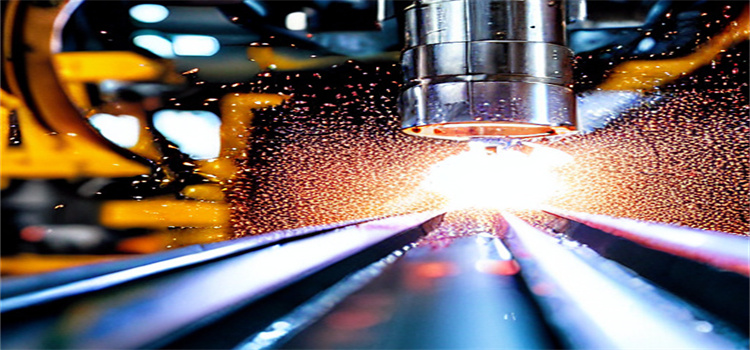
Angle production begins with a reheated billet fed through a roughing stand that establishes the width, then a series of finishing stands that progressively bend the section into the L-shape. The two legs are formed simultaneously, and the inter-stand tension is controlled so both legs develop uniformly. After the final pass the angle is cooled on a bed, straightened by a roller straightener, and cut to length. Modern mills monitor roll gap and temperature to keep leg angle close to the nominal 90 degrees.
Connection Design Notes
| Aspect | Guidance |
|---|---|
| Bolt spacing | Follow standard gauge lines |
| Edge distance | ≥ 1.5x bolt diameter |
| Unequal use | Long leg connects to gusset |
| Welding | Fillet welds both legs |
Selection Guide
Choose equal angles for symmetric framing and general bracing; choose unequal angles when one leg must carry more load or when connecting to a thin element. For outdoor use specify galvanized; for indoor machinery plain A36 is economical. Confirm the section weight from standard tables so your structure’s load calculations use the correct values.
Typical Project Example
A solar mounting fabricator ordered 80 tonnes of 50x50x5 mm equal angles in S235, galvanized to ASTM A123, for ground-mount racks. We supplied cut-to-length angles with punched holes per their drawing, galvanized, bundled and delivered in a single container. The pre-punched, pre-galvanized angles cut their site labour dramatically and removed the need for field drilling and painting.
Frequently Asked Questions
Equal or unequal? Equal for symmetric framing; unequal when one leg carries more load or connects to a thin plate.
Can you punch holes? Yes, we offer punching and cut-to-length per drawing.
Galvanizing thickness? Per ASTM A123, roughly 85 micron average on this section mass.
Equal vs Unequal at a Glance
| Type | Use |
|---|---|
| Equal | Symmetric bracing, frames |
| Unequal | Connections to thin elements |
Angle Weight Calculation
The weight of an angle per metre is read from standard section tables based on leg sizes and thickness; for quick estimates use the formula approximately (2 x leg x thickness x density) minus the overlap at the corner. Knowing the per-metre weight lets you convert a project’s linear metres into tonnes for quotation and shipping. Always confirm the actual weight with the mill’s table, because small thickness differences change tonnage and therefore both price and container load.
Galvanizing Process Steps
Hot-dip galvanizing follows a sequence: degreasing, pickling to remove scale and rust, fluxing, dipping in molten zinc at about 450 °C, and cooling. The result is a metallurgically bonded zinc-iron coating that protects even if scratched. Because the bath size limits part dimensions, very long angles may be galvanized in sections or by a continuous line. Specify the coating standard (ASTM A123) so thickness is verified, not assumed.
Mistakes to Avoid
Common errors: ordering the wrong leg orientation for unequal angles, forgetting hole patterns, specifying plain steel for outdoor use, and ignoring the small dimensional growth from galvanizing. Plan holes and coating up front, and confirm leg angle tolerance so fabricated connections fit. A few minutes of specification review saves rework and rejected deliveries.
Angle in Truss and Frame Design
Angles are the workhorse of trusses, towers and equipment frames because they are light, connect easily on two faces and resist axial loads well. In a lattice tower, angle members are bolted back-to-back or to gusset plates; in a machine frame, they form corners and stiffeners. Choose leg length so both the connected elements and the load path are satisfied, and check slenderness for compression members so the angle does not buckle before it yields.
Cutting and Fabrication Tips
Angles cut cleanly with band saws, chop saws or plasma; for bolted work, drill or punch holes to the gusset pattern. When welding, fillet welds on both legs develop the connection; control heat to avoid distortion of the 90-degree angle. For galvanized angles, do all cutting and drilling before galvanizing, or touch up exposed cuts with zinc-rich paint to maintain corrosion protection at the edges.
How to Request a Quote Correctly
Provide: standard and grade, equal or unequal with leg sizes, thickness, length, quantity, surface (plain or galvanized), and any hole/punching drawing. State whether random or fixed lengths are acceptable, since that affects price and cutting scrap. A complete inquiry lets us quote immediately and reserve rolling capacity for your delivery date.
Summary: Why Choose Huaxia-Steel for Angles
Huaxia-Steel supplies a full range of equal and unequal angles direct from the mill, in A36, A572, S235/S355, SS400 and Q235, plain or hot-dip galvanized, cut and punched to your drawing. Our consistent section geometry and heat-traceable certificates support both structural fabricators and machinery builders, and our mixed-profile containers help you optimise freight. Tell us the leg size, thickness and grade, and we return a competitive mill-direct quote with a realistic lead time and full documentation for clearance.
Quick Reference
Equal angle: both legs the same length. Unequal angle: legs of different lengths. Leg angle: the included angle, nominally 90 degrees. Galvanizing: hot-dip zinc coating for corrosion resistance. Theoretical weight: mass per metre from section tables. Using these terms consistently in inquiries prevents the common errors that lead to rejected or mismatched deliveries.
Buying Tip
When comparing angle quotes, compare on equal terms: same grade, leg size, thickness, length type and surface. A cheaper plain angle may cost more once you add galvanizing and cutting later, while a galvanized, cut-and-punched angle can lower your total fabricated cost. Ask suppliers to quote both options so you can choose on total cost, not just the ex-works price of the raw section.
Request a Quote
Tell us the leg size, thickness, grade and length you need, and Huaxia-Steel will quote mill-direct pricing with lead time. Contact our team now.